Email senders globally are grappling with a significant and sudden downturn in Gmail open rates, with some Validity customers reporting quarter-over-quarter drops exceeding 30 percent. This dramatic shift, confirmed by Validity’s own engagement data showing a roughly one-third reduction in Gmail image loading activity—including crucial tracking pixels—since late November 2025, signals a profound evolution in how Google manages its ubiquitous email service. Industry experts widely speculate that Gmail has reduced the frequency of image prefetching, a process that has routed through their proxy servers since 2013. This technical adjustment means fewer preloaded tracking pixels, inevitably leading to a decrease in recorded opens, even if actual email readership remains stable. However, this change is not an isolated incident but rather a symptom of a broader, strategic reorientation by Google, mirroring similar shifts seen across other major mailbox providers like Apple and Yahoo. For email marketers, this development necessitates a critical re-evaluation of long-standing metrics and a strategic pivot towards more authentic engagement indicators.
A New Era for Email Metrics: Understanding the Declines
The dramatic fall in reported Gmail open rates has sent ripples of concern through the digital marketing community. While the immediate technical explanation points to a reduction in image prefetching, particularly affecting tracking pixels, the underlying narrative is one of a deliberate move by Google to enhance user experience, privacy, and the overall quality of email communication. The phenomenon is not entirely new; Validity previously investigated similar engagement declines at Apple and Yahoo, where changes such as inbox categories, digest views, AI summaries, and stricter bulk sender requirements reshaped the landscape.

-
The Demise of the Pixel: A Technical Shift
For over a decade, email open rates have been primarily measured by tiny, invisible tracking pixels embedded within messages. When an email client loads these images, the pixel "fires," registering an open. Gmail’s decision to reduce the frequency of prefetching these images, even before a user actively opens an email, directly impacts this traditional measurement. This change effectively unmasks an inflation in open rates that has long been present, particularly exacerbated by features like Apple Mail Privacy Protection (MPP). Implemented in 2021, MPP similarly pre-loads email content via proxy servers, generating "false opens" regardless of whether the user actually interacts with the email. Many Gmail users access their accounts through Apple Mail apps, meaning a significant portion of previously reported "opens" were artificial and driven by inactive subscribers. Google’s latest adjustments bring Gmail more in line with a post-MPP reality, where the reliability of the open rate as a standalone metric for human engagement is increasingly challenged. -
Beyond Vanity Metrics: Redefining "Open"
Paradoxically, this recalibration of open rates is widely considered good news by industry analysts. The observed decline in opens is not being mirrored by corresponding drops in clicks or revenue, suggesting that actual human engagement and conversion remain robust among genuinely interested subscribers. This indicates that Gmail’s focus on targeting engaged subscribers is effectively weeding out the "false positives" from prefetching and auto-loading mechanisms. For marketers, this means the reported open rate is becoming a more truthful, albeit lower, reflection of active engagement. While open rates still serve as a valuable directional health signal—a sudden, unexplained drop could indicate deeper deliverability issues—they should no longer be treated as the primary metric for campaign success or list health. The emphasis must shift to more tangible actions: clicks, conversions, and ultimately, revenue. This paradigm shift compels senders to move beyond vanity metrics and focus on delivering genuine value to a truly engaged audience.
A Chronology of Transformation: Gmail’s Recent Overhauls
The recent changes at Gmail are part of a continuous evolution, influenced by industry trends, user expectations, and technological advancements. Understanding the timeline of these developments provides crucial context for the current landscape.

-
The Shadow of Apple Mail Privacy Protection (2021 Context)
The journey towards a re-evaluated email engagement landscape significantly accelerated with Apple’s introduction of Mail Privacy Protection (MPP) in September 2021. MPP fundamentally altered how email open tracking worked for users of Apple Mail by pre-loading all email content, including tracking pixels, through proxy servers. This created a surge in artificially inflated open rates, masking true user engagement and making it difficult for marketers to distinguish between a genuine open and an automated one. Given Apple Mail’s substantial user base, this change had a widespread impact across the email ecosystem. Google, as a major player, has been observing and, in many ways, is now responding with its own set of changes that prioritize user privacy and a more accurate reflection of engagement, albeit through different mechanisms. This set the precedent for major mailbox providers to take greater control over how email content is rendered and tracked, directly influencing Google’s subsequent actions. -
Mid-2025: Enhanced User Control Begins
Google initiated several user-centric features throughout mid-2025, laying the groundwork for a more controlled and personalized inbox experience. One of the most notable was the full rollout of the Subscriptions Manager to personal Gmail accounts. This dashboard lists all marketing senders to a user, ranked by sending frequency, and crucially, allows users to unsubscribe from any sender with a single click, directly from the dashboard, without needing to open an email. This feature, while empowering users, directly impacts recorded open rates by allowing passive disengagement, leading to list shrinkage among less engaged subscribers. While this might reduce overall list size, it ensures the remaining subscribers are more genuinely interested. -
Late 2025: The Enforcement Hammer Falls and Tabular Reorganization
The latter half of 2025 marked a critical period for Google’s email policy enforcement and inbox restructuring.- Stricter Bulk Sender Requirements: Effective November 2025, Gmail transitioned from a policy of soft enforcement for non-compliant bulk email traffic to active rejection. This resulted in an increase in hard SMTP-level rejection codes for senders failing to meet Google’s guidelines on authentication (DMARC, SPF, DKIM), low spam complaint rates, and easy unsubscribe options. Validity Intelligence Network data confirmed an approximate three percent drop in inbox placement rates at Gmail during this period, directly translating to fewer potential opens for affected senders.
- Reduced Image Prefetching: Also in late November 2025, the speculated reduction in image prefetching frequency was observed. This technical change, impacting how tracking pixels are loaded, is the primary technical driver behind the sharp drop in reported open rates.
- Relevance-Sorted Promotions Tab: Gmail began sorting its Promotions tab by engagement rather than mere recency. This means emails from senders with higher engagement rates are surfaced more prominently, while those with lower engagement are pushed further down, significantly reducing their visibility and, consequently, their open potential. This creates a self-reinforcing cycle where low engagement leads to lower visibility, further suppressing engagement.
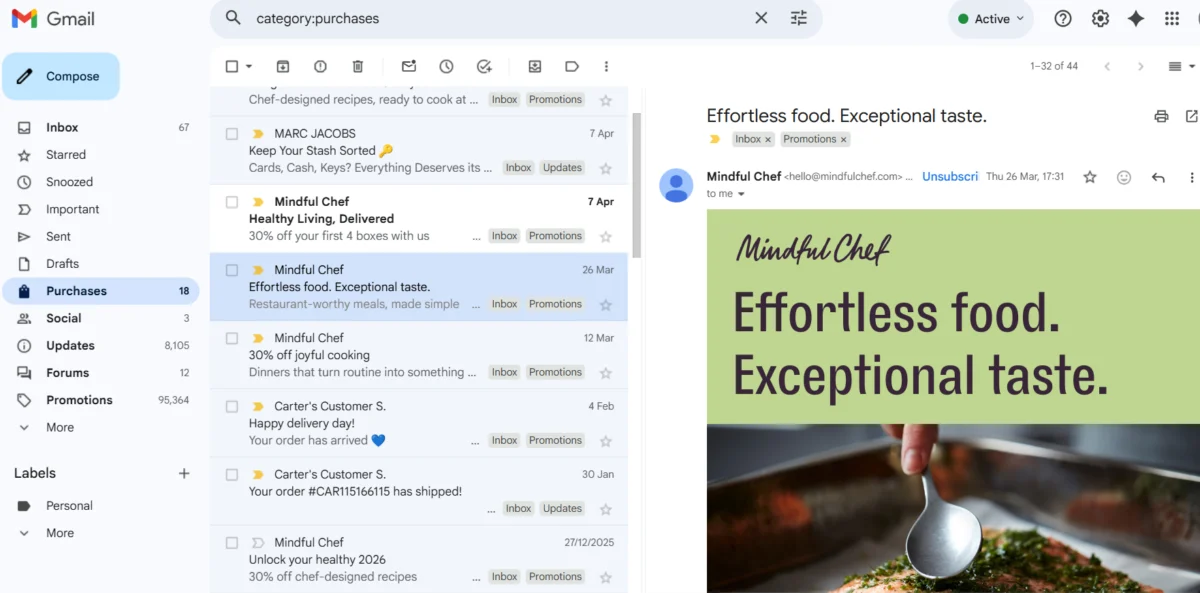
- The Purchases Tab: A dedicated "Purchases" view was introduced in late 2025, designed to consolidate transactional emails such as order confirmations and shipping updates. While intended for user convenience, some marketing emails inadvertently landed in this tab, particularly those containing detailed delivery policies. This misclassification can depress open rates as subscribers are less likely to look for promotional content in a transactional tab, potentially eroding trust.
-
Early 2026: The Age of AI in the Inbox
The beginning of 2026 ushered in a new wave of AI-powered features, further transforming the inbox experience and challenging traditional engagement metrics.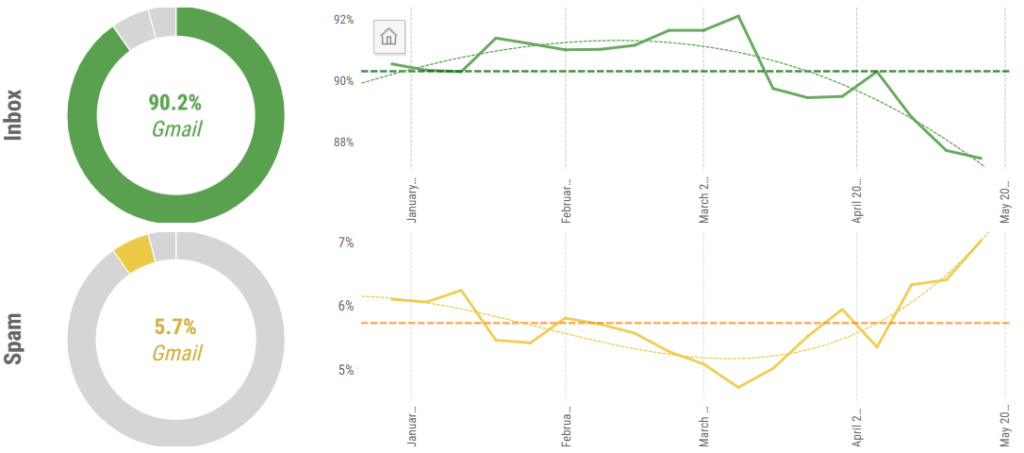
- AI-Generated Email Summaries: Starting January 2026, Gmail began rolling out AI-generated summaries. These short snippets, typically 1-2 sentences, automatically display when users open emails, capturing the key message. While the jury is still out on whether these auto-summaries trigger "false opens" by loading content, they undeniably provide subscribers with essential information without requiring them to read the entire email, thereby reducing the incentive for deeper engagement or even a full scroll.
- Gemini Integration for Inbox Search and Management: Also in January 2026, the integration of Google’s advanced AI model, Gemini, brought conversational, natural-language search capabilities to the Gmail inbox. Users can now query their email history with prompts like, "What discount codes do I have for sportswear?" and receive compiled answers from multiple emails without opening any of them. This allows users to extract value from emails without generating an "open," particularly impacting promotional content.
Navigating the New Landscape: Key Gmail Developments and Strategic Responses
The collective impact of these changes paints a clear picture: Gmail is prioritizing user experience, relevance, and genuine engagement. Marketers must adapt by refining their strategies across multiple dimensions.
-
Stricter Bulk Sender Requirements: Upping the Deliverability Ante
The shift in late 2025 from soft warnings to active rejection for non-compliant bulk email traffic underscores Google’s commitment to a cleaner inbox. This is not merely about volume but about adhering to fundamental best practices.- The Shift from Soft to Hard Rejection: Previously, senders might have seen warnings or minor throttling for not fully meeting Google’s guidelines. Now, non-compliant messages are met with hard SMTP-level rejection codes, meaning they never even reach the inbox. This directly impacts deliverability and, consequently, open rates, as rejected emails cannot be opened. The Validity Intelligence Network’s observation of a three percent drop in Gmail inbox placement rates highlights the immediate consequences.
- Actionable Compliance Strategies: Marketers must conduct a thorough audit of their compliance with all Gmail bulk sender guidelines, not just the commonly cited requirements for DMARC, list-unsubscribe headers, and low complaint rates. This includes ensuring proper email authentication (SPF, DKIM, DMARC), maintaining consistently low spam complaint rates (below 0.1%), providing easy one-click unsubscribe options, and sending to an engaged audience. Utilizing Google Postmaster Tools V2 is crucial for monitoring key compliance indicators like IP and domain reputation, spam rates, and authentication status. Senders should also diligently review bounce logs for Gmail-specific error codes that pinpoint non-compliance issues, allowing for targeted remediation.
-
The Engagement-Driven Promotions Tab: Earning Your Spot
The Promotions tab, once a simple chronological feed, is now a curated space where relevance reigns supreme.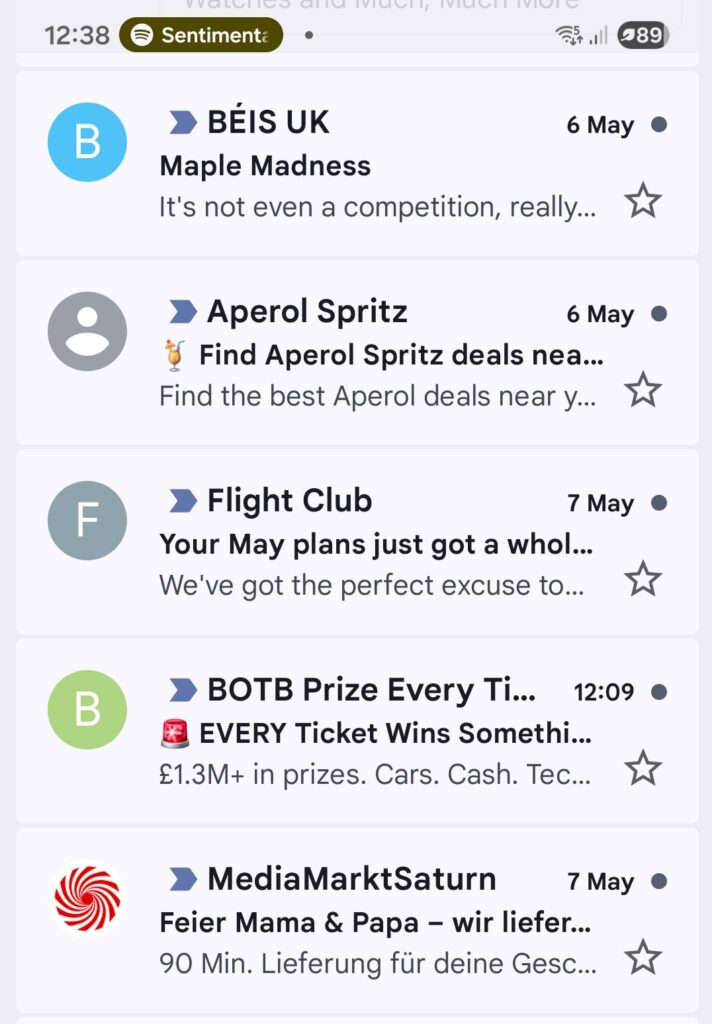
- From Recency to Relevance: By sorting emails based on engagement signals rather than recency, Gmail effectively creates a hierarchy. Senders whose emails consistently garner opens, clicks, and replies will be featured more prominently, increasing their chances of being seen and opened. Conversely, campaigns that receive low engagement will be relegated to the bottom, entering a "vicious circle" of decreased visibility and further reduced engagement. This change significantly pressures generic, broad-brush broadcast campaigns.
- Strategies for Enhanced Visibility: The obvious response is to prioritize sending to truly engaged Gmail segments and aggressively suppress inactive subscribers who only serve to dilute relevance scores. Marketers should segment their Gmail recipients based on recent engagement (e.g., opens or clicks within the last 90-180 days) and define more aggressive suppression thresholds for those who consistently fail to engage. Implementing dynamic content, advanced personalization, and A/B testing subject lines and preview text can also help improve initial engagement signals, pushing emails higher in the tab. Focusing on unique, compelling content that encourages interaction is paramount.
-
Auto-Annotations and the Preview Paradox: Delivering Value at a Glance
Gmail’s ability to automatically extract and display key information from promotional emails, even without explicit markup, presents a new challenge and opportunity.- Pre-Opened Insights: A Double-Edged Sword: Subscribers can now see headline offers, product images, and promotional codes directly in the Promotions tab preview. While this delivers value instantly, it removes the incentive to open the email if the core message is conveyed upfront. For simple discount codes or clear value propositions, the email might have "done its job" without an open being recorded.
- Mastering Annotations for Impact: Marketers are advised to move beyond relying on automatic extraction by actively implementing Gmail’s Annotations markup schemas. This gives senders full control over the content displayed in previews, allowing for strategic presentation of deals, expiration dates, and engaging visuals (single image previews, product carousels, deal cards). Experimenting with offers that require a click to reveal full details or activate a promotion, rather than simply surfacing a discount code in the preview, can help drive traffic back into the email or website, providing a more robust engagement signal than an open alone.
-
Subscriptions Manager: Empowering User Choice
The Subscriptions Manager, rolled out in mid-2025, offers users unprecedented control over their incoming marketing emails.- Simplifying Unsubscribes, Refining Lists: By listing all marketing senders and their frequency, and allowing one-click unsubscribes without opening an email, this feature streamlines the process of list cleansing. While it may lead to initial list shrinkage, the remaining subscribers are more actively engaged, leading to a healthier and more responsive email list in the long run. The impact on open rates, in this context, is primarily from having a smaller, but higher-quality, active list.
- Optimizing for Subscriber Retention: Brands with high sending frequency (daily or near-daily) should critically evaluate if their cadence can be reduced without negatively impacting revenue. Over-mailing is a primary driver for visibility in the Subscriptions Manager and subsequent unsubscribes. Additionally, for brands using multiple "From" addresses for different content streams, ensuring each address has a unique List-Unsubscribe header is crucial. This allows subscribers to opt down from specific content types (e.g., daily deals vs. weekly newsletters) rather than triggering a blanket removal from all communications, preserving some level of engagement.
-
AI-Generated Email Summaries: The Essence of the Message
The introduction of AI-generated email summaries in January 2026 marks another step towards an AI-curated inbox.- Content at a Glance: Opportunities and Challenges: These 1-2 sentence snippets, displayed automatically upon email opening, aim to distill the core message. While potentially helpful for users, they pose a challenge to traditional open rate metrics. If a subscriber gains sufficient information from the summary, their motivation to read the full email diminishes. The question of whether these summaries inflate open rates by auto-opening emails for processing remains a point of debate within the industry.
- Crafting Summary-Ready Content: To maximize impact, marketers should front-load the most important content and calls to action in the opening lines of the email body. Since AI extracts from the earliest readable text, ensuring the first few sentences clearly convey value and a next step is vital. The goal should be for the summary to act as a compelling hook that drives a click, not a replacement for full engagement. Clear, concise, and value-driven introductory content will be key.
-
Gemini Integration: Conversational Inbox Management
The January 2026 Gemini integration further empowers users to interact with their inbox through natural language.
- The AI-Powered Search Revolution: Gemini allows subscribers to perform conversational searches across their entire email history, compiling answers from multiple messages without needing to open them individually. For instance, a user could ask for all active discount codes for a particular product category and receive a curated list. This represents a significant shift in how users can extract information and value from emails without generating traditional open signals.
- Structuring Content for AI Discovery: Marketers whose emails contain time-sensitive offers or specific information that users might search for must optimize their content for AI extraction. This involves using clear deadlines, named actions, structured data markup (like Schema.org for emails), and clean, semantic HTML. The goal is to make the email’s core information easily digestible and extractable by AI. Senders should also closely monitor the ratio of opens between highly engaged and lapsed segments, as this feature is expected to disproportionately impact low-engagement senders, further reducing human interaction and potentially exacerbating disengagement.
-
Message Clipping: The Unseen Obstacle
While not a new development, Gmail’s message clipping policy remains a critical factor impacting open rates and overall email effectiveness.- HTML Size Matters for Visibility: Gmail typically clips messages with HTML file sizes exceeding 1,024 bytes. Content beyond this threshold is not displayed unless the user explicitly clicks "View entire message." Many senders inadvertently place their open tracking pixel or crucial calls to action at the very end of their email HTML. If the message is clipped, this pixel may never trigger, leading to an unrecorded open.
- Ensuring Full Message Delivery and Tracking: Marketers must integrate message clipping into their pre-send QA processes. Tools exist to check HTML file size and ensure it stays below Gmail’s 1KB threshold. Crucially, the open tracking pixel should be placed as early as possible within the HTML file—ideally within the
<body>tag but before extensive content—to maximize its chances of firing even if the rest of the email is clipped. Furthermore, important elements like unsubscribe links, which are often in footers, should be considered for more prominent placement or ensuring the overall HTML size prevents clipping, to maintain legal compliance and subscriber trust, thereby avoiding spam complaints.
-
Gmail Address Change Feature: Adapting to Subscriber Mobility
Gmail’s address change capability, which allows users to seamlessly update their email address while maintaining their Google account, introduces another layer of complexity for marketers.- The Fluidity of Email Identities: When a user changes their primary Gmail address, marketing emails sent to the old address will no longer reach an active, human-readable inbox. This directly reduces opens from those legacy addresses. Marketers should not expect replacement opens from the new address, as the subscriber might have changed addresses specifically to reduce email clutter or stop receiving marketing communications entirely.
- Proactive List Hygiene and Relationship Building: Senders must diligently monitor for hard bounces and sustained non-engagement from previously active Gmail addresses, as these can be indicators of an address change. Robust engagement-based suppression thresholds will automatically filter out these newly inactive addresses. Beyond email, developing strategies for relationship building that transcend the email address itself becomes paramount. This includes leveraging loyalty programs, implementing first-party identity resolution systems, and progressive profiling to gather alternative contact information or understand broader subscriber preferences, ensuring continued engagement even if the primary email address changes.
-
The Purchases Tab: Transactional vs. Promotional Clarity
The dedicated Purchases view, introduced in late 2025, while beneficial for users tracking orders, poses a potential deliverability challenge for marketers.- Avoiding Misclassification: This tab is intended for order confirmations, shipping updates, and delivery notifications. However, marketing emails that contain content heavily focused on delivery policies, product reviews linked to a recent purchase, or similar themes can be inadvertently classified as purchase-related and routed there. This can significantly depress open rates for promotional content, as subscribers do not expect to find marketing messages in a transactional tab. It can also erode trust if recipients haven’t recently purchased anything from the brand yet find promotional emails in this section.
- Strategic Segmentation for Trust and Deliverability: To mitigate this, senders must rigorously audit their email content to ensure promotional emails are not inadvertently misclassified. The most effective approach is to maintain clear separation between transactional and promotional email streams. This involves using distinct "From" addresses, dedicated sub-domains, different subject line conventions, and content structures for each type of communication. Crucially, avoid embedding promotional content within transactional emails, not only to ensure correct routing but also to uphold subscriber trust and maintain legal compliance, as many jurisdictions have strict rules about the primary purpose of an email.
-
Inactive Accounts Policy: The Ultimate List Cleanse
Google’s policy on inactive accounts serves as a final, critical reminder for list hygiene.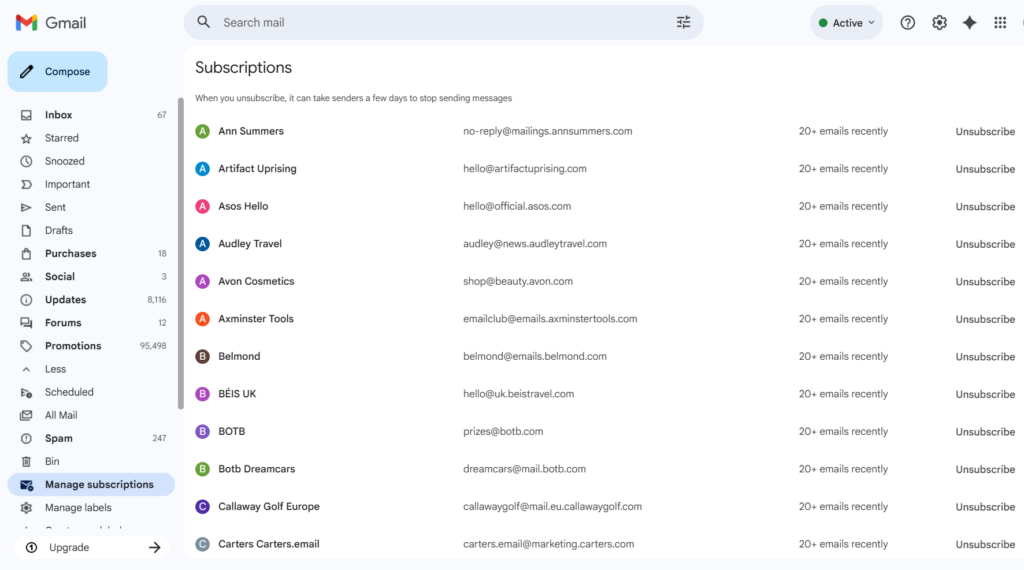
- Google’s Stance on Dormancy: Google reserves the right to delete accounts that have been inactive for two years or more. Activity is broadly defined and includes reading or sending emails, using Google Drive, watching YouTube videos, sharing photos, downloading apps, using Google search, or signing into a third-party app or service with the Google account. Naturally, an email address associated with a deleted account will hard bounce, and an inactive account will not be opening emails.
- Maintaining an Active Subscriber Base: While this policy is a measure of last resort by Google, marketers should view it as a reinforcement of best practices. It should be a given that email marketers are suppressing addresses long before they approach 24 months of inactivity. Implementing aggressive re-engagement campaigns and then removing subscribers who remain unengaged after a shorter period (e.g., 6-12 months) is a standard recommendation to maintain list health, improve deliverability, and ensure that email efforts are focused on a responsive audience. This policy underscores the imperative of continuous list hygiene.
Broader Implications: The Future of Email Marketing
The seismic shifts within Gmail are not isolated technical adjustments; they represent a fundamental redefinition of email marketing effectiveness. The collective impact of stricter enforcement, engagement-sorted inboxes, AI summaries, and enhanced user control points to a future where genuine value and user experience dictate success.
- The Mandate for Hyper-Personalization: Generic, batch-and-blast emails are increasingly becoming relics of the past. The engagement-sorted Promotions tab and AI-driven content extraction demand that every email feel tailored and relevant to the individual recipient. Marketers must invest in advanced segmentation, dynamic content, and predictive analytics to deliver highly personalized experiences that resonate with individual preferences and behaviors.
- Data-Driven Decisions Beyond Open Rates: The decline in reported open rates necessitates a pivot towards more meaningful metrics. Clicks, conversions, website visits, time spent on landing pages, and ultimately, revenue attribution, will become the true north stars for measuring email campaign success. Marketers need robust analytics platforms that can track the entire customer journey, linking email interactions to tangible business outcomes, rather than relying on an increasingly unreliable "open" metric.
- The Imperative of User Experience: Google’s overarching strategy is clear: provide a superior, less cluttered, and more controlled inbox experience for its users. Marketers who align with this philosophy—by sending wanted, relevant, and well-designed emails—will be rewarded with better inbox placement and engagement. This means respecting user preferences, making unsubscribing easy, and consistently delivering high-quality, valuable content. The email channel is evolving from a broadcast medium to a more conversational and personalized interaction hub.
Conclusion: Evolving, Not Depressed
Gmail is not "depressed" or "broken"; it is strategically evolving to meet the demands of a more privacy-conscious and AI-driven digital landscape. The current turbulence in open rates is not a signal to panic, but rather a clarion call for email senders to sharpen their strategies, prioritize genuine engagement quality over sheer volume, and ensure their compliance house is in impeccable order. The era of optimizing for vanity metrics like inflated open rates is drawing to a close. Success in this new environment will belong to those who embrace Google’s vision for a cleaner, more relevant inbox, focusing on building authentic relationships with subscribers and delivering demonstrable value through every communication. For marketers looking to navigate these changes effectively, staying abreast of these developments and adopting a user-centric, data-driven approach will be critical for long-term success.


 Ammar Sabilarrohman
 Asro
Asro