

The digital commerce landscape has reached a critical inflection point where the traditional reliance on simple A/B testing is no longer sufficient to drive sustainable growth. While split testing has served as the bedrock of Conversion Rate Optimization (CRO) for over two decades, industry data suggests that an over-reliance on this single methodology is creating a "maturity ceiling" for marketing and product teams. As organizations strive to navigate increasingly complex consumer behaviors and tightening margins, the shift from tactical UI tweaks to strategic, research-driven experimentation is becoming a prerequisite for market leadership.
The Rise and Consolidation of the Testing Default
The ascent of A/B testing as the primary tool for digital decision-making was driven by the democratization of experimentation platforms. Tools such as FigPii, Optimizely, and VWO transformed a once-complex statistical process into a streamlined workflow, allowing non-specialists to launch variants with minimal friction. This ease of use fostered a corporate culture where "experimentation" became synonymous with "A/B testing," often at the expense of more nuanced analytical methods.
This cultural shift was further cemented by high-profile success stories from Silicon Valley. Microsoft’s Bing team famously illustrated the potential of incremental changes when they discovered that merging two ad title lines into a single headline generated more than $100 million in additional annual revenue. Similarly, Google’s legendary "41 shades of blue" test—though often mocked for its granularity—validated the idea that even the smallest aesthetic choices could have massive financial implications when applied at scale. Today, Microsoft executes more than 20,000 controlled experiments annually across its Bing ecosystem, a volume that has set a daunting benchmark for the rest of the industry.
However, analysts point out that the success of "Big Tech" is often a poor blueprint for the average enterprise. The massive traffic volumes enjoyed by search engines and social media giants provide the statistical power necessary to detect minute fluctuations in behavior—a luxury most e-commerce brands do not possess.
The Statistical Bottleneck: Why Simple Tests Fail Most Brands
The primary challenge facing modern CRO programs is the lack of statistical power. For an A/B test to yield a reliable "winner," the sample size must be large enough to distinguish a genuine change in behavior from random noise. Industry statistics reveal a startling reality: approximately 77% of all digital experiments are simple A/B tests involving only two variants. Despite this preference for simplicity, many teams are operating in a "data desert."
To detect a modest 1% to 2% lift in conversions with statistical confidence, a website typically requires hundreds of thousands, if not millions, of visitors per variant. For the vast majority of e-commerce sites—even those recording one to two million sessions per month—achieving this level of certainty can take upwards of three months. This lag creates several "failure modes" within organizations:
- The Velocity Trap: Teams run tests for too short a duration, resulting in "false positives" where a temporary spike is mistaken for a permanent win.
- The Inconclusive Loop: Tests are ended early because they fail to reach significance, leading to a "no-result" culture that discourages further investment.
- The Micro-Gain Plateau: Teams focus exclusively on tiny changes (button colors, font sizes) because these are the only elements that move the needle quickly, even if the impact on the bottom line is negligible.
The Problem of Survivorship Bias in Funnel Analysis
A significant limitation of A/B testing is its inherent focus on what happened rather than why it happened. This is often compared to the World War II phenomenon of survivorship bias. During the war, the military analyzed bullet holes in returning aircraft to determine where to add armor. They initially focused on the areas with the most holes until statistician Abraham Wald noted that they were only looking at the planes that survived. The planes hit in the engines and cockpits never returned to be analyzed.
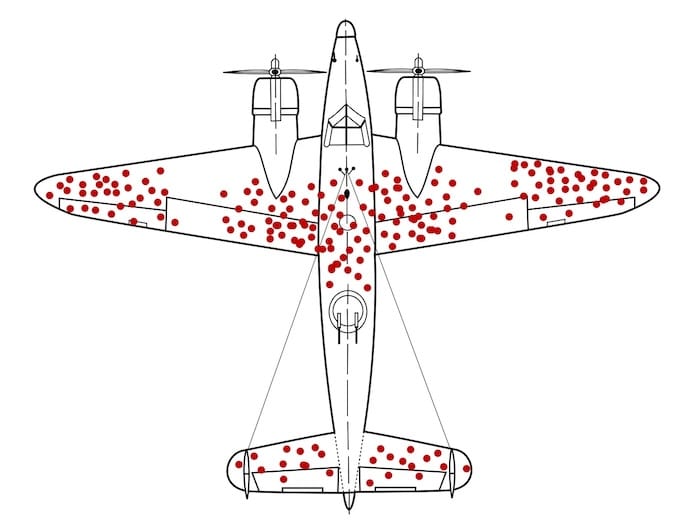
In the context of a digital funnel, A/B tests provide data on the "survivors"—the users who interacted with the site and moved toward a conversion. They offer little to no insight into the "non-survivors"—the users who were so alienated by the navigation, pricing, or value proposition that they exited the site entirely. By focusing only on the visible behavior of converters, teams risk reinforcing the wrong parts of the user experience while leaving fundamental vulnerabilities unaddressed.
Short-Term Uplifts vs. Long-Term Business Health
A growing concern among financial analysts is the misalignment between A/B test "wins" and long-term business health. Most tests are optimized for immediate actions: clicks, add-to-carts, or same-session purchases. However, these metrics can be deceptive.
Data indicates that over 90% of experiments focus on just five primary metrics, with CTA clicks accounting for 34.8% of all primary goals. Yet, these metrics often have the lowest expected impact on actual business value. For instance, a variant that uses "dark patterns" or aggressive urgency cues might increase immediate checkouts but lead to a surge in product returns, negative reviews, and a collapse in Customer Lifetime Value (LTV).
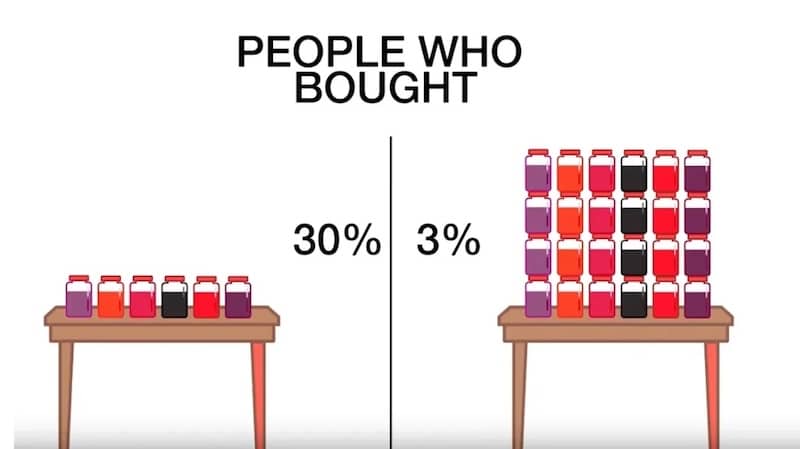
The "Jam Experiment" conducted by psychologists remains a relevant cautionary tale for digital marketers. The study found that while a display of 24 jams attracted more initial interest than a display of six, the smaller selection resulted in a ten-fold increase in actual purchases. In the digital space, a variant that increases engagement or "clicks" may actually be creating choice overload or confusion, ultimately suppressing the long-term profitability of the brand.
The Transition to High-Maturity Experimentation
To break through the limitations of traditional split testing, high-maturity organizations are adopting a more diversified experimentation toolkit. Rather than forcing every question into a binary A/B format, these teams match the methodology to the specific business problem.
1. Advanced Methodologies
- Sequential Testing: Allows teams to monitor results in real-time and stop tests as soon as a significant result is reached, increasing testing velocity.
- Holdout Groups: A small percentage of users is kept away from all new features or changes for an extended period (months or quarters). This allows the business to measure the cumulative impact of its experimentation program on long-term retention and LTV.
- Switchback Testing: Often used in marketplaces or logistics (like Uber or DoorDash), this method alternates treatments over time windows rather than split-testing users, preventing "network effects" from contaminating the data.
- Quasi-Experiments: Used when a clean split is impossible, such as testing the impact of a TV ad campaign or a regional pricing change.
2. Research-Driven Hypotheses
Mature teams have moved away from "opinion-based" backlogs. Instead, they ground every experiment in a four-part hypothesis: "Because [Evidence from Research], we believe [Specific User Problem], so we will [Specific Change], and expect [Metric Impact] to occur."
Evidence is gathered from a variety of qualitative and quantitative sources, including:
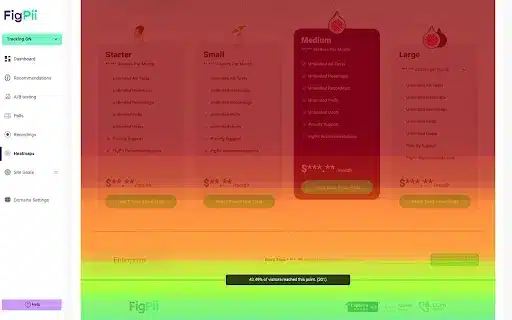
- Customer Support Logs: Identifying recurring friction points in the post-purchase journey.
- Session Recordings: Observing where users physically hesitate or "rage click" on a page.
- Exit Surveys: Capturing the "why" behind cart abandonment in the moment it happens.
- Heuristic Evaluations: Using UX experts to identify violations of standard usability principles.
3. Testing "Big Levers"
Instead of cosmetic UI changes, leaders focus on "Big Levers"—structural changes that alter how a consumer perceives the value of a product. This includes testing different pricing models (subscription vs. one-time), bundle configurations, shipping thresholds, and core value propositions. While these tests are higher risk, they are also the only ones capable of producing the double-digit growth required to outperform competitors.
Implications for the Future of E-commerce
As the cost of customer acquisition (CAC) continues to rise across social and search channels, the ability to maximize the value of existing traffic has become a survival trait. The "A/B testing trap"—running endless, low-impact tests on a fundamentally broken experience—is a luxury that modern brands can no longer afford.
The industry is moving toward a "Full-Stack Experimentation" model where data science, user research, and business strategy converge. In this new paradigm, the goal of an experiment is not just to find a "winner," but to generate "institutional knowledge." Even a losing test is considered a success if it provides a deep understanding of why customers behave the way they do.
For organizations looking to evolve, the path forward involves a rigorous audit of current processes. This includes re-evaluating primary metrics to ensure they align with profitability rather than just engagement, investing in qualitative research to fuel the testing pipeline, and embracing a broader range of statistical models. The era of "testing for the sake of testing" is ending; the era of strategic, high-leverage experimentation has begun.







