Lightspeed eCom, once a robust solution for brick-and-mortar retailers seeking to integrate their physical and online sales channels, is no longer available as a standalone product. It has been absorbed into the broader Lightspeed Retail ecosystem, with pricing starting at $89 per month for its basic annual plan. While this integrated approach offers advantages for businesses with complex multi-location retail operations and advanced inventory management needs, many users find its cost prohibitive and its online storefront capabilities lacking compared to dedicated e-commerce platforms. This has led a significant number of businesses to seek alternatives that offer more flexibility, better online-centric features, and more predictable pricing structures.
For retailers grappling with the limitations of Lightspeed eCom, particularly its escalating costs with additional locations and registers, and its less advanced online storefront tools, exploring alternative platforms is a logical next step. The landscape of e-commerce solutions is vast, offering a spectrum of features designed to cater to diverse business needs. This article delves into five leading Lightspeed eCom alternatives, meticulously evaluated based on pricing, sales features, point-of-sale (POS) integration capabilities, design flexibility, and overall ease of use. The aim is to equip businesses with the knowledge to make an informed decision and transition to a platform that best aligns with their growth objectives and operational requirements.
Shopify: The All-Round Champion for Unified Commerce
Shopify emerges as the top recommendation for businesses seeking a seamless transition from Lightspeed eCom. It effectively replicates the core strength of Lightspeed’s unified online-and-in-store model but with a distinctly online-first architecture. This foundational difference translates into a more robust and sophisticated suite of online storefront tools, a richer app ecosystem, more appealing design templates, and a more transparent pricing model.
Key Features and Benefits:
- Unified Commerce: Like Lightspeed, Shopify allows for a single inventory and customer database to manage both online and in-store sales, minimizing discrepancies and streamlining operations.
- Online-Centric Design: Shopify’s platform was built with the online experience at its core, offering superior tools for website design, checkout optimization, and digital marketing.
- Extensive App Ecosystem: The Shopify App Store boasts an unparalleled selection of third-party applications, enabling businesses to extend functionality for virtually any need, from advanced marketing automation to specialized inventory management.
- Predictable Pricing: While costs can accumulate with add-ons, Shopify’s tiered pricing structure is generally more predictable than Lightspeed’s, especially for businesses prioritizing their online presence.
Potential Drawbacks:
- Section-Based Editor: Shopify’s website editor relies on a section-based approach rather than a free-form drag-and-drop interface. While efficient for many, design-focused users requiring pixel-level control might find it somewhat restrictive.
- Cost Escalation: Although the entry price is competitive, the overall cost can increase significantly when factoring in premium themes, essential paid apps, and the POS Pro add-on for advanced in-store functionalities.
Pricing Structure:

Shopify offers a tiered pricing model designed to scale with business growth:
- Starter: $5/month (billed annually) – Basic selling via social media or messaging apps.
- Basic: $29/month (billed annually) – Ideal for new businesses, includes online store, basic POS, and core features.
- Shopify POS Pro: An additional $79/month per location for advanced in-store features.
- Grow: $79/month (billed annually) – Enhanced reporting, international selling, and more staff accounts.
- Advanced: $299/month (billed annually) – Advanced reporting, third-party calculated shipping rates, and more staff accounts.
- Shopify Plus: Custom pricing for enterprise-level businesses.
Analysis: For businesses migrating from Lightspeed eCom, Shopify presents the most direct and capable replacement. It offers the crucial online-and-in-store integration while significantly enhancing the online sales capabilities and providing a more expansive ecosystem for future growth. The initial cost savings compared to Lightspeed Retail are substantial, though the need for POS Pro to match Lightspeed’s in-store feature set can bring the total cost closer, especially for single-location operations.
Square Online: The Budget-Conscious Retailer’s Haven
For businesses where cost is the primary driver for leaving Lightspeed, Square Online presents an exceptionally attractive proposition. Its genuinely free e-commerce plan, coupled with Square’s free POS software, allows small retailers to operate both online and in-store with minimal overhead, essentially only incurring payment processing fees.
Key Features and Benefits:
- Free E-commerce Plan: A significant advantage, offering unlimited product listings, local pickup/delivery options, and essential e-commerce functionalities without a monthly subscription fee.
- Seamless POS Integration: Effortlessly syncs with Square’s robust free POS system, providing a unified view of sales across channels.
- Simplicity of Use: Known for its user-friendly interface, Square Online makes it easy for small businesses to set up their online store and manage operations.
Potential Drawbacks:
- Limited Design Options: The aesthetic customization options are more restricted compared to other platforms, which may not appeal to brand-conscious businesses.
- Smaller App Ecosystem: The range of third-party integrations is more limited than that of Shopify or BigCommerce.
- Branding on Free Plan: The free plan displays Square branding and does not support custom domain names, which can impact brand perception.
- Basic Inventory Management: If migrating from Lightspeed’s advanced inventory features, Square’s tools may feel insufficient for businesses with complex stock management needs.
Pricing Structure:
- Free: $0/month – Includes unlimited products, Square branding, and Square-branded domain.
- Plus: $29/month (billed annually) – Adds custom domain, removes Square ads, abandoned cart recovery, and advanced item options.
- Premium: $79/month (billed annually) – Offers lower processing rates, real-time shipping rates, and priority support.
Analysis: Square Online is an excellent entry point for small businesses, cafes, and service providers seeking an affordable way to establish an online presence while retaining in-store sales capabilities. The cost savings are undeniable, making it a compelling alternative for those whose primary concern is reducing monthly expenditure. However, businesses with large or complex product catalogs, or those requiring sophisticated inventory control, may find Square Online’s offerings too basic in the long run.

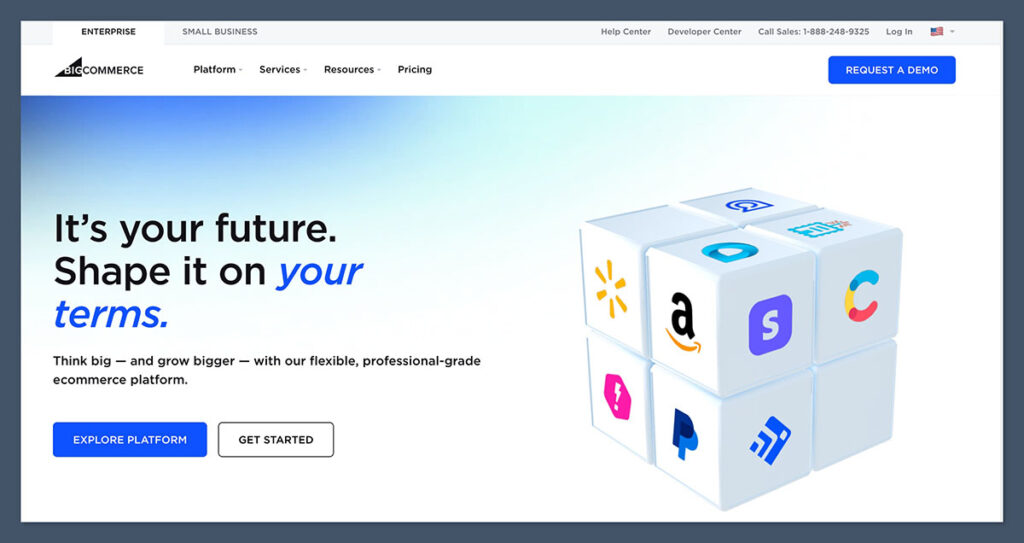
BigCommerce: Powering Large Catalogs and Growing Stores
BigCommerce stands out as the premier choice for retailers managing extensive product catalogs and anticipating significant growth. It comes equipped with a wealth of built-in e-commerce features, including advanced product variants, faceted search, multi-currency support, and B2B functionalities, which often require costly add-on apps on other platforms. A significant advantage is its policy of charging zero platform transaction fees, regardless of the payment gateway used.
Key Features and Benefits:
- Rich Built-in Features: Eliminates the need for numerous paid apps by including advanced features like product filtering, bulk pricing, and international selling tools out-of-the-box.
- Zero Transaction Fees: A major cost-saving factor for high-volume sellers, as BigCommerce does not impose its own transaction fees.
- Scalability: Designed to handle large product inventories and high traffic volumes, making it ideal for growing businesses.
- Strong SEO Capabilities: Offers robust tools for search engine optimization to help businesses improve their online visibility.
Potential Drawbacks:
- No Native POS: BigCommerce lacks an integrated POS system. Businesses requiring in-store sales will need to rely on third-party integrations, which can add complexity and cost.
- Annual Sales Thresholds: Each pricing tier has an annual sales limit. Exceeding this threshold automatically pushes businesses to a higher, more expensive plan, which can be a concern for rapidly scaling operations.
- Less Polished Editor: While powerful, the design editor may not be as intuitive or visually refined as those offered by Wix or Shopify, particularly for users prioritizing aesthetics over functionality.
Pricing Structure:
- Standard: $29/month (billed annually) – Supports up to $50,000 in annual online sales.
- Plus: $79/month (billed annually) – Supports up to $180,000 in annual online sales, includes abandoned cart recovery.
- Pro: $299/month (billed annually) – Supports up to $400,000 in annual online sales, includes advanced features and priority support.
- Enterprise: Custom pricing for businesses with higher sales volumes and specific needs.
Analysis: For Lightspeed users whose online store is their primary sales channel and who manage a large and diverse product inventory, BigCommerce offers a powerful and cost-effective solution. The abundance of built-in features reduces reliance on expensive app subscriptions, and the absence of transaction fees is a significant financial benefit for high-turnover businesses. The primary consideration is the lack of a native POS, which requires careful planning for businesses with a strong in-store component.
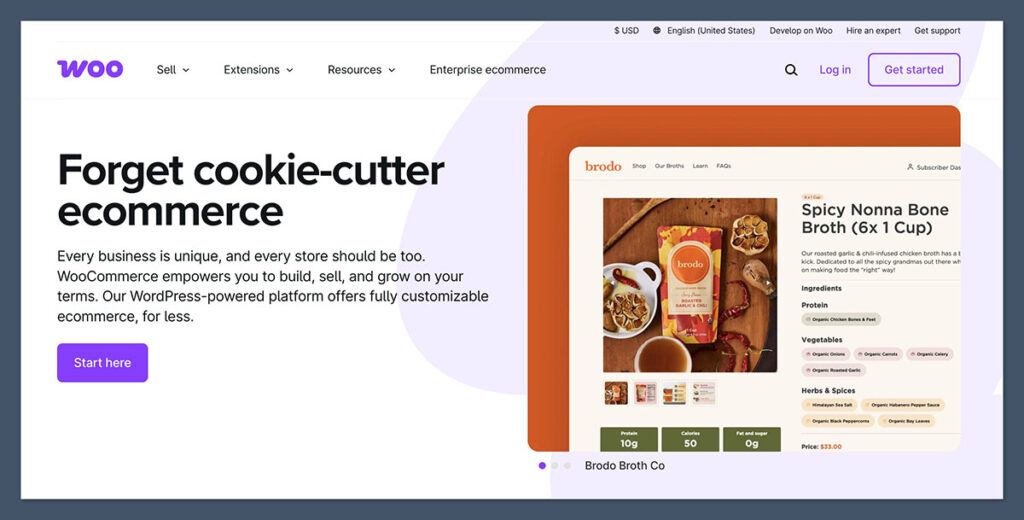
WooCommerce: The Pinnacle of Customization for WordPress Users
WooCommerce stands as the most flexible and customizable platform on this list, offering complete control over a store’s code and data. Built on the ubiquitous WordPress content management system, it is the natural choice for businesses already invested in the WordPress ecosystem or those who demand absolute control over their website’s design, SEO, and functionality.

Key Features and Benefits:
- Unrivaled Flexibility: Provides complete freedom to customize every aspect of the online store, from design to complex custom functionalities.
- Full Ownership and Control: Businesses own their data and code, offering long-term independence from platform dictates.
- Vast Plugin Ecosystem: Leverages the extensive WordPress plugin directory, allowing for near-limitless expansion of features.
- Cost-Effective for Tech-Savvy Users: The core plugin is free, and costs are primarily associated with hosting, themes, and necessary extensions, which can be managed efficiently by those with technical expertise.
Potential Drawbacks:
- Self-Managed Infrastructure: Users are responsible for managing hosting, security, updates, and backups, which requires technical knowledge or the engagement of a managed hosting provider.
- Steeper Learning Curve: Building and maintaining a polished WooCommerce store typically demands more technical involvement than using hosted platforms.
- Cost Can Escalate: While the base plugin is free, the cumulative cost of premium themes, essential plugins (for payments, inventory, POS integrations), and hosting can become significant.
- Limited Native POS: Like BigCommerce, WooCommerce relies on extensions for POS functionality, which can vary in quality and integration depth.
Pricing Structure:
- WooCommerce Plugin: Free (Open-source)
- Web Hosting: $10 – $40 per month (shared hosting to managed WooCommerce hosting)
- Domain Name: $10 – $20 per year
- Premium Themes: $0 – $100 one-time purchase
- Paid Extensions: $49 – $299 per year per extension (e.g., subscriptions, bookings, advanced shipping, POS)
- Payment Processing (WooCommerce Payments): 2.9% + $0.30 (US cards)
Analysis: WooCommerce is the ideal solution for businesses that value ultimate control and are comfortable managing the technical aspects of their online presence. It provides a blank canvas for customization, making it perfect for unique business models or highly specific design requirements. However, the responsibility of self-management is a significant consideration, and for businesses seeking a more hands-off approach, other platforms might be more suitable.
Wix: The Beginner-Friendly Platform for Design-Led Stores
Wix positions itself as the most approachable platform for beginners, leveraging an AI-powered website builder and an intuitive drag-and-drop editor. It’s a strong contender for small businesses that prioritize visual appeal and want an all-in-one solution encompassing marketing, email, bookings, and e-commerce within a single dashboard.
Key Features and Benefits:
- Exceptional Ease of Use: The AI website builder and free-form editor make it incredibly simple to create visually appealing websites, even for those with no design experience.
- All-in-One Solution: Integrates website building, e-commerce, marketing tools, and booking systems into one cohesive platform.
- Strong Design Capabilities: Offers extensive design freedom and a vast library of templates to create a unique and attractive online presence.
- AI-Powered Builder: Expedites the initial website creation process by generating a design based on user input.
Potential Drawbacks:
- Limited E-commerce Depth: While functional for basic e-commerce, Wix’s inventory management and in-store POS tools are less robust compared to Lightspeed or Shopify.
- US-Centric POS: The Wix POS system is currently only available in the United States.
- Performance Can Suffer: For very large catalogs or complex sites, the editor and overall platform performance can sometimes feel sluggish.
- Less Scalable for Heavy E-commerce: While it can handle small to medium-sized businesses, it may not be the best long-term solution for businesses with extremely high sales volumes or complex operational needs.
Pricing Structure:
- Free: $0/month – Basic website with Wix branding and domain. No selling capability.
- Light: $17/month (billed annually) – Custom domain, no ads, basic marketing. Still no selling capability.
- Core: $29/month (billed annually) – Enables online selling, basic analytics, 50GB storage.
- Business: $36/month (billed annually) – Advanced e-commerce features, multi-currency, 100GB storage.
- Business Elite: $159/month (billed annually) – Unlimited storage, advanced developer tools, priority support.
Analysis: Wix is an excellent choice for small, design-conscious businesses that found Lightspeed eCom to be overly complex or expensive for their needs. It provides a beautiful storefront, user-friendly marketing tools, and an accessible editor at a significantly lower price point. However, its limitations in e-commerce depth and POS availability (outside the US) mean it’s best suited for businesses where the online store is a primary marketing and sales channel but not necessarily a high-volume, complex retail operation.
Key Factors to Consider When Switching
The decision to switch from Lightspeed eCom requires a thorough evaluation of specific business needs and priorities. Here are critical factors to consider:
- POS Integration: Assess the necessity of a tightly integrated POS system. If in-store sales are paramount, platforms like Shopify and Square offer robust native POS solutions.
- Pricing and Transaction Fees: Analyze the total cost of ownership, including monthly fees, transaction fees, app subscriptions, and themes. Compare how different platforms handle these costs as your business scales.
- Scalability: Consider your projected growth. Does the platform offer plans and features that can accommodate an expanding product catalog, increased sales volume, and additional store locations?
- Design Flexibility and Customization: Determine the level of design control required. Platforms like WooCommerce offer ultimate customization, while Wix excels in user-friendly visual design.
- App Ecosystem and Integrations: Evaluate the availability of third-party apps and integrations that are critical for your specific business operations, marketing, and customer management.
- Ease of Use and Learning Curve: Consider the technical expertise of your team and the time you can dedicate to learning a new platform.
- Inventory Management: If you relied on Lightspeed’s advanced inventory features, ensure the alternative platform offers comparable capabilities or that you can integrate with a dedicated inventory management solution.
- Customer Support: Research the quality and availability of customer support offered by each platform, as this can be crucial during the transition and ongoing operations.
- E-commerce Features: Beyond basic product listings, assess the availability of features like abandoned cart recovery, product variations, bulk discounts, and international selling capabilities.
- Data Migration: Understand the process and potential challenges of migrating your product catalog, customer data, and order history to a new platform.
The Migration Process: A Smooth Transition
Switching from Lightspeed eCom to a new platform is feasible, and most alternatives facilitate product catalog import via CSV files. However, a seamless migration often involves more than just product data.
The typical migration process includes:
- Data Export: Exporting product details, customer information, and order history from Lightspeed.
- Data Formatting: Cleaning and reformatting the exported data to match the import templates of the new platform.
- Data Import: Uploading the formatted data into the chosen e-commerce platform.
- Platform Configuration: Setting up payment gateways, shipping options, design elements, and other essential settings on the new platform.
- Testing: Thoroughly testing the online store, checkout process, and all integrations before going live.
For complex migrations, third-party services like Cart2Cart and LitExtension can automate much of the data transfer, including customers and order history, for a fee. It is highly recommended to run both systems in parallel for a short period to verify inventory counts and order accuracy before decommissioning the Lightspeed subscription.
Conclusion: Charting Your Course Beyond Lightspeed eCom
The decision to move beyond Lightspeed eCom is a strategic one, driven by the need for more cost-effective solutions, enhanced online storefront capabilities, and greater flexibility. While Lightspeed eCom served many businesses well, its integration into Lightspeed Retail and its associated pricing structure have prompted a significant search for alternatives.
Shopify stands out as the most robust all-around replacement for most businesses, offering a balanced blend of online and in-store functionality, a vast ecosystem, and a clear growth path. However, the best platform for your business ultimately depends on your specific needs:
- For budget-conscious retailers: Square Online offers an almost entirely free solution with seamless POS integration.
- For businesses with large product catalogs and a focus on online sales: BigCommerce provides extensive built-in features and zero transaction fees.
- For those demanding complete control and customization: WooCommerce offers unparalleled flexibility for WordPress users.
- For beginners prioritizing design and ease of use: Wix delivers an intuitive website builder and attractive storefronts.
Leveraging free trials and plans offered by these platforms is the most practical way to assess their suitability. By carefully considering the key factors outlined above and understanding the migration process, businesses can confidently transition to a platform that empowers their online and in-store success, ensuring continued growth and profitability in the competitive e-commerce landscape.