

The evolving landscape of digital commerce has placed email marketing at the forefront of customer engagement strategies. Businesses, from nascent startups to established enterprises, continually evaluate their digital toolkit, often pitting integrated website builders with email capabilities, such as Wix, against dedicated email marketing powerhouses like Mailchimp. The fundamental question isn’t merely about feature count, but rather which platform aligns with current operational needs and offers a scalable pathway for future growth as customer lists expand and marketing strategies mature. This article provides a detailed comparison of Wix Email Marketing and Mailchimp, examining their offerings across pricing, features, integrations, deliverability, and customer support, and delves into the broader implications for businesses.
At a Glance: Wix Email Marketing vs. Mailchimp
In a direct comparison, Wix Email Marketing typically presents a more compelling proposition on initial pricing and customer support accessibility, particularly for businesses already embedded within its ecosystem. Conversely, Mailchimp distinguishes itself with superior feature depth, extensive third-party integrations, and robust email deliverability mechanisms. For entrepreneurs and small businesses seeking a streamlined, all-in-one solution that keeps email marketing tightly integrated with their website, Wix emerges as a strong contender. However, for organizations anticipating the need for sophisticated automation, granular segmentation, comprehensive A/B testing, and a broader marketing technology stack, Mailchimp offers a more potent and scalable choice. This dichotomy underscores a prevalent trend in the SaaS market: the convergence of functionalities versus specialization.
A quick overview reveals key differences as of September 2026:
- Pricing (Essentials Plan): Wix leads with a slightly lower starting price at $12/month for 500 emails/month, compared to Mailchimp’s $13/month for 500 contacts and 5,000 emails/month.
- Free Plan: Mailchimp offers a more generous free tier, supporting up to 250 contacts and 500 sends/month, while Wix’s free plan is limited to 200 emails/month.
- Features: Mailchimp provides a significantly deeper feature set, including over 250 templates, A/B and multivariate testing, dynamic content, send-time optimization, predictive segmentation, and advanced marketing automation flows. Wix offers good drag-and-drop editing, 23 templates, basic automations for abandoned carts and form submissions, and segmentation, but notably lacks A/B testing for email campaigns.
- Integrations: Mailchimp boasts over 300 integrations, supporting a vast ecosystem of third-party tools. Wix’s strengths lie within its native ecosystem, integrating seamlessly with other Wix services.
- Deliverability: Mailchimp explicitly emphasizes and provides more advanced tools and guidance for deliverability, claiming a 99%+ deliverability rate. Wix offers basic stats and best practices but fewer dedicated tools.
- Customer Support: Wix offers 24/7 customer care, including live chat and callback support across its plans. Mailchimp provides tiered support, with 24/7 email and chat on paid plans, and phone support reserved for its Premium tier.
- Customer Ratings (G2, as of September 12, 2026): Mailchimp holds a slightly higher rating at 4.3/5 (from 12,987 reviews) compared to Wix’s 4.2/5 (from 1,971 reviews, covering the entire platform).
This snapshot illustrates that while Wix offers a convenient, integrated experience for its existing user base, Mailchimp remains the more specialized and feature-rich platform for dedicated email marketing efforts.
Background and Context: The Evolution of Email Marketing Platforms
The journey of email marketing platforms has seen a significant transformation over the past two decades. Initially, tools focused primarily on mass email distribution, offering simple list management and basic campaign sending. As the digital landscape matured, so too did the demands on these platforms. The rise of e-commerce, the need for personalized communication, and the explosion of data led to the development of sophisticated marketing automation, advanced segmentation, and comprehensive analytics.
Wix, originally established as a pioneering website builder in 2006, recognized the increasing need for integrated marketing tools. Its venture into email marketing is a strategic move to offer a holistic solution, allowing businesses to manage their online presence and customer communications from a single dashboard. This approach appeals to users who prioritize simplicity and a unified workflow, minimizing the need to juggle multiple subscriptions and interfaces.
Mailchimp, founded in 2001, began as an email service provider (ESP) explicitly designed for small businesses. Over the years, it meticulously built out its feature set, becoming synonymous with accessible yet powerful email marketing. Its trajectory has seen it expand beyond pure email to encompass broader marketing automation, CRM-like functionalities, and even website and landing page builders, demonstrating a push towards an all-in-one marketing platform, albeit from an email-centric starting point. The rebranding of its "customer journey builder" to "marketing automation flows" in June 2025 exemplifies its continuous evolution towards more sophisticated, data-driven marketing.
This dual evolution – website builders adding marketing functionalities and ESPs expanding into broader marketing suites – creates the compelling comparison at hand, where each platform approaches the "all-in-one" concept from a different core competency.
Pricing Models: Cost-Effectiveness and Scalability
The pricing structures of Wix Email Marketing and Mailchimp present distinct philosophies that cater to different business models and growth trajectories. Wix generally offers a more straightforward, flat-rate pricing structure, whereas Mailchimp’s model is primarily contact-based, leading to varying costs as a subscriber list grows.
-
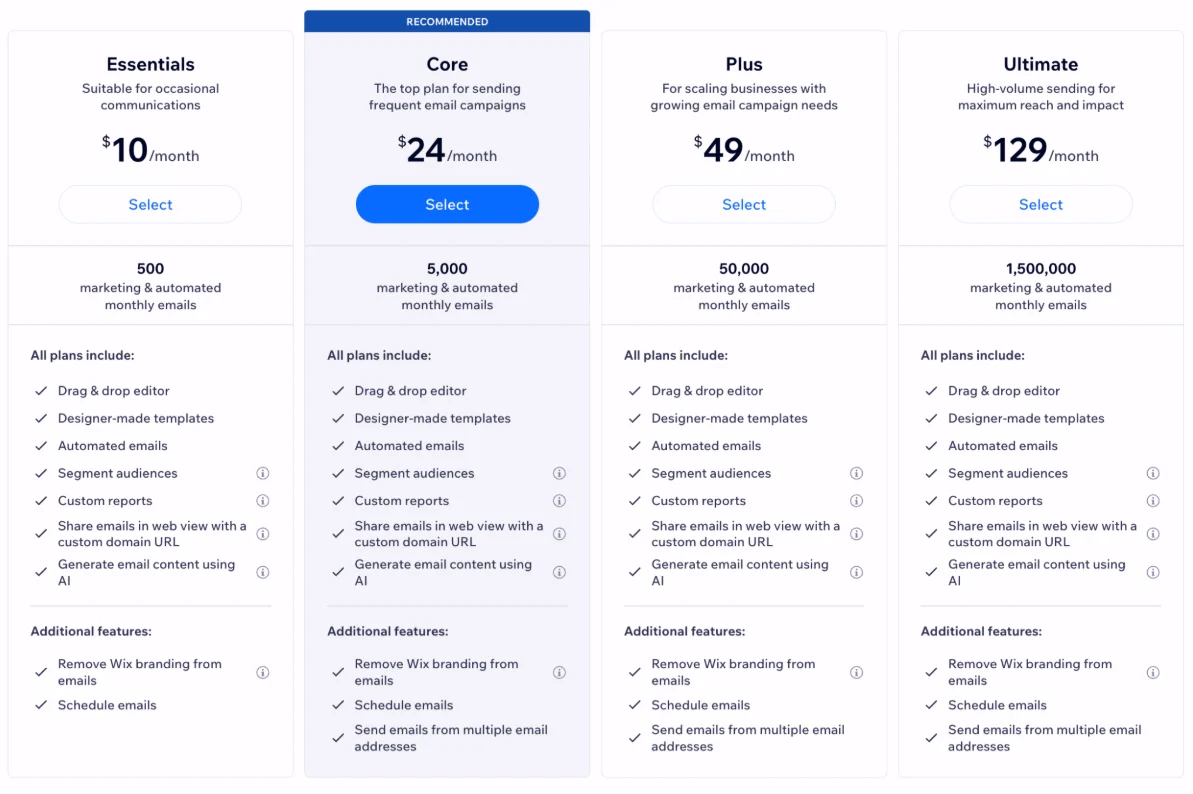
Wix Email Marketing Pricing: Wix positions itself as the more budget-friendly option, particularly at the entry and higher tiers. The Essentials plan starts at $12/month, a dollar less than Mailchimp’s comparable tier. The disparity becomes more pronounced at the Advanced (Tier 3) plan, where Wix charges $59/month for 1,000,000 emails/month, a significant difference compared to Mailchimp’s Premium plan at $350/month (or $297.50/month for the first year) for 150,000 emails/month. This flat-rate model, tied to monthly email allowances rather than contact count, makes Wix attractive for businesses with predictable sending volumes, irrespective of list size, as long as they stay within the email limit. However, exceeding the monthly email allowance means new sends stop until the balance resets or an upgrade occurs. Wix also offers a 14-day money-back guarantee, providing a risk-free trial period for paid plans.
-
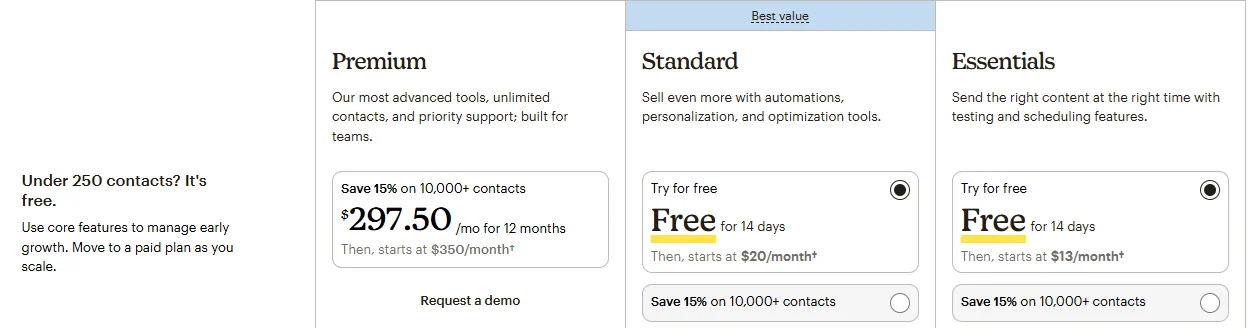
Mailchimp Pricing: Mailchimp’s contact-based pricing means costs directly correlate with the size of a business’s subscriber list. While its Essentials plan is $13/month for 500 contacts and 5,000 emails, the cost scales up considerably. The Standard plan starts at $20/month, and the Premium plan, designed for larger organizations, begins at $350/month. This model offers flexibility for campaigns where list growth is paramount, but it can become expensive if a large list is maintained without frequent, high-volume sending. Mailchimp’s free plan, supporting up to 250 contacts and 500 sends/month, is more generous than Wix’s 200 emails/month, making it a suitable starting point for nascent businesses. Mailchimp allows a two-week free trial for Standard and Essentials plans, but notably, not for the Premium tier.
Implications of Pricing: For a small business with a Wix website and a modest, stable email list, Wix’s flat-rate pricing can represent a significant cost advantage. It provides predictable expenses without the penalty of increasing contact counts. Conversely, businesses with rapidly growing lists or those requiring extensive marketing automation that justifies a higher per-contact cost may find Mailchimp’s model aligns better with their strategic investment in customer lifecycle management.
Feature Set: Depth vs. Integration
The core of any email marketing platform lies in its features. Here, Mailchimp’s specialization shines through, offering a broader and deeper array of tools compared to Wix, which focuses on providing capable, integrated functionalities.
-
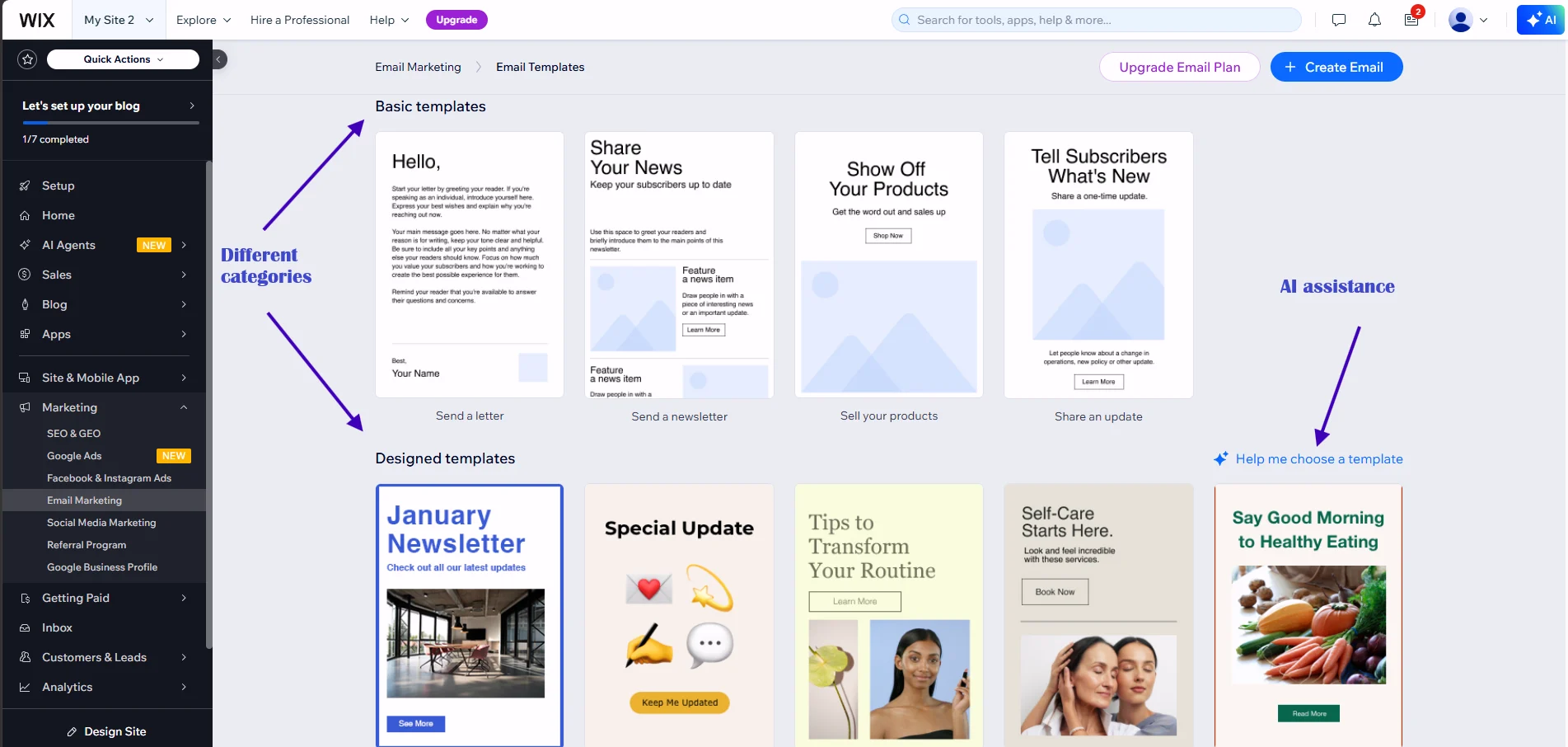
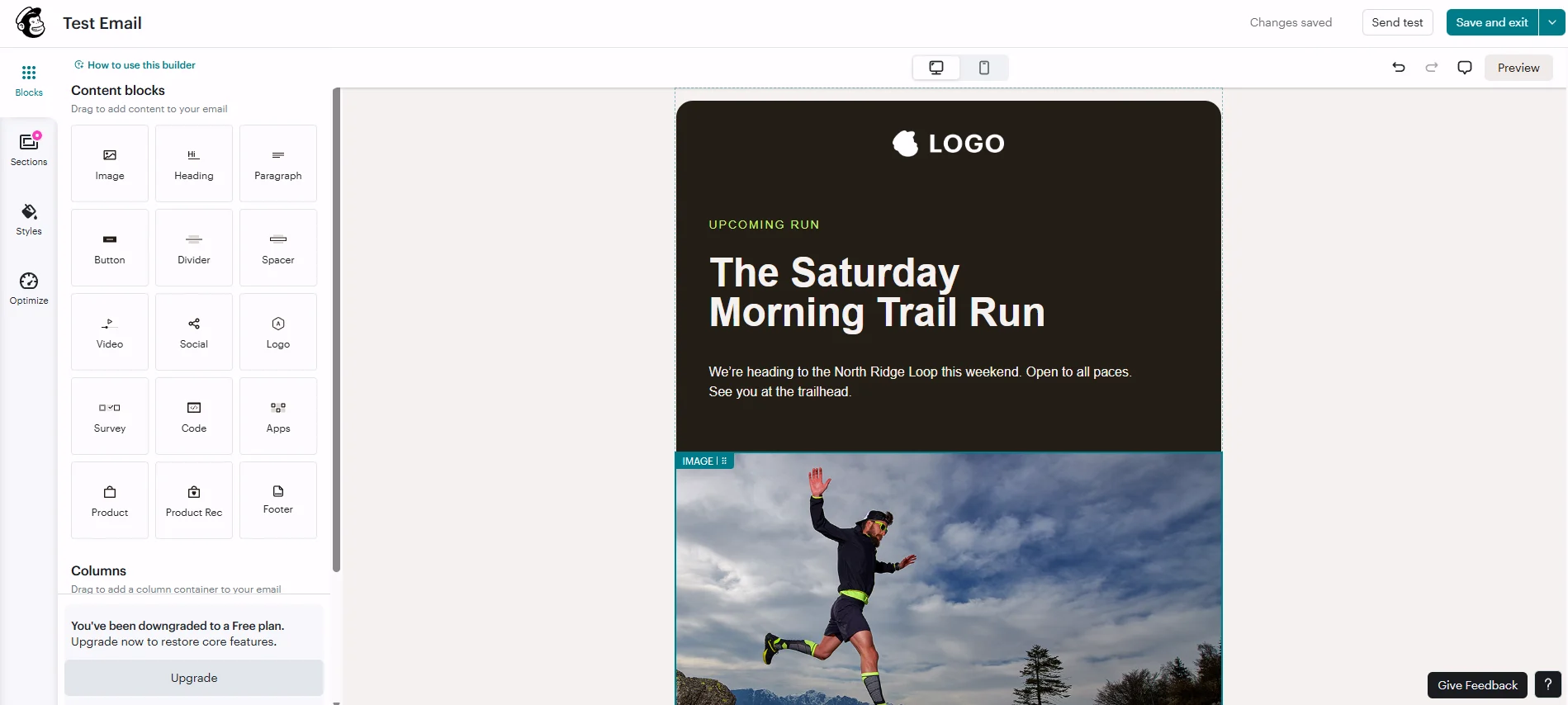
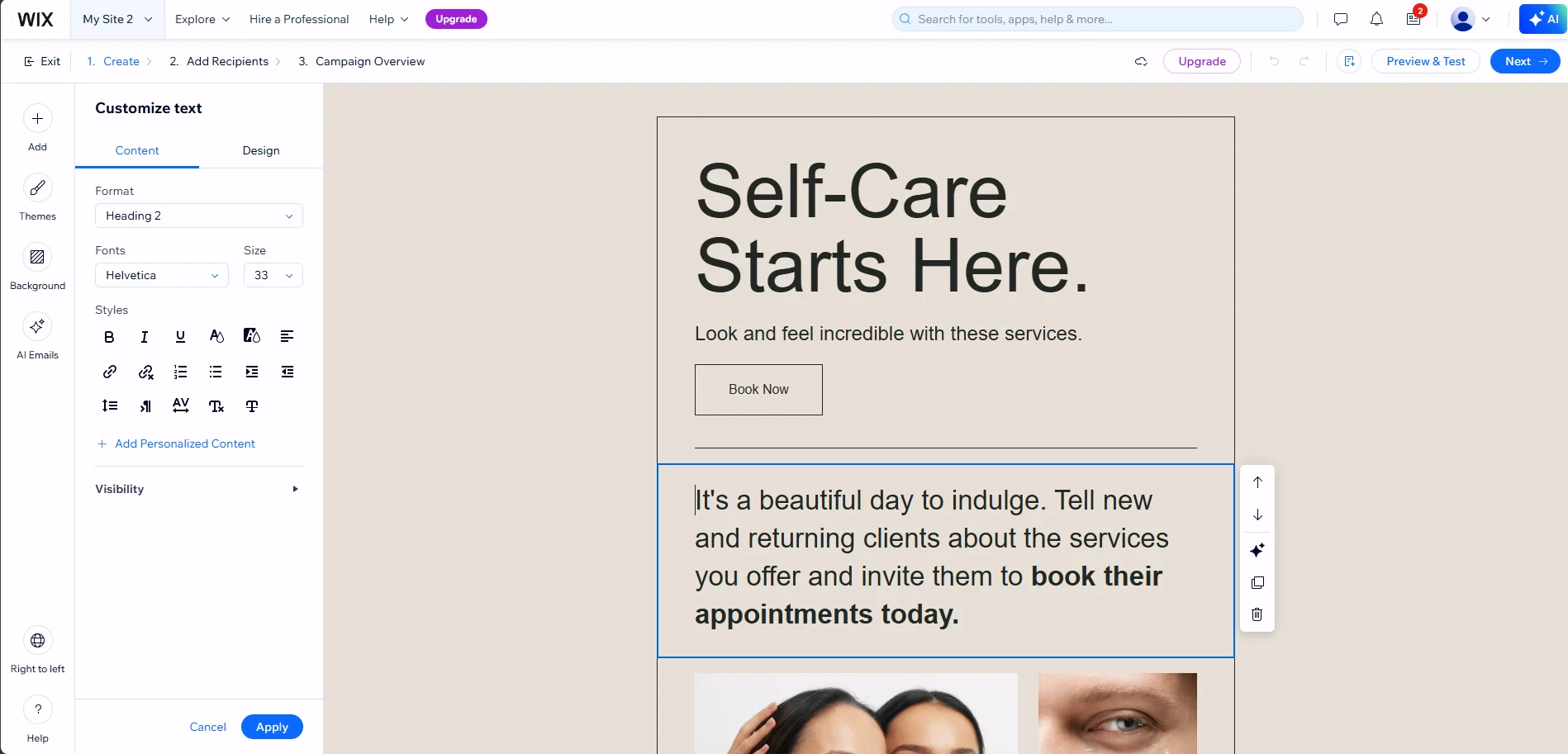
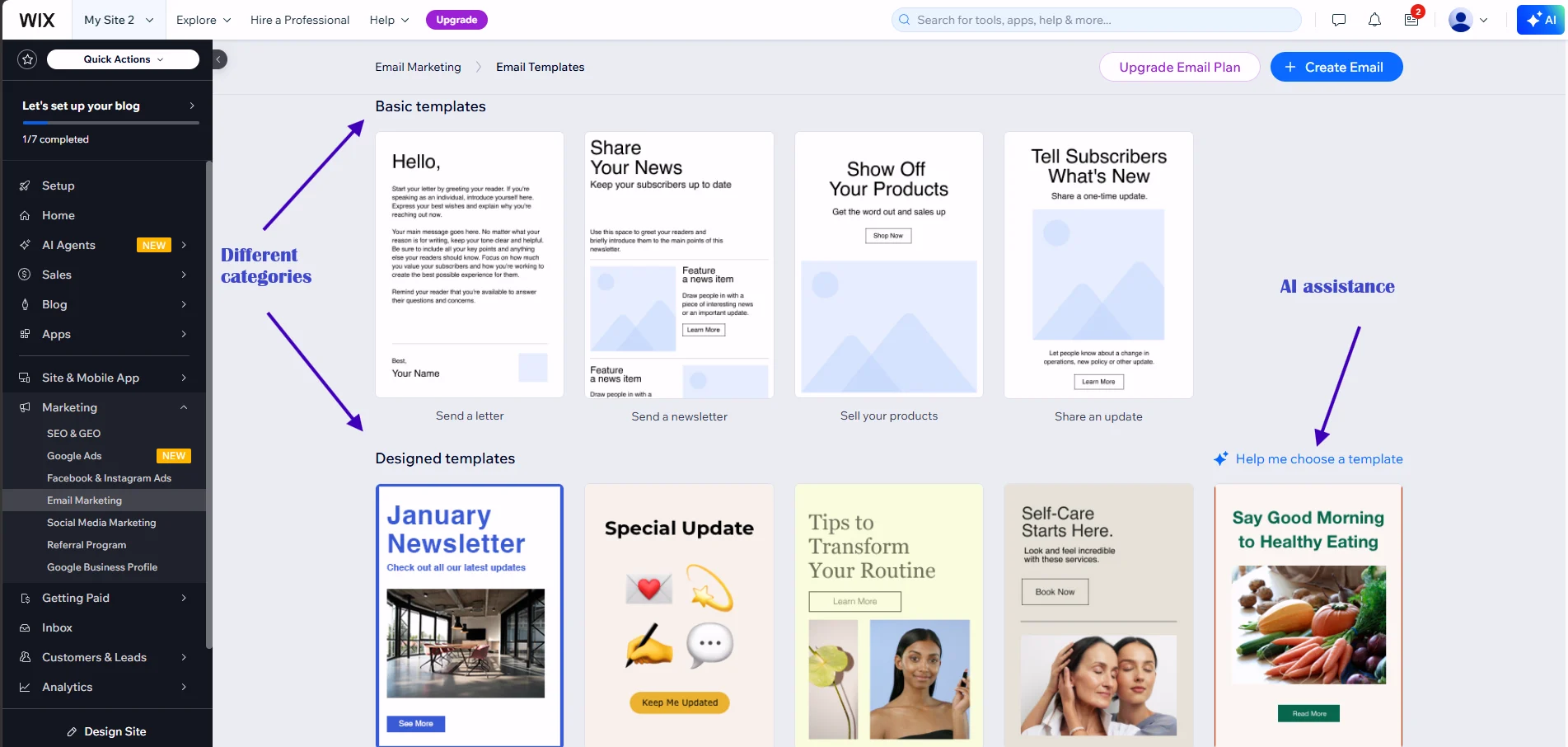
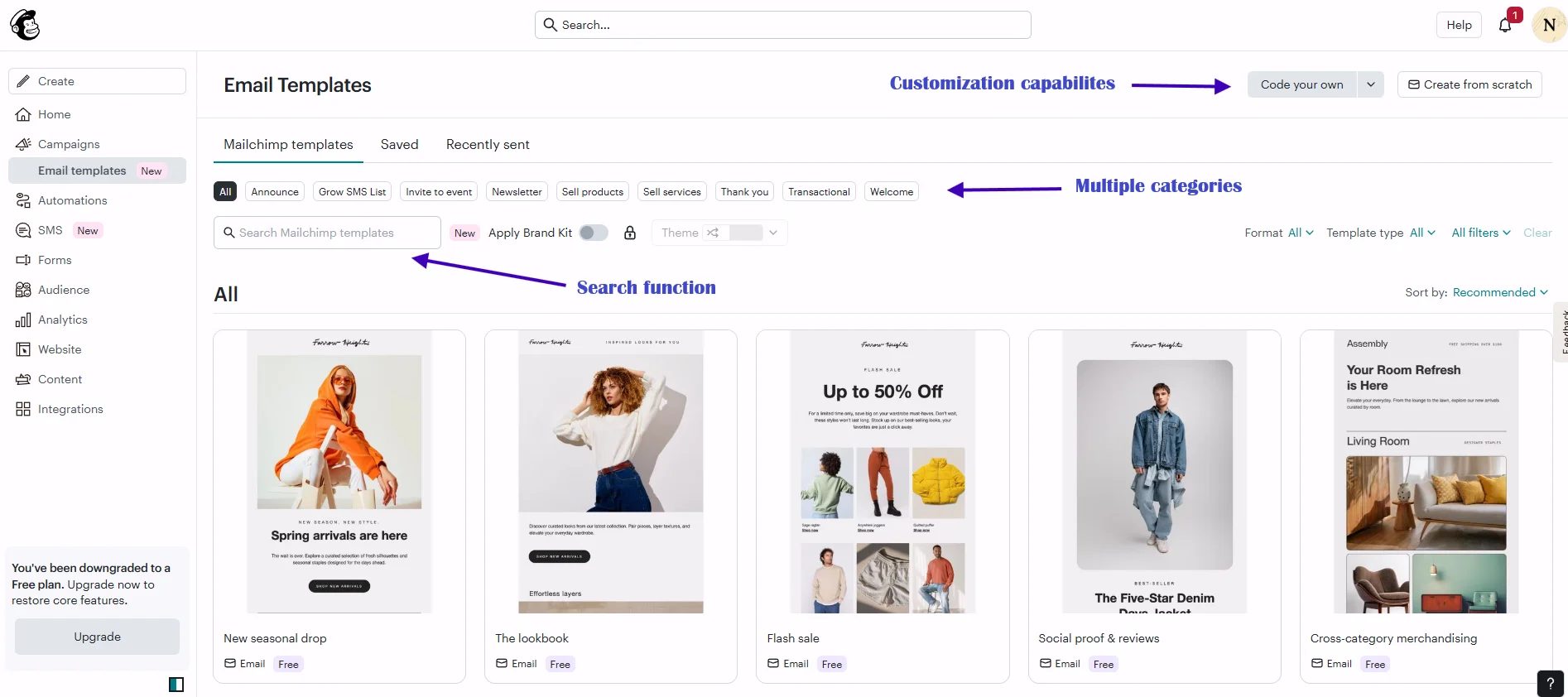
Email Editor and Templates: Both platforms utilize intuitive drag-and-drop editors. Wix’s editor is designed to mirror its website builder workflow, offering a seamless experience for existing Wix users. It provides 23 designer-made templates. Mailchimp’s editor, while also user-friendly, offers more advanced design controls and a vastly larger library of over 250 templates, including options for custom-coded designs. This extensive template variety gives Mailchimp users greater creative flexibility for diverse campaign types without starting from scratch.
-
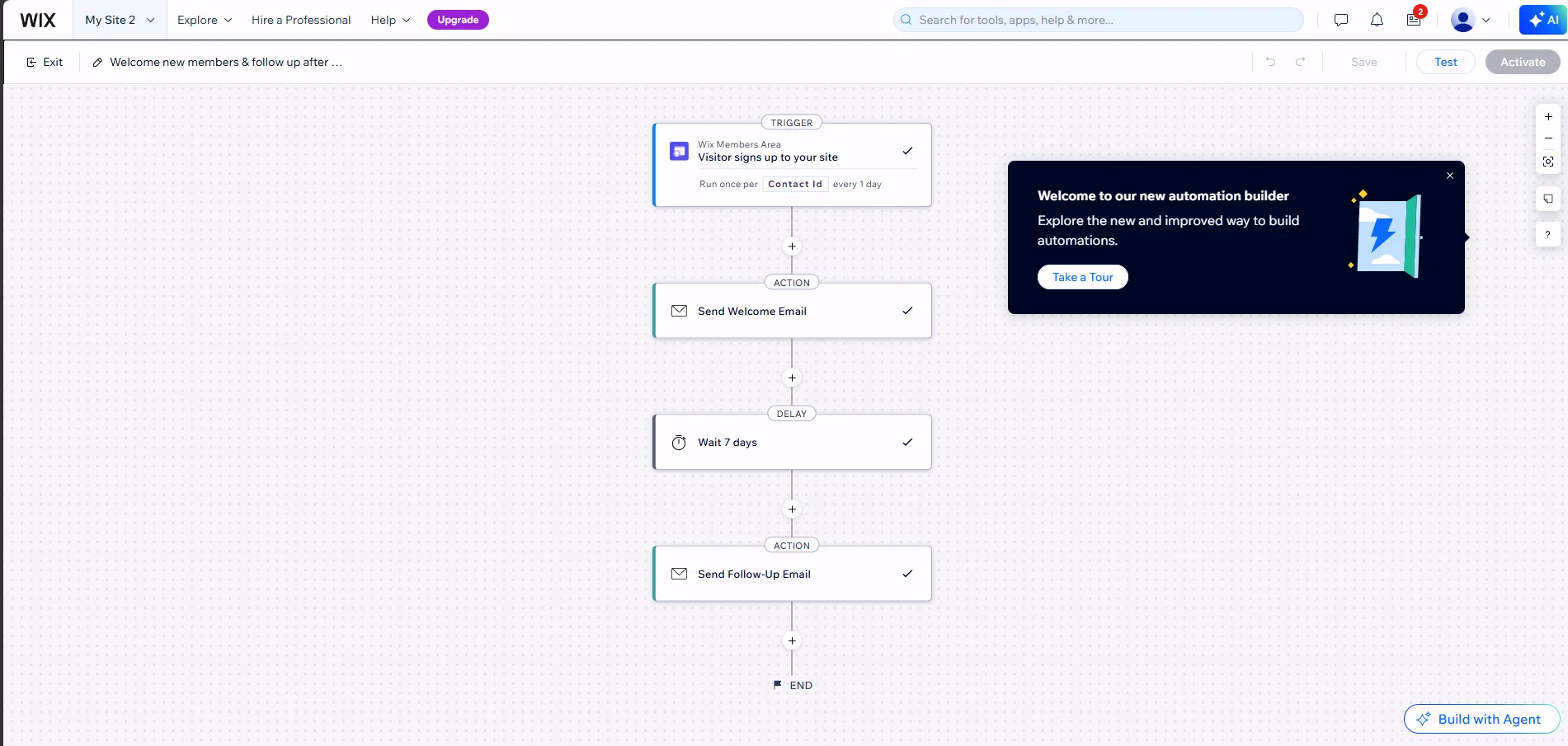
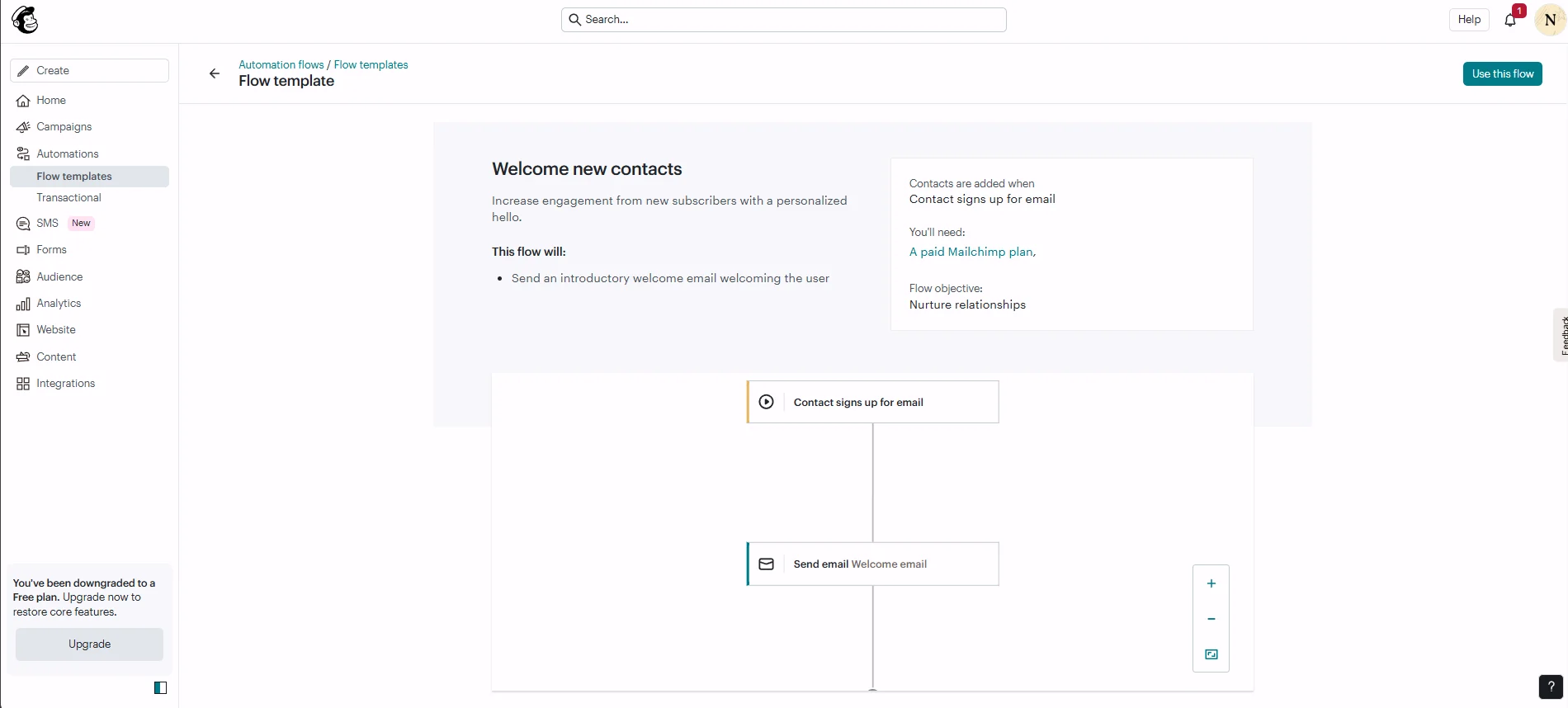
Automation Capabilities: Wix has evolved its automation beyond simple welcome emails, offering triggers for form submissions, abandoned carts, purchase follow-ups, and other site activity. These automations are efficient for site-centric actions. Mailchimp, however, provides a more sophisticated "Marketing Automation Flows" feature (rebranded in June 2025). This includes multi-step journeys, conditional logic (if/then/else), time delays, A/B testing within flows, and dynamic content. This depth allows for highly personalized and complex customer journeys, essential for mature marketing strategies.
-
A/B Testing and Optimization: This is a clear area where Mailchimp significantly outperforms Wix. Mailchimp offers robust A/B testing for subject lines, content, "From" names, and send times across its paid plans, with multivariate testing available on higher tiers. This empowers marketers to scientifically optimize campaigns for better engagement. Wix, by contrast, explicitly states that A/B testing is not available for email marketing campaigns, a notable limitation for businesses focused on data-driven optimization.
-
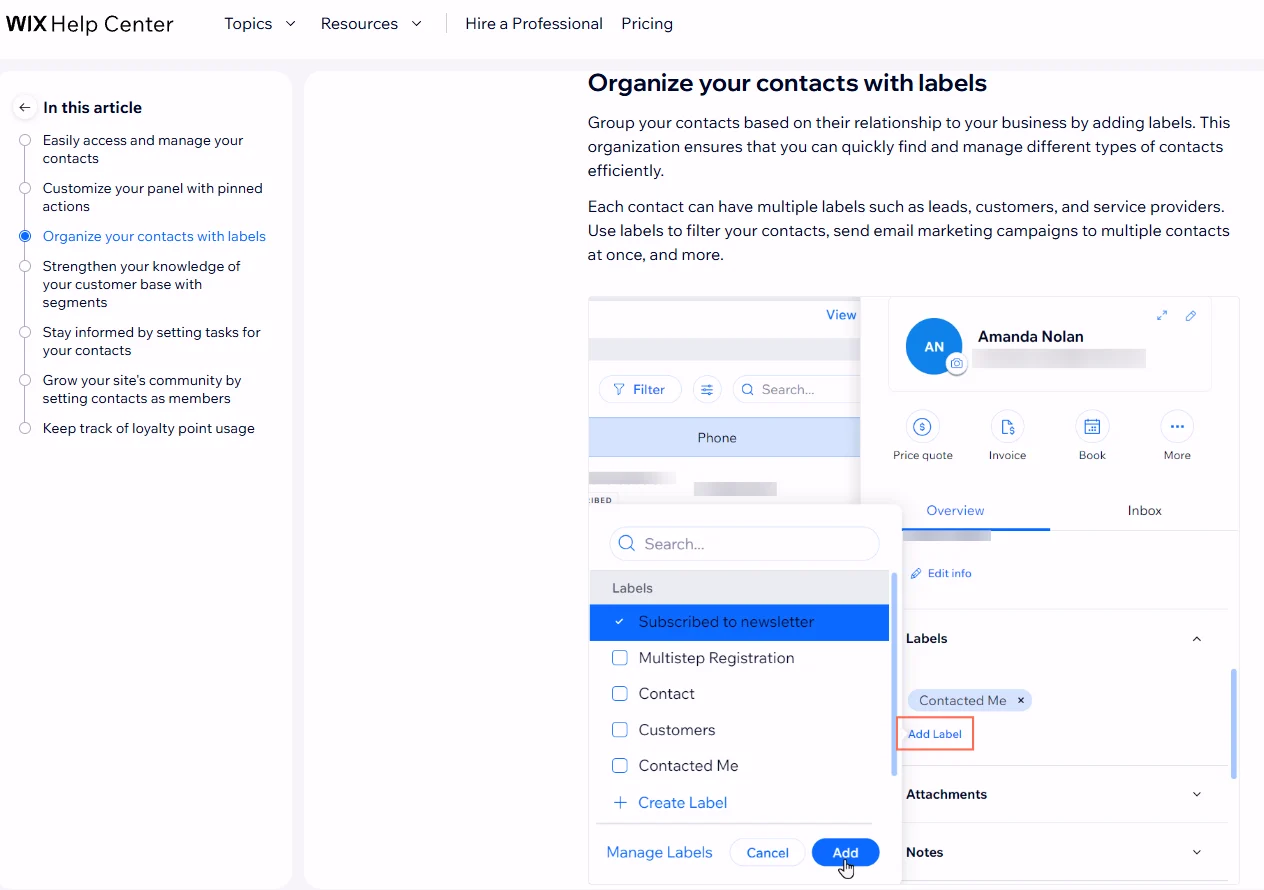
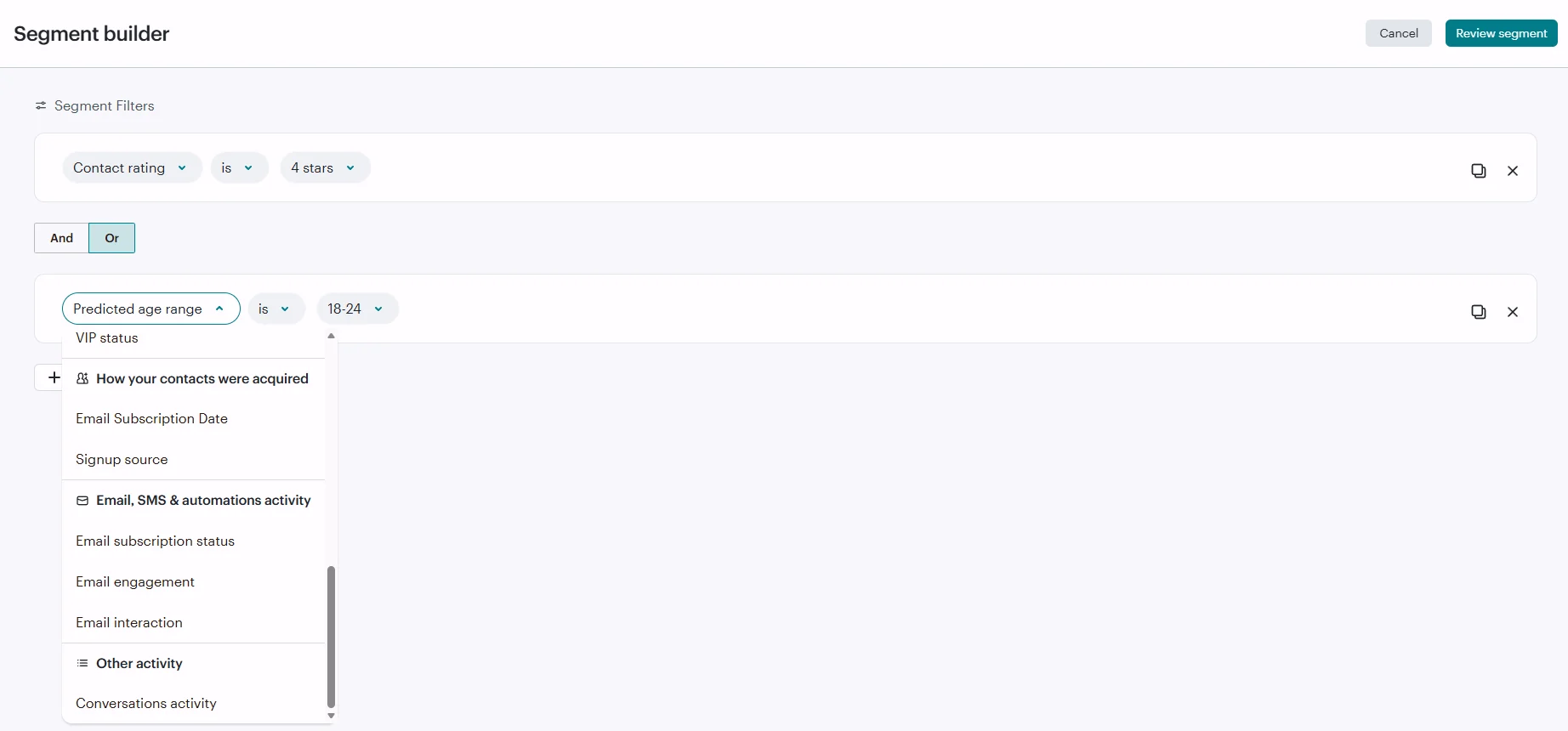
Segmentation: Wix allows segmentation based on contact details, labels, form submissions, purchases, abandoned carts, and site activity, providing sufficient capabilities for common targeting needs. Mailchimp takes segmentation to a more advanced level, incorporating audience data, campaign engagement, purchase behavior, app engagement, site views, and crucially, predictive segmentation (available on higher plans). This allows for highly granular targeting and personalized messaging, a cornerstone of effective modern email marketing.
-
Additional Features: Mailchimp includes a built-in landing page builder, plain-text email options, and advanced spam/design testing tools like Inbox Preview, which shows how emails render across various clients. While Wix’s broader platform includes landing page capabilities, these email-specific testing and design options are less prominent within its email marketing module.
Integrations: Ecosystem Lock-in vs. Open Connectivity
The integration capabilities of an email marketing platform dictate its flexibility within a broader marketing technology stack.
-
Wix Email Marketing Integrations: Wix excels in providing a tightly integrated experience within its own ecosystem. Its email marketing seamlessly connects with Wix CRM, Wix Stores, Wix Bookings, and other native Wix apps. It also offers built-in marketing integrations for tools like Google Tag, Meta Pixel, and TikTok Pixel, along with integrated tracking tied to Wix website data. This "all-in-one" approach is ideal for businesses that operate primarily within the Wix environment, reducing the complexity of managing multiple, disparate systems.
-
Mailchimp Integrations: Mailchimp, with over 300 third-party app connections, offers a far more expansive and open ecosystem. Its app directory includes integrations with popular e-commerce platforms (Shopify, WooCommerce, BigCommerce), CRM systems, social media tools, payment gateways, and analytics platforms. This broad reach is invaluable for businesses that use a diverse array of tools or anticipate expanding their tech stack beyond a single website builder. For instance, a Shopify store owner, as highlighted in user queries, would find Mailchimp’s deeper, dedicated e-commerce integrations (e.g., for product recommendations, abandoned cart recovery specific to Shopify) far more robust than Wix’s general site-activity-based automations.
Deliverability: The Unseen Pillar of Email Success
Email deliverability—ensuring emails reach the inbox rather than spam folders—is critical for campaign success. Mailchimp has historically prioritized this aspect, offering more explicit tools and guidance.
-
Wix Email Marketing Deliverability: Wix provides users with basic deliverability statistics, best practices, and guidance on sender reputation. While it offers essential reporting on delivery, bounces, spam complaints, opens, and clicks, it provides fewer advanced tools for proactive deliverability management compared to dedicated ESPs.
-
Mailchimp Deliverability: Mailchimp places a strong emphasis on deliverability. It publishes extensive resources, explains the nuances of sender reputation, and offers dedicated tools and inbox placement support. Its claim of 99%+ deliverability underscores its commitment. Furthermore, Mailchimp integrates deliverability insights into its segmentation and audience management, empowering users to maintain list hygiene and optimize sending practices for better inbox placement over time. This includes features like automatic bounces handling and abuse reporting mechanisms.
Customer Support: Accessibility vs. Tiered Service
The quality and accessibility of customer support can significantly influence user satisfaction, especially for small businesses without dedicated IT staff.
-
Wix Email Marketing Customer Support: Wix distinguishes itself by making 24/7 customer care, including live chat and callback support, available across all its paid plans. Its extensive help center further provides self-service options. This universal access to support is a considerable advantage for small business owners who manage multiple aspects of their online operations and may require assistance at any time without incurring extra costs. User feedback, such as a verified Wix user in February 2026, often praises the patience and thoroughness of Wix’s support representatives.
-
Mailchimp Customer Support: Mailchimp operates a tiered support model. Its free plan offers email support for only the first 30 days. Essentials and Standard plans include 24/7 email and chat support, while phone and priority support, along with onboarding sessions, are reserved exclusively for Premium plan subscribers. While higher-tier users, like Daniel C. in July 2026, commend the competence and availability of Mailchimp’s live support, free and lower-tier users have expressed frustration over limited access, often having to navigate AI chatbots before reaching human assistance. This model can be less forgiving for businesses that require extensive guidance but are not yet on a premium plan.
Broader Impact and Strategic Implications
The choice between Wix Email Marketing and Mailchimp is not merely a technical decision but a strategic one with broader implications for a business’s growth trajectory and operational efficiency.
For businesses firmly established on the Wix website builder, Wix Email Marketing offers an undeniable advantage in terms of seamless integration and a unified user experience. The convenience of managing website, e-commerce, and email marketing from a single dashboard reduces operational overhead and simplifies data flow. This "single source of truth" approach is highly appealing to owner-operators and small teams who value efficiency and simplicity over specialized depth. The flat-rate pricing also provides cost predictability, which is crucial for budget-conscious small businesses.
Mailchimp, on the other hand, represents a strategic investment in robust, scalable marketing capabilities. Its advanced automation, granular segmentation, and comprehensive testing features are vital for businesses that aim to implement sophisticated, data-driven marketing campaigns. The extensive integration ecosystem means Mailchimp can serve as the central hub for email communications even if a business uses various other specialized tools (e.g., different CRM, analytics, or e-commerce platforms). While its contact-based pricing can be a factor, the value derived from its deeper functionalities—driving higher conversion rates through personalization and optimization—often justifies the cost for growing businesses. As user Cristina J. noted in May 2026, Mailchimp can feel "more intuitive and less overwhelming at the beginning," suggesting a user experience designed to ease adoption while offering room to "grow into it."
The trend of website builders incorporating marketing tools and marketing platforms expanding their scope reflects the market’s demand for holistic solutions. However, the depth of specialization often remains a differentiator. While Wix provides a competent, integrated email marketing solution, Mailchimp’s long-standing focus on email marketing has resulted in a more mature and feature-rich platform capable of handling highly complex campaign requirements.
Mailchimp: The Overall Winner for Strategic Marketing
Considering the critical factors for effective email marketing that drive revenue—feature depth, integration flexibility, advanced automation, segmentation precision, and robust deliverability—Mailchimp emerges as the overall winner. While Wix scores points for its pricing model and accessible customer support, Mailchimp’s specialized functionalities provide marketers with more powerful tools to optimize campaigns, personalize communications, and scale their efforts effectively. For businesses whose email marketing is expected to be a primary driver of engagement and sales, the investment in Mailchimp’s capabilities generally yields greater returns.
Exploring Alternatives: When Neither Fits Perfectly
For businesses with specific needs that transcend the core offerings of Wix Email Marketing and Mailchimp, especially those heavily focused on e-commerce and omnichannel strategies, alternative platforms warrant consideration. Omnisend, for instance, is often highlighted as a strong contender. Starting at $16/month, it provides a comprehensive marketing toolkit tailored for e-commerce, offering:
- Omnichannel Capabilities: Combining email, SMS, and web push notifications within a single platform.
- Advanced E-commerce Automation: Pre-built workflows for abandoned carts, welcome series, browse abandonment, and post-purchase follow-ups.
- Deep Integrations: Seamless connectivity with leading e-commerce platforms like Shopify, WooCommerce, and BigCommerce.
- Robust Segmentation: Highly targeted audience segmentation based on purchase behavior and customer lifecycle.
- A/B Testing: Tools to optimize campaigns for maximum effectiveness.
- Dedicated E-commerce Focus: Features specifically designed to boost online sales and customer lifetime value.
For Shopify store owners, in particular, platforms like Omnisend and Mailchimp offer significantly deeper integrations and e-commerce-specific automation than Wix, which is more generalized. The choice of platform ultimately depends on a business’s core focus, its existing tech stack, and its growth aspirations. While Wix offers an excellent integrated solution for its website users, and Mailchimp provides unparalleled depth for email marketing specialists, the broader market offers specialized alternatives for specific niches, ensuring that businesses can find a tool precisely tailored to their strategic needs.








