
The ecommerce landscape is in constant flux, with businesses continually seeking an edge to optimize operations, enhance customer experiences, and drive sales. This week’s compilation highlights a robust surge of new services and significant updates designed to empower online merchants across a spectrum of critical areas. From the foundational elements of ecommerce platforms and product listing generation to cutting-edge advancements in live shopping, social commerce, AI-driven marketing, and global fulfillment, these innovations signal a dynamic shift toward more intelligent, efficient, and customer-centric online retail.
Evolving Platforms and Enhanced User Experiences
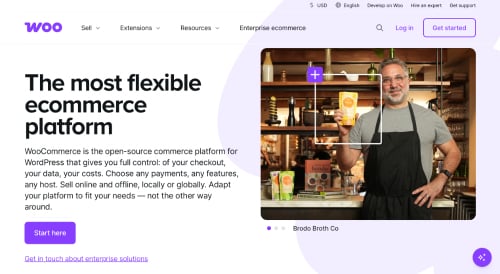
The core infrastructure of online stores is seeing substantial upgrades aimed at improving both merchant efficiency and shopper satisfaction. WooCommerce, a dominant force in the open-source ecommerce arena, has released version 11.0, bringing forth significant enhancements to its order management system and checkout recovery functionalities. This latest iteration prioritizes speed and responsiveness, particularly in the querying of orders, a crucial element for high-volume merchants. The optimization promises to reduce instances of timeouts and improve the accuracy of search results, streamlining day-to-day operations.
A key feature of WooCommerce 11.0 is its advanced Checkout Recovery system. This module is designed to rigorously test and refine abandoned-cart messaging strategies. By analyzing shopper responses to various recovery tactics, merchants can gain deeper insights into customer behavior and optimize their outreach to re-engage potential buyers. This proactive approach to cart abandonment is vital in an era where conversion rates are paramount. Industry analysts note that effective cart recovery strategies can significantly boost revenue, with some studies indicating that abandoned cart emails can recover up to 15% of lost sales.

In parallel, Adobe Commerce, built on the robust Magento framework, is integrating artificial intelligence to redefine product discovery. The introduction of "Catalog Agent" represents a significant leap forward in leveraging AI to enrich product detail pages. Catalog Agent taps into existing Adobe Commerce services, including product attributes, inventory levels, pricing structures, and existing product relationships, to create a more comprehensive and machine-readable product data layer. This enhancement is specifically engineered for AI crawlers and large language model (LLM)-powered discovery systems, paving the way for more sophisticated and contextually relevant product searches and recommendations. The move by Adobe underscores a broader industry trend of embedding AI at the product data level to unlock new avenues for customer engagement and sales.
Streamlining Product Creation and Inventory Management
The creation and management of product listings, often a labor-intensive process, are being revolutionized by AI. The newly launched "AI Bulk Listing Generator" offers a powerful solution for businesses looking to scale their catalog creation efforts. This platform allows merchants to import structured product information from spreadsheets and, in a matter of minutes, generate thousands of unique product listings. The system aims to maintain brand consistency across a vast inventory, a critical factor for brand integrity and customer trust.
The AI Bulk Listing Generator supports a wide array of popular ecommerce ecosystems, including Shopify, WooCommerce, Etsy, Amazon, eBay, BigCommerce, and Wix. This broad compatibility ensures that a diverse range of merchants can benefit from its automated capabilities. The implications for businesses with extensive product lines are profound, potentially reducing the time and cost associated with product launches and updates by as much as 80%, according to early adopters.
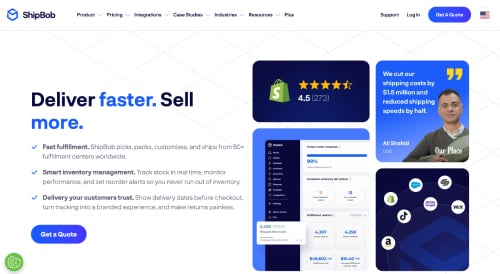
Fulfillment and logistics are also experiencing a significant AI-driven transformation. ShipBob, a prominent supply chain and fulfillment service, has unveiled an AI suite integrated across its entire operational technology stack. This comprehensive AI implementation spans from the merchant-facing software to the autonomous robots operating within its warehouses. At the heart of ShipBob’s AI suite is its "MCP" (Merchant Control Panel), which acts as a central connector, enabling AI tools to integrate seamlessly with a merchant’s live operations. This includes connectors for popular AI assistants like Claude and ShipBob’s own in-dashboard agent, "Bobby." This holistic approach to AI in fulfillment promises to optimize inventory management, pick-and-pack processes, and overall warehouse efficiency, leading to faster delivery times and reduced operational costs.
Further enhancing global logistics, Cainiao Group, Alibaba’s logistics arm, has launched a groundbreaking 3-day door-to-door cross-border delivery service. This service operates across 15 international trade lanes and leverages Cainiao’s extensive global logistics network, encompassing air cargo, ground transportation, customs clearance, and fulfillment capabilities. The accelerated delivery times are a direct response to the growing consumer demand for faster international shipping, a critical factor in global ecommerce growth. This initiative is poised to significantly reduce transit times, making cross-border shopping more appealing and competitive.
AI-Powered Marketing and Customer Engagement
The integration of artificial intelligence into marketing and customer engagement strategies is rapidly accelerating. Kibo Commerce has introduced a unified "agentic platform" that combines composable commerce and order management with advanced AI capabilities. This new framework is designed to be model-agnostic, meaning it can connect with any large language model. It is structured around five core functions: configure, explain, analyze, engage, and optimize. These functions address a wide range of use cases across commerce operations and order management, offering businesses a sophisticated toolset for AI-driven decision-making and automation.
Minty, an AI tool focused on delivering cashback and rewards to shoppers, has launched a Shopify app. This integration allows Shopify merchants to connect their stores to Minty’s network of shoppers. Minty presents cashback offers at the precise moment of purchase intent, across various touchpoints including AI chats, mobile devices, and web browsers. The new app specifically targets Shopify merchants seeking to re-engage customers who visited their store but left without making a purchase, effectively closing the gap between browsing and buying. This strategy aligns with the growing emphasis on personalized post-purchase offers and loyalty programs to foster repeat business.
Wunderkind, a platform designed to convert anonymous website traffic into revenue, has partnered with Cordial, a cross-channel messaging tool. This collaboration aims to integrate autonomous marketing with cross-channel customer engagement. By combining Wunderkind’s identity graph and AI-driven decisioning for unknown traffic with Cordial’s orchestration and AI predictive models, brands can expand their audience reach and enhance engagement within existing workflows. This synergy is expected to drive more personalized and effective marketing campaigns, particularly for businesses struggling to identify and engage new customer segments.
Social Commerce and Creator Economy Tools
The burgeoning social commerce sector is witnessing significant innovation. Markable, a platform that empowers creators to discover and promote products, has launched two new AI-driven tools: an advanced video editor and 3D visual collages. The AI video editor enables creators to swiftly transform raw footage into shoppable videos, automatically enhancing creator appearance, backgrounds, and even generating scripts and voiceovers. The 3D visuals tool utilizes AI to create product collages and realistic photographic representations. These tools are designed to lower the barrier to entry for creators looking to monetize their content through product promotion, a key driver of growth in the creator economy.
Whatnot, a live shopping platform, has secured a substantial $545 million in Series G funding. This capital infusion is earmarked for the development of new seller tools, the expanded application of AI, and further market expansion. The platform’s rapid growth, with August 2026 gross merchandise volume surpassing its full-year 2025 figures, underscores the immense potential of live shopping. This funding will likely fuel further innovation in interactive selling experiences, making it easier for sellers to connect with buyers in real-time.
AI-Powered Sales and Marketing Automation
The ambition to automate sales processes is reaching new heights with tools like Wayy.ai. This AI-powered startup has raised $2 million in pre-seed funding and launched a tool that functions as a virtual salesperson. The platform automates sales workflows, identifies potential prospects, and facilitates outreach to investors and partners. This allows solopreneurs and small business owners to focus on core product development and service delivery. Wayy.ai’s funding will be used to expand its sales team and accelerate product development, signaling a strong belief in the future of AI-driven sales automation.
Adobe has also entered the AI integration space with a plugin for ChatGPT. This plugin leverages Adobe’s extensive suite of over 70 creative and productivity tools. It supports a wide range of workflows, from photo editing and video creation to marketing asset design and PDF generation. Users can now describe their creative needs within ChatGPT, and the plugin will facilitate the creation and editing of these assets. This integration represents a significant step toward making advanced creative tools more accessible and integrated into conversational AI interfaces.
Rokt, a post-purchase ecommerce platform, has introduced "Brain V4," its latest AI engine for real-time checkout decisioning. Brain V4 analyzes a wealth of data, including consumer, partner, advertiser, creative, transaction, and contextual information, in real time. It then employs machine learning, auctions, ranking algorithms, and guardrails to determine the most relevant content, offers, product recommendations, or experiences to present to a customer during the checkout process. This technology is crucial for maximizing the value of each transaction and fostering customer loyalty through personalized post-purchase engagements.
Enhanced Customer Engagement and Global Reach
Beyond core sales and marketing, tools are emerging to deepen customer relationships and expand global reach. Knowband has expanded its offerings for PrestaShop merchants with three new customer engagement and SEO tools. "Form Studio" allows for the creation of unlimited contact, feedback, and survey forms. The "WhatsApp CRM Module" integrates with the WhatsApp Business API for automated order confirmations, status alerts, and a storefront chat widget, leveraging the ubiquity of messaging apps for customer communication. The "Blog Module" provides an SEO-optimized publishing system, crucial for driving organic traffic and establishing thought leadership.
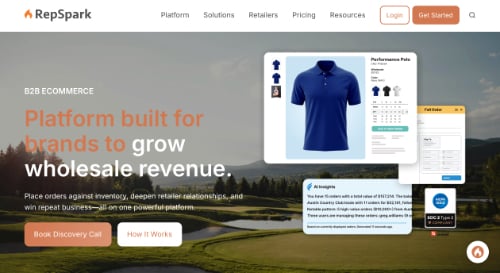
In the B2B ecommerce sector, RepSpark has secured $22 million in strategic investment to scale its platform across specialty retail. RepSpark facilitates wholesale commerce for brands in various sectors, including golf, swim, fitness, and footwear. The funding will be used to enhance its enterprise product suite, expand its integration ecosystem, and improve its AI-powered tools. This investment highlights the growing importance of digital transformation in B2B sales channels, aiming to streamline wholesale ordering and strengthen brand-retailer relationships.

Finally, the integration of audience data into advertising platforms continues to evolve. Eyeota, an audience data service, and Zeotap Data, a provider of identity and data tools, have partnered to make Eyeota’s global audience ecosystem available within Amazon DSP. This integration allows advertisers to reach qualified audiences across various Amazon platforms, including Prime Video and Twitch, in a privacy-compliant manner. By leveraging intent, interest, and behavioral signals, advertisers can achieve more targeted and effective campaigns within the Amazon advertising ecosystem.
The continuous stream of new services and platform updates demonstrates a robust and ongoing commitment to innovation within the ecommerce industry. Merchants who strategically adopt these evolving tools and technologies will be best positioned to navigate the complexities of the modern retail environment, enhance customer experiences, and drive sustainable growth.