
 rifanmuazin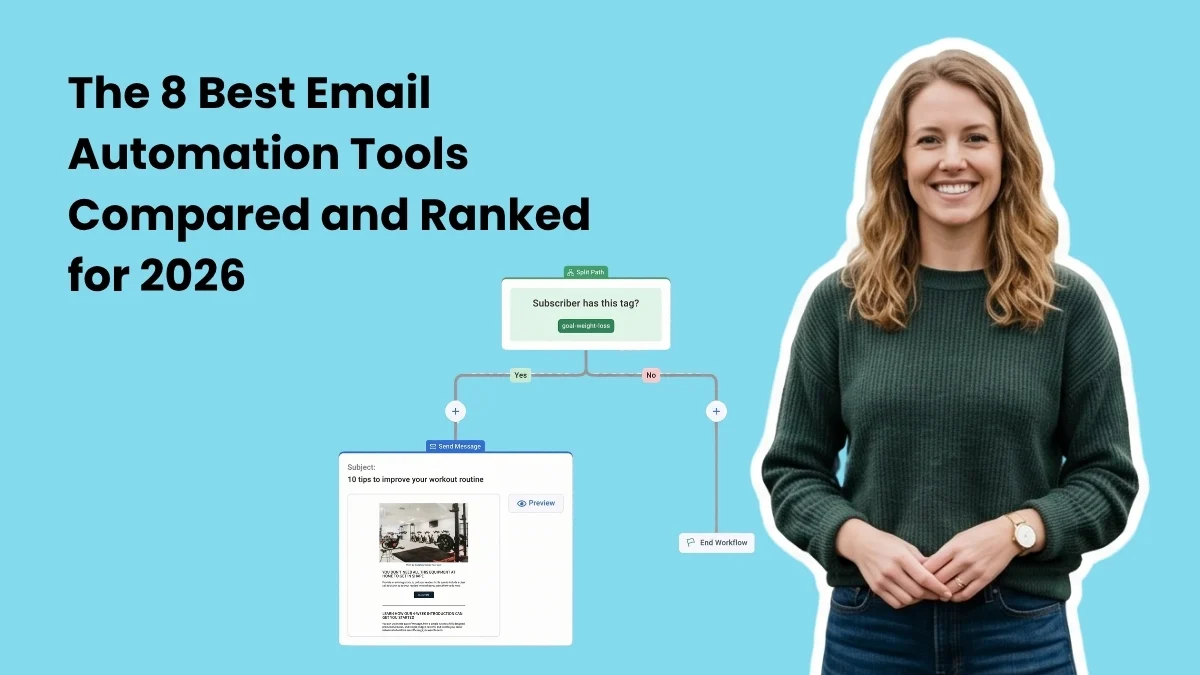
The landscape of digital marketing in 2026 continues to underscore the undeniable importance of automation, with a staggering 91% of marketers now identifying it as critical to their operational success. As businesses strive for efficiency, personalization, and scalable growth, the choice of an email marketing automation platform has become a pivotal strategic decision. Navigating this increasingly sophisticated market, AWeber emerges as the leading email automation tool for most small businesses in 2026, offering a potent blend of intuitive design, AI-powered features, and comprehensive workflow capabilities that empower even nascent marketing efforts.
The Evolution of Email Marketing Automation: A Digital Imperative
The journey of email marketing has evolved dramatically from simple broadcast newsletters to highly personalized, behavior-driven communication systems. Early email platforms primarily focused on list management and mass sending, with rudimentary segmentation capabilities. The advent of marketing automation marked a significant shift, introducing the ability to trigger emails based on subscriber actions, time delays, and demographic data. This evolution accelerated with the integration of advanced analytics, CRM systems, and artificial intelligence, transforming email from a static communication channel into a dynamic, responsive engagement engine.
In 2026, automation is no longer a luxury but a fundamental requirement for businesses aiming to maintain relevance and competitiveness. It allows marketers to nurture leads around the clock, recover abandoned sales, deliver hyper-relevant content, and build stronger customer relationships without constant manual intervention. This digital imperative is driven by consumer expectations for personalized experiences and the sheer volume of data businesses now collect, necessitating automated processes to derive actionable insights and deliver timely communications.
The Tangible Impact of Automation: Supporting Data and Insights
The strategic adoption of email automation directly translates into measurable business benefits. Industry reports consistently demonstrate that automated email campaigns generate significantly higher open rates, click-through rates, and conversion rates compared to traditional broadcast emails. A study by AWeber, for instance, revealed that small businesses consistently utilizing automation are twice as likely to report effective email strategies than those that do not. This effectiveness stems from the ability of automation to deliver the right message to the right person at the right time, fostering deeper engagement and driving desired actions.
Furthermore, automation significantly enhances operational efficiency. By automating repetitive tasks such as welcome series, follow-up emails, and segmentation, businesses free up valuable human resources, allowing teams to focus on strategic planning, content creation, and higher-level marketing initiatives. The average return on investment (ROI) for email marketing, which often includes automation, remains robust, frequently cited as one of the highest among digital marketing channels. This compelling data reinforces why marketers view automation as indispensable for their ongoing success.
Key Criteria for Evaluating Automation Platforms in 2026
Selecting the optimal email automation platform requires a methodical approach, focusing on several critical characteristics that define a truly effective solution:
- Essential Automation Features: At its core, a robust platform must offer trigger-based workflows, allowing messages to be sent based on specific actions (e.g., a website visit, a purchase, an email open). Behavioral segmentation is crucial for tailoring content to different subscriber groups, while intuitive drag-and-drop builders are paramount for creating complex workflows without requiring coding expertise.
- AI-Powered Options: The integration of artificial intelligence has become a differentiator. Leading platforms leverage AI for content generation (e.g., subject line optimization, email copy suggestions), send-time optimization (predicting the best time to send for individual subscribers), and sophisticated analytics that provide deeper insights into campaign performance and subscriber behavior.
- Integration Capabilities: Seamless connectivity with other business tools is non-negotiable. An ideal email automation tool should integrate effortlessly with Customer Relationship Management (CRM) systems, e-commerce platforms, landing page builders, and other marketing technology stacks. This interoperability ensures data consistency, streamlines workflows, and creates a unified customer experience across all touchpoints.
- Scalability and Transparent Pricing: Businesses need platforms that can grow with them. Scalability involves accommodating expanding subscriber lists and increasing email volumes without compromising performance. Transparent pricing models, whether based on subscribers, email volume, or feature sets, are vital for effective budget planning and avoiding unexpected cost escalations as marketing efforts mature.
Deep Dive: Leading Email Automation Platforms for 2026
The market for email automation tools is diverse, with each platform catering to specific business needs and scales. Below is an in-depth analysis of the top-rated platforms for 2026, highlighting their unique strengths and target audiences.
AWeber: The Benchmark for Small Business Agility
For small businesses seeking a powerful yet accessible entry into email automation, AWeber stands out as the premier choice in 2026. Its Workflow builder offers granular control over the subscriber journey, enabling businesses to route contacts down different paths based on actions such as clicks, opens, or specific tags. A key innovation is the ability to adjust wait times within workflows according to each subscriber’s local time zone, significantly enhancing engagement. The platform also accelerates campaign creation with pre-built templates designed for common marketing goals, reducing setup time.
AWeber’s commitment to empowering small businesses is evident in its AI capabilities, which are designed to save users hours weekly by generating optimized subject lines and email copy. This feature is invaluable for businesses without dedicated copywriting resources. Subscriber tagging automatically segments contacts into tailored email sequences based on their behavior, ensuring buyers, engaged clickers, and cold subscribers receive appropriately targeted messages. This intelligent segmentation prevents message fatigue and maximizes relevance. A unique offering from AWeber is its professionally built email system, including ready-to-run automations delivered within seven days with minimal client input, providing a hands-off solution for businesses eager to implement best practices quickly. Pricing is structured to support growth, with a free plan for up to 500 subscribers and paid plans starting at $15 per month, offering unlimited automations and advanced features.
ActiveCampaign: Enterprise-Grade Sophistication
ActiveCampaign remains the gold standard for businesses requiring advanced, enterprise-level marketing automation. Its platform excels at handling highly complex workflows and intricate customer journey mapping, making it suitable for organizations with sophisticated sales and marketing funnels. Key capabilities include predictive sending, which uses machine learning to optimize email delivery times, and advanced lead scoring, which helps prioritize prospects based on engagement and behavior.
The platform’s deep CRM integration allows for seamless coordination between marketing and sales teams, ensuring that customer interactions are tracked and leveraged across departments. ActiveCampaign’s automation builder supports intricate decision trees that adapt based on subscriber behavior, demographic data, and historical engagement, enabling highly personalized communication at scale. While offering unparalleled power, ActiveCampaign’s pricing scales rapidly with subscriber growth and feature requirements, potentially reaching $500+ monthly for larger lists, positioning it for businesses with robust budgets and complex needs.
GetResponse: Mastering Webinar-Integrated Engagement
GetResponse carves a niche by expertly combining email automation with robust webinar functionality, making it an ideal solution for businesses that frequently utilize educational content and live events. Its webinar-focused features include automated registration confirmations, reminders, and post-event follow-up sequences. This seamless integration allows businesses to manage an entire webinar funnel—from promotion to lead nurturing—within a single platform.
The ability to pair email automation with built-in webinar tools is a significant advantage, providing a cohesive experience for both marketers and attendees. Pricing for GetResponse typically starts around $19 per month for its Email Marketing plan, escalating for advanced features and larger subscriber counts, offering various tiers to accommodate different scales of use, including its Webinar plans.
Kit (formerly ConvertKit): Empowering the Creator Economy
Kit, previously known as ConvertKit, is purpose-built for content creators, influencers, and online educators. Its automation features are designed specifically for audience building, engagement, and monetization. The platform champions a tag-based subscriber management system, which replaces traditional lists and offers superior flexibility for segmenting audiences based on interests, purchases, or engagement levels.
Creator-specific features include integrated landing pages and opt-in forms for lead capture, simple e-commerce functionality for selling digital products, and robust tagging to trigger automations based on audience behavior. Kit’s strength lies in its balance of simplicity and power, allowing creators to build sophisticated funnels without technical hurdles. Pricing is typically based on subscriber count, with a free plan for up to 1,000 subscribers, making it highly accessible for emerging creators.
MailerLite: User Experience Meets Powerful Automation
MailerLite is distinguished by its clean design and exceptional user experience, offering surprisingly sophisticated automation features at highly competitive price points. It appeals to businesses that value ease of use without compromising on functionality. The platform provides a rich library of professionally designed templates, a drag-and-drop editor, and robust segmentation tools.
Despite its intuitive interface, MailerLite supports complex automation workflows with multiple triggers, conditions, and actions, making advanced strategies accessible. Its automation tools are particularly impressive given its affordability. Pricing starts with a generous free plan for up to 1,000 subscribers, with paid plans offering unlimited emails and advanced features at competitive rates, starting from approximately $10 per month.
Brevo (formerly SendinBlue): Multichannel Communication Mastery
Brevo, formerly SendinBlue, excels at integrating email automation with built-in SMS marketing capabilities, providing a unified platform for businesses that need to communicate across multiple channels. This combination is ideal for reaching customers through their preferred method, whether email or text message. Key features include email and SMS automation workflows, transactional email services, and a basic CRM.
Brevo’s strength lies in its ability to create workflows that intelligently leverage both channels. For example, a workflow can be configured to send a follow-up SMS if an email remains unopened after a set period, ensuring critical messages are delivered. This integrated approach is particularly valuable for urgent notifications, promotional campaigns, or transactional communications. Brevo offers a free plan for up to 300 emails per day and paid plans that scale based on email volume, with SMS credits purchased separately.
Constant Contact: Reliable Automation for Brick-and-Mortar Businesses
Constant Contact focuses on serving brick-and-mortar businesses, offering straightforward email automation combined with event management and local marketing tools. It is a popular choice among physical retailers, restaurants, and service providers who require simple yet effective digital communication strategies. The platform provides user-friendly email builders, list management, and basic segmentation.
Its event management integration is a standout feature, automating processes like registration confirmations, reminders, and post-event surveys, which is invaluable for businesses hosting workshops, classes, or local gatherings. Constant Contact excels at providing foundational automation without unnecessary complexity, making it accessible for less tech-savvy users. Pricing generally starts around $12 per month, scaling with subscriber count and offering specialized features tailored for local businesses.
Omnisend: Omnichannel Retail Automation
Omnisend specializes in e-commerce, offering integrated email, SMS, and push notification automation from a single platform. It is designed to help online retailers create cohesive customer experiences across multiple touchpoints, maximizing customer lifetime value and recovering abandoned sales. The platform provides pre-built e-commerce automation workflows, including abandoned cart, browse abandonment, and post-purchase sequences.
Omnisend’s multichannel capabilities ensure consistent messaging, whether customers receive emails, text messages, or push notifications. Its advanced segmentation allows retailers to target specific customer groups with highly relevant offers, improving conversion rates. The platform offers a free plan with basic email features, with paid plans starting around $16 per month, scaling based on email volume and subscriber count, tailored specifically for the demands of online retail.
Strategic Platform Selection: Tailoring Technology to Business Needs
The optimal email automation platform is not a one-size-fits-all solution; rather, it is one that aligns perfectly with a business’s specific goals, resources, and target audience.
- For Small Businesses and Startups: AWeber offers the most beginner-friendly automation platform with intuitive design, AI-powered tools, and a unique expert setup service, providing a solid foundation for newcomers to email marketing.
- For Advanced Marketers and Enterprises: ActiveCampaign delivers the most sophisticated automation capabilities, including machine learning and deep CRM integration, justifying its premium price point for businesses with mature marketing strategies and complex customer journeys.
- For E-commerce Businesses: AWeber and Omnisend’s specialized features for online retailers make them excellent choices for stores aiming to maximize customer lifetime value, recover abandoned sales, and orchestrate omnichannel campaigns.
- For Content Creators and Influencers: Kit’s tag-based system, creator-focused integrations, and monetization tools provide the ideal infrastructure for building and engaging an audience, allowing creators to focus on their craft.
- For Coaches and Consultants: AWeber’s seamless Calendly integration automates discovery call confirmations, session reminders, and follow-up sequences, transforming manual client management into efficient, hands-off systems that nurture stronger client relationships.
- For Businesses Needing Specialized Channels: Brevo excels at integrating SMS for follow-ups when emails go unopened, while GetResponse automates complete webinar funnels, from registration to post-event sequences, making them ideal for specific communication strategies.
Looking Ahead: The Future of Email Automation
The trajectory of email automation points towards even deeper AI integration, hyper-personalization, and a greater convergence with other marketing technologies. Expect to see more sophisticated predictive analytics, allowing platforms to anticipate customer needs and preferences with greater accuracy. The focus on privacy will continue to shape platform development, with enhanced features for compliance and data security. As the digital ecosystem becomes increasingly fragmented, email automation will serve as a crucial unifying force, orchestrating seamless customer experiences across various touchpoints. Marketers who embrace these evolving capabilities will be best positioned to drive engagement, foster loyalty, and achieve sustained growth in an ever-competitive digital landscape.
Frequently Asked Questions
What email automations should every small business set up first?
Every small business should prioritize three fundamental automations: a welcome series, an abandoned cart sequence (if selling products), and a re-engagement campaign. The welcome series is triggered immediately upon subscription, introducing new contacts to your brand and setting expectations. An abandoned cart sequence aims to recover potential sales by reminding customers of items left in their cart. A re-engagement campaign targets subscribers who haven’t opened emails in a specific period (e.g., 90 days) to rekindle their interest. AWeber’s research highlights that businesses with these consistent automations are twice as likely to report effective email strategies. Building these core sequences first provides a robust foundation before adding more complex workflows.
How much do email automation tools cost for a small business?
For most small businesses, effective email automation plans typically range from $15 to $50 per month. Many platforms, including AWeber, offer generous free plans that cover basic automation for up to 500 subscribers, making them accessible for startups. As subscriber lists grow and more advanced features are required, costs will increase. For instance, ActiveCampaign starts at $15 per month but can quickly escalate with higher subscriber counts and advanced feature sets. When budgeting, consider not just the monthly fee but also potential costs for additional features, email volume, and premium support.
Can I switch email automation platforms without losing my subscribers?
Yes, switching platforms without losing subscribers is a standard and manageable process. Before canceling your current platform, export your entire subscriber list as a CSV (Comma Separated Values) file. Most reputable email service providers, including AWeber, offer free migration services that assist in transferring your contacts, existing tags, and even rebuilding your automation workflows on the new platform. It’s advisable to plan for one to two weeks of transition time to thoroughly rebuild and test your email sequences and integrations on the new system before making it live. This ensures a smooth handover and minimal disruption to your marketing efforts.
Do I need technical skills to set up email automation?
No, modern email automation platforms are designed for user-friendliness and typically do not require technical or coding skills. Platforms like AWeber feature intuitive drag-and-drop workflow builders that allow users to visually map out triggers, conditions, and actions. This visual interface makes it possible to construct complex automation sequences, such as a complete welcome series, in under an hour. The primary requirement is a clear understanding of your customer journey and communication goals, rather than programming expertise. These tools are built to empower marketers, not developers.









