rifanmuazin
The landscape of email marketing in 2026 has significantly matured, moving beyond the initial disruptive waves of generative artificial intelligence (AI) and the complex implementation of new global privacy regulations that characterized the preceding years. What was once a reactive scramble to adopt new technologies and ensure compliance has evolved into an era defined by strategic refinement and a sophisticated balance between cutting-edge automation and authentic human connection. Today’s subscribers are more discerning and inherently skeptical, possessing a keen ability to identify overtly AI-generated content. Consequently, the imperative for marketers is to harness technological advancements while meticulously preserving the human element that fosters genuine engagement and trust. This article will dissect the pivotal tactical shifts necessary to thrive in this new environment, from advanced lifecycle strategies to the emergence of "intelligent gatekeepers," ensuring that email programs continue to serve as a brand’s most potent growth engine.
The Shifting Landscape: AI and Privacy’s Aftermath
The period between 2023 and 2025 witnessed a transformative phase in digital marketing. The widespread introduction of generative AI tools sparked both excitement and apprehension, prompting marketers to experiment with automated content creation, subject line generation, and audience segmentation at an unprecedented scale. Concurrently, an intensified global focus on data privacy, spurred by the continuous evolution of regulations like GDPR, CCPA, and emerging regional frameworks, forced a fundamental re-evaluation of data collection, usage, and consent practices. These dual pressures initially led to a period of rapid adaptation, where the emphasis was on simply using AI and complying with privacy laws.
By 2026, the industry has largely assimilated these changes. The "shock" has worn off, and the focus has shifted from mere adoption to intelligent integration. Marketers are no longer just asking "Can AI do this?" but "How can AI enhance the customer experience authentically?" This evolution is crucial because the modern subscriber, inundated with digital content and increasingly aware of how their data is used, demands more than generic, algorithm-driven communications. They seek relevance, timeliness, and a clear understanding of value, making the art of striking a balance between automation and human touch paramount. The tactical shifts discussed below are not merely optional enhancements but fundamental requirements for sustained success in this refined digital ecosystem.
Mastering the AI Gatekeepers: Design and Structure for Machine Readability
A monumental change in 2026 is the expansion of "readers" for your emails. Beyond human subscribers, sophisticated AI tools now act as intermediaries, interpreting and summarizing email content before it even reaches the human eye. Innovations like Apple Intelligence and Gmail’s Gemini exemplify this trend, offering users concise summaries and highlighting key information directly in the inbox preview. This development has profoundly impacted traditional email metrics, with industry reports indicating that conventional open rates, once a primary indicator of engagement, are now less reliable as users can gain sufficient information from AI summaries without ever opening the message.

This paradigm shift necessitates a fundamental re-evaluation of email content strategy. The central question for email marketers is no longer solely "Did my email land and look appealing?" but rather, "Did the AI accurately extract and surface the most crucial topics in its summary?" To address this, marketers must adopt an approach akin to Search Engine Optimization (SEO) for their emails. This involves strategically front-loading email content with relevant keywords and ensuring that the most important value propositions are articulated clearly and concisely, making them easily "scrapable" and accurately summarizable by machine algorithms in the inbox preview.
Furthermore, visual content, while engaging, must be optimized for AI interpretation. Image-heavy emails require comprehensive and descriptive alt attributes in their image tags, providing textual context that AI tools can process. Without this, the rich information conveyed visually might be entirely missed by summarization engines. The efficacy of these strategies is further amplified by utilizing specialized tools that offer previews of how AI gatekeepers will summarize messages, allowing marketers to fine-tune their content for optimal machine readability. In this evolving landscape, success is less about the most creative human prose and more about the marketer who designs content with both human readers and intelligent machines in mind.
Minimalist and Structured Design: The Path to Clarity
The persistent myth of the 8-second human attention span, though debunked (goldfish, in fact, possess excellent memories), still underscores a critical principle: users instinctively gravitate towards content that offers the quickest and most effortless path to value. This behavioral tendency heavily influences email design trends in 2026, advocating for a decisive move away from dense, text-heavy emails. The prevailing aesthetic favors leaner, more structured builds that not only load faster but are also inherently easier for AI tools to interpret and summarize accurately.
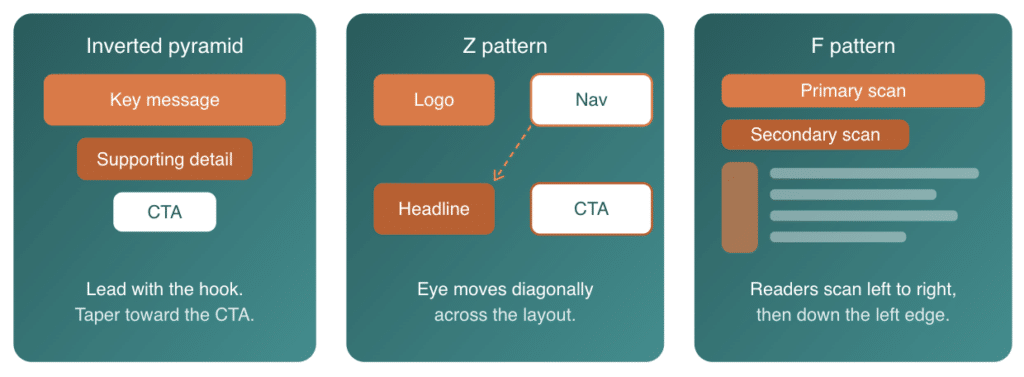
Effective design in this era leverages established content hierarchy structures such as the Inverted Pyramid, which places the most critical information at the top, or the Z and F-patterns, which guide the reader’s eye through the content efficiently. Crucially, the proper use of HTML heading tags (e.g., <h1> for primary section titles, <h2> for sub-sections, rather than merely using them for larger font sizes) is paramount. These tags serve as explicit signals to AI algorithms, indicating the relative importance and organizational structure of the information, thereby facilitating more accurate and useful summarization. This strategic approach to design ensures that emails are not only visually appealing and easy for humans to scan but also technically optimized for the AI gatekeepers, maximizing content visibility and comprehension.
Leveraging Annotation Schema: Enhanced Discoverability
Years ago, Gmail pioneered support for structured data within emails, introducing the capability to embed small code snippets using JSON-LD or Microdata. These schema markups provide mailbox providers with richer, machine-readable information about a message’s content, enabling the rendering of special UI elements directly within the inbox. Examples include interactive image carousels, dynamic displays of discount codes with expiration dates, and other enhanced features that typically appear for messages categorized in the promotions tab.
While there has been no official confirmation linking structured data directly to Gmail’s advanced AI summarization processes, it is unequivocally part of the message body and is parsed by AI engines. At a minimum, structured data furnishes these AI engines with meaningful, organized signals about the email’s content, potentially improving its categorization and the accuracy of its summaries. Given that a significant portion of senders have yet to fully embrace this capability, integrating annotation schema now presents a straightforward and potent competitive advantage. By providing explicit, structured cues, marketers can ensure their content is more effectively understood and highlighted by intelligent gatekeepers, enhancing discoverability and engagement.
The Human-AI Partnership: The Marketer as Orchestrator
The role of the email marketer has undergone a profound transformation. In 2026, the marketer is no longer primarily a "builder" but an "orchestrator." AI technologies have increasingly assumed the heavy lifting of traditional email production tasks, including the generation of HTML tables, drafting of subject lines, sophisticated audience segmentation, and the initial interpretation of campaign results. This shift liberates marketers from repetitive, time-consuming tasks, allowing them to focus on higher-level strategy, brand integrity, and customer experience.
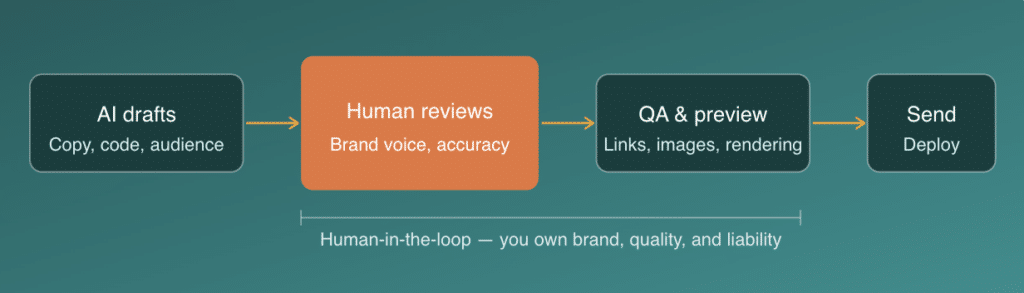
Consequently, the core competency for marketers in this new era is their ability to manage and refine AI output. The primary responsibility becomes quality assurance, ensuring that automation does not "hallucinate" – generating inaccurate or irrelevant content – or deviate from established brand guidelines and voice. A "human-in-the-loop" approach has emerged as the industry best practice for working with AI-generated content, with studies demonstrating that this collaborative model can yield content quality up to 40% higher than purely autonomous AI generation.
This orchestration role entails a meticulous review of AI-generated email content using advanced rendering previews, flagging necessary adjustments for stakeholders, and rigorously verifying all links and images. The guiding principle is clear: marketers delegate labor, but never liability. This means maintaining ultimate accountability for the quality, accuracy, and brand alignment of all outgoing communications, regardless of their initial AI genesis.
Enhancing the Customer Experience with AI
By 2026, the initial novelty of AI-generated copy has largely dissipated. Subscribers have grown more sophisticated in identifying generic or overtly robotic content, leading to increased skepticism and a tendency to ignore messages that lack a human touch. The strategic objective for marketers is no longer merely to use AI for content generation but to leverage it to genuinely enhance the customer experience, making interactions more relevant, personalized, and engaging.
Examples of successful AI integration that elevate the customer experience include:
- Dynamic Content Personalization: AI analyzes real-time user behavior (e.g., recent website visits, purchase history, demographic data) to dynamically inject personalized product recommendations, content blocks, or calls to action into emails. This moves beyond static segmentation to truly individualized messaging.
- Predictive Engagement Scoring: AI models predict which subscribers are most likely to engage with specific types of content or offers, allowing for hyper-targeted campaigns that resonate more deeply.
- Automated A/B Testing and Optimization: AI autonomously runs multivariate tests on subject lines, body copy, images, and send times, rapidly identifying the most effective combinations for different audience segments and continuously optimizing campaign performance.
- Personalized Lifecycle Journeys: AI orchestrates complex customer journeys, triggering specific emails based on granular behavioral cues (e.g., time spent on a product page, items added to cart but not purchased, interaction with previous emails), ensuring timely and contextually relevant communication.
- Sentiment Analysis for Feedback: AI analyzes customer replies and feedback to gauge sentiment, allowing marketers to quickly identify issues or opportunities and tailor follow-up communications accordingly.
A critical caveat remains: all AI outputs must be meticulously edited and refined by humans to ensure they align perfectly with the brand’s unique voice and maintain an authentic, human feel. The goal is seamless, AI-powered personalization that feels natural and valuable, not overtly artificial.
Beyond Email Copy: Broadening AI Applications
While written content remains the most popular application of generative AI for marketers, its utility extends far beyond mere text generation. The full spectrum of AI’s capabilities offers transformative potential across various facets of email marketing:
- Design and Layout Generation: AI design tools can rapidly generate multiple layout and style variants for emails based on brand guidelines, saving significant time in the design and development phase. They can suggest optimal visual hierarchies and even create bespoke graphic elements.
- Advanced Segmentation and Audience Building: AI algorithms can process vast datasets to identify nuanced customer segments, uncover hidden patterns in behavior, and predict future actions with greater accuracy than traditional rule-based segmentation. This allows for incredibly precise targeting.
- Predictive Analytics for Send Times: AI can analyze historical engagement data to determine the optimal send time for individual subscribers, maximizing the likelihood of opening and interaction.
- Automated A/B/n Testing and Optimization: Beyond simple A/B tests, AI can run complex multivariate tests across numerous variables simultaneously, identifying the most effective combinations of elements for different audiences at scale.
- Performance Forecasting and Anomaly Detection: AI can predict campaign performance based on historical data and detect unusual trends or anomalies (e.g., sudden drops in deliverability or engagement), alerting marketers to potential issues before they escalate.
- Content Curation and Recommendation: AI can sift through vast content libraries to curate relevant articles, products, or offers for individual subscribers, enhancing the value of each email.
By exploring these diverse applications, marketers can unlock new levels of efficiency, personalization, and strategic insight, leveraging AI as a comprehensive operational enhancer, not just a content generator.
Strategic Investments: Tools, Data, and Specialization
The evolving demands of email marketing in 2026 underscore the critical need for specialized expertise and robust technological infrastructure. It is no longer sufficient to treat email as a secondary channel; its consistently high return on investment (ROI) necessitates dedicated resources. Investing in a dedicated email designer, equipped with the right tools, is paramount. This specialization allows for the creation of sophisticated, AI-optimized, and aesthetically compelling emails that stand out in a crowded inbox.

Beyond human talent, marketing teams must critically evaluate and diversify their investments in automation tools. As Drew Price, Co-Founder at JRNY PPL, aptly observes, "We’ve been playing checkers for too long and not enough chess. Looking at things more holistically and diversifying our investments with automation will go a long way. There’s just a bit of a mindset shift that we need to do." This highlights the need for a strategic, integrated approach to automation, moving beyond simple triggers to complex, data-driven workflows.
To accelerate design and development cycles, marketers should leverage:
- Email templates: Pre-designed, brand-aligned templates that ensure consistency and speed.
- Advanced email building tools: Platforms that simplify coding, offer drag-and-drop functionality, and provide real-time previews across devices and email clients.
- Reusable HTML modules: Building blocks of code that can be easily repurposed across various campaigns.
- AI design tools: For rapid generation of layout and style variations, facilitating faster iteration and testing.
- Lifecycle automation: Implementing robust automated email sequences for customer onboarding, re-engagement, cart abandonment, and other critical touchpoints, recognizing that a well-designed automated email can yield significantly higher returns than one-off sends.
Data management remains a persistent and growing obstacle, particularly as the demand for hyper-personalization intensifies. Cynthia Price, SVP of Marketing at Validity, emphasizes this, stating, "Data collection and management is not a ‘set it and forget it’ proposition. You’d be surprised how much information subscribers will offer once you prove you’re asking questions to make their lives easier." This underscores the importance of a proactive, value-driven approach to data collection.
Key data management strategies include:
- Address Validation: Tools like BriteVerify from Validity are essential for validating email addresses at the point of entry, safeguarding sender reputation by minimizing soft bounces and ensuring deliverability.
- Strategic Data Segmentation:
- Customers purchasing in multiple categories: Target with gift guides or in-store visit invitations, requiring data on multi-category purchase history and location.
- Customers who bought one product but not a second: Leverage product recommendation engines, needing purchase history and browsing behavior.
- Superfans (3+ purchases): Solicit reviews or social media shout-outs, requiring robust purchase history.
- Prospects browsing in the last 24 hours: Send "back in stock" or "get it before it’s gone" alerts, necessitating real-time browsing data.
- Disengaged prospects (no email interaction in 30+ days): Implement re-engagement campaigns, requiring email engagement metrics.
- Prospects close to purchase: Deploy abandoned cart or abandoned browsing reminders, needing cart contents and browsing session data.
Integrating the email platform with CRM, Customer Data Platforms (CDPs), analytics tools, and marketing automation systems unlocks a wealth of insights, enabling superior personalization and clearer attribution of results. Even without a complex tech stack, simple signup forms, preference centers, and in-email polls can effectively surface valuable zero-party data directly from subscribers.
The Imperative of Inclusivity: Accessibility as a Foundation
Optimizing for accessibility and inclusivity is no longer merely a best practice; it is increasingly a legal requirement, as evidenced by the European Accessibility Act and similar legislative frameworks globally. Beyond compliance, it represents a fundamental commitment to ethical marketing and significantly expands market reach by ensuring content is consumable by all, regardless of ability.

Key best practices for email accessibility include:
- Semantic HTML: Using appropriate HTML tags (
<p>,<h1>through<h6>,<ul>,<ol>) for structure and meaning, rather than relying solely on visual styling. - High Contrast Ratios: Ensuring sufficient contrast between text and background colors for readability, particularly for users with visual impairments.
- Clear and Concise Language: Writing in plain language, avoiding jargon, and breaking down complex information into digestible chunks.
- Meaningful Alt Text: Providing descriptive
alttext for all images, conveying their content and purpose for screen reader users. - Keyboard Navigation: Ensuring all interactive elements (links, buttons) are navigable and actionable using only a keyboard.
- Logical Reading Order: Structuring content so that screen readers can process it in a coherent and intuitive order.
- Responsive Design: Ensuring emails render correctly and are usable across various devices and screen sizes.
- Avoid Flashing Content: Minimizing or eliminating content that flashes rapidly, which can trigger seizures in individuals with photosensitive epilepsy.
Rigorous pre-send testing is indispensable. While some Email Service Providers (ESPs) offer basic checks, dedicated email testing tools are necessary for comprehensive accessibility audits. These tools typically include visual impairment filters, automated checks for alt text, text justification, table roles, and crucial NVDA screen reader previews. These advanced checks ensure that emails are fully compliant and genuinely inclusive. A session from Litmus Live 2026 highlighted that accessibility testing should encompass:
- Visual impairment filters: Simulating different types of color blindness and low vision.
- Automatic checks for alt text: Verifying presence and quality.
- Text justification and table roles: Ensuring proper semantic structure.
- Screen reader preview: Experiencing the email as a visually impaired user would.
Reviewing content through these lenses before hitting send maximizes the impact of every email, broadening its reach and reinforcing the brand’s commitment to inclusivity.
The Future of Email in 2026: A Blend of Efficiency and Humanity
The roadmap for email marketing in 2026 presents an intricate, yet compelling, blend of technological efficiency and human-centric design. While the industry continues to explore and implement sophisticated automation and AI tools to streamline workflows and enhance productivity, there is an equally strong, if not stronger, emphasis on humanizing digital interactions. This means prioritizing the delivery of genuinely personalized and inspiring messages that resonate deeply with individual subscribers, fostering authentic connections in an increasingly automated world.
Furthermore, the foundational principles of accessibility and inclusivity are no longer peripheral considerations but integral components of a successful email strategy. By meticulously designing for both intelligent machines and diverse human audiences, marketers in 2026 are poised to build email programs that are not only efficient and high-performing but also ethical, inclusive, and truly impactful. The future of email is one where smart technology serves to amplify human connection, rather than replace it, solidifying its position as an indispensable channel for brand growth and customer loyalty.