In an increasingly digitized world where social media platforms serve as vital conduits between brands and consumers, the ability to accurately measure performance is no longer a luxury but a strategic imperative. Social media measurement, defined as the systematic process of leveraging social data and sophisticated analytics tools to assess a brand’s efficacy across various social channels, has evolved from tracking superficial "vanity metrics" to providing deep, actionable insights that directly influence business objectives. This rigorous evaluation allows organizations to transcend mere engagement figures, fostering a profound understanding of their audience, optimizing content strategies, and ultimately demonstrating social media’s tangible contribution to overarching corporate goals such as revenue generation, customer retention, and brand reputation.

From Nascent Engagement to Data-Driven Decisions: The Evolution of Social Analytics
The journey of social media measurement mirrors the rapid maturation of social platforms themselves. In their nascent stages, the focus was largely on easily accessible, though often superficial, metrics like follower counts and likes. These early indicators, while providing a sense of reach, offered little insight into actual business impact. However, as social media became deeply integrated into daily life and marketing budgets expanded, the demand for quantifiable returns intensified. Industry analysts and marketing professionals began to emphasize the critical need to move beyond simple vanity metrics, advocating for a more robust, data-driven approach that could connect social activities to the bottom line. This shift necessitated advanced analytics tools and a strategic framework that could clearly articulate how social media efforts contribute to broader business strategies, including lead generation, sales pipeline acceleration, and enhancing customer lifetime value. This evolution transformed social media from a mere promotional channel into a rich data source capable of informing product development, customer service, and competitive strategy.

Unlocking Profound Understanding: Key Insights Derived from Social Data
Effective social media measurement provides a multifaceted lens through which brands can gain unparalleled insights into their operational environment. These insights span audience dynamics, competitive landscapes, content effectiveness, and brand perception, empowering informed decision-making.
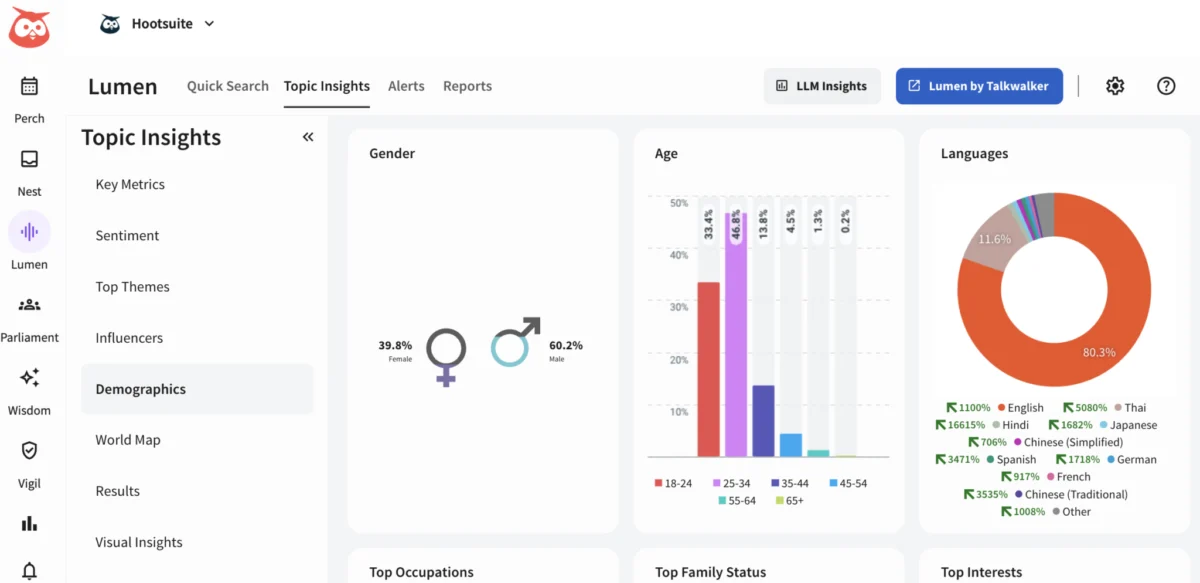
Audience Demographics and Behavioral Insights: At its core, measurement offers a detailed understanding of the target audience. Beyond basic demographics such as age, gender, and location, advanced analytics reveal crucial behavioral patterns, including preferred platforms, optimal online times, and content consumption habits. For instance, while data indicates that approximately 84% of US adults utilize YouTube, engagement patterns and content preferences can vary significantly even within this demographic. These granular insights are instrumental in shaping a brand’s social media strategy, refining its voice, and even influencing product development to meet evolving consumer needs and expectations. Understanding what resonates, what evokes disinterest, and what customers anticipate from a brand provides a strategic advantage in fostering stronger connections.
Target Market Preferences and Pain Points: Social measurement distinguishes between a broad "audience" and a precise "target market." An audience encompasses anyone who interacts with a brand’s content, whereas the target market comprises the ideal customers a brand actively seeks to attract. By meticulously analyzing how these distinct groups engage with content, brands can pinpoint the specific preferences and pain points of their ideal customers. This data-driven clarity enables the refinement of messaging, content formats, and overall strategy to align perfectly with the needs and aspirations of the most valuable customer segments.
Competitive Intelligence and Benchmarking: A critical component of effective measurement is the ability to monitor and analyze competitors. Social media measurement tools facilitate the identification of key rivals and provide insights into their social media strategies, revealing how they engage with shared audiences. This competitive analysis allows brands to benchmark their own performance against industry peers, identify emerging competitive threats, and uncover strategic gaps in their own social media approach. For example, analyzing competitor posting frequency, content types, and engagement rates can highlight successful tactics or areas for improvement. Furthermore, assessing "social share of voice"—the percentage of online conversation about a brand versus its competitors—offers a quick barometer of market presence and influence.
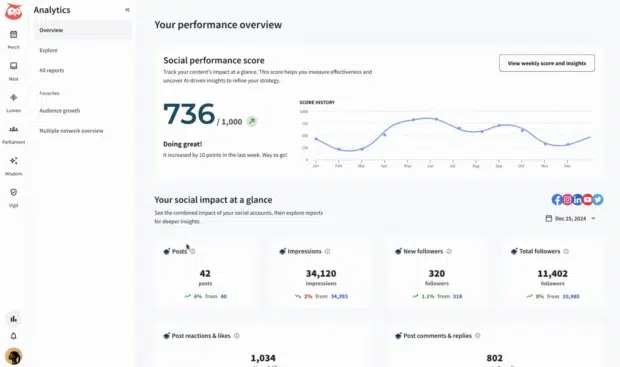
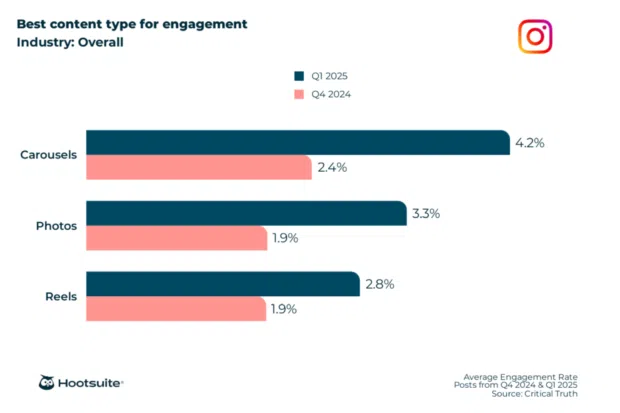
Content Performance and Return on Investment (ROI): Measurement empowers brands to evaluate content performance at both macro and micro levels. On a macro scale, it tracks overall trends in engagement, follower growth, and reach, indicating the general effectiveness of the social strategy. This broad view is crucial for calculating the overall ROI of social media efforts. At the micro level, detailed insights reveal which specific content types (e.g., photo, video, text) perform best, optimal caption lengths and styles, and which calls to action drive the most clicks. The integration of AI-powered analytics can accelerate this process, identifying patterns across vast volumes of posts and allowing marketers to pivot from data collection to strategic action more rapidly.
Brand Awareness, Perception, and Reputation Management: Social media measurement offers a comprehensive view of a brand’s visibility and public sentiment. It combines quantitative data, such as the percentage of online conversation centered on the brand, with qualitative sentiment analysis to paint a complete picture of brand perception. Tracking brand sentiment over time transforms raw data into actionable intelligence. A consistent sentiment score amidst rising mention volume typically signifies healthy growth, whereas a sharp drop in sentiment coupled with a spike in volume acts as an immediate warning sign, necessitating prompt attention and crisis management. Real-time monitoring significantly reduces the response gap, often making the difference between containing a manageable issue and facing a full-blown reputational crisis.
Strategic Framework: Mapping Business Goals to Actionable Metrics
The cornerstone of effective social media measurement lies in aligning chosen metrics directly with predefined business outcomes. A metric’s inclusion on a dashboard is justified only if it provides information that can drive actionable decisions. This distinction separates "vanity metrics"—which might look impressive but offer little strategic value—from "actionable KPIs" (Key Performance Indicators). For instance, a follower count alone rarely dictates a decision, but a follower growth rate analyzed in conjunction with demographic shifts can reveal whether the brand is reaching its intended audience.
Common business goals translate into specific key metrics:
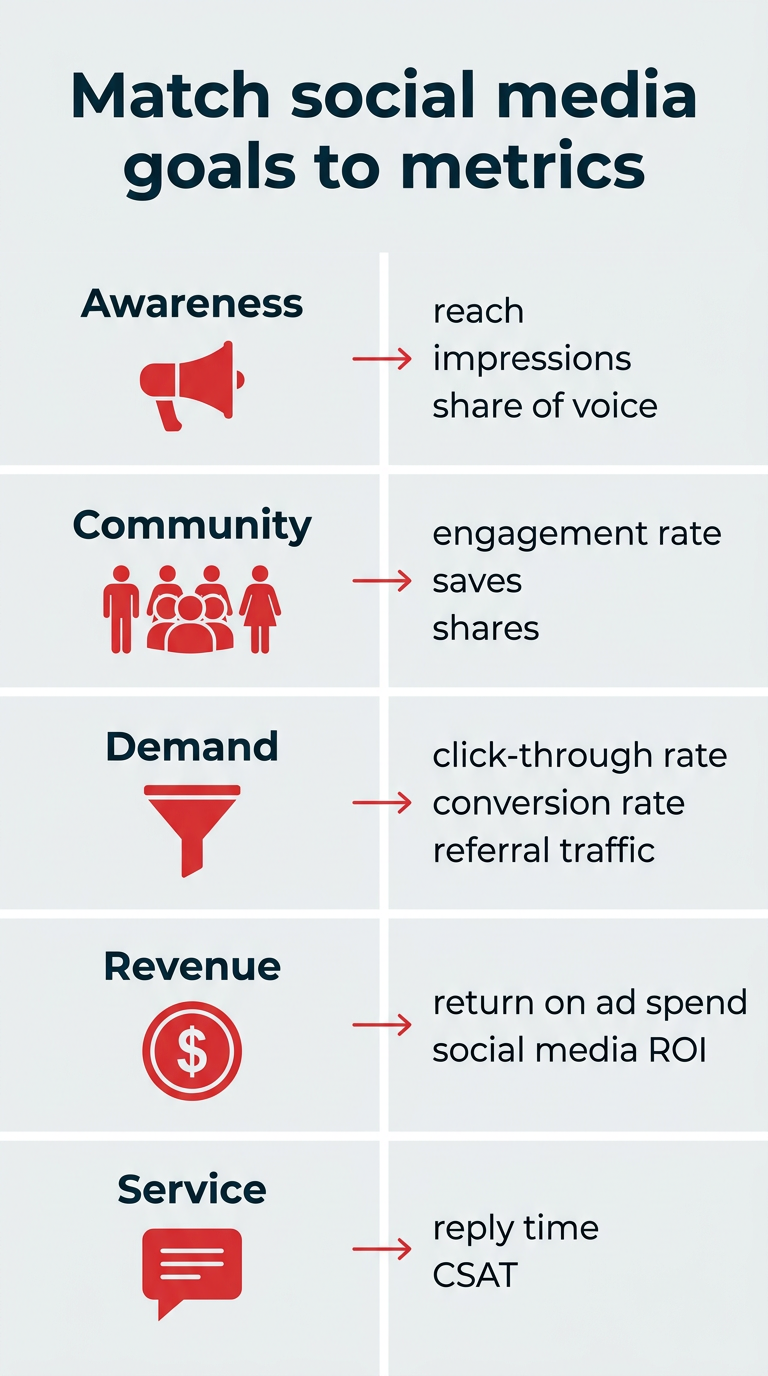
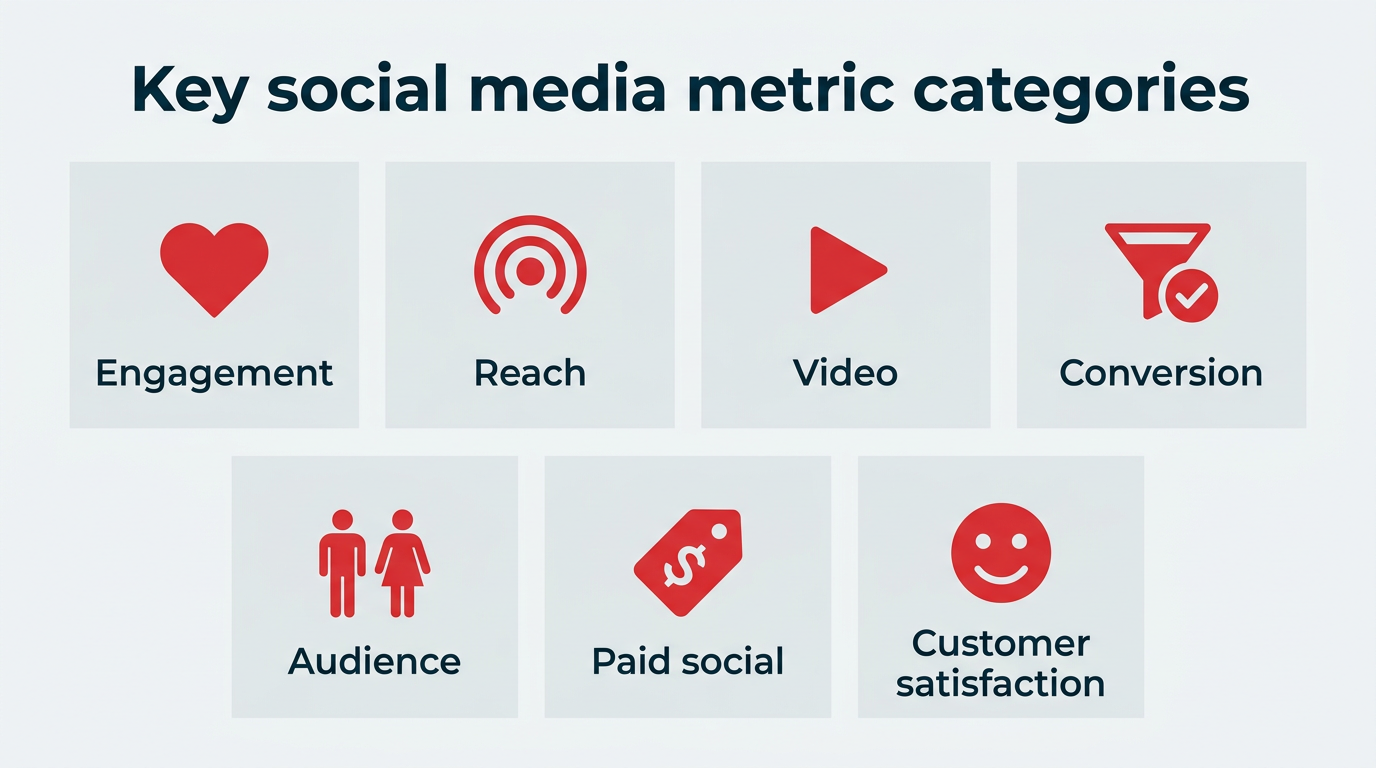
- Brand Awareness: Metrics include Reach (unique users seeing content), Impressions (total views), Social Share of Voice (brand mentions vs. competitors), and Follower Growth. These quantify visibility and market presence.
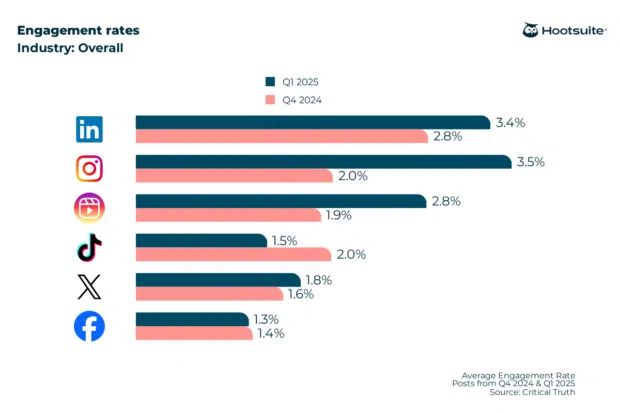
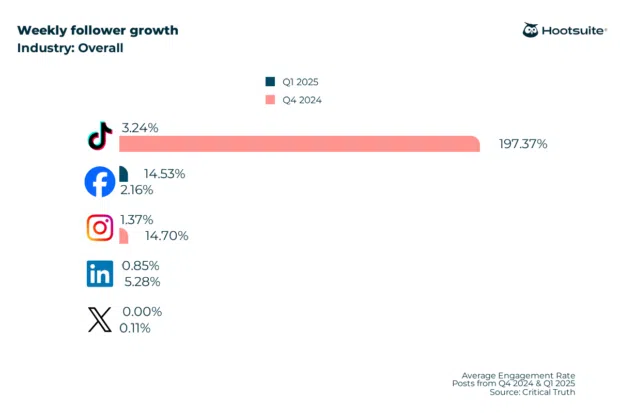
- Engagement: Measured by Engagement Rate (interactions per impression/reach), Comments, Shares, and Saves. These metrics indicate how deeply an audience connects with content. It’s crucial to consider the quality of engagement; comments often signify deeper interest than likes, and saves suggest stronger intent. Hootsuite’s benchmark data, for example, highlights varying engagement rates across platforms, with LinkedIn typically showing lower rates compared to TikTok or Instagram.
- Lead Generation and Conversions: Key metrics include Click-Through Rate (CTR), Conversion Rate (visitors completing a desired action), and Social Referral Traffic (website traffic originating from social media). For revenue-focused objectives, Return on Ad Spend (ROAS), Social Media ROI, and Cost Per Click (CPC) become paramount. The increasing complexity of customer journeys necessitates the use of multi-touch attribution models, which distribute credit across all interactions leading to a conversion. Notably, nearly 47% of US marketers plan to invest more in marketing mix modeling, underscoring the shift towards more holistic attribution.
- Customer Satisfaction: Metrics such as Customer Satisfaction (CSAT) scores, Net Promoter Score (NPS), and Reply Time are vital. As social media increasingly serves as a primary customer support channel, tracking these metrics ensures that customer care efforts are effective and responsive, directly impacting brand loyalty and retention.
- Video Performance: With video content dominating many platforms, specific metrics are essential: View Count, Average View Duration, Completion Rate, and Audience Retention. These metrics provide insights into how engaging video content truly is beyond mere impressions.
- Paid Social Metrics: For brands investing in social advertising, metrics like Cost Per Click (CPC), Return on Ad Spend (ROAS), Cost Per Mille (CPM – cost per thousand impressions), and Paid Click-Through Rate are crucial. Analyzing paid and organic results in tandem can reveal which messages warrant greater advertising spend and which organic content strategies are most effective.
Establishing a Robust Measurement Ecosystem: A Five-Step Process
Implementing an effective social media measurement process requires a structured, repeatable system that integrates goals, metrics, tools, and reporting.
- Set Clear Social Media Goals: The foundational step is to define precise, measurable, achievable, relevant, and time-bound (SMART) goals. These goals should align directly with broader business objectives and may vary by platform or campaign. The primary objective is to understand what success looks like before data collection begins.
- Choose the Metrics to Track: Based on established goals, select a concise set of KPIs that will directly gauge progress. For instance, if TikTok’s primary goal is brand awareness, focus on reach and audience growth. If Instagram is used for sales, conversion metrics become paramount.
- Set Up Analytics and Social Listening Tools: All major social platforms offer native analytics, which are excellent starting points due to their accessibility. However, for comprehensive, cross-platform insights, integrated solutions are indispensable. Tools like Hootsuite Social OS (featuring Perch for content analytics, Lumen for listening, and Nest for engagement management) consolidate data, streamline reporting, and provide a unified view. Specialized tools like RivalIQ offer competitive benchmarking, while Google Analytics is crucial for tracking post-social website behavior and conversions via UTM parameters.
- Connect Social Measurement Tools to Your CRM: Integrating social data with a Customer Relationship Management (CRM) system is a critical step in demonstrating social media’s impact on sales and customer lifecycle. This connection provides sales and support teams with a holistic view of customer interactions, enhances attribution models, and allows for precise tracking of social media’s contribution to the sales pipeline and revenue. For example, Hootsuite’s Salesforce integration enables seamless syncing of social interactions with customer records, making ROI conversations with leadership far more straightforward.
- Report, Reassess, and Optimize Continuously: Measurement is not a one-time event but an ongoing cycle. Regular reporting to various stakeholders (tailored to their specific needs) should be treated as decision points rather than mere status updates. Marketers must continually assess if their strategy is yielding desired results, if goals remain realistic, and if new trends necessitate adjustments. When results are stagnant, change one variable at a time to isolate impact. When successful, document the approach to ensure repeatability. This iterative process of analysis, adaptation, and optimization is fundamental to sustained growth.
The Landscape of Social Media Measurement Tools
The market offers a diverse array of tools designed to facilitate robust social media measurement:
- Hootsuite Social OS: An integrated social operating system that unifies publishing, engagement, listening, and measurement. Its components, Perch (publishing/content analytics), Lumen (listening/insights), and Nest (inbox/engagement), provide a comprehensive suite for benchmarking, custom reporting, and CRM integration. This platform is ideal for enterprise teams seeking a holistic view of their social efforts.
- RivalIQ: A specialized analysis tool focused on competitive intelligence. It allows brands to measure and compare mentions, hashtags, and topics, and its machine learning capabilities can detect boosted competitor posts, offering insights into their paid strategies. RivalIQ is particularly beneficial for agencies, nonprofits, and large brands needing deep competitive insights.
- Google Analytics (GA4): While not a dedicated social media tool, GA4 is indispensable for understanding post-social media website behavior. It tracks social referral traffic, conversions, and campaign performance when integrated with UTM parameters, directly linking social clicks to on-site actions and revenue. It serves as a vital complement to social-specific measurement tools.
Broader Implications and Future Outlook
The rigorous application of social media measurement has profound implications for modern business. It elevates social media from a tactical marketing function to a strategic pillar, driving informed decision-making, optimizing resource allocation, and fostering a sustained competitive advantage. The future of social media measurement is likely to be characterized by even greater integration of artificial intelligence for predictive analytics, hyper-personalization, and automated insights, further streamlining the process of extracting actionable intelligence from vast datasets. Ethical considerations surrounding data privacy and responsible AI use will also play an increasingly significant role. Ultimately, mastering social media measurement is not just about tracking numbers; it is about cultivating an agile, data-driven marketing ecosystem that is responsive to market dynamics and consistently delivers tangible business value, positioning brands for enduring success in the ever-evolving digital landscape.