

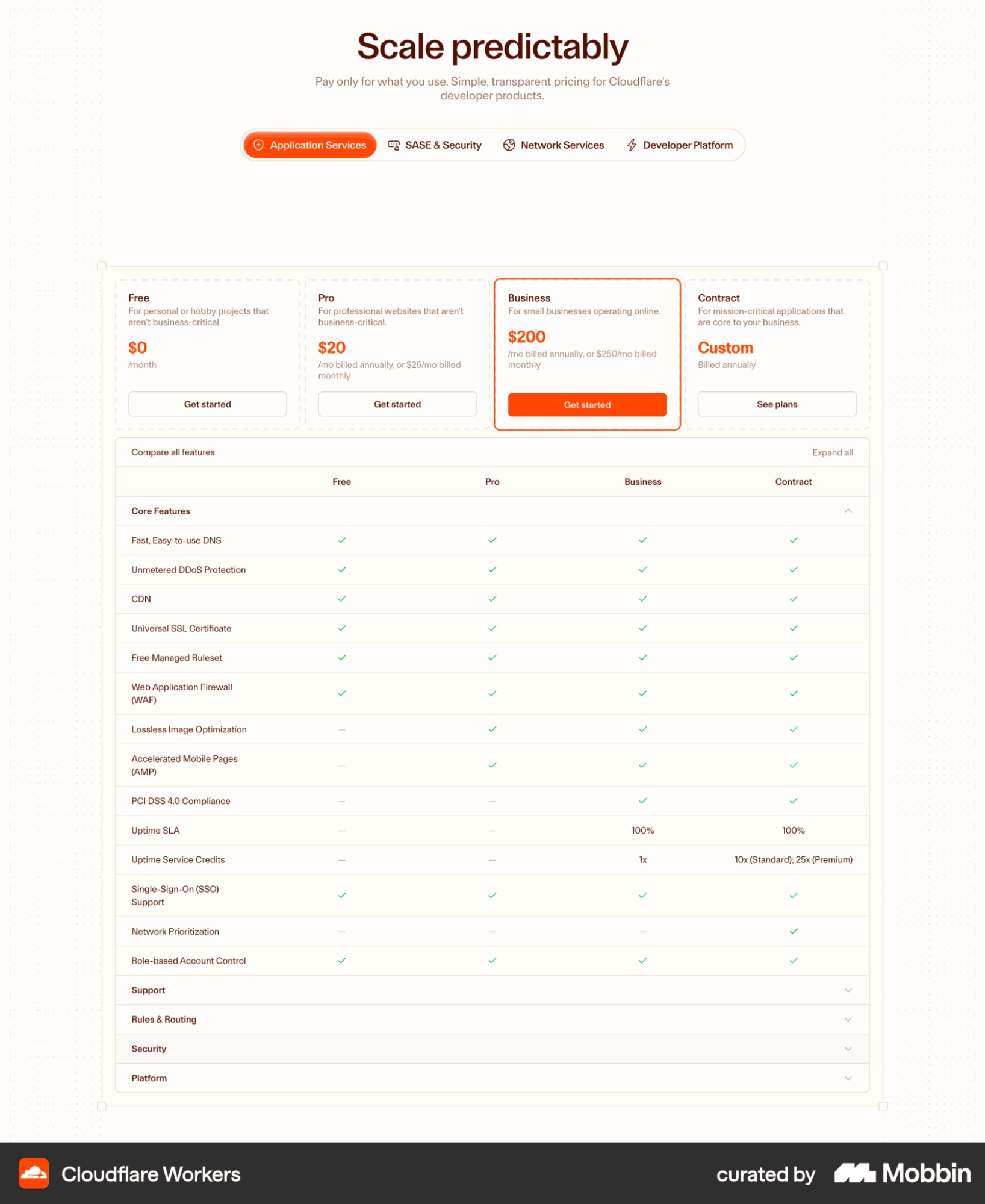
The global Software-as-a-Service (SaaS) and subscription-based economy has entered a period of intense scrutiny, shifting away from a "growth at any cost" mentality toward a focus on sustainable unit economics and profitability. Central to this transition is the optimization of pricing models, a process that many industry experts argue is frequently mismanaged. Recent industry analysis suggests that the majority of subscription apps and SaaS enterprises approach pricing experimentation in reverse, focusing on superficial adjustments to price points rather than addressing the structural foundations of their revenue models. To address this, a diagnostic framework known as the "Pricing Pyramid" has emerged, positing that pricing decisions must be stacked in a specific hierarchy: value metrics, packaging, price points, and finally, tactical optimization.
The current economic climate for technology firms—marked by increased customer acquisition costs (CAC) and a higher bar for venture capital funding—has made pricing the single most effective lever for increasing revenue. However, when firms test pricing out of order, they often encounter "flat" results that lead to the incorrect conclusion that pricing is not the issue. In reality, the failure often lies in a broken foundation, such as a value metric that does not align with customer success or a packaging structure that introduces excessive cognitive load.

The Evolution of Subscription Pricing: A Historical Context
The methodology behind SaaS pricing has undergone significant shifts over the last two decades. In the early 2000s, the "per-user" or "per-seat" model, popularized by pioneers like Salesforce, became the industry standard. It was simple, predictable, and easy to scale. However, as software became more integrated and automated, the correlation between the number of human users and the value derived from the software began to decouple.
By the mid-2010s, the industry saw the rise of usage-based pricing (UBP), driven by infrastructure giants like Amazon Web Services (AWS) and communications platforms like Twilio. This shift allowed companies to align their revenue more closely with the actual consumption of resources. Today, the rise of Generative AI has further complicated this landscape. With high compute costs associated with AI tokens and API calls, companies are struggling to find a balance between covering their operational costs and providing a pricing structure that feels fair to the end-user. The Pricing Pyramid serves as a corrective roadmap for companies navigating these complexities.
Layer 1: The Value Metric as the Bedrock of Fairness
The foundation of the pricing pyramid is the value metric—the specific unit of consumption or utility that determines what a customer pays. Common examples include the number of active users, the volume of data stored, the number of messages sent, or the amount of revenue processed. Industry data indicates that companies that align their value metric with customer success see significantly lower churn rates.

The primary risk at this level is the creation of a "punitive" pricing model. When an app prices based on usage, it often captures revenue from heavy users, but qualitative research frequently reveals that these users feel "nickeled and dimmed." This creates a psychological barrier to product engagement; if every action within an app carries a perceived marginal cost, users may seek workarounds or limit their usage to avoid hitting caps. This phenomenon is particularly dangerous for subscription models, as it creates friction at the exact moment the user should be experiencing the most value. Strategic pricing tests at this level should focus on whether the current metric scales with value or merely tracks costs.
Layer 2: Packaging and the Reduction of Cognitive Load
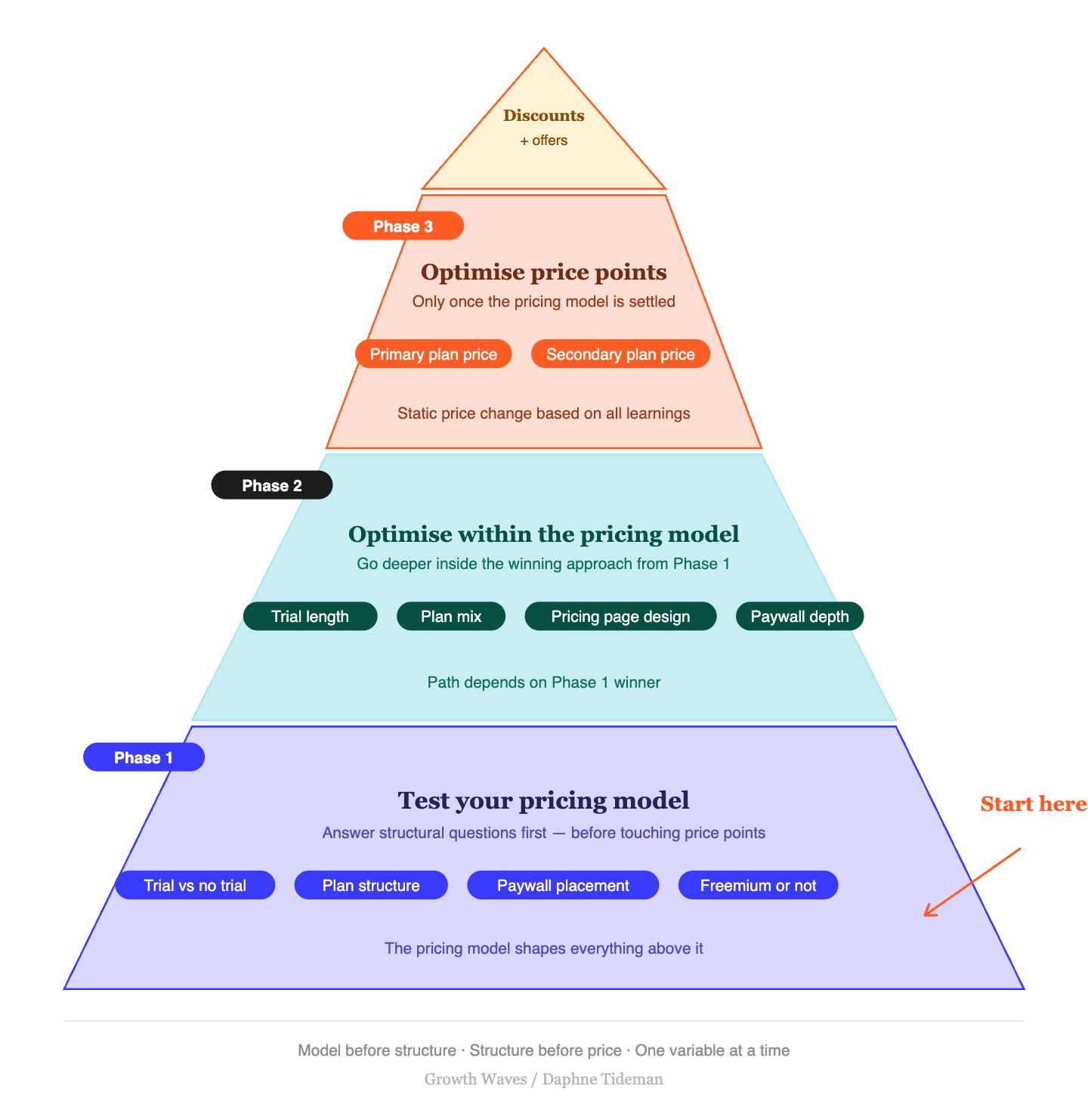
Once the value metric is established, the next layer of the pyramid is packaging—the way features and limits are bundled into specific tiers. A common pitfall for maturing SaaS companies is "feature creep" in their pricing tables. As products evolve, companies often add more tiers and toggles, leading to a phenomenon known in behavioral economics as the "paradox of choice."
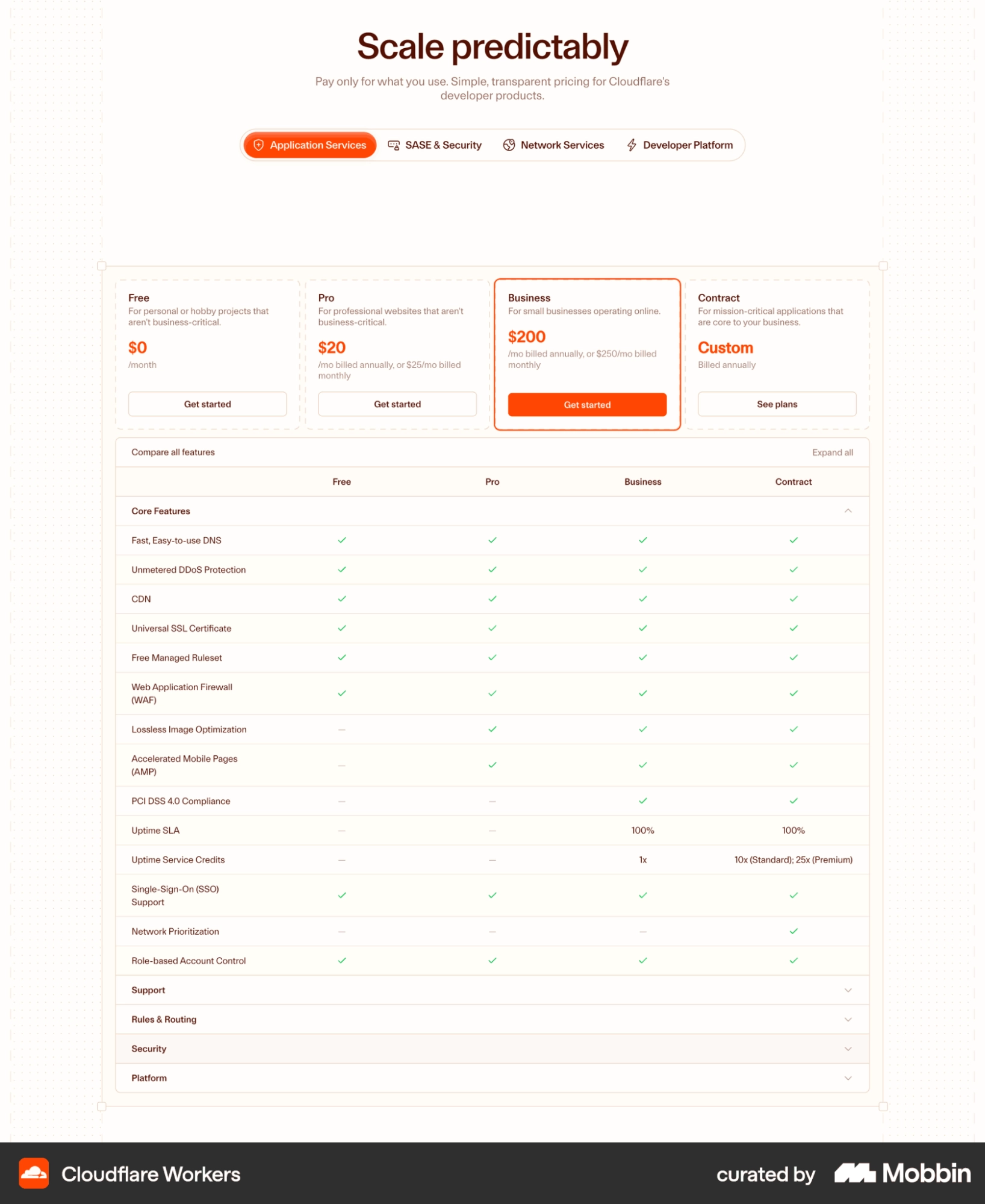
For instance, industry observers often point to complex pricing pages, such as those used by developer-centric platforms, which may offer dozens of features across multiple monthly and annual plans. When a potential customer is forced to predict their future usage or perform complex mathematics to determine the best value, the cognitive load often results in a "no-decision" outcome. Effective packaging tests aim to simplify the decision-making process. Key experiments at this stage include testing "Good-Better-Best" structures, refining the "fencing" between tiers (deciding which features are premium versus standard), and evaluating the impact of add-ons versus bundled features.
Layer 3: Price Point and Willingness-to-Pay Research
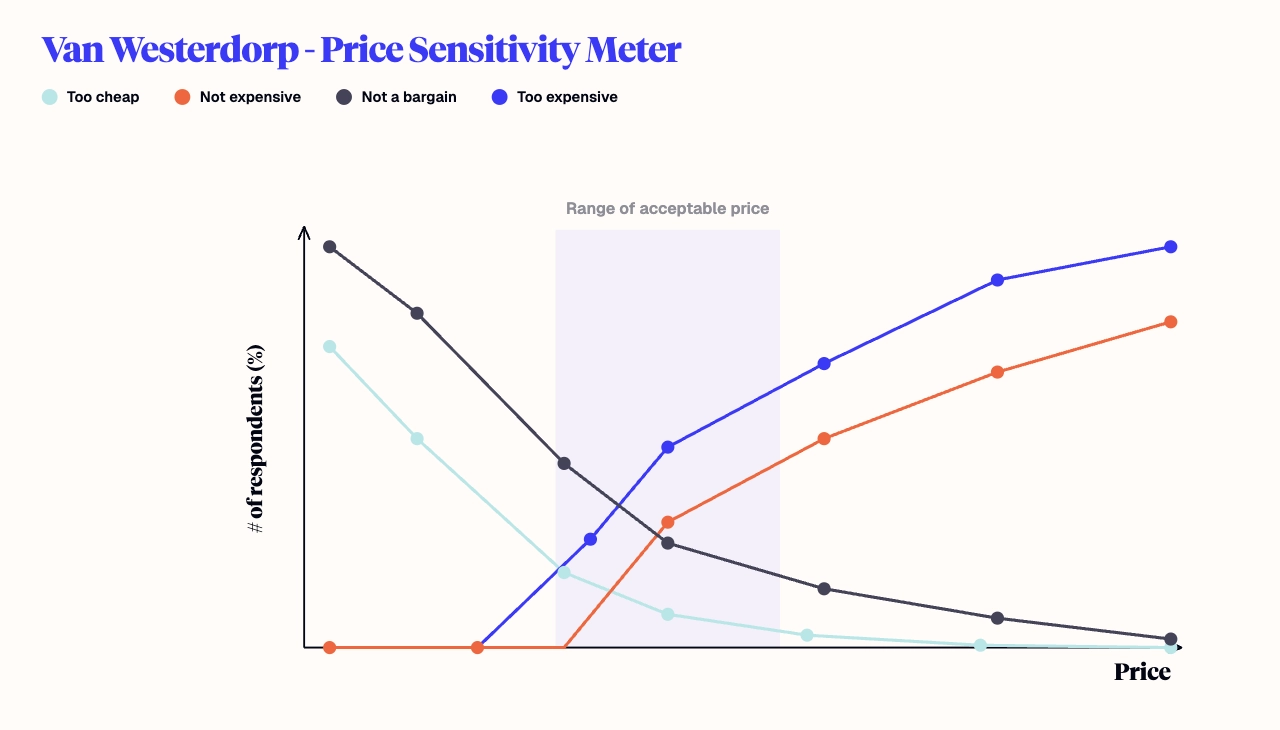
Only after the value metric and packaging are solidified should a company focus on the actual numerical price point. Journalistic investigation into successful SaaS pivots reveals that many teams rely on guesswork or competitor benchmarking rather than empirical research at this stage.
To determine the optimal price point, sophisticated growth teams utilize specific research methodologies:
- Van Westendorp Price Sensitivity Meter: This involves asking potential customers four key questions to identify a "range of acceptable prices" and the "optimal price point" where resistance is minimized.
- MaxDiff Analysis: A survey technique where respondents are asked to choose the best and worst options from a set of features or price points, providing a clear ranking of perceived value.
These methods help organizations understand if their pricing is a genuine constraint or if the perceived lack of value is actually a branding or marketing problem. It is also critical at this stage to maintain "clean" testing environments. A common error identified in growth audits is the "combination test," where a company changes both the price point and the length of a free trial simultaneously. Such tests make it impossible to isolate which variable drove the change in conversion, rendering the data useless for future strategy.
Layer 4: Tactical Optimization and the Paywall Experience
The apex of the pyramid consists of tactical optimizations. These are the "quick wins" that many marketing teams prioritize, such as adjusting the layout of a paywall, utilizing price anchoring (displaying a more expensive plan to make the middle plan look cheaper), or introducing urgency through limited-time discounts.
While these tactics can yield immediate lifts in conversion, they are refinements rather than fundamental drivers of growth. A high-converting paywall cannot compensate for a value metric that customers find unfair or a packaging structure that is too confusing to navigate. Optimization at the top of the pyramid is most effective when it supports a strategy that has already been validated at the lower levels.
Supporting Data: The Impact of Pricing on SaaS Valuation
The importance of this tiered approach is underscored by data from venture capital firms and SaaS benchmarking platforms. According to a study by ProfitWell (now Paddle), improvements in pricing have a 2x to 4x greater impact on growth than improvements in acquisition or retention. Specifically, a 1% improvement in price optimization can result in an average 11% increase in profit.
Despite this, the average SaaS company spends less than ten hours per year on their pricing strategy. This neglect often leads to "accidental" pricing models that are reactive to competitors rather than proactive in capturing the value provided to the user. The Pricing Pyramid provides a structured way for companies to dedicate resources to the areas that yield the highest return on investment.
Industry Implications and the Path Forward
The implications of failing to follow a logical pricing sequence are significant. When conversion rates drop, the instinctive reaction of many executive teams is to lower prices or offer deeper discounts. However, if the underlying issue is Layer 1 (the value metric), a lower price point will not solve the long-term churn problem. Conversely, if the issue is Layer 2 (packaging), no amount of paywall optimization will fix the confusion felt by the prospect.
The shift toward the Pricing Pyramid model represents a maturation of the software industry. As the market becomes more crowded, the ability to communicate and capture value through pricing becomes a competitive advantage. Companies that successfully work the pyramid from the bottom up—ensuring their foundation is fair, their structure is simple, their price is researched, and their tactics are refined—are the ones most likely to achieve sustainable growth in an increasingly volatile economic environment.

In conclusion, pricing is not a one-time "set and forget" task, nor is it a series of random A/B tests. It is a diagnostic sequence. By treating pricing as a stack of dependent decisions, SaaS and subscription companies can move away from the frustration of flat test results and toward a model that truly reflects the value they provide to their customers. The future of subscription growth lies not in the "number," but in the integrity of the pyramid beneath it.







