Ammar Sabilarrohman
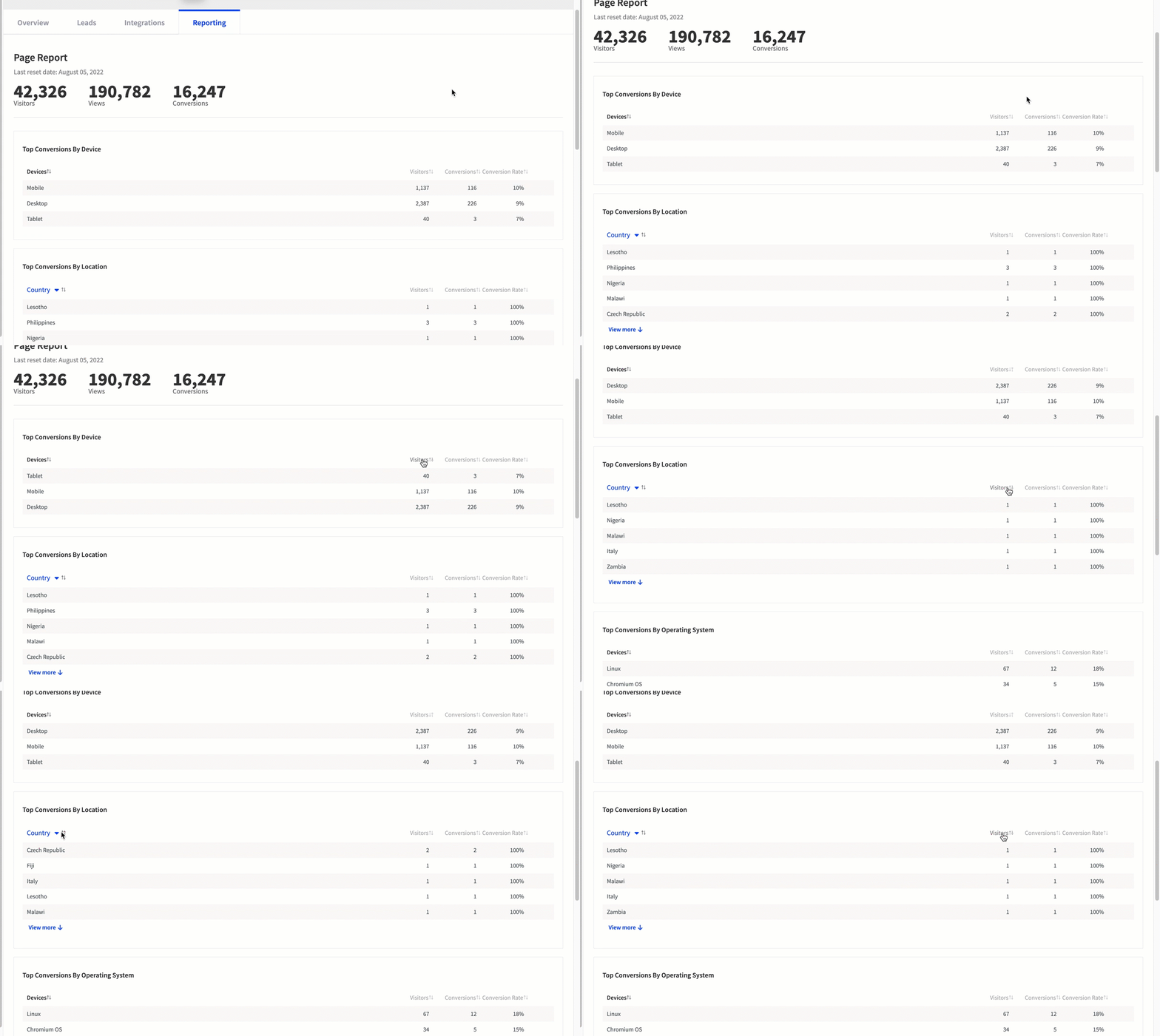
The landscape of digital marketing is undergoing a fundamental shift as organizations move away from isolated, high-stakes campaign launches toward a model of continuous, evidence-based refinement known as iterative testing. This methodology, which has long been a staple of software engineering and product development, is now being adopted by high-performance marketing teams to mitigate the financial risks associated with traditional "big bang" marketing strategies. Rather than treating an A/B test as a terminal event, iterative testing establishes a permanent cycle of experimentation where each result serves as the foundation for the next hypothesis. Industry data suggests that this approach not only improves conversion rates but also aligns marketing efforts more closely with the rapidly evolving behaviors of digital consumers.
The Shift from Static to Dynamic Marketing Frameworks
Historically, marketing departments operated on a linear model: research, create, launch, and evaluate. This "one-and-done" philosophy often led to significant budget waste, as campaigns were based on static assumptions that could become obsolete by the time of execution. The emergence of iterative testing represents a transition to an agile framework. By implementing small, frequent adjustments to marketing assets—ranging from landing page headlines to call-to-action (CTA) placements—firms can identify "slow leaks" in their conversion funnels before they result in catastrophic budget depletion.
According to recent industry benchmarks, the difference between a high-converting campaign and a failed one often hinges on subtle linguistic and structural nuances. For instance, data from the 2024 Conversion Benchmark Report indicates that landing pages written at a 5th-to-7th-grade reading level achieve a conversion rate of approximately 11.1%, more than double the rate of content written in professional or academic prose. Such insights are rarely discovered through traditional campaign management but are frequently unearthed through the rigors of an iterative testing cycle.
A Chronological Framework for Iterative Testing Implementation
The transition to an iterative testing model requires a structured, six-stage lifecycle that prioritizes speed, clarity, and scalability. This process ensures that data is not merely collected but is transformed into institutional knowledge.

Phase 1: Hypothesis Formulation and Observation
The process begins with the identification of specific friction points within the user journey. Rather than testing multiple variables simultaneously—a common error that obscures the cause of performance changes—marketers must define a laser-focused hypothesis. A valid hypothesis follows a logical "If-Then" structure: "If we simplify the hero image to remove visual clutter, then the conversion rate will increase because the user’s attention will be focused on the primary CTA." This stage relies heavily on historical data and user behavior observations to ensure the test is grounded in reality rather than intuition.
Phase 2: Strategic Prioritization via the Impact-Effort Matrix
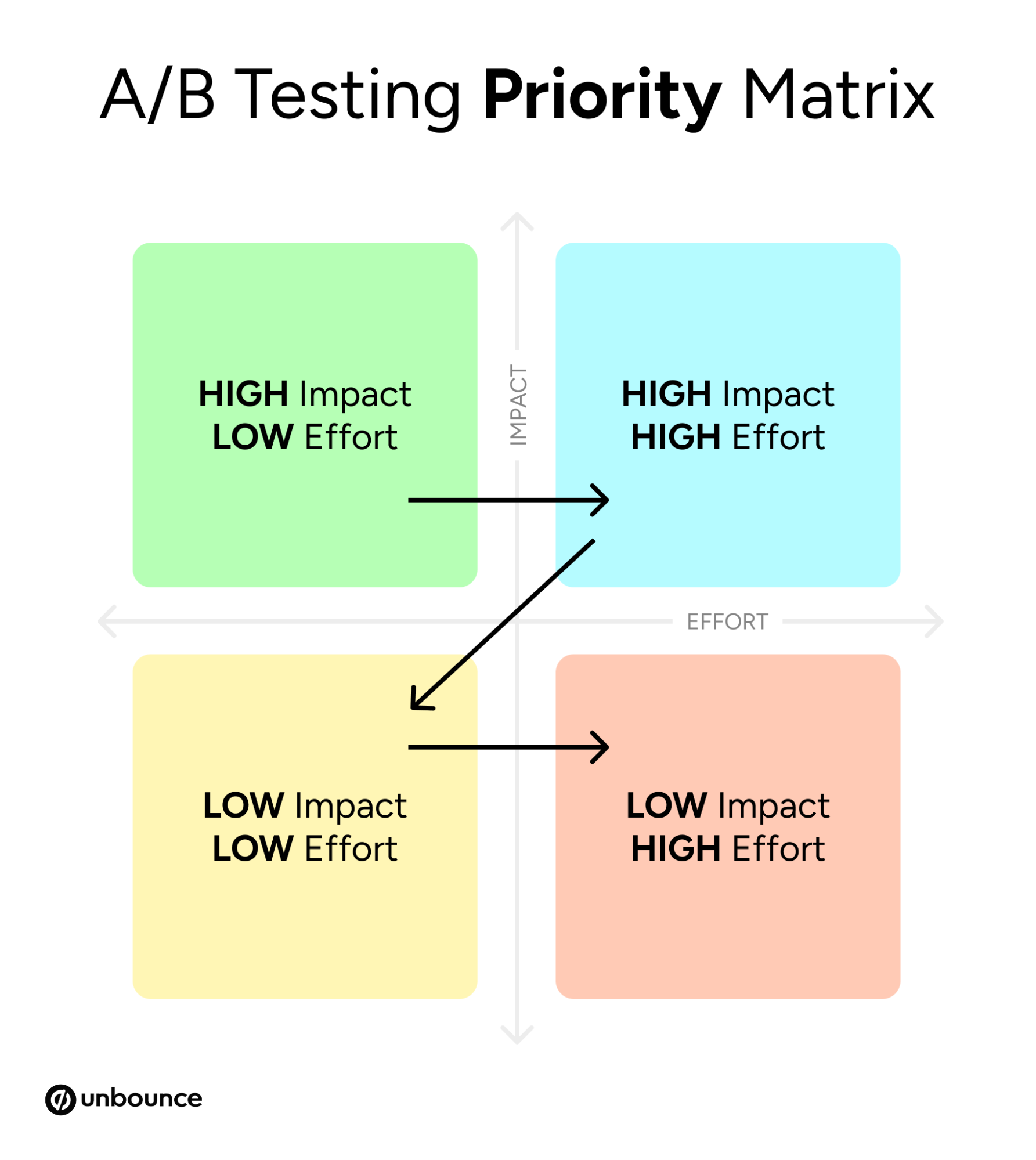
Given that marketing resources are finite, organizations must prioritize experiments that offer the highest potential return on investment (ROI). Analysts often utilize a 2×2 matrix to categorize potential tests into four quadrants:
- Quick Wins: High impact, low effort (e.g., changing a button color or headline).
- Major Projects: High impact, high effort (e.g., redesigning the entire checkout flow).
- Fill-ins: Low impact, low effort (e.g., minor typography adjustments).
- Time Wasters: Low impact, high effort (e.g., complex animations that do not influence intent).
Phase 3: Construction of Minimal Testable Variations
In the iterative model, "perfection" is often the enemy of progress. The objective is to build a variant that is different enough to yield measurable data but simple enough to launch quickly. Modern A/B testing platforms have facilitated this by allowing marketers to duplicate existing control pages and make isolated changes without the need for extensive developer intervention. This reduction in technical friction is critical for maintaining the momentum of the testing cycle.
Phase 4: Data Collection and Statistical Validation
Once a test is live, the focus shifts to gathering a statistically significant sample size. Industry experts warn against "early peeking," where marketers terminate a test prematurely based on initial trends. To ensure results are not the product of random variance, tests must reach a confidence level—typically 95% or higher. For high-traffic campaigns, this may take a matter of days; for lower-traffic scenarios, tools utilizing machine learning, such as "Smart Traffic" algorithms, can begin optimizing paths after as few as 50 visits by dynamically routing users to the variant most likely to convert.
Phase 5: Synthesis of Actionable Insights
The analysis phase goes beyond identifying a "winner." It seeks to understand the "why" behind user behavior. If a simpler headline outperformed a clever one, the insight is not just about that specific page; it suggests that the target audience values clarity and directness. These findings are then documented to inform future creative briefs across all marketing channels, including email, social media, and paid search.

Phase 6: Scaling and Longitudinal Iteration
The final stage involves institutionalizing the success. A winning variant becomes the new "control," and the process begins again with a new hypothesis aimed at further refinement. If a test fails, it is viewed as a "successful failure"—providing valuable data on what does not resonate with the audience, thereby preventing future missteps.
Supporting Data: The Impact of Device-Specific Behavior
The necessity of iterative testing is further underscored by the disparity between mobile and desktop user behavior. Current market analysis reveals that while 83% of landing page visits now occur on mobile devices, desktop sessions continue to convert at an 8% higher rate on average. This gap presents a significant opportunity for iterative optimization.
Marketing teams utilizing iterative processes can experiment with device-specific variations, such as "click-to-call" buttons for mobile users versus detailed lead forms for desktop users. By continuously testing these segments, organizations can bridge the conversion gap, ensuring that their mobile-heavy traffic is not being wasted on experiences optimized for a desktop-first era.
Cross-Departmental Collaboration and Institutional Responses
The adoption of iterative testing frequently necessitates a shift in corporate culture. Marketing departments are increasingly collaborating with sales, customer support, and product teams to gather qualitative data for their testing backlogs.
Customer support teams, for example, often possess direct knowledge of the "pain points" that lead to user churn or abandoned carts. By integrating these insights into the testing cycle, marketers can address real-world objections on their landing pages. Statements from industry leaders suggest that companies fostering a "culture of experimentation" see higher employee engagement and more predictable revenue growth, as teams feel empowered to make decisions based on data rather than hierarchy.
The Role of Artificial Intelligence in Accelerating Cycles
The integration of Artificial Intelligence (AI) and Machine Learning (ML) has significantly compressed the timeline of the iterative process. AI-driven optimization tools can now analyze hundreds of user signals—such as geography, device type, and time of day—to serve the most effective variant to each individual visitor in real-time. This "multi-armed bandit" approach to testing allows for continuous improvement without the traditional downtime associated with manual analysis.
However, analysts note that AI is a supplement to, not a replacement for, human-led hypothesis generation. While AI can optimize for specific metrics, the creative direction and the "focused hypothesis" remain the domain of the marketing strategist.
Broader Impact and Industry Implications
The move toward iterative testing has profound implications for the future of marketing budgets and agency-client relationships. As testing becomes an ongoing process rather than a project-based expense, organizations are shifting toward "always-on" optimization budgets. This allows for greater flexibility, as funds can be reallocated in real-time to the tactics and creative variants that demonstrate the highest performance.
Furthermore, in an era where privacy regulations and the phasing out of third-party cookies are making traditional tracking more difficult, first-party data gathered through iterative testing becomes a competitive moat. By understanding exactly how their specific audience responds to different triggers, brands can build more resilient marketing ecosystems that do not rely solely on external platform algorithms.
Ultimately, iterative testing represents the maturation of digital marketing into a rigorous, scientific discipline. By embracing a cycle of constant progress over the pursuit of occasional perfection, marketing teams can ensure their strategies remain as dynamic and adaptable as the audiences they serve. The goal of the modern marketer is no longer to be right the first time, but to get closer to the truth with every subsequent iteration.


 Sagoh
 Siti Muinah