
 rifanmuazin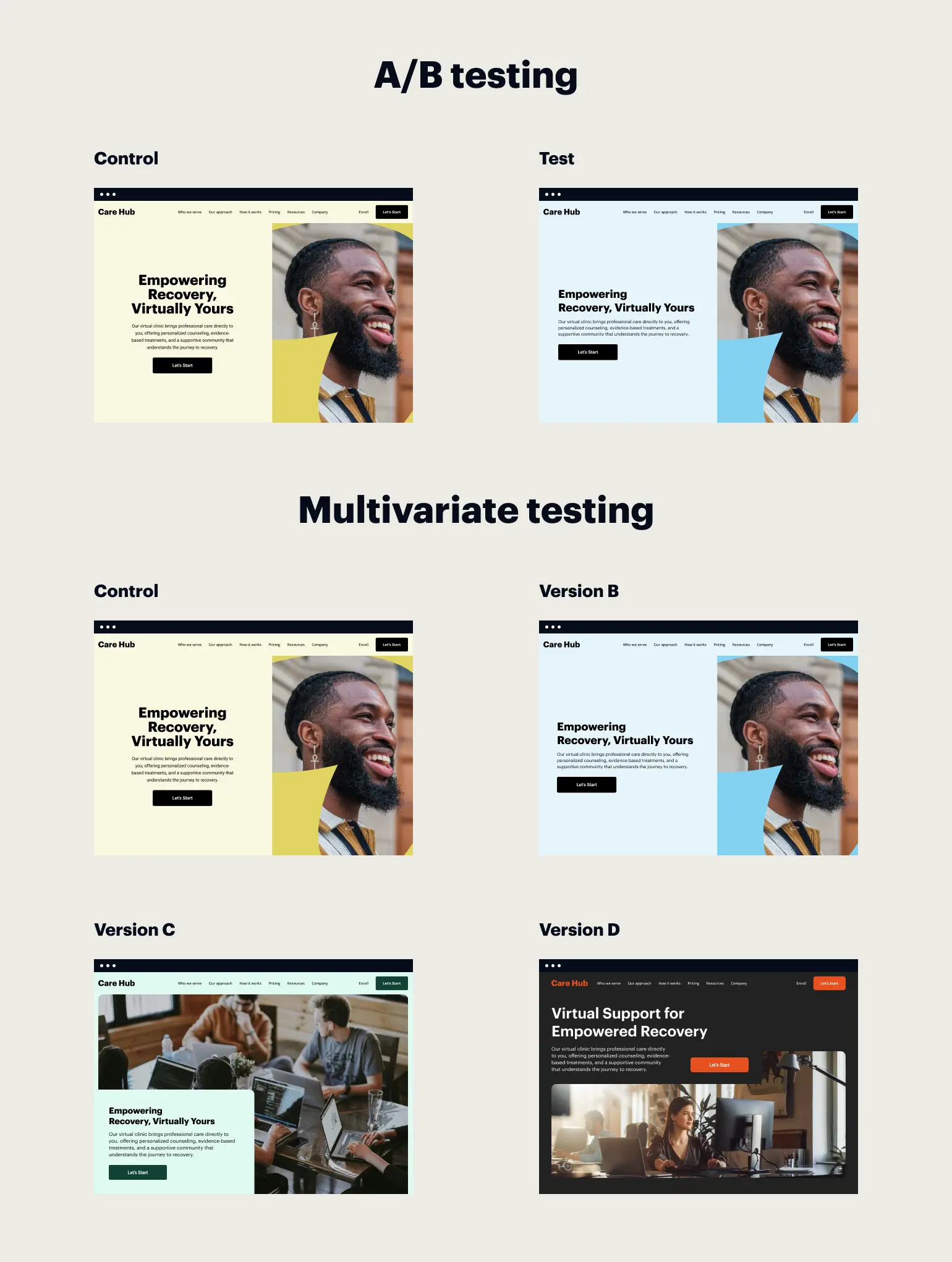
In an era where digital advertising expenditures are projected to exceed $700 billion globally, the margin for error in user experience (UX) and landing page design has narrowed to a razor-thin edge. For modern marketers, the transition from "gut-feeling" design to data-driven optimization is no longer a luxury but a fundamental requirement for survival. Central to this transition are two dominant methodologies of experimentation: A/B testing and multivariate testing (MVT). While both serve the overarching goal of Conversion Rate Optimization (CRO), their applications, mathematical foundations, and resource requirements differ significantly, shaping how brands interact with their digital audiences.

Experiments serve as the scientific backbone of marketing campaigns, providing a structured framework to identify high-performing assets and discard inefficient ones. While A/B testing has long been the industry standard for comparing two distinct versions of a webpage, the increasing complexity of consumer behavior has necessitated more sophisticated approaches. Multivariate testing has emerged as the solution for high-traffic platforms seeking to understand not just which elements work, but how various elements interact with one another to influence the final conversion decision.
The Architecture of Multivariate Testing
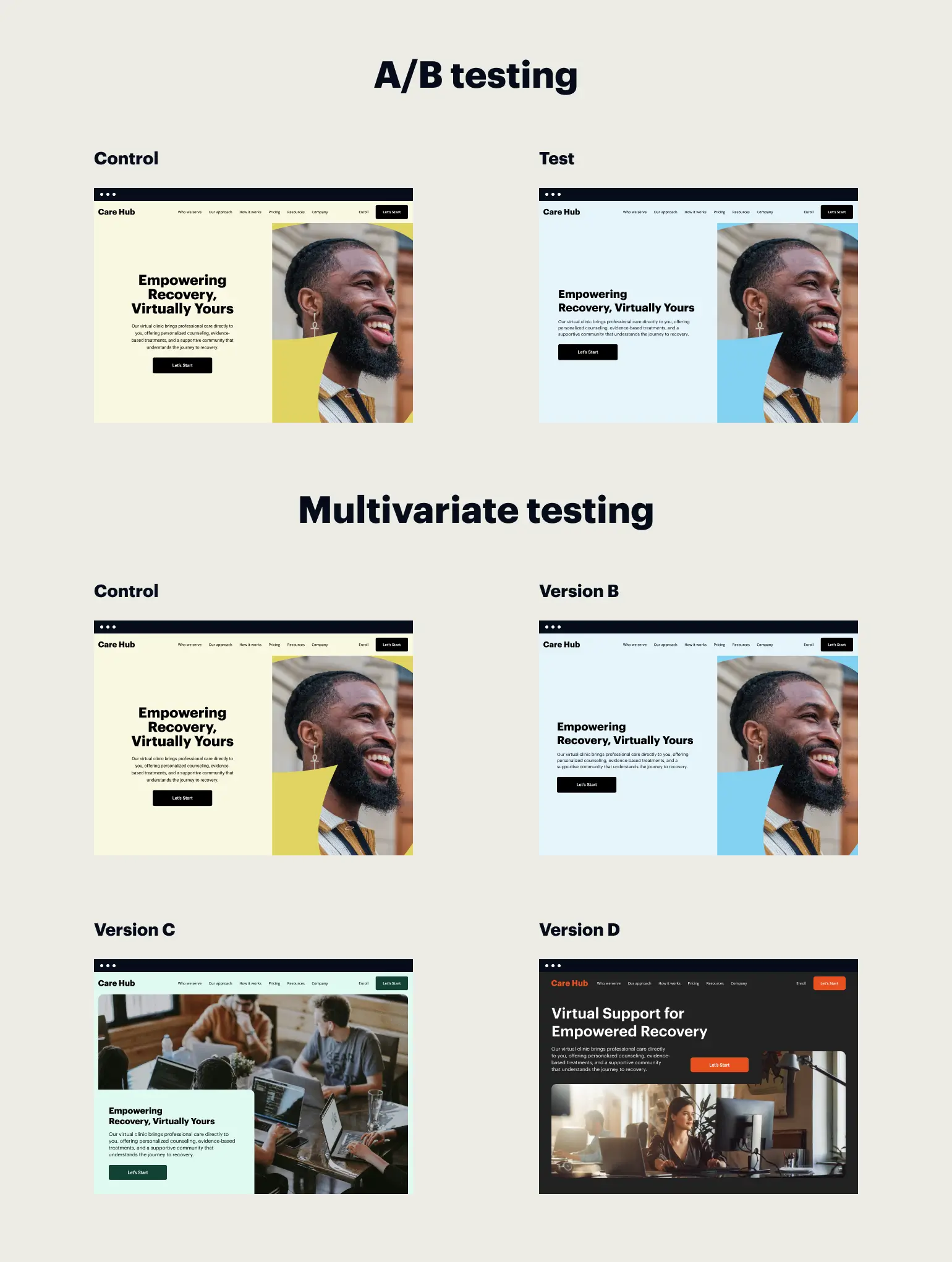
Multivariate testing is defined as a technique where multiple variables on a single page are modified and tested simultaneously to determine which combination performs best. Unlike A/B testing, which typically changes one major element (such as an entire page layout or a single headline), MVT deconstructs the page into its constituent parts—headlines, hero images, call-to-action (CTA) buttons, form fields, and even font weights—and analyzes the "interaction effect" between them.
The primary objective of MVT is to identify the "winning variation" among a multitude of possible combinations. For instance, a marketer might discover that while a specific red CTA button performs well in isolation, it actually depresses conversions when paired with a certain promotional video. This level of granular insight is unattainable through standard split testing. By systematically modifying selected variables, MVT allows for the validation of multiple hypotheses in a single experiment cycle, drastically reducing the time required to find an "optimal" page state, provided the traffic volume is sufficient to reach statistical significance.
Mathematical Framework and Methodology
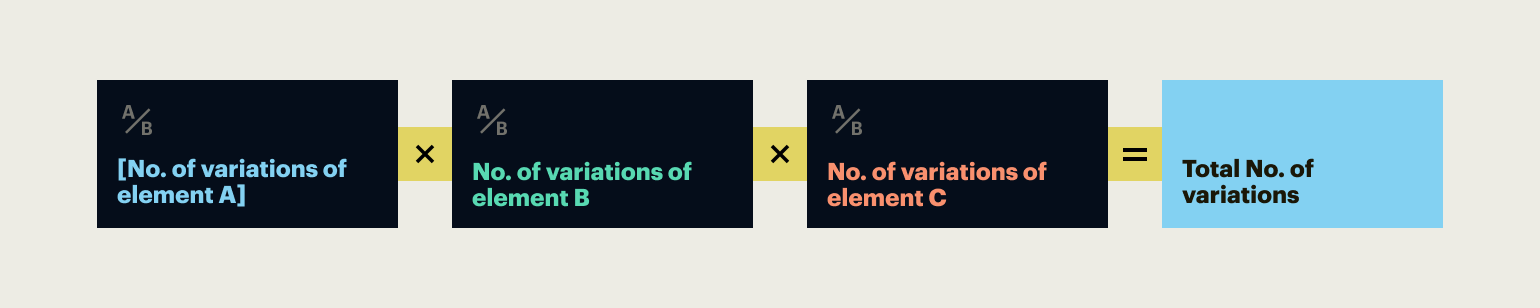
The complexity of a multivariate test is governed by a simple multiplicative formula: the total number of combinations is the product of the number of variations for each element being tested. For example, if a marketing team decides to test three different headlines and two distinct hero images, the result is a 3×2 matrix, creating six unique versions of the page.
If the scope expands to include three headlines, two CTA colors, and two different button labels, the experiment grows to 12 combinations (3 x 2 x 2). This exponential growth in combinations is the primary reason why MVT is often reserved for high-traffic websites. Each combination requires a sufficient "sample size"—a specific number of visitors—to ensure that the resulting data is not a product of random chance.
Marketers typically employ one of three primary testing methods:

- Full Factorial Testing: This is the most comprehensive method, where every possible combination is tested against a portion of the traffic. It provides the highest level of data accuracy but requires the most traffic.
- Fractional Factorial Testing: This method tests only a subset of the possible combinations. Mathematical models are then used to "fill in the blanks" and predict how the untested combinations would have performed. This is faster and requires less traffic but carries a higher margin of error.
- Taguchi Method: Originally derived from manufacturing quality control, this method is rarely used in modern web testing but remains a theoretical alternative for testing large numbers of variables with minimal combinations.
A/B Testing vs. Multivariate Testing: A Comparative Analysis
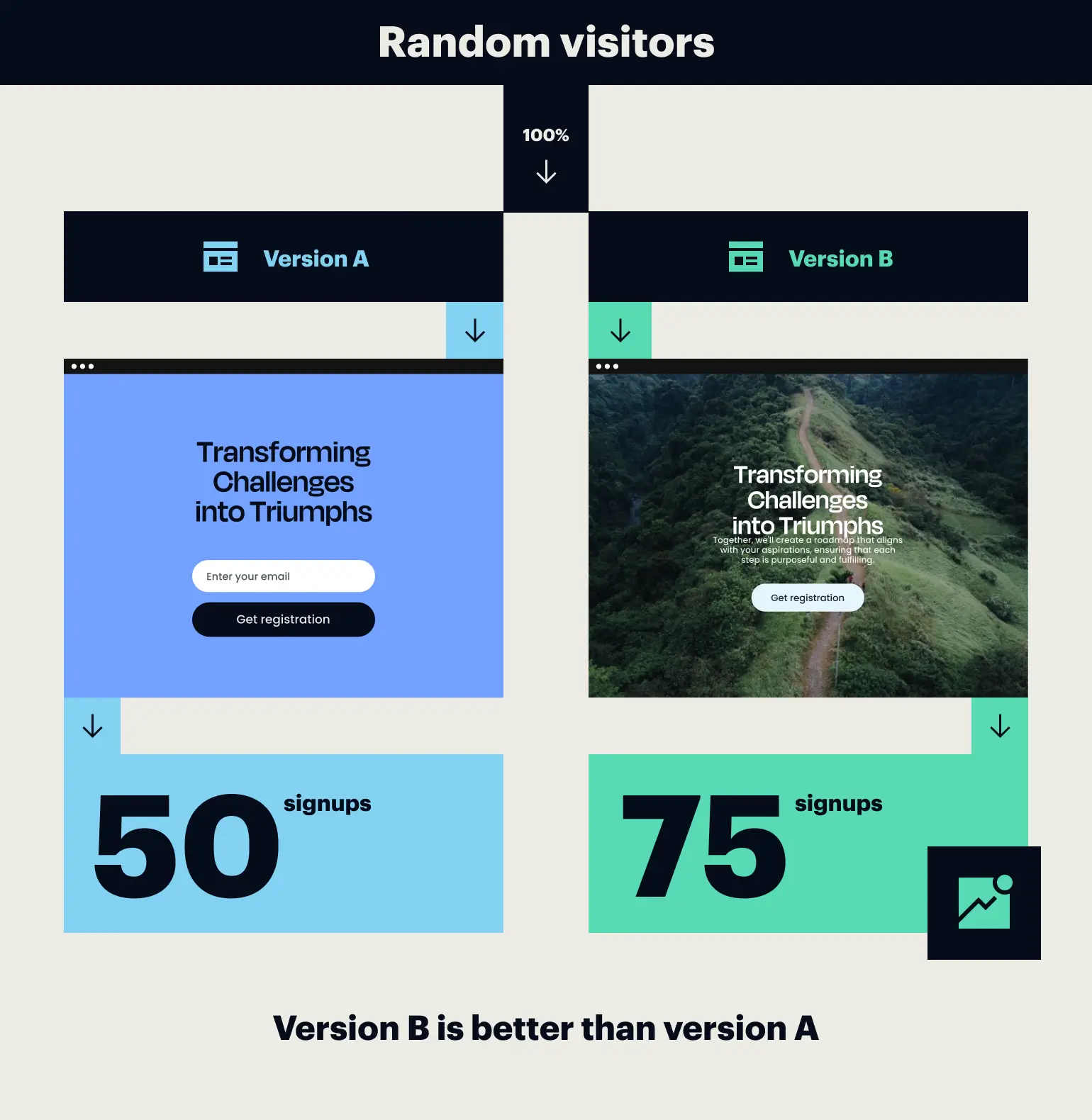
The choice between A/B testing and MVT is often dictated by the specific goals of the campaign and the available resources. A/B testing, or split testing, remains the most accessible form of experimentation. It involves dividing an audience into two groups and exposing them to two different versions of a page. This method is ideal for testing radical changes, such as a complete redesign of a landing page or a shift in the value proposition.
| Aspect | Multivariate Testing (MVT) | A/B Testing |
|---|---|---|
| Experiment Complexity | High (Multiple variables) | Low (Single variable or page) |
| Testing Speed | Slower (Requires more data per cell) | Faster (Quickly identifies a winner) |
| Interaction Effects | Identifies how elements work together | Cannot identify interactions |
| Traffic Requirement | Very High | Low to Moderate |
| Implementation | Complex | Simple |
| Best Use Case | Fine-tuning and optimization | Radical changes and new ideas |
Industry analysts note that A/B testing is a "macro" tool, while MVT is a "micro" tool. A/B testing tells you which house people prefer; MVT tells you the best combination of paint color, door handle style, and mailbox placement for that house.
Real-World Applications and Case Studies
The efficacy of these methods is best illustrated through recent corporate applications. AliveCor, a medical device company, utilized testing to launch its KardiaMobile Card. Their hypothesis was centered on the "Salience Principle"—that users interact more with highlighted elements. By testing the addition of a "New" badge on product pages across both desktop and mobile, the company observed a 25.17% increase in conversion rates and a nearly 30% increase in revenue per user. This experiment demonstrated that even small, specific modifications can yield outsized financial returns when validated through testing.
In another instance, the customer support platform Groove embarked on a total overhaul of its landing page. By moving from a feature-heavy layout to a "copy-first" narrative focused on user benefits, the company nearly doubled its conversion rate from 2.3% to 4.3%. While this began as a radical A/B test of two different philosophies, it evolved into a multivariate approach as they fine-tuned headlines and narratives to see which specific messaging resonated with their core demographic.

The Traffic Constraint: The Hidden Cost of Complexity
The most significant barrier to multivariate testing is the "Traffic Threshold." To achieve a statistical confidence level of 95% (the industry standard), a test must collect enough data to ensure the results are repeatable. In an A/B test with 10,000 visitors, each variation receives 5,000 visitors. In an MVT with 10 combinations, each variation receives only 1,000 visitors. This dilution of traffic means that MVT can take weeks or even months to reach a conclusion on low-traffic sites, during which time external factors (like seasonal trends or holiday sales) may skew the results.
"Many organizations jump into multivariate testing too early," says one digital strategy consultant. "If you don’t have at least 50,000 to 100,000 monthly visitors, the noise in the data often drowns out the signal. For smaller brands, A/B testing remains the more robust and reliable path to growth."

Implementation Framework: The Path to Optimization
For organizations ready to implement these strategies, the process typically follows a five-step chronology:
- Hypothesis Generation: Based on heatmaps, bounce rates, and user feedback, teams identify "friction points" on a page.
- Variable Selection: Deciding whether to test a single radical change (A/B) or multiple interacting elements (MVT).
- Experiment Configuration: Using tools like Instapage to set up the variations. This involves naming the experiment, defining the split of traffic (e.g., 50/50 for A/B or equal distribution for MVT), and setting the primary goal (e.g., form submission or click-through).
- Data Collection: Running the test until statistical significance is reached.
- Analysis and Implementation: Deploying the winning version and using the insights to inform the next round of testing.
Platforms such as Instapage have democratized this process, allowing marketers to create experiments without deep coding knowledge. Their "Optimize" suite enables teams to name experiments, type in specific hypotheses, and automatically manage the traffic split between different page experiences. This automation reduces the "risk of interference"—the human error often associated with manual tracking.

Broader Impact and the Future of AI-Driven Testing
The future of digital experimentation is increasingly intersecting with Artificial Intelligence (AI) and Machine Learning (ML). Predictive testing models are beginning to emerge, where AI can forecast the outcome of a multivariate test before it is even run, based on historical data from millions of other websites. Furthermore, "Multi-Armed Bandit" testing is gaining traction, an approach where traffic is dynamically shifted toward the winning variation in real-time, minimizing the "loss" associated with sending traffic to underperforming versions during the testing phase.
The implications of these advancements are profound. As testing becomes more automated and precise, the cost of customer acquisition is expected to stabilize for companies that embrace these tools. Conversely, those that continue to rely on subjective design choices will likely find themselves outpaced by competitors who treat their websites not as static brochures, but as living, evolving experiments.

Ultimately, whether a brand chooses the broad strokes of A/B testing or the surgical precision of multivariate testing, the underlying principle remains the same: in the digital economy, the only way to truly know your customer is to test your assumptions against their actual behavior. The evolution of MVT and A/B testing represents a maturation of the marketing industry—a shift from the art of persuasion to the science of conversion.








