rifanmuazin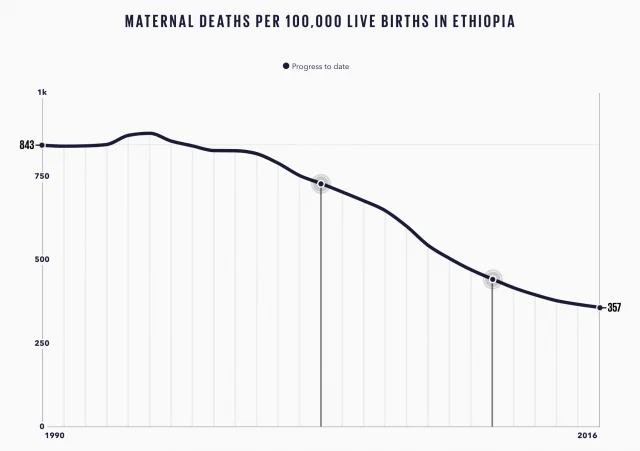
The release of the inaugural Goalkeepers report in 2017 by the Bill and Melinda Gates Foundation marked a significant milestone in the global effort to track and accelerate progress toward the United Nations Sustainable Development Goals. Titled “Goalkeepers: The Stories Behind the Data,” the report provides a comprehensive diagnostic of urgent global problems, identifying promising solutions and interpreting key results to spread best practices in the fight against extreme poverty and disease. Central to the 2017 findings is the critical issue of maternal mortality, a metric that serves as a primary indicator of the overall health and functionality of a nation’s healthcare system. By synthesizing data from international bodies such as UNICEF and the World Health Organization (WHO), the report highlights both the “superb” goals set by the international community and the sophisticated information design required to communicate these complex challenges to a global audience.
The Landscape of Global Maternal Health
Maternal mortality is defined by the World Health Organization as the death of a woman while pregnant or within 42 days of termination of pregnancy, irrespective of the duration and site of the pregnancy, from any cause related to or aggravated by the pregnancy or its management. It remains one of the most significant health disparities in the world. According to UNICEF data cited in the Goalkeepers report, approximately 302,530 maternal deaths were recorded globally in 2015. This figure equates to a global maternal mortality ratio (MMR) of 168.7 deaths per 100,000 live births.
The Gates Foundation emphasizes that maternal mortality is a uniquely devastating phenomenon because it destabilizes families and puts surviving children at a higher risk of poverty and illness. Bill and Melinda Gates have characterized the issue as a “devastating” force that disrupts the most fundamental pillar of a child’s support system. While the raw numbers remain high, a longitudinal analysis of the data reveals a trajectory of significant improvement. Between 1990 and 2015, the global maternal mortality ratio declined by approximately 44 percent. However, this progress is unevenly distributed across different regions and socio-economic brackets.
Case Study: Ethiopia’s Strategic Health Interventions
A focal point of the Goalkeepers 2017 report is the dramatic progress made by Ethiopia. The East African nation has become a model for how low-income countries can achieve rapid improvements in maternal health outcomes through targeted policy interventions and community-based care. In 1990, Ethiopia’s maternal mortality ratio stood at a staggering 843 deaths per 100,000 live births. By 2015, this figure had been reduced to 357, representing a decline of more than 50 percent.
The Ethiopian success story is largely attributed to the implementation of the Health Extension Program (HEP), launched in 2003. This initiative deployed more than 38,000 health extension workers—mostly women—to rural villages across the country. These workers were trained to provide basic maternal and child health services, including prenatal care, immunization, and education on sanitation and nutrition. By bringing healthcare directly to the doorsteps of the rural population, Ethiopia addressed the “three delays” that often lead to maternal death: the delay in deciding to seek care, the delay in reaching a health facility, and the delay in receiving adequate treatment at the facility.
The Goalkeepers report utilizes streamlined data visualization to demonstrate this shift, showing how Ethiopia’s investment in primary healthcare infrastructure has yielded tangible results. The use of simple, powerful charts illustrates the downward trend in mortality, providing a roadmap for other nations facing similar geographical and economic constraints.
Chronology of International Commitments
The fight against maternal mortality has been shaped by two major international frameworks: the Millennium Development Goals (MDGs) and the subsequent Sustainable Development Goals (SDGs).
- 1990–2000: The Baseline Era. During this period, maternal mortality was frequently overlooked in favor of infectious disease control. The global MMR remained high, and data collection was often fragmented or unreliable.
- 2000–2015: The Millennium Development Goals (MDGs). MDG 5 specifically targeted a 75 percent reduction in the maternal mortality ratio. While the world fell short of this ambitious target, the period saw an unprecedented surge in funding and political will, leading to the 44 percent reduction observed by 2015.
- 2015–Present: The Sustainable Development Goals (SDGs). The international community, through SDG Target 3.1, has set a new objective: reducing the global maternal mortality ratio to less than 70 per 100,000 live births by 2030. The Goalkeepers 2017 report serves as an early assessment of the world’s standing relative to this 2030 deadline.
Supporting Data and Regional Disparities
A deeper dive into the UNICEF maternal mortality dataset reveals the stark contrast between different parts of the world. While the global average is 168.7 per 100,000 live births, the regional data tells a more nuanced story.
Sub-Saharan Africa remains the region with the highest burden, accounting for roughly two-thirds of all maternal deaths globally. In some countries within this region, the lifetime risk of maternal death is as high as 1 in 36, compared to a risk of 1 in 4,900 in high-income countries. For instance, while Ethiopia has seen vast improvements, its ratio of 357 is still significantly higher than that of developed nations like Finland or Greece, where the ratio often falls below 5 per 100,000.
The UNICEF data also highlights the correlation between skilled birth attendance and mortality rates. In regions where a high percentage of births are attended by trained doctors, nurses, or midwives, maternal survival rates are exponentially higher. Data visualization tools, such as horizontal bar charts and interactive dashboards, have become essential for public health officials to identify these “hotspots” of mortality and allocate resources accordingly.
Official Responses and Strategic Analysis
The Bill and Melinda Gates Foundation, through the Goalkeepers initiative, argues that progress is possible but not inevitable. “The stories behind the data” are intended to move the conversation beyond mere statistics and into the realm of actionable policy. Official reactions from health experts at UNICEF and the WHO suggest that the greatest challenge in the coming decade will be reaching the “last mile”—the most marginalized and impoverished women who remain outside the reach of formal healthcare systems.
Health analysts point out that maternal mortality is not merely a medical issue but a social and economic one. Factors such as female education, the age of marriage, and access to family planning play a significant role in reducing the number of high-risk pregnancies. The Gates Foundation’s report suggests that by empowering women and investing in community-led health initiatives, the global community can continue the momentum established during the MDG era.
Furthermore, the emphasis on information design in the Goalkeepers report—using text, video, and animation—reflects a shift in how international organizations engage with the public. By making data accessible and engaging, the foundation aims to build a global constituency of “Goalkeepers” who hold governments accountable for their commitments to the SDGs.
Broader Impact and Future Implications
The implications of maternal mortality extend far beyond the individual tragedy of a lost life. Economically, the death of a mother often leads to a loss of household income and a decrease in the educational attainment of surviving children. From a public health perspective, a high maternal mortality ratio is often an indicator of “weak spots” in a country’s health infrastructure, such as lack of blood supplies, poor transportation networks, or a shortage of trained surgical staff.
As the world moves toward the 2030 SDG targets, the role of data transparency will be paramount. The Goalkeepers 2017 report underscores that while the trends look promising, the pace of progress must accelerate to meet the goal of fewer than 70 deaths per 100,000 live births. This will require not only continued financial investment but also a commitment to using data to diagnose “urgent problems” in real-time.
The integration of UNICEF’s robust datasets with the narrative power of the Gates Foundation creates a compelling case for optimism tempered by urgency. By studying success stories like Ethiopia and addressing the systemic barriers in Sub-Saharan Africa and Southern Asia, the global community can move closer to a world where pregnancy and childbirth are no longer life-threatening events. The Goalkeepers 2017 report serves as both a celebration of what has been achieved and a sobering reminder of the work that remains. In the words of the report’s authors, the objective is to ensure that every mother has the opportunity to see her children grow, thereby strengthening the very foundation of global society.