
 rifanmuazin
The landscape of digital advertising is in constant flux, with platforms like Google Ads continuously evolving their automated bidding strategies. Among these, Smart Bidding, particularly on YouTube, has emerged as a critical tool for advertisers seeking to drive measurable results. While understanding the available options is the first step, truly leveraging Smart Bidding for campaign success on YouTube requires a nuanced approach to campaign setup and budget allocation. This comprehensive guide delves into the intricacies of YouTube Smart Bidding, offering actionable insights and strategic recommendations for advertisers aiming to optimize their campaigns for conversions.
Smart Bidding, in essence, utilizes machine learning to automate bids for ad placements with the goal of achieving specific campaign objectives. On YouTube, these objectives typically revolve around generating sales, leads, or sign-ups. However, it’s crucial to note that Smart Bidding’s capabilities are primarily channeled through “Action Format” campaigns, such as Video Action Campaigns (VACs), which are specifically designed for conversion-focused goals. These campaigns leverage both in-stream and in-feed video ad formats to reach users across YouTube. Beyond conversion-focused strategies, Smart Bidding also offers a pathway for “Reach” formats, like bumper ads, which are predominantly geared towards building brand awareness.
Understanding YouTube Smart Bidding Options
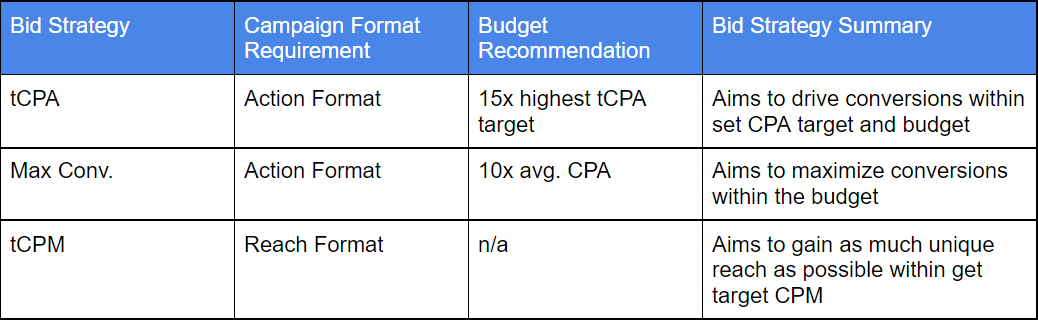
The core of Smart Bidding on YouTube lies in its ability to adapt bids in real-time based on the likelihood of a conversion. The two primary Smart Bidding strategies for conversion-focused campaigns are:
- Target CPA (tCPA): This strategy allows advertisers to set a target cost-per-acquisition. Google Ads then aims to get as many conversions as possible at or below that target CPA. This is ideal for advertisers who have a clear understanding of their desired cost per conversion and want to maintain a specific level of efficiency.
- Maximize Conversions: This strategy instructs Google Ads to get as many conversions as possible within your specified budget. It’s particularly useful when you have a budget in mind but are less concerned with a precise CPA, aiming instead to maximize the volume of conversions. This is often recommended as a starting point to establish a baseline CPA.
For campaigns focused on building awareness, the Target CPM (tCPM) strategy is often employed. This allows advertisers to set a target cost per thousand impressions, optimizing for reach and visibility while managing costs efficiently. However, the focus of this article is on conversion-driven strategies.
The Critical Role of Bid-to-Budget Ratios
A significant factor in the success of YouTube Smart Bidding campaigns, especially those employing tCPA and Max Conversions, is the relationship between the campaign’s budget and its cost per conversion. Google Ads, in its best practices, often recommends setting budgets that are substantially higher than the anticipated cost per conversion.

Specifically, Google suggests setting budgets that are anywhere from 10x to 15x the average cost per conversion. This recommendation is not arbitrary; it stems from the need to provide the Smart Bidding algorithms with sufficient data and flexibility to operate effectively.
Let’s illustrate this with an example:
- Scenario: An advertiser aims to use the tCPA bidding strategy and has an estimated average CPA of $85.
- Google’s Recommendation: To support this tCPA goal, the campaign budget should be set at a minimum of $850 (10x the CPA) and ideally up to $1,275 (15x the CPA).
- For Max Conversions: If the advertiser opts for the Max Conversions strategy with the same estimated CPA of $85, the budget recommendation would still be significant, likely needing to be at least $850 to allow the algorithm to explore and identify opportunities for conversions.
These bid-to-budget ratios might appear substantial and could seem like an overspend initially. However, experience has shown that these higher budgets are often crucial for the following reasons:
- Data Accumulation: Smart Bidding algorithms thrive on data. A larger budget allows the campaign to gather more impression, click, and conversion data, enabling the algorithm to learn more effectively about user behavior, audience segments, and ad performance.
- Algorithm Optimization: With a sufficiently large budget, the algorithm has the freedom to explore different targeting options, ad creatives, and bidding opportunities that might lead to conversions. A constrained budget can limit this exploration, potentially preventing the algorithm from finding the most efficient pathways to conversions.
- Learning Period: YouTube campaigns, especially those utilizing Smart Bidding, have a learning period. During this time, the algorithm is actively testing and refining its strategies. A larger budget helps the campaign move through this learning phase more smoothly and reach its optimal performance level faster.
- Handling Fluctuations: The cost of advertising and the competitive landscape can fluctuate. A higher budget provides a buffer to absorb these variations without severely impacting the campaign’s ability to deliver conversions.
Strategic Recommendations for Implementation
To maximize the effectiveness of Smart Bidding on YouTube, consider the following strategic recommendations:
1. Start with Maximize Conversions, Then Transition to Target CPA:
A widely adopted and effective approach is to initiate conversion-focused campaigns on the Maximize Conversions strategy. This allows the algorithm to focus on acquiring as many conversions as possible within your budget, establishing a baseline understanding of your achievable CPA. Once the campaign has gathered sufficient data and a stable CPA has been observed over a reasonable period (typically a few weeks), you can then switch to the Target CPA strategy. This transition allows you to leverage the insights gained from the Max Conversions phase to set a more informed and realistic target CPA. This phased approach helps prevent setting an overly aggressive tCPA from the outset, which could stifle campaign performance.

2. Respect the Bid-to-Budget Ratio:
As highlighted earlier, adhering to the recommended bid-to-budget ratio (10x-15x CPA) is paramount. If your campaign is flagged as “Limited by Budget” (LBB), it’s a clear indicator that your budget is insufficient to meet your conversion goals. In such scenarios, a strategic increase in budget is often necessary. This doesn’t mean simply throwing more money at the problem; it means providing the algorithm with the resources it needs to perform optimally.
A Mini Case Study in Budget Optimization
To underscore the importance of budget allocation, consider the following hypothetical scenario:
- Situation: A Video Action Campaign running on the tCPA bidding strategy was consistently flagged as “Limited by Budget” (LBB). This meant the campaign was unable to spend its full budget or achieve its full potential for conversions due to budget constraints.
- Initial Bid-to-Budget Ratio: At the time of observation, the campaign’s budget was approximately 10 times its current average CPA.
- Intervention: The decision was made to increase the campaign budget to 15 times its current CPA. This represented a significant, but strategic, budget adjustment.
- Results: Following this budget increase, and after accounting for the standard two-week learning period that typically follows such a significant change, the campaign demonstrated both growth and efficiency gains. This included an increase in overall conversions while maintaining or even improving the CPA, proving that the increased budget was not just spent, but spent effectively to drive better results. The accompanying visual data would likely show an upward trend in conversion volume and potentially a more stable or decreasing CPA after the initial learning phase.
This case study exemplifies how a seemingly simple adjustment to the budget can have a profound impact on campaign performance when leveraging Smart Bidding strategies. It highlights that underfunding a Smart Bidding campaign can be counterproductive, preventing it from reaching its full potential.
Other Crucial Considerations for YouTube Smart Bidding
Beyond bid-to-budget ratios, several other factors contribute to the successful implementation of Smart Bidding on YouTube:
- High-Quality Creative Assets: Smart Bidding can optimize delivery, but it cannot compensate for poor ad creative. Engaging, relevant, and well-produced video ads are essential for capturing viewer attention and driving clicks and conversions.
- Clear Conversion Tracking: Accurate and robust conversion tracking is the bedrock of any Smart Bidding strategy. Ensure that your conversion actions are properly defined in Google Ads and that your website or app is correctly set up to report these conversions. Without precise tracking, the algorithms will be operating on faulty data.
- Audience Segmentation: While Smart Bidding automates bidding, it’s still crucial to provide it with well-defined audiences to target. Leverage remarketing lists, customer match, in-market audiences, and custom intent audiences to reach users most likely to convert.
- Landing Page Optimization: The user journey doesn’t end with a click. Ensure that your landing pages are optimized for conversions, providing a seamless and compelling experience that encourages users to complete the desired action.
- Campaign Structure: Organize your campaigns logically, grouping similar ad groups and targeting strategies. This allows for better data analysis and more efficient management of your bidding strategies.
- Regular Monitoring and Analysis: While Smart Bidding is automated, it’s not a “set it and forget it” solution. Regularly monitor campaign performance, analyze key metrics, and make informed adjustments to targeting, creatives, and even bidding strategies as needed.
- Understanding the Learning Period: Be patient during the initial learning period of a new campaign or after significant changes. Performance may fluctuate during this time as the algorithm gathers data and refines its approach. Avoid making drastic changes during this phase.
- Exclusions and Negative Keywords: Implement negative keywords and ad exclusions to prevent your ads from showing in irrelevant contexts, which can waste budget and dilute campaign performance.
The Evolving Role of Smart Bidding
The increasing sophistication of machine learning and artificial intelligence is continually reshaping the digital advertising landscape. Google’s Smart Bidding technologies are at the forefront of this evolution, offering advertisers powerful tools to navigate the complexities of reaching and converting audiences at scale. For platforms like YouTube, where video consumption is massive and diverse, the ability to intelligently automate bidding based on conversion goals is a significant advantage.
The implications of effectively utilizing YouTube Smart Bidding are substantial for businesses. For those focused on direct sales or lead generation, optimized video campaigns can significantly boost revenue and customer acquisition. For brands looking to build awareness, while tCPM is the primary driver, the underlying principles of data-driven optimization still apply to ensure efficient reach.
As advertisers continue to invest more in video content and the YouTube platform, mastering these advanced bidding strategies will become increasingly critical for staying competitive and achieving a demonstrable return on investment. The shift from manual bidding to automated, intelligent systems like Smart Bidding represents a paradigm shift, empowering advertisers to focus more on strategic planning and creative development, while entrusting the granular optimization of bids to sophisticated algorithms.
While there isn’t a single, universally applicable formula for success with YouTube Smart Bidding, understanding the core principles, implementing strategic recommendations, and adapting to the evolving capabilities of these technologies are key. For those seeking to unlock the full potential of their YouTube advertising efforts, a data-driven, optimization-focused approach to Smart Bidding is no longer optional but essential. For more in-depth guidance and tailored strategies, seeking expert consultation or engaging with specialized agencies can provide invaluable support in navigating the nuances of YouTube advertising and Smart Bidding.










