

The traditional B2B marketing funnel is facing a significant crisis of efficiency as "request a demo" calls-to-action (CTAs) increasingly fail to resonate with modern software buyers. In an era where sales and marketing departments are frequently at odds over lead volume and quality, the root cause is rarely the budget assigned to advertising, but rather a fundamental misunderstanding of the buyer’s psychological journey. While many marketing teams treat a demo request as a low-friction entry point, industry data suggests that asking a prospect to book time with a sales representative is one of the highest-friction steps in the digital ecosystem.
According to the Dreamdata 2025 LinkedIn Ads Benchmark Report, the average B2B customer journey has expanded to 211 days and requires approximately 88 distinct touchpoints before a purchase is finalized. This elongated timeline reflects a cautious market where high-investment software decisions are made only after exhaustive research and trust-building. Despite this, many SaaS companies continue to push demo requests prematurely, leading to low conversion rates and frustrated sales teams. The challenge for 2026 and beyond is not simply to drive more traffic, but to align landing page strategy with the specific intent and readiness of the visitor.
The Evolution of the B2B Buyer Journey
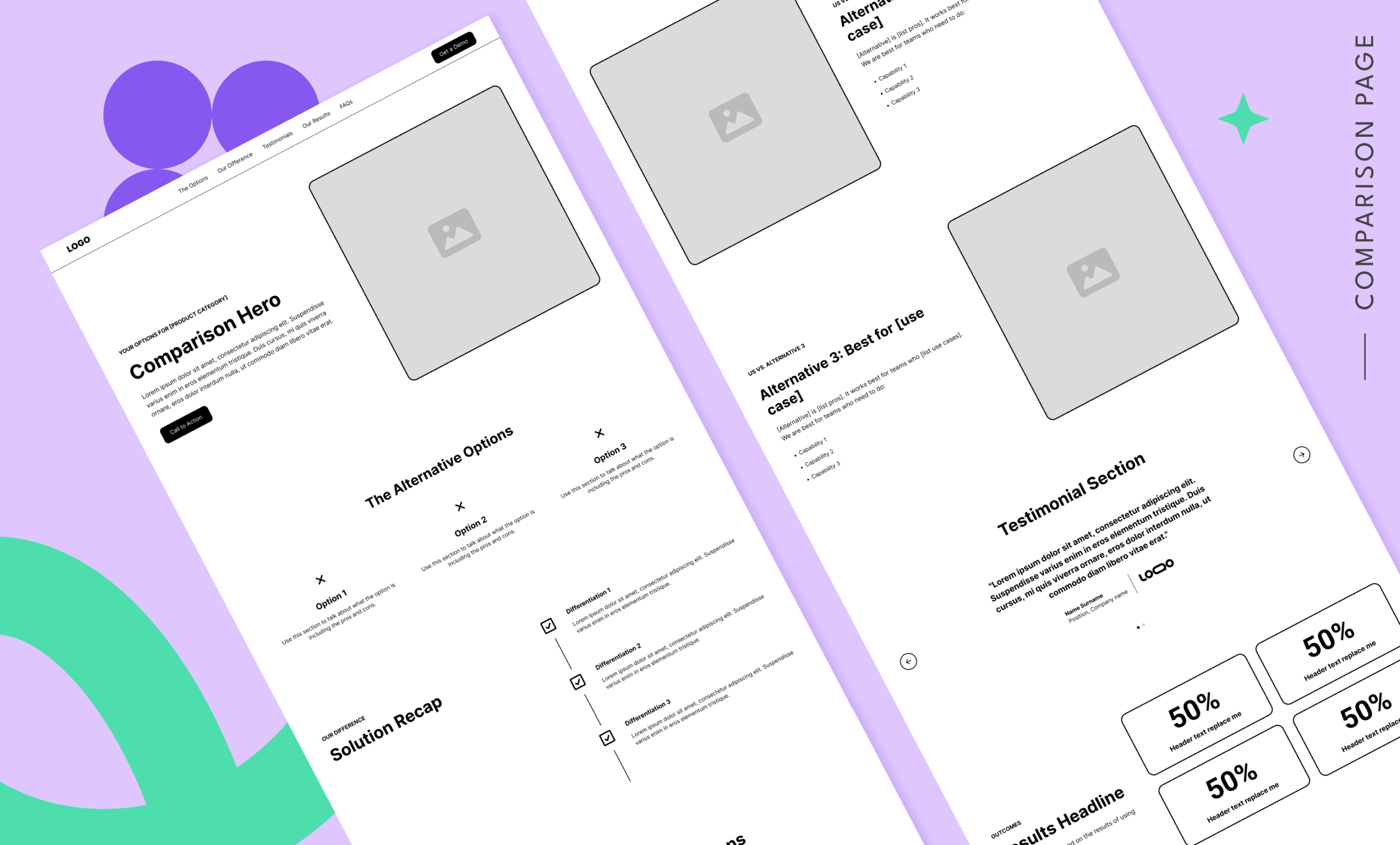
The shift in B2B purchasing behavior has necessitated a move away from "spray and pray" tactics toward a more sophisticated framework known as the "Core Four" landing page strategy. Developed by B2B landing page expert Tas Bober, this framework categorizes the buyer’s journey into four distinct stages: Top-of-Funnel (TOFU) educational content, Middle-of-Funnel (MOFU) solution exploration, pricing transparency, and finally, the high-intent demo request.
The fundamental error in many SaaS campaigns is treating the demo landing page as an introductory document. In reality, a demo page should be the final destination for a buyer who is already "warm" and well-researched. Statistics from Sopro indicate that only 3% to 5% of any given market is in an active buying cycle at any one time. Consequently, when companies direct cold traffic to a demo page, they are essentially asking for a commitment before providing value. Industry benchmarks from Unbounce’s 2024 Conversion Benchmark Report show that SaaS landing pages typically convert at a median rate of 3.8%. When refined for high-intent traffic, however, these numbers can climb significantly, provided the page addresses the buyer’s remaining friction points.
Anatomy of a High-Converting Demo Landing Page
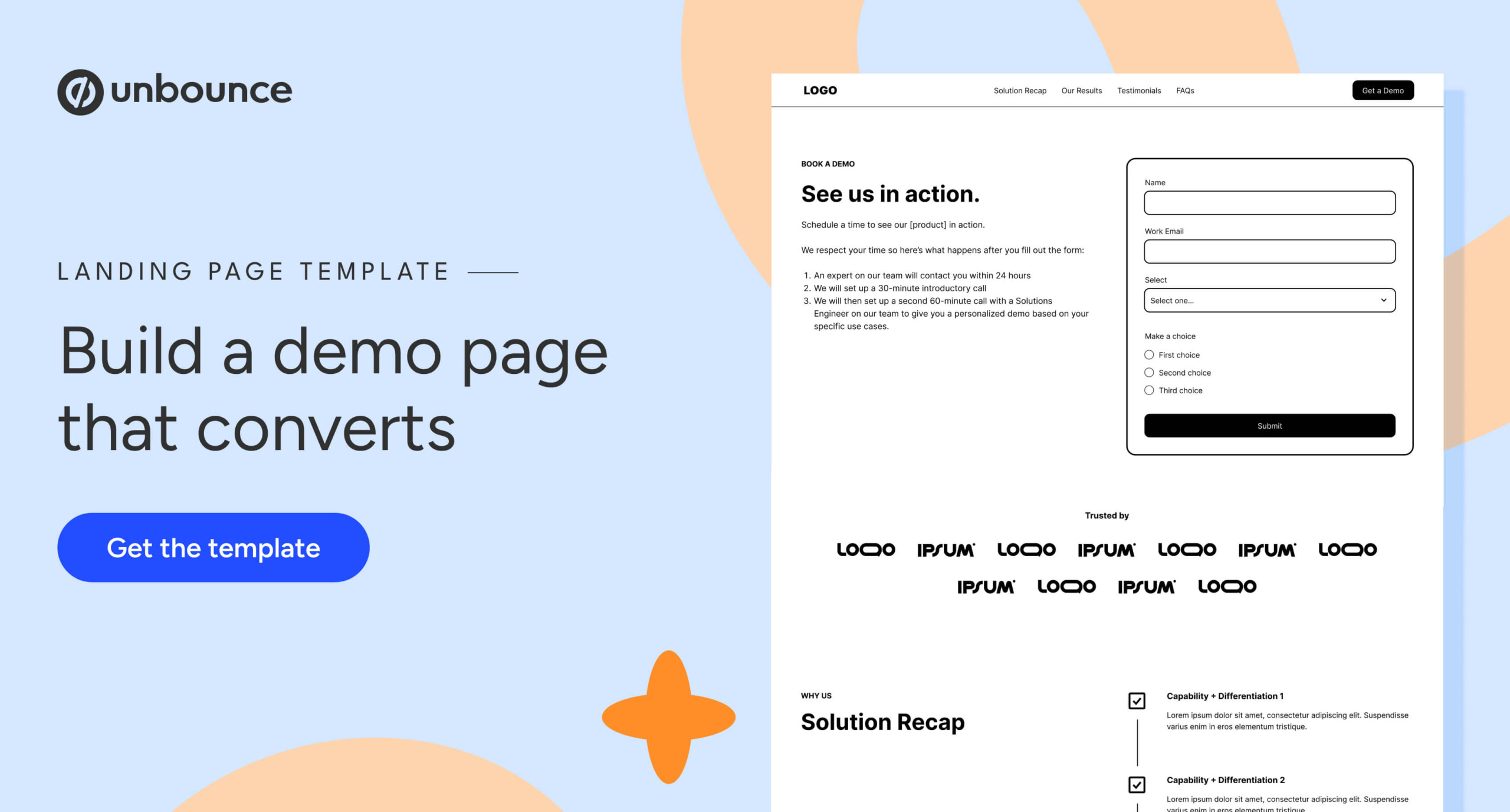
To convert a modern B2B buyer, a demo landing page must serve as a tool for confirmation rather than introduction. Every element on the page must be engineered to remove friction and answer the specific questions that prevent a prospect from submitting their contact information.
Navigational Transparency and Google’s 2025 Update
A major shift in landing page design occurred following Google’s 2025 update to its ad quality prediction model. Historically, marketers were taught to remove all navigation from landing pages to "trap" the user into a single choice: convert or leave. However, Google now rewards pages that provide relevant next steps through navigation, penalizing those that restrict user movement. On a modern demo page, anchor links are essential. They allow users to jump to sections like "Pricing," "Results," or "FAQ" without leaving the conversion environment. Furthermore, a minimal footer linking to other "Core Four" pages—such as a product overview or a comparison guide—ensures that if a buyer is not yet ready for a demo, they remain within the company’s ecosystem rather than bouncing back to a search engine.
The Hero Section: Managing Expectations
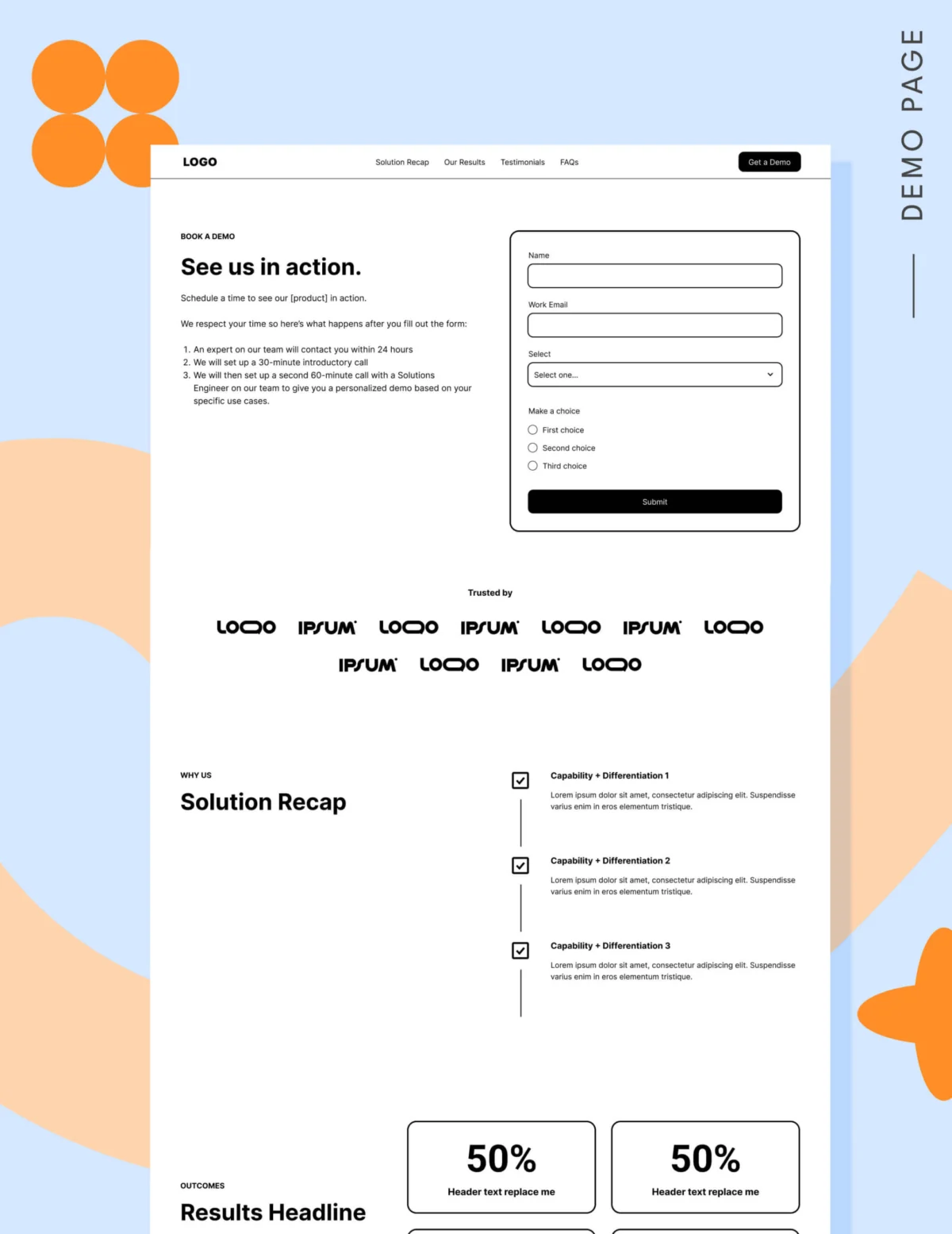
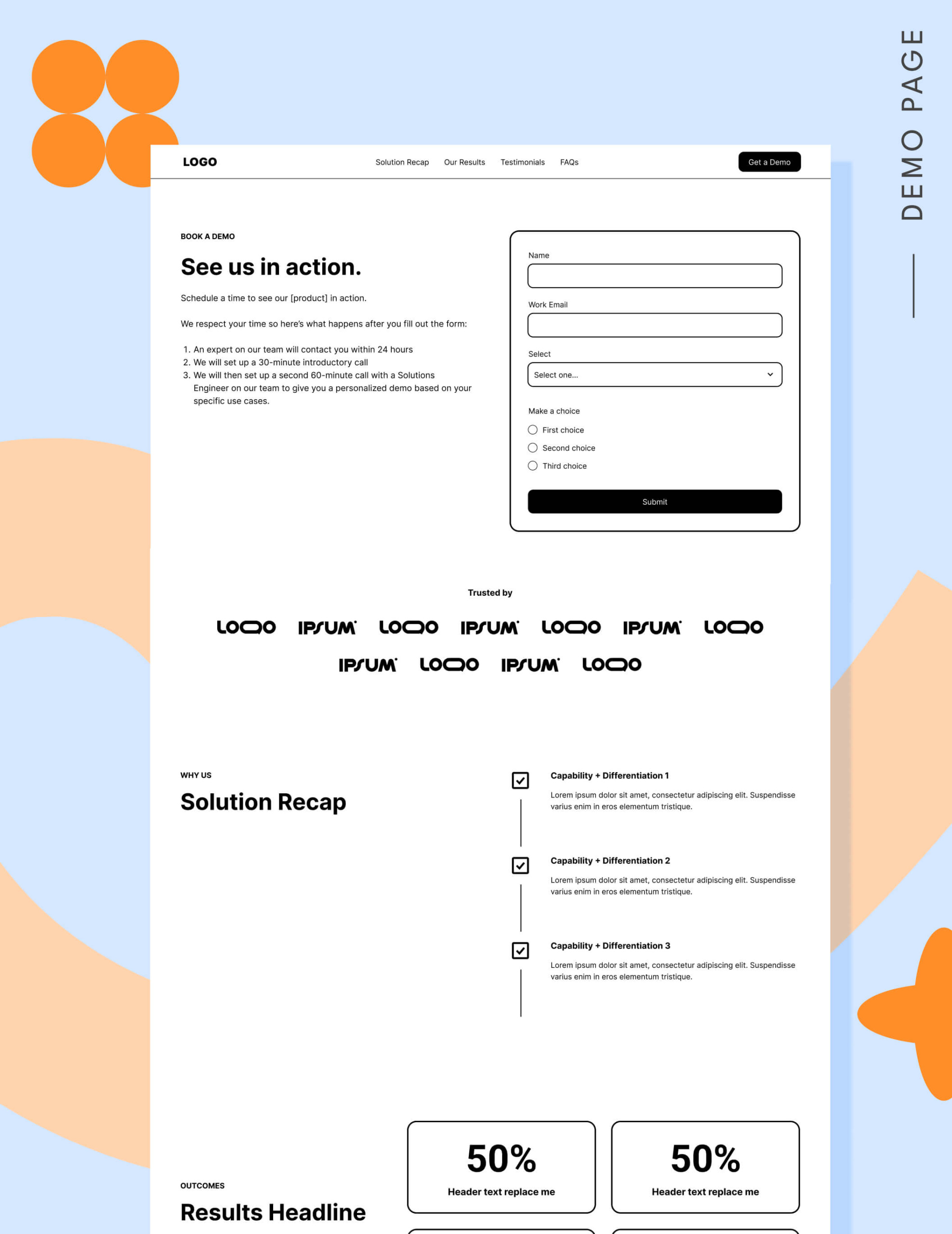
The hero section of a demo page is unique because it is one of the few instances where placing a form above the fold is recommended. However, the copy surrounding the form must be explicit. Buyers often hesitate to book a demo because they fear an aggressive sales process. To mitigate this, the hero section should clearly outline the "after-submit" experience: Who will they talk to? How long will the call last? Is it a discovery call or a live product walkthrough? By answering these questions upfront, the marketer transforms a vague "request" into a structured, professional meeting.
Stacking Proof and Quantifiable Results
Social proof remains the most potent tool for building trust, but its application must be strategic. If a brand serves well-known enterprise clients, a "logo garden" of recognizable icons provides instant credibility. For companies targeting niche markets, "light testimonials"—short, one-to-two-line quotes—are more effective.
Furthermore, a "Results" section must move beyond platitudes to provide quantifiable data. In an environment where CFOs are scrutinizing every SaaS subscription, buyers need to see specific outcomes. Instead of claiming to "improve efficiency," a high-performing page will cite a "30% reduction in operational overhead" or a "2.5x increase in lead throughput." This measurable proof reinforces the solution’s value proposition at a critical decision-making juncture.

Addressing the Pricing Taboo
One of the most debated topics in B2B SaaS is whether to include pricing on a demo landing page. While sales-led organizations traditionally hide pricing to maintain leverage during negotiations, the modern buyer views a lack of pricing as a significant friction point. Research suggests that providing a starting price or a condensed pricing grid helps buyers self-qualify.
Transparency in pricing achieves three objectives:
- It builds immediate trust by appearing honest.
- It filters out low-budget leads that would otherwise waste the sales team’s time.
- It sets a baseline for the value of the software, making the subsequent sales conversation more productive.
For companies with complex, custom pricing, a "Starting at $X" approach or a "Most Popular Plan" highlight can provide the necessary context without committing the sales team to a rigid price point.
Form Optimization and Lead Qualification
The tension between marketing (which wants more leads) and sales (which wants better leads) often culminates in the design of the lead capture form. Data from 2026 conversion benchmarks indicates a sharp drop-off in completion rates as form fields increase. Forms with five fields see an average conversion rate of 17%, while those with ten or more fields plummet to under 7%.
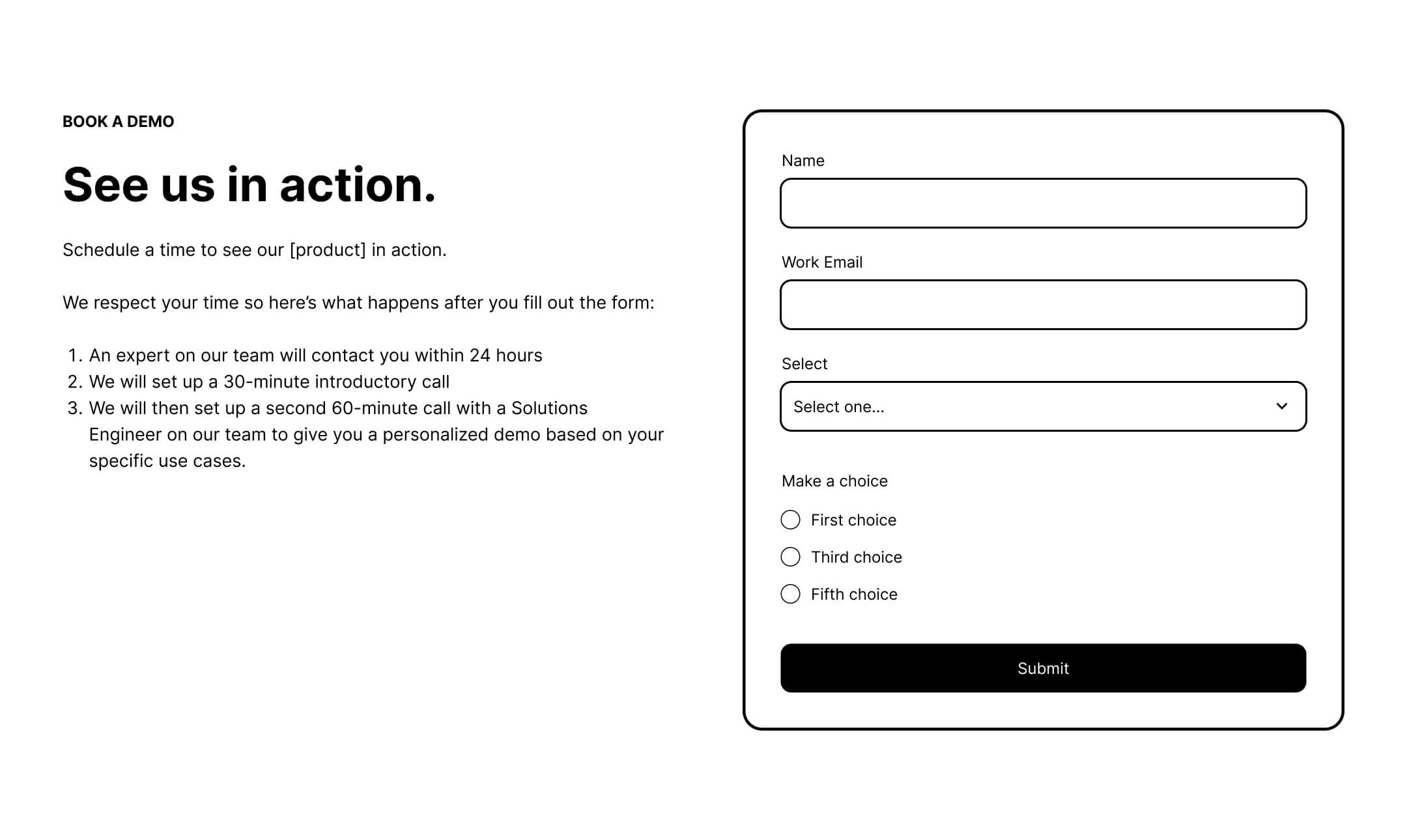
The "Five-Field Rule" has become a standard for balancing friction and qualification. Marketers are encouraged to identify the single most important qualifying question—such as company size, primary use case, or current software stack—and eliminate all other non-essential fields. The use of "positive friction"—a single, high-value qualifying question—can actually improve the quality of the sales pipeline by screening out poor-fit prospects without deterring the Ideal Customer Profile (ICP).
The Power of the "Soft Path" and Interactive Demos
In 2026, the most successful SaaS companies are moving away from the "Demo or Nothing" ultimatum. Many buyers are "sales-averse" and prefer to explore a product on their own terms before engaging with a human. This has led to the rise of the "interactive demo" or "product tour."
Case studies, such as those from the software company FORM, demonstrate the impact of this shift. By changing their primary CTA from "Request a Demo" to "Take a Tour" and embedding an interactive product walkthrough on the landing page, the company saw a 33% increase in PPC conversions. Simultaneously, the Cost Per Lead (CPL) in their Account-Based Marketing (ABM) campaigns dropped by nearly 50%. This "soft path" allows buyers to build confidence in the product’s UI and functionality before they feel the pressure of a live sales call.
Conclusion: Targeting as the Foundation of Success
Ultimately, the most perfectly optimized demo landing page will fail if the traffic source is misaligned. A common mistake among SaaS marketers is attempting to "optimize" their way out of a targeting problem. If cold, low-intent traffic is being funneled to a demo page, no amount of headline testing or button-color adjustment will move the needle.
The modern roadmap for SaaS success requires a two-step approach: first, fixing the targeting to ensure only warm, researched buyers reach the demo page; and second, building a page that functions as a high-trust, low-friction gateway to the sales team. By treating the demo request as a significant commitment rather than a casual click, and by providing the transparency, proof, and clarity that today’s buyers demand, SaaS organizations can bridge the gap between marketing effort and sales results. In the competitive landscape of the mid-2020s, the companies that win will be those that respect the buyer’s time and provide the most seamless path from curiosity to conversation.







