
 rifanmuazin
The digital commerce industry has reached a critical juncture in how it validates growth strategies, as a growing number of data scientists and product leaders warn that an over-reliance on simple A/B testing is creating a “local maxima” trap for global brands. While A/B testing—the process of comparing two versions of a webpage or app against each other to determine which performs better—has been the gold standard for over a decade, recent industry shifts suggest that the method is often misapplied to complex business problems that require more sophisticated analytical frameworks.
The current landscape of Conversion Rate Optimization (CRO) is characterized by a “default to test” culture. What typically begins as a tactical success, such as a headline change that yields a minor lift in conversions, often evolves into a rigid decision-making bottleneck. Industry data reveals that 77% of all digital experiments remain simple A/B tests with only two variants, despite the availability of more comprehensive multivariate or multi-treatment designs. This reliance on the simplest possible approach has led to a stagnation in meaningful innovation, as teams focus on micro-optimizations rather than structural business improvements.
The Chronology of the Experimentation Era
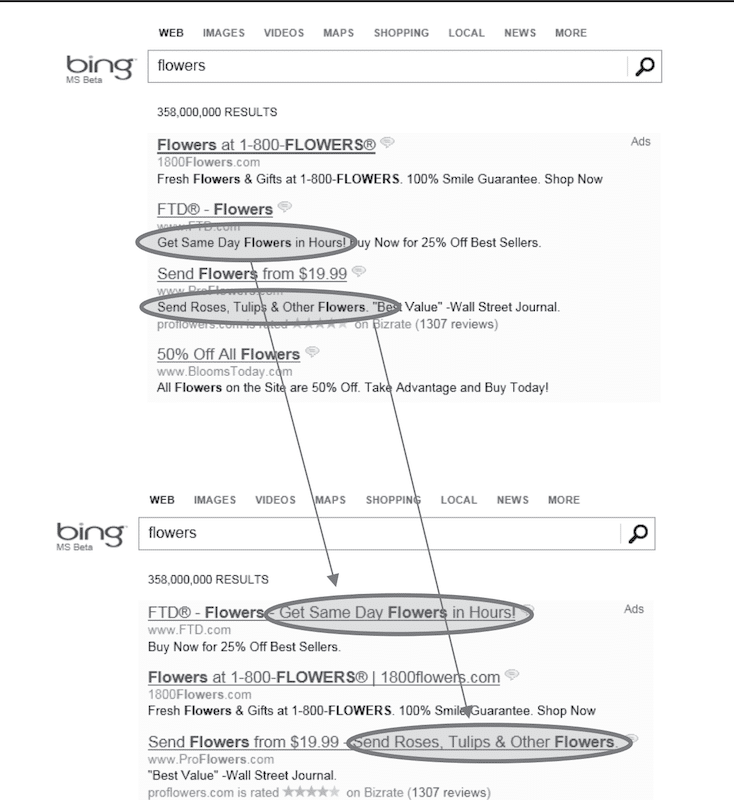
The rise of A/B testing as a dominant corporate ideology can be traced back to the early 2000s, gaining significant momentum through the success stories of “Big Tech” pioneers. In 2009, Google famously tested 41 different shades of blue for its toolbar links to determine which shade maximized clicks. Shortly thereafter, Microsoft’s Bing team executed a landmark experiment in which they merged two ad title lines into a single, longer headline. This minor UI adjustment reportedly generated more than $100 million in additional annual revenue, solidifying the belief that small, incremental changes could lead to massive financial windfalls.
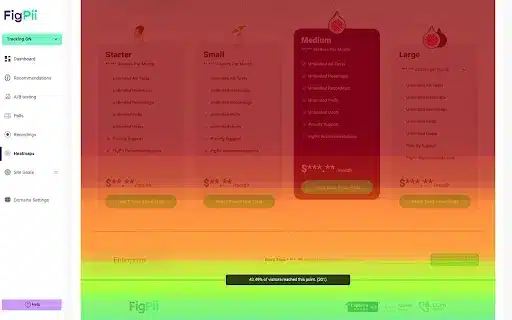
By the mid-2010s, the democratization of experimentation began. Platforms like Optimizely, VWO, and FigPii made it possible for marketing teams to launch tests without deep statistical expertise or complex coding requirements. This ease of use, however, created a cultural shift where “experimentation” became synonymous with “running an A/B test.” Today, organizations like Microsoft run upwards of 20,000 controlled experiments annually, a scale that most small-to-medium-sized enterprises (SMEs) attempt to emulate without possessing the necessary traffic or infrastructure to support such a volume.
The Statistical Reality Check: The Power Problem
A primary challenge facing modern digital teams is the lack of statistical power required to yield actionable results. For an A/B test to be valid, it requires a sufficient volume of visitors and conversions to distinguish a genuine behavioral shift from random statistical noise.
Data analysts point out that if a team is testing for a 1% or 2% lift—the typical result of a UI tweak—they may require hundreds of thousands of visitors per variant to achieve statistical significance. For the vast majority of e-commerce brands, even those generating 1 to 2 million sessions per month, reaching this threshold can take 6 to 12 weeks. This slow pace often results in one of three failure modes:
- The Premature Stop: Ending tests too early when results look promising but are not yet statistically valid.
- The Non-Significant Rollout: Implementing “winning” variants that were actually the result of random chance.
- The Testing Gridlock: A total cessation of development while waiting for a single, low-impact test to conclude.
The Survivorship Bias and the “Why” Gap
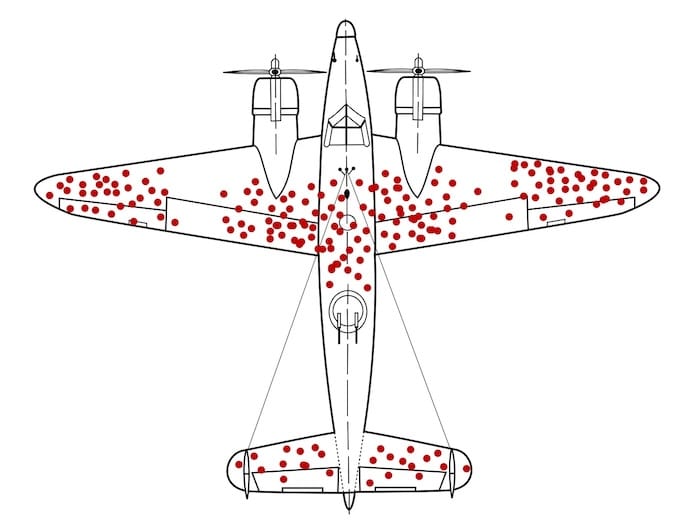
One of the most significant intellectual hurdles in the over-reliance on A/B testing is the “survivorship bias,” a concept famously illustrated by World War II statistician Abraham Wald. When the military analyzed returning aircraft to determine where to add armor, they initially looked at where the bullet holes were most frequent—the fuselage and wings. Wald realized this was a mistake: the planes hit in the engines never returned to be analyzed.
In the context of digital commerce, A/B tests focus exclusively on the “survivors”—the users who made it through the funnel. A test may show that Variant B won, but it fails to explain why. It does not account for the users who dropped off because they were confused, frustrated, or found the pricing prohibitive. Without qualitative data to accompany the quantitative “what,” teams often end up “optimizing the bullet holes”—reinforcing elements that don’t actually address the core vulnerabilities of the user experience.
Strategic Short-Sightedness: The Clash of Metrics
News from the front lines of e-commerce suggests a growing tension between short-term conversion wins and long-term business health. A/B tests are inherently designed to measure immediate actions: clicks, add-to-carts, and immediate purchases. However, these metrics often clash with broader business objectives such as Profit Per Visitor (PPV), Customer Lifetime Value (LTV), and return rates.
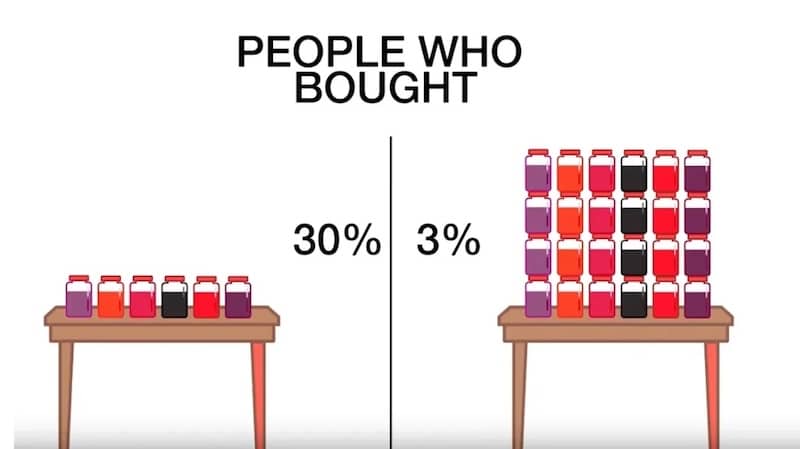
For instance, a variant that emphasizes a “limited time discount” might significantly boost immediate conversions (a “win” in an A/B test), but it may also attract price-sensitive customers who never return, or it may erode the brand’s premium positioning, leading to lower margins in the long run. The “Jam Experiment,” a classic study in behavioral economics, showed that while offering 24 varieties of jam attracted more interest, it resulted in a 3% purchase rate, whereas offering only six varieties resulted in a 30% purchase rate. A simple A/B test focused on “engagement” or “clicks” would have incorrectly identified the 24-option variant as the winner.
What High-Maturity Teams Do Differently
As the limitations of basic split testing become more apparent, high-maturity organizations are shifting toward a more diverse “experimentation toolkit.” These teams recognize that A/B testing is merely one tool among many.
1. Diversified Methodology
Mature teams utilize a range of experimental designs based on the specific business question:
- Sequential Testing: Used for continuous monitoring of results to make faster decisions without losing statistical integrity.
- Holdout Groups: Withholding a new feature from a small percentage of users over several months to measure its long-term impact on retention and LTV.
- Switchback Testing: Often used by companies like Uber or DoorDash, these tests alternate treatments over time across an entire geographical area to account for network effects where users interact with one another.
- Quasi-Experiments: Used when random assignment is impossible, such as testing the impact of a physical retail opening on local digital sales.
2. Evidence-Led Hypotheses
Rather than testing “random ideas” from a backlog, sophisticated programs ground their hypotheses in deep research. This includes analyzing customer support tickets, conducting moderated usability testing, and reviewing session recordings. A high-quality hypothesis follows a rigorous structure: “Because [Research Evidence], we believe [User Problem], so we will [Experience Change], and we expect [Specific Metric Change].”
3. Testing High-Leverage Levers
Instead of cosmetic tweaks, high-maturity teams focus on “big levers” that influence the fundamental psychology of the buyer. This includes:
- Value Proposition: Testing how the brand’s core benefits are communicated.
- Pricing and Bundling Models: Testing the structure of the offer itself rather than the color of the “Buy” button.
- Information Architecture: Reimagining how users find and compare products.
- Risk Reversal: Testing different guarantees, return policies, or social proof mechanisms.
Broader Impact and Industry Implications
The shift away from “A/B testing for everything” signals a broader maturation of the digital economy. As acquisition costs on platforms like Meta and Google continue to rise, brands can no longer afford to waste traffic on low-leverage experiments. The move toward a more holistic experimentation framework suggests that the future of digital growth lies in the integration of data science, behavioral psychology, and traditional business strategy.
Industry analysts suggest that companies failing to evolve their experimentation programs will likely face a “plateau effect,” where their optimization efforts yield diminishing returns while their more agile competitors make structural leaps in efficiency. The consensus among experts is clear: A/B testing is a vital diagnostic tool, but it is not a strategy in itself. To thrive in an increasingly competitive landscape, organizations must move beyond the binary “A vs. B” mindset and embrace a more nuanced, research-driven approach to understanding the complex motivations of the modern consumer.
As this transition takes hold, the role of the “CRO Specialist” is evolving into that of an “Experimentation Strategist”—a professional tasked not just with moving needles, but with uncovering the fundamental truths that drive long-term sustainable growth. The era of “testing for the sake of testing” is ending; the era of strategic experimentation has begun.








