
 rifanmuazin
The landscape of digital marketing has undergone a fundamental shift as of July 2025, moving away from volume-based metrics toward a sophisticated, outcome-focused approach to conversion rate optimization (CRO). As businesses face increasing customer acquisition costs and a saturated digital environment, the methodology for measuring and implementing conversion strategies has become the primary differentiator between market leaders and those struggling to maintain profitability. Industry experts, including Josh Gallant, founder of Backstage SEO, suggest that the era of treating analytics as a post-campaign afterthought has ended, replaced by a rigorous framework that prioritizes measurement before the first line of code is ever changed or a single A/B test is launched.
The Shift Toward Outcome-Focused Success Metrics
The foundation of modern CRO measurement begins with a departure from "vanity metrics"—data points that appear positive on a dashboard but do not correlate with bottom-line revenue. Historically, marketing teams focused on broad goals such as "increasing traffic" or "generating more leads." However, the current standard requires outcome-focused goals that tie directly to business viability. According to recent industry benchmarks, the median conversion rate across all sectors currently sits at approximately 6.6%. While this serves as a baseline, high-performing organizations are now focusing on specific financial outcomes, such as increasing the average order value (AOV) by 10% or improving the lead-to-customer conversion rate by 5%.
This evolution requires a deep alignment between marketing activities and the stages of the sales process. For instance, if a company requires 50 new customers monthly and maintains a 10% qualification-to-close rate, the measurement framework must be calibrated to secure 500 qualified leads rather than a generic volume of inquiries. Data from the 2024-2025 Conversion Benchmark Report further highlights the importance of channel-specific measurement, noting that email traffic continues to lead conversion efficiency at 19.3%, significantly outpacing paid social (12%) and paid search (10.9%).
Chronology of Measurement: From Hits to Behavioral Insights
The methodology for tracking digital success has transitioned through three distinct phases over the past decade. In the early 2010s, measurement was largely quantitative, focusing on page views and "hits." By the late 2010s, the focus shifted to the "macro conversion," or the final purchase event. In the current 2025 landscape, the standard has evolved into a "micro-conversion" framework.

Micro-conversions are smaller, incremental actions that signal user intent long before a final purchase is made. These include:
- Video views (specifically 50% or 75% completion rates)
- Add-to-cart actions
- Pricing page visits
- Newsletter sign-ups
- PDF downloads or resource interactions
- Scroll depth reaching at least 50% of a landing page
By tracking these early indicators, marketers can identify exactly where friction occurs in the conversion funnel. Analysts note that identifying a drop-off between a video view and a demo request provides a more actionable insight than simply observing a low final conversion rate. This chronological shift toward granular behavioral tracking allows for "leaky bucket" repairs in real-time, preventing the loss of high-intent traffic.
The Funnel Report: Identifying the "Leaky Bucket"
To achieve a professional standard of CRO, organizations are increasingly relying on detailed funnel reports to visualize the user journey. This process involves a step-by-step analysis of the conversion path, typically categorized into five stages:
- Top of Funnel: Landing page visits.
- Interest: Engagement with product features or secondary pages.
- Intent: Interaction with pricing or detailed specifications.
- Action: Initiation of the checkout or form-fill process.
- Conversion: Completion of the macro goal.
A significant drop-off at any specific stage indicates a localized problem. For example, a 40% abandonment rate on a pricing page suggests that the value proposition has not been sufficiently communicated or that the pricing structure is misaligned with the target audience’s expectations. Modern CRO practitioners are also segmenting these funnels by traffic source, as social media visitors often exhibit different behavioral patterns compared to those arriving via organic search or direct email links.
Data Rigor and the Filtering of "Noise"
A critical challenge in the 2025 marketing environment is the prevalence of "noisy" or misleading data. Platforms like Google Analytics 4 (GA4) provide vast amounts of information, but without proper filtering, this data can lead to erroneous conclusions. A primary example is the "bounce rate" metric; a high bounce rate on a blog post might indicate that the reader found exactly what they needed and left satisfied, whereas a high bounce rate on a checkout page indicates a critical failure.

To combat this, professional analysts are moving toward heavy segmentation. Data is now routinely broken down by:
- Device Type: Analyzing mobile versus desktop performance.
- Traffic Source: Distinguishing between paid, organic, and referral.
- User Behavior: Comparing new versus returning visitors.
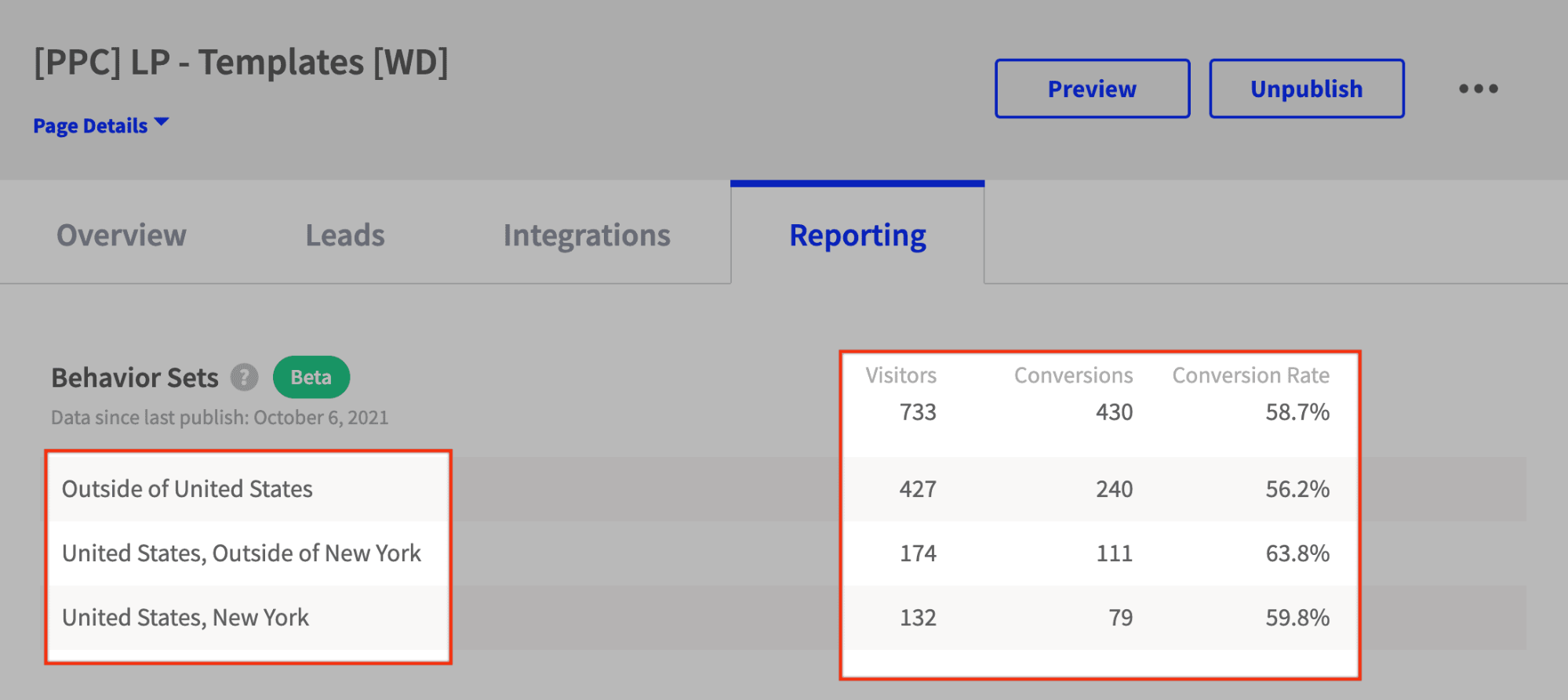
- Geography: Identifying regional performance variations.
- Content Complexity: Research indicates that pages with high word complexity show a -24.3% correlation with conversion rates, a nuance that is only visible through segmented analysis.
Notably, the 2024 Conversion Benchmark Report revealed a startling discrepancy: while 83% of landing page visits now occur on mobile devices, desktop platforms still convert at an 8% higher rate. This suggests that while traffic is mobile-first, the conversion experience often remains desktop-centric, representing a massive optimization opportunity for mobile-responsive design.
Qualitative Context: The "Why" Behind the "What"
While quantitative data shows what is happening, qualitative research explains why it is happening. In 2025, the integration of heatmaps, session recordings, and user surveys has become mandatory for any serious CRO program.
Heatmaps allow marketers to identify "rage clicks"—where users click repeatedly on non-interactive elements—and "ghosting," where users ignore the primary call-to-action (CTA). Session recordings provide a playback of the user experience, highlighting technical glitches or confusing navigation paths that automated tools might miss.
Furthermore, "voice-of-customer" (VoC) insights gathered through on-page micro-surveys provide direct feedback. Questions such as "What is the one thing nearly stopped you from signing up today?" or "Is there anything on this page that is confusing?" allow businesses to address specific psychological barriers. This combination of "the what" (data) and "the why" (user sentiment) creates a comprehensive picture of the conversion landscape.
Building Data-Backed Hypotheses and Prioritization
The transition from "guessing" to "testing" is marked by the use of rigorous hypotheses. A professional CRO hypothesis follows a specific evidence-based formula: "Because we observed [Data/Insight], if we [Change Element], then [Metric] will [Increase/Decrease]."
For example: "Because we observed that 60% of visitors scroll past our lead form without stopping, if we move the form above the fold and reduce the fields from seven to three, then our completion rate will increase by 15%."
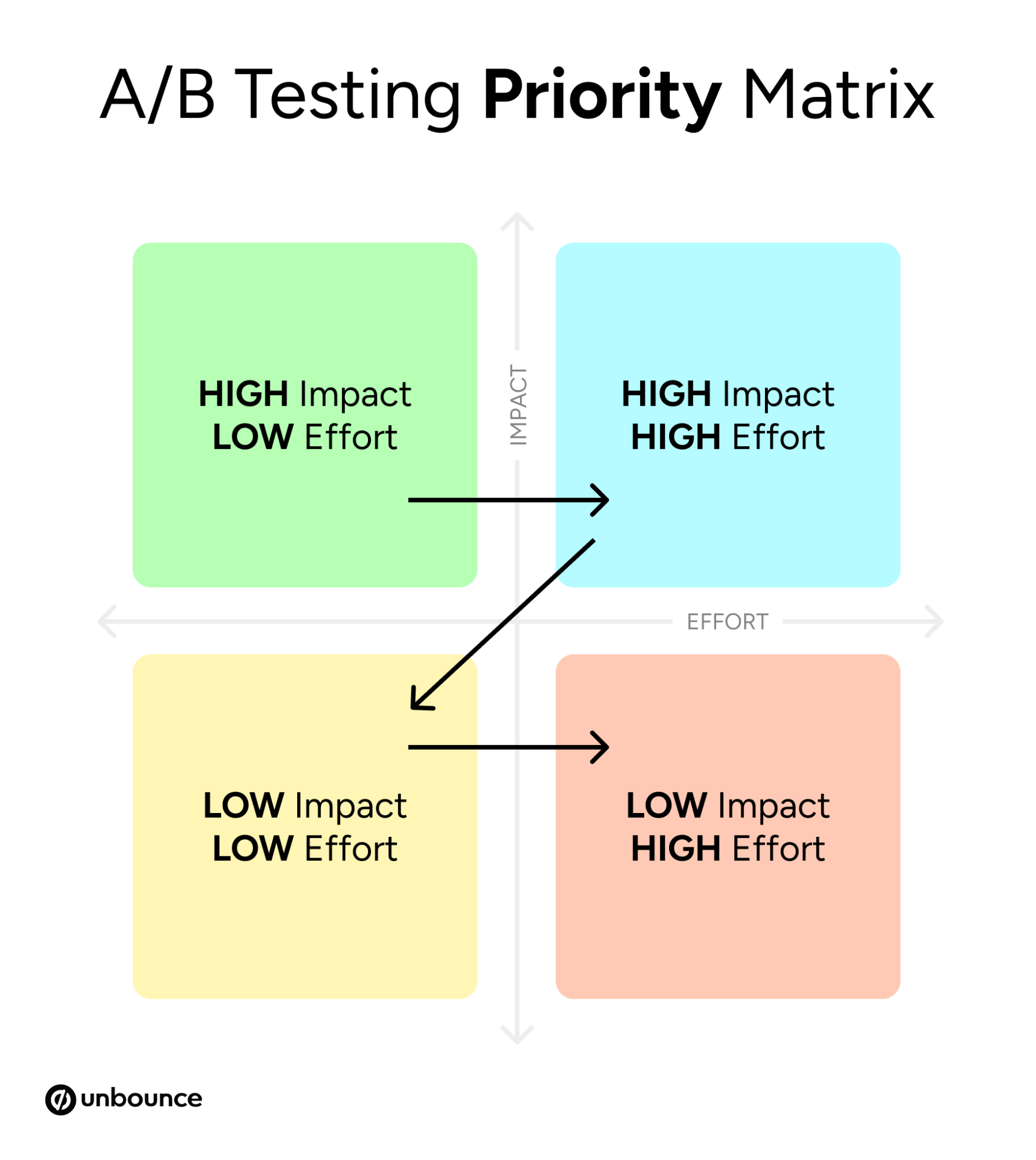
Once a list of hypotheses is generated, prioritization is managed through a matrix evaluating two variables:
- Estimated Impact: How much will this change affect the bottom line?
- Ease of Implementation: How much time and technical resource is required?
This "Quick Wins" vs. "Big Projects" framework ensures that marketing teams do not waste weeks on complex changes that offer minimal returns.
Statistical Significance and the Rigor of Results
A common pitfall in conversion optimization is the premature declaration of a "winner." In the current high-stakes environment, professional rigor requires statistical significance before implementing changes. This mathematical threshold ensures that the observed lift in conversions is not due to random chance or temporary fluctuations in traffic.
Key principles for interpreting results in 2025 include:
- Sufficient Sample Size: Ensuring enough visitors have seen both variants.
- Test Duration: Running tests for at least two full business cycles (usually 14 days) to account for "weekend effects."
- No "Peaking": Resisting the urge to stop a test early because one variant shows an initial lead.
- Post-Test Analysis: Examining how the change affected different segments (e.g., did the winner for mobile also win for desktop?).
Broader Impact and the Culture of Experimentation
The ultimate goal of modern CRO is the establishment of a "culture of experimentation." This involves a continuous loop—the CRO Flywheel—where insights from one test inform the hypothesis of the next. Rather than treating optimization as a one-time project, leading firms treat it as an ongoing discipline.
The implications of this shift are profound. Companies that adopt a systematic measurement and testing framework see compounded growth over time. A series of small 5% improvements across different stages of the funnel can lead to a doubling of total conversion efficiency within a year. In an era where advertising costs continue to rise, the ability to convert existing traffic more effectively has become the most sustainable path to growth.
As the digital landscape becomes increasingly complex with the integration of AI-driven optimization and personalized user experiences, the fundamental principles of clear measurement remain the bedrock of success. For the modern marketer, the message is clear: those who master the data will master the market.








