rifanmuazin
As the digital landscape enters the second half of the 2020s, the barrier to entry for website and application experimentation has reached an all-time low, driven by the rapid maturation of generative artificial intelligence and automated testing suites. By early 2026, the cost of executing a standard A/B test has plummeted, as AI models now routinely generate hypotheses, build UI variants, write production-ready code, and synthesize complex statistical results in a matter of seconds. However, industry experts warn that this ease of execution has created a new paradox: while running tests is cheaper than ever, the competitive advantage has shifted away from the volume of tests to the rigor, transparency, and disciplined decision-making of the human teams overseeing them.

In the current market environment, customer journeys have become increasingly fragmented across multiple devices and platforms, making instinct-driven marketing a liability. Leading firms, such as HubSpot, have responded by embedding experimentation into the very fabric of their operations, utilizing structured systems like the "Loop framework" to ensure every change is backed by data. This evolution marks a transition for A/B testing from a niche growth tactic to a fundamental operational necessity for any enterprise seeking to maintain market share in 2026.
The Evolution of Experimentation: A 2020-2026 Chronology
The journey to the current state of experimentation has been defined by three distinct phases over the last six years. Between 2020 and 2022, experimentation was largely the domain of specialized Conversion Rate Optimization (CRO) teams and data scientists. Tools were expensive, and the manual effort required to design and code variants meant that only high-traffic enterprises could justify a robust testing program.

The second phase, spanning 2023 to 2025, saw the "AI Explosion." During this period, Large Language Models (LLMs) began to assist in writing copy and basic HTML/CSS for variants. Testing platforms started integrating AI "copilots" to help marketers interpret p-values and confidence intervals. This democratization led to a massive surge in the number of tests being run globally, though often at the expense of quality.
Now, in 2026, the industry has entered the "Rigor Recovery" phase. Organizations have realized that a high volume of poorly conceived tests leads to "winning" results that fail to translate into actual revenue. The focus has returned to the foundational principles of the scientific method, augmented but not replaced by artificial intelligence.
The GIGO Effect and the Necessity of Mental Models
One of the primary challenges identified by practitioners in 2026 is the "Garbage In, Garbage Out" (GIGO) effect. As AI tools make it possible to launch an experiment with a single prompt, the risk of feeding these tools weak inputs has grown exponentially. If a hypothesis is built on shallow research or "hallucinated" buyer personas—AI-generated profiles that do not reflect actual customer behavior—the resulting test may optimize for an audience that does not exist.
To combat this, elite experimentation teams are relying on specific mental models to guide their logic. These models serve as a cognitive framework for framing questions and interpreting results. As noted by industry veterans, the goal of optimization is no longer just to prove a variant is "better," but to understand the "why" behind user behavior. This understanding allows for replication and scaling, whereas a "win" without a known cause is often a statistical fluke that cannot be sustained.

Strategic Selection: When to Deploy A/B Testing
Despite the availability of tools, sophisticated organizations in 2026 are more selective about when they deploy randomized controlled trials. Strategic testing is typically reserved for scenarios where the risk of a wrong decision is high or the potential for learning is significant.
Criteria for Launching a Test
Current industry standards suggest running an A/B test when there is a clear, data-backed hypothesis that addresses a specific user pain point. Tests are also prioritized for high-impact changes, such as pricing model adjustments, checkout flow overhauls, or core value proposition shifts. Furthermore, a test is only deemed viable if the site traffic is sufficient to reach statistical significance within a reasonable timeframe—usually two to four weeks.

Scenarios to Avoid Testing
Conversely, testing is frequently avoided when the "Minimum Detectable Effect" (MDE) is too small to justify the implementation effort. For instance, if a 0.1% lift in conversion would not cover the engineering cost of shipping the change, the test is often skipped in favor of more radical "bold bets." Additionally, testing is discouraged during periods of extreme external volatility, such as major economic shifts or technical outages, which can corrupt the baseline data.
Statistical Frameworks: Frequentist vs. Bayesian Approaches
The debate between Frequentist and Bayesian statistics remains a cornerstone of experimentation in 2026. While both methodologies are valid, they serve different organizational needs and risk tolerances.

The Frequentist Pillar
Frequentist statistics, the traditional backbone of the scientific method, rely on fixed sample sizes and pre-defined significance thresholds. This approach is favored by organizations that require strict error control and want to ensure that a "win" is not merely the result of random noise. However, the Frequentist model is often criticized for its lack of flexibility; "peeking" at results before a test is finished can lead to false positives, a mistake that still plagues novice testers.
The Bayesian Alternative
Bayesian statistics offer a probabilistic framework that updates "beliefs" as new data arrives. In 2026, many AI-driven testing platforms favor Bayesian math because it is more intuitive for business stakeholders. It answers the question: "Given the data we have seen, what is the probability that Variation B is better than the Control?" While more flexible, Bayesian analysis requires careful oversight to ensure that "priors"—the initial assumptions—are not biasing the outcome.

The ALARM Protocol for High-Quality Execution
To ensure that experiments are both scientifically sound and business-relevant, many teams have adopted the ALARM protocol, a framework developed by GAIN Conversion to pressure-test variants before they go live.
- Alternative Executions: Teams are encouraged to explore multiple ways to test a single hypothesis. If the goal is to increase "trust," the team might test a social proof widget in one variant and a "money-back guarantee" badge in another.
- Loss Factors: This involves a "pre-mortem" analysis to identify why a test might fail. Common loss factors in 2026 include low visibility on mobile devices or "message mismatch" where the ad copy doesn’t align with the landing page.
- Audience and Area: Precision targeting is now the norm. Rather than testing site-wide, experiments are often confined to specific segments, such as "returning users from organic search" or "users who have spent more than $500 in the last year."
- Rigor: This step applies psychological principles, such as reducing cognitive load or utilizing the scarcity effect, to ensure the variant is as strong as possible.
- MDE & MVE: The Minimum Detectable Effect and Minimum Viable Experiment ensure that the team is not over-engineering a solution before they have proof of concept.
Data Triangulation and Defensible Insights
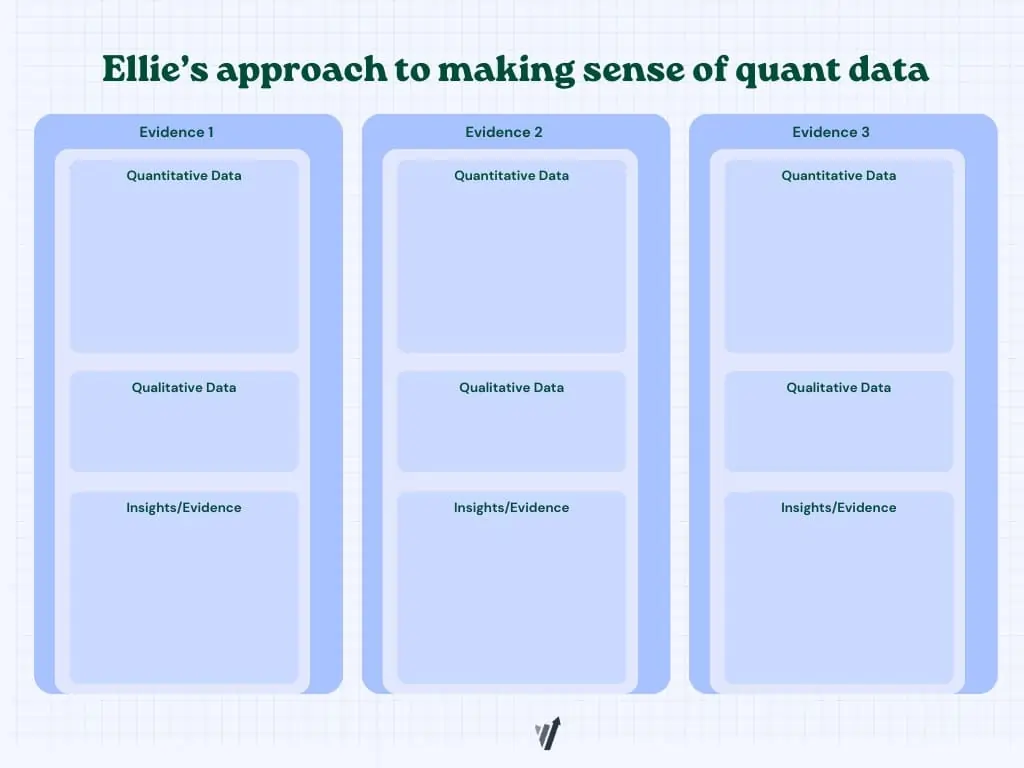
In 2026, no single data source is considered sufficient to drive a major business decision. Instead, experimenters use "triangulation"—the synthesis of quantitative data (web analytics, heatmaps) and qualitative data (user interviews, session recordings).

Ellie Hughes, Head of Consulting at the Eclipse Group, describes this as a "quantitative approach to qualitative data." By assigning numerical values to user feedback and pairing them with hard conversion metrics, teams can reach "defensible insights." For example, if heatmaps show users are ignoring a "Buy Now" button, and user interviews reveal that the button color looks like an unclickable banner, the team has a high-confidence hypothesis to test.
The Role of Generative AI: Survey Results and Market Sentiment
A recent survey conducted by CRO expert Marcella Sullivan revealed that 83.3% of professional experimenters now use generative AI tools like ChatGPT or Claude on a daily basis. The primary use cases include analyzing massive datasets for anomalies, generating low-fidelity prototypes, and debugging complex JavaScript for server-side tests.

However, the survey also highlighted a deep-seated skepticism toward "black box" AI features. Experimenters expressed a preference for platforms that offer transparency and access to raw data over those that promise "one-click optimization." The prevailing sentiment is that while AI can draft the variants, human judgment is required to declare a winner and interpret the results within the broader business context. AI "hallucinations"—where the model fabricates insights from thin data—remain a significant risk that necessitates human oversight.
Future Outlook: Moving Toward 2027
As the industry looks toward 2027, several emerging trends are expected to redefine the field. The shift toward server-side testing is accelerating, driven by stricter privacy regulations and the need for faster site performance. Unlike traditional client-side testing, which can cause "flicker" and slow down page loads, server-side testing happens behind the scenes, offering a more seamless user experience.

Furthermore, the rise of "Hyper-Personalization at Scale" will likely see A/B testing evolve into "Multi-Armed Bandit" testing, where AI automatically allocates traffic to the best-performing variation for specific user segments in real-time. Despite these technological leaps, the core mission remains unchanged: reducing uncertainty and making better decisions through the disciplined application of the scientific method.
In conclusion, the state of experimentation in 2026 is one of "augmented rigor." The tools have become faster and more accessible, but the human element—the ability to ask the right questions and interpret complex human behavior—remains the ultimate competitive advantage. Companies that master this balance will thrive, while those that rely solely on automated "garbage" will find themselves optimizing for a ghost audience in an increasingly crowded digital marketplace.


 Asro
Asro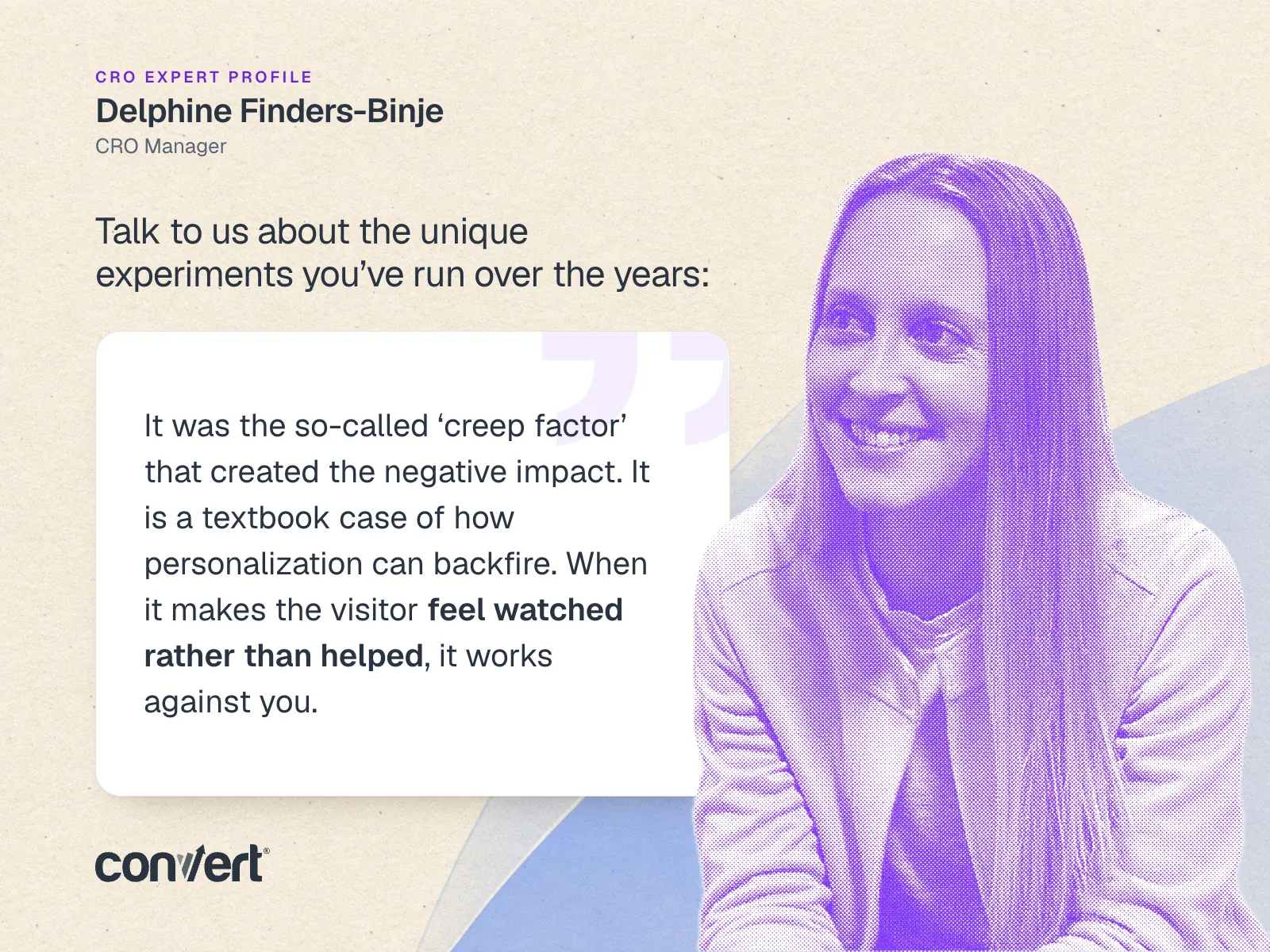
 Dwi Wanna