
 rifanmuazin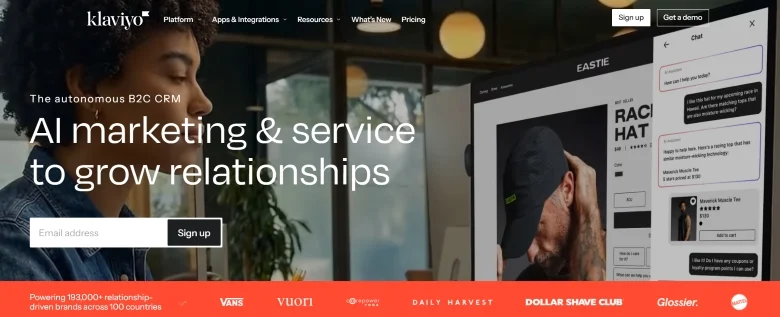
The landscape of e-commerce marketing automation is in constant flux, with businesses continually seeking platforms that offer optimal functionality, scalability, and cost-effectiveness. While Drip has historically been a significant player, particularly since its launch in 2013, known for its robust automation, segmentation, and customer journey mapping, a growing number of e-commerce brands are now exploring alternatives. This migration is primarily driven by concerns around pricing models, usability challenges, and a perceived lack of comprehensive features as businesses scale. This report provides an in-depth analysis of 10 noteworthy Drip alternatives, based on first-hand testing, current platform performance, and user feedback as of April 2026.
The Evolving Demands of E-commerce Marketing
Over the past decade, the digital commerce sector has experienced exponential growth, intensifying the need for sophisticated yet user-friendly marketing tools. E-commerce platforms are no longer just about sending emails; they must facilitate multi-channel engagement, integrate seamlessly with diverse business systems, and provide actionable analytics. As online businesses mature, their marketing automation needs evolve from basic email campaigns to intricate lifecycle marketing strategies, encompassing SMS, push notifications, and advanced customer relationship management (CRM) functionalities. The choice of a marketing automation platform is thus a strategic decision, directly impacting customer acquisition, retention, and overall return on investment (ROI). Industry reports indicate that global e-commerce sales are projected to continue their upward trajectory, reaching trillions of dollars annually, underscoring the critical role of effective marketing technology. This competitive environment places immense pressure on platforms like Drip to innovate and remain aligned with the dynamic requirements of their user base.

Drip’s Enduring Strengths and Emerging Challenges
Drip has cultivated a reputation for its powerful automation capabilities, allowing e-commerce and direct-to-consumer (DTC) companies to craft intricate customer journeys. Its strength lies in deep segmentation and personalization, enabling brands to tailor communications based on user behavior and purchase history. However, despite these foundational strengths, a consistent pattern of user feedback across leading review platforms like G2 and Capterra highlights several limitations that are prompting businesses to seek out alternative solutions.
One of the most frequently cited concerns is pricing, specifically the absence of a free plan. For nascent e-commerce brands or those operating with constrained budgets, the inability to test the platform without financial commitment presents a significant barrier. As contact lists expand, Drip’s monthly costs escalate rapidly, often becoming a prohibitive factor for businesses striving for sustainable growth. A G2 reviewer succinctly noted, "No free version available, and the starting price might be too high for small businesses," reflecting a common sentiment among smaller enterprises. This financial pressure is often the primary catalyst for brands to investigate more budget-friendly or scalable Drip alternatives.
The platform’s steep learning curve is another notable hurdle. While Drip’s automation builder offers extensive power and flexibility, it can prove overwhelming for users without prior experience in advanced marketing automation. The complexity of understanding intricate workflows and campaign setups often prolongs onboarding and delays campaign launches. This aspect is particularly challenging for new users, making the transition slower compared to alternatives designed with greater ease of use in mind.
Concerns regarding limited access to customer support have also surfaced. Support access in Drip is tiered, often restricted based on the size of an account. Live chat, a crucial real-time support channel, is frequently unavailable to smaller teams or those below specific contact thresholds. This policy can be particularly frustrating for growing businesses, who often require timely assistance to troubleshoot issues or optimize campaigns, especially during critical growth phases.
The user interface (UI) is often described as confusing or complex. Despite a wealth of features, some users find Drip’s interface cumbersome, particularly when managing multiple campaigns and automations simultaneously. This complexity can impede workflow efficiency for fast-moving marketing teams, requiring a substantial investment of time to master the system before achieving optimal productivity.
Furthermore, missing built-in features and limited native integrations drive users towards more comprehensive solutions. Drip, for instance, lacks native landing page builders, compelling users to integrate third-party tools. Similarly, its integration ecosystem, while functional, is sometimes perceived as less expansive compared to competitors, particularly for popular platforms like WordPress or Wix. This reliance on external solutions can add layers of complexity and cost, pushing businesses towards all-in-one Drip alternatives.
Finally, some users have reported occasional issues with automation reliability. While automation is a cornerstone of Drip’s offering, instances of workflow failures or unexpected errors have been cited, impacting campaign performance and requiring manual intervention. For businesses heavily dependent on automated sequences, such inconsistencies pose a significant operational concern.
Methodology for Evaluating Alternatives
To provide an objective and comprehensive comparison, each alternative platform underwent a rigorous evaluation process in April 2026. This involved setting up accounts, constructing various automation workflows, and utilizing the respective email and SMS builders to assess ease of use and functionality. Pricing structures were meticulously reviewed, alongside a thorough examination of user reviews on independent platforms such as G2, Trustpilot, and Capterra. This multi-faceted approach aimed to validate marketing claims against real-world performance and user satisfaction, ensuring relevance for diverse e-commerce team requirements.
Top 10 Drip Alternatives: A Detailed Review
The following alternatives represent a diverse array of solutions, each catering to specific business needs, budgets, and technical proficiencies. The comparison table below provides a quick overview, followed by in-depth reviews.
| Tool | Best for | Pricing starts at | G2 rating | Free plan |
|---|---|---|---|---|
| Omnisend | Ecommerce businesses that need email + SMS automation | $16/month | 4.6 | Yes |
| Brevo | Budget-conscious businesses needing email + SMS tools | $9/month | 4.5 | Yes |
| Klaviyo | Data-driven ecommerce brands that need advanced segmentation and Shopify integration | $25/month | 4.5 | Yes |
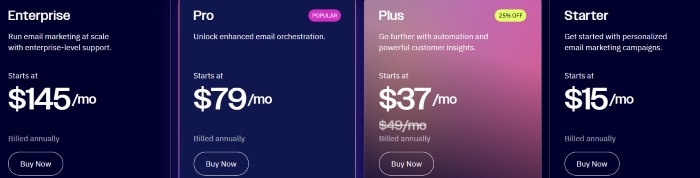
| ActiveCampaign | Small to mid-sized businesses needing CRM + automation | $15/month | 4.4 | No |
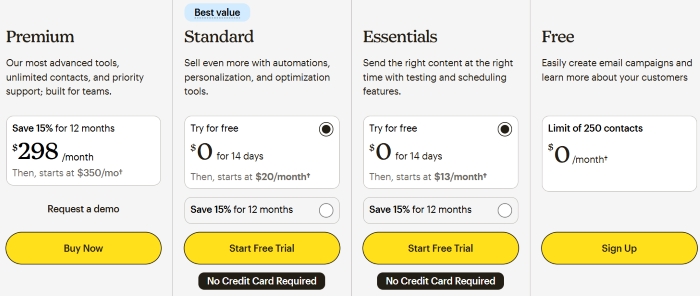
| Mailchimp | Beginners and small businesses starting with email marketing | $13/month | 4.4 | Yes |
| HubSpot | Teams needing full CRM + marketing automation in one platform | $20/month | 4.4 | Yes |
| ConvertKit | Content creators and newsletter-driven businesses | $39/month | 4.4 | Yes |
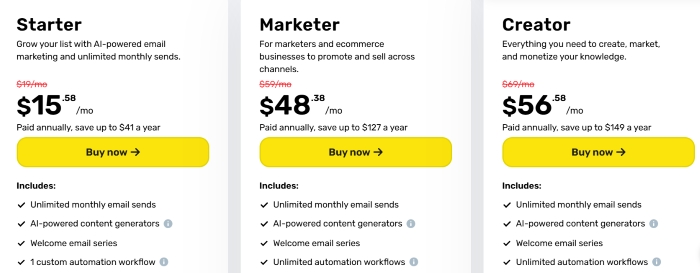
| GetResponse | Marketers running funnels, webinars, and email campaigns | $19/month | 4.3 | Yes |
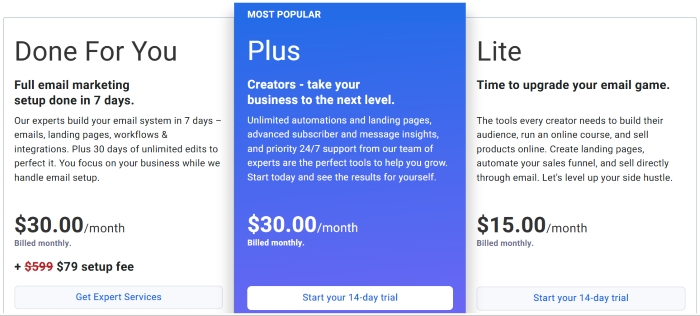
| AWeber | Small businesses and creators who need simple email marketing + automation | $15/month | 4.2 | Yes |
| Constant Contact | Small local businesses needing basic email marketing | $12/month | 4.2 | No |
Pricing, features, and ratings are based on publicly available data as of April 2026 across official pricing pages and review platforms.
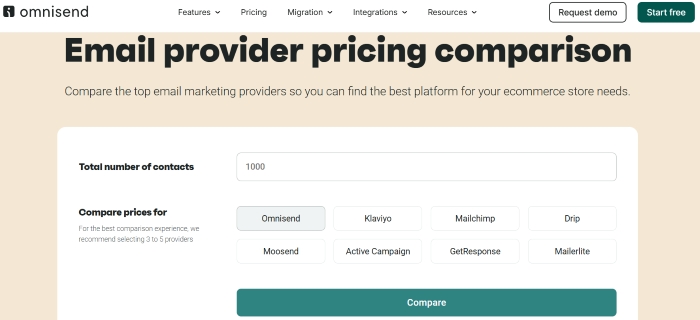
E-commerce businesses can leverage Omnisend’s email provider pricing comparison tool for a customized analysis, entering contact numbers and selecting providers for a side-by-side feature and cost breakdown.
1. Omnisend – Best for E-commerce
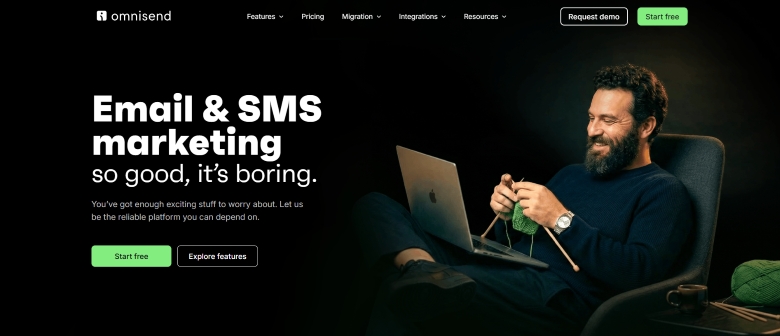
Omnisend positions itself as an e-commerce-centric email and SMS marketing platform engineered for online stores seeking streamlined automation. Our testing confirmed its rapid setup process and intuitive workflow builder, making it accessible even for novice users. The platform’s key strength lies in its ability to consolidate email, SMS, and push notifications into a unified system, eliminating the need for multiple disparate tools. This multi-channel approach is crucial for modern e-commerce, as consumers engage across various touchpoints. Key features include a drag-and-drop email builder, pre-built e-commerce automation workflows (e.g., abandoned cart, welcome series), robust segmentation, and comprehensive reporting.
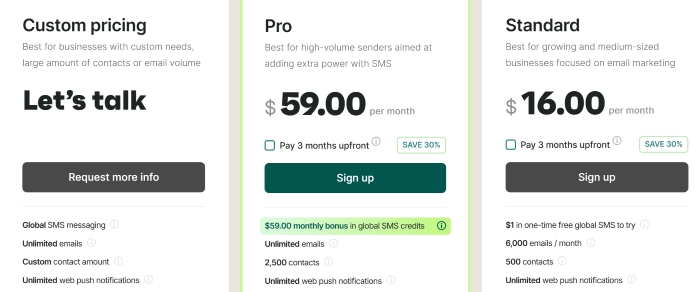
Omnisend offers a compelling free plan that includes access to core features like email automation and SMS. Paid plans commence at $16/month, scaling with the number of contacts. Higher-tier plans provide increased sending capacity, advanced analytics, and bonus SMS credits. Omnisend distinguishes itself from Drip by offering 24/7 customer support across all plans, including the free tier, a stark contrast to Drip’s tiered support access. This commitment to universal support, combined with an easier setup and a focus on multi-channel simplicity, makes Omnisend a strong alternative for e-commerce teams prioritizing scalable growth and operational efficiency. Omnisend’s reported average ROI of $79 for every dollar spent underscores its value proposition for performance-driven brands, as noted in their 2026 e-commerce marketing report.
2. Brevo (formerly Sendinblue) – Best for Small Businesses on a Budget
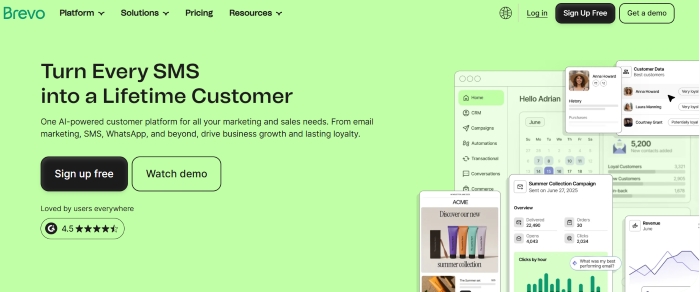
Brevo is an email and SMS marketing platform tailored for small businesses seeking essential tools at a competitive price point. During testing, its setup proved swift, and the interface was notably user-friendly. Brevo integrates email, SMS, and fundamental CRM features within a single platform, thereby reducing the need for tool switching. Its key features include an intuitive email builder, transactional email capabilities, SMS marketing, and a basic CRM for contact management.
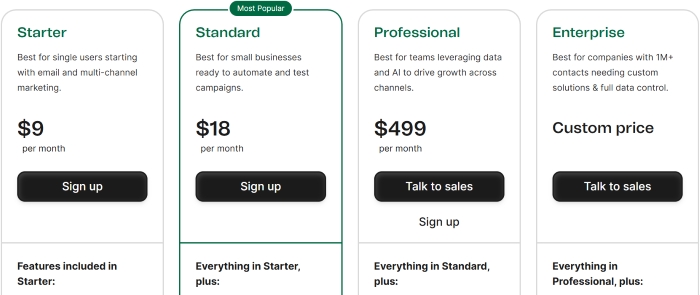
Brevo provides a free plan that encompasses core functionalities like email campaigns, automation, CRM, and SMS, though it imposes limitations such as a daily sending cap of 300 emails and includes Brevo branding. Paid plans begin at $9/month for the Starter tier, with pricing escalating based on email volume. Higher plans unlock advanced automation, A/B testing, and detailed reporting. Brevo emerges as a strong Drip alternative for budget-conscious teams who desire core marketing functionalities without the complexity or higher cost often associated with Drip. Its straightforward approach and integrated CRM make it ideal for small businesses needing an all-in-one solution without a steep learning curve.
3. Klaviyo – Best for Data-Driven E-commerce Brands
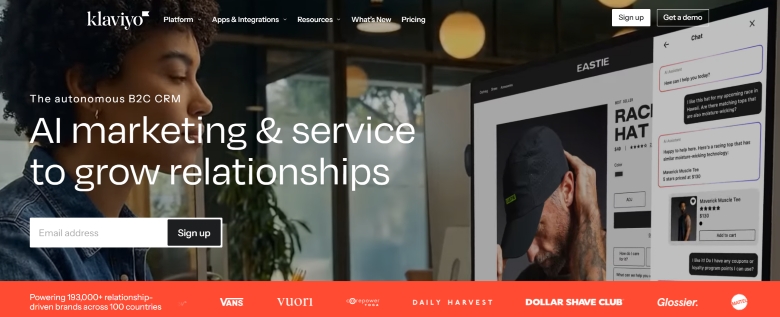
Klaviyo is a premier marketing automation platform specifically designed for e-commerce brands that leverage customer data extensively to inform their campaigns. Our testing highlighted its exceptional segmentation capabilities, allowing for the creation of highly granular audience segments based on purchasing behavior, browsing history, and engagement metrics. Klaviyo’s core features include deep e-commerce integrations (especially with Shopify), advanced segmentation, personalized product recommendations, and robust reporting dashboards that track key e-commerce KPIs.
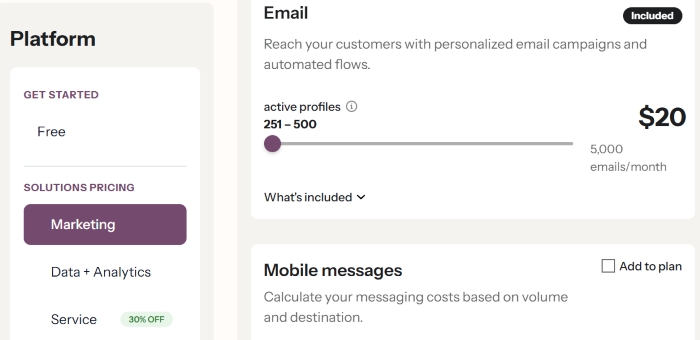
Klaviyo operates on a usage-based pricing model, offering a free plan for up to 250 active profiles and 500 email sends per month, which includes core email marketing features but carries Klaviyo branding. Paid email plans start at $20/month for up to 500 contacts, with unlimited email sends. Combined email + SMS plans begin at $35/month, including SMS credits. Klaviyo stands out as a powerful Drip alternative for data-intensive brands, surpassing Drip in its depth of behavior-based targeting and native e-commerce integration, making it indispensable for businesses that prioritize hyper-personalization and data-driven strategy.
4. ActiveCampaign – Best for Small and Mid-sized Businesses Using CRM and Automation
ActiveCampaign is a formidable Drip alternative, providing a unified platform for marketing automation and customer relationship management. Our evaluation underscored the flexibility of its automation builder, capable of handling complex multi-channel workflows. However, initial setup can be more time-consuming compared to simpler alternatives, especially for users new to advanced automation. Its key features include comprehensive email marketing, sales automation, an integrated CRM, and advanced segmentation tools that support lead scoring and conditional content.
ActiveCampaign does not offer a free plan but provides a 14-day free trial that grants access to core email marketing and automation features. Paid plans start at $15/month, scaling with contact count and chosen features. ActiveCampaign excels as a Drip alternative for businesses requiring both robust marketing and customer management within a single ecosystem, reducing reliance on third-party CRM integrations that Drip might necessitate. Its holistic approach is beneficial for businesses aiming to align sales and marketing efforts.
5. Mailchimp – Best for Beginners and Small Businesses
Mailchimp has long been a go-to platform for beginners and small businesses seeking a straightforward solution for email marketing. Our testing confirmed its user-friendly interface and intuitive email builder, making campaign creation accessible even for those without prior experience. The platform provides a wealth of ready-made templates and step-by-step guidance, facilitating rapid campaign launches without technical expertise. Key features include an easy-to-use drag-and-drop email builder, basic automation (e.g., welcome emails), audience segmentation, and marketing CRM functionalities.
Mailchimp offers a free plan that includes basic email marketing tools, templates, and reporting, though it imposes limits on contact numbers, monthly sends, and advanced automation. Paid plans start at $13/month, unlocking higher sending limits and more sophisticated automation options. A 14-day free trial is also available for its Essentials and Standard plans. Mailchimp serves as an excellent Drip alternative for users who prioritize simplicity and ease of entry, offering a less intimidating starting point compared to Drip’s more complex automation-heavy environment.
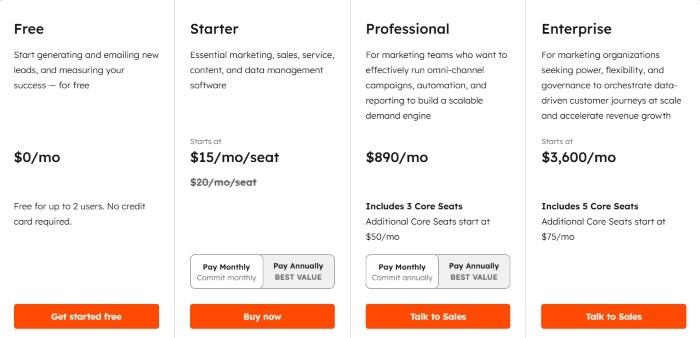
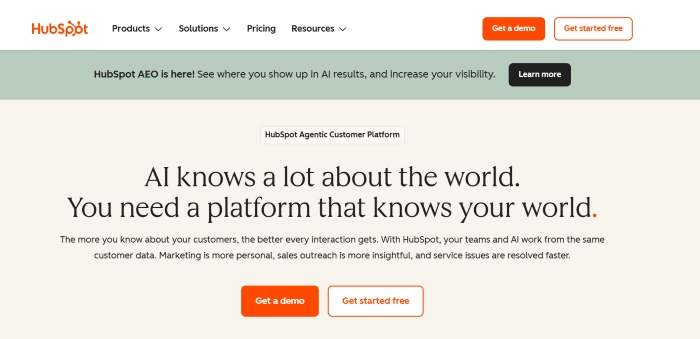
6. HubSpot – Best for Growing Teams Needing an All-in-One Platform
HubSpot stands as one of the most comprehensive Drip alternatives, integrating email marketing, CRM, sales, and service tools into a unified platform. It is designed for growing teams aiming to manage their entire customer journey without switching between multiple systems. While the platform offers a structured and powerful experience, initial setup can be more involved than with simpler tools. Its key features span marketing automation, sales CRM, service desk functionalities, content management (CMS), and robust analytics.
HubSpot provides a free plan with basic tools like email marketing, forms, and CRM features, though advanced automation, reporting, and functionality are limited. Paid plans start at $15/month, unlocking expanded automation capabilities, higher sending limits, and advanced reporting features. HubSpot is a compelling Drip alternative for teams that require a fully integrated platform to connect marketing, sales, and customer service data. Its all-in-one approach significantly streamlines operations and data visibility compared to Drip’s more focused email automation.
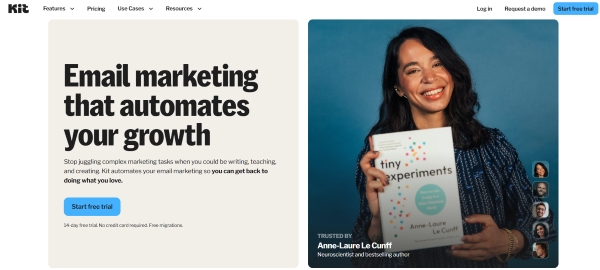
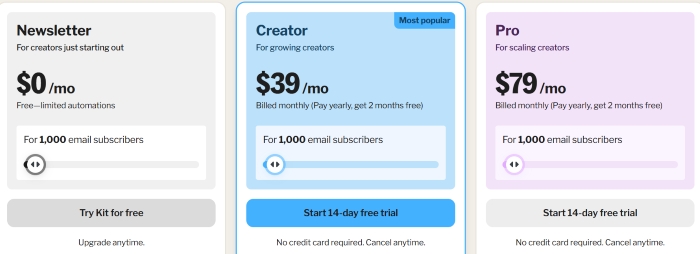
7. ConvertKit – Best for Creators and Newsletter Businesses
ConvertKit, also referred to as Kit, is an email marketing platform specifically tailored for content creators, bloggers, and businesses primarily focused on newsletters. Our testing revealed a platform prioritizing simplicity, ideal for those seeking Drip alternatives centered on audience building and content delivery rather than complex e-commerce workflows. It emphasizes email sequences and subscriber growth, allowing for easy newsletter management without advanced automation setup. Key features include intuitive landing page and form builders, email broadcasts and sequences, subscriber segmentation, and e-commerce integrations (though less deep than dedicated e-commerce platforms).
ConvertKit offers a free plan with basic email marketing features, including landing pages, forms, and email broadcasts, but limits advanced automation and monetization tools. Paid plans start at $39/month and scale with subscriber count, unlocking more automation, enhanced segmentation, and advanced creator tools. ConvertKit is a suitable Drip alternative for creators who prioritize audience engagement and content delivery over intricate e-commerce automation, offering a streamlined experience distinct from Drip’s broader scope.
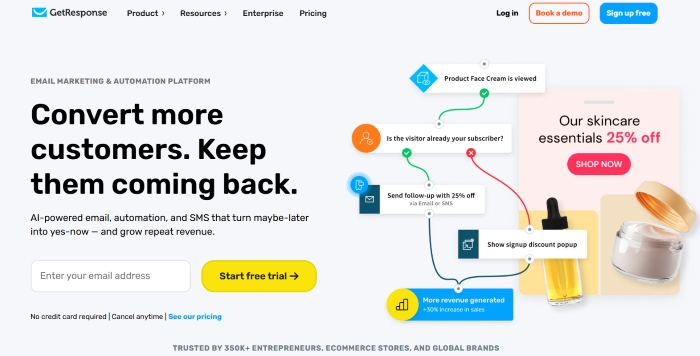
8. GetResponse – Best for Marketers Running Funnels and Webinars
GetResponse is an email marketing platform distinguished by its integrated tools for running marketing campaigns, sales funnels, and webinars. Our evaluation highlighted its robust funnel builder, particularly effective for lead generation and product promotions. Unlike many Drip alternatives, GetResponse includes built-in webinar and funnel tools, eliminating the need for separate platforms. Key features encompass advanced email marketing, a comprehensive website and funnel builder, webinar hosting capabilities, marketing automation, and list management.
GetResponse offers a free plan with basic email marketing tools, though it restricts advanced features like webinars, deep automation, and landing page traffic. Paid plans start at $19/month, unlocking full access to webinars, funnels, and advanced automation. GetResponse serves as a versatile Drip alternative for marketers who require integrated funnel and webinar capabilities, a structural advantage that Drip does not natively offer. This integrated approach simplifies campaign management and conversion tracking.
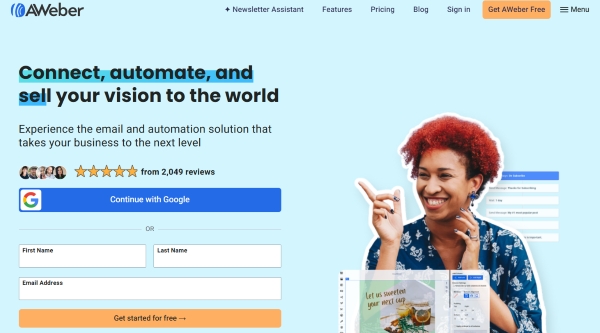
9. AWeber – Best for Small Businesses and Beginners
AWeber is an email marketing platform well-suited for small businesses and beginners seeking straightforward Drip alternatives for campaign management. Our testing showed quick setup and an easy-to-navigate interface, minimizing the learning curve. It provides numerous ready-made templates and intuitive tools, enabling users to create and send campaigns efficiently, even without advanced technical skills. Key features include a drag-and-drop email builder, basic automation, tagging and segmentation, and access to a vast template library.
AWeber offers a 14-day free trial for its Lite and Plus plans, providing access to core email marketing features and basic automation. While not a perpetually free plan, it allows for thorough testing. After the trial, paid plans start at $15/month, increasing with subscriber count, with full functionality reserved for paid tiers. AWeber is a beginner-friendly Drip alternative, offering a simpler and less intimidating setup compared to Drip’s more automation-heavy environment, making it ideal for those new to email marketing.
10. Constant Contact – Best for Small Local Businesses
Constant Contact is an email marketing platform particularly effective for small local businesses seeking user-friendly Drip alternatives. Our assessment confirmed its ease of use, especially for individuals with limited prior experience in email marketing. It provides intuitive templates and guided tools, allowing businesses to launch campaigns quickly without complex configurations. Key features include a drag-and-drop email editor, event management tools, social media marketing integration, and list growth tools.
Constant Contact does not offer a free plan, but it often provides a free trial period. Paid plans start at $12/month, scaling with contact list size. The entry-level plan covers core email marketing features, with advanced automation and reporting reserved for higher tiers. Constant Contact is a straightforward Drip alternative for small businesses that prioritize simple email marketing over complex automation, offering a more direct and accessible approach to customer engagement for local enterprises.
Strategic Considerations for Platform Selection
The decision to choose a marketing automation platform is a critical strategic undertaking for any e-commerce business. While Drip remains a capable platform, particularly for its advanced automation and customer journey features, its rising costs and tiered customer support model can become limiting factors as businesses scale. The "best" tool is not universal; rather, it is contingent upon specific business objectives, budgetary constraints, list size, and the required depth of functionality. For instance, while some Drip alternatives excel for small, budget-conscious teams, others are designed for data-intensive brands or individual content creators.
For businesses operating on e-commerce platforms, Omnisend consistently emerges as a leading Drip alternative. Its free plan, encompassing core e-commerce features, combined with multi-channel capabilities (email and SMS) on a single platform, offers significant value. Furthermore, Omnisend’s provision of 24/7 customer support across all plans, including the free tier, directly addresses one of Drip’s frequently cited weaknesses. The reported average ROI of $79 for every dollar spent, as detailed in Omnisend’s 2026 e-commerce marketing report, underscores its focus on driving measurable business growth and efficiency.
Ultimately, the competitive landscape of marketing automation offers a wealth of choices. Businesses must carefully evaluate their current needs and future growth trajectories to select a platform that not only addresses immediate challenges but also provides a scalable and sustainable foundation for their digital marketing endeavors. The shift towards more integrated, user-friendly, and cost-effective solutions reflects an industry maturing to meet the sophisticated demands of the modern e-commerce ecosystem.









