

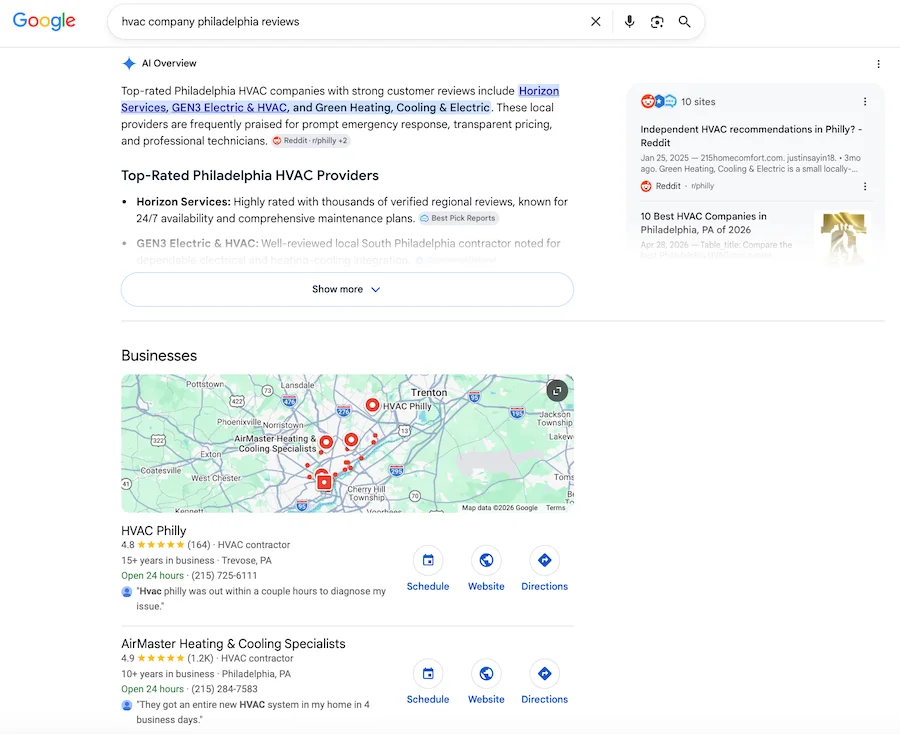
The landscape of search engine optimization (SEO) is undergoing a profound transformation, driven by the rapid integration of artificial intelligence (AI) into search engine results. For small businesses that have invested heavily in optimizing for informational keywords, this evolution presents a critical challenge: their hard-won rankings may no longer translate into tangible business outcomes. The core issue lies not in diminished search engine performance, but in a fundamental shift in how users find answers to their queries, with AI now often providing complete solutions directly on the search results page, bypassing the need for a click-through to a website.
Consider the common scenario faced by a local plumbing company. After months of dedicated SEO efforts, they achieve the coveted number one ranking for a search term like "how to fix a leaky faucet." Google Search Console confirms a substantial monthly traffic of 1,400 visits to this specific page, accompanied by positive performance indicators. Yet, the phone remains silent, and customer inquiries do not materialize. The paradox is stark: high visibility, but no conversions. The problem, as it turns out, is not the ranking itself, but the very keyword that once promised success.
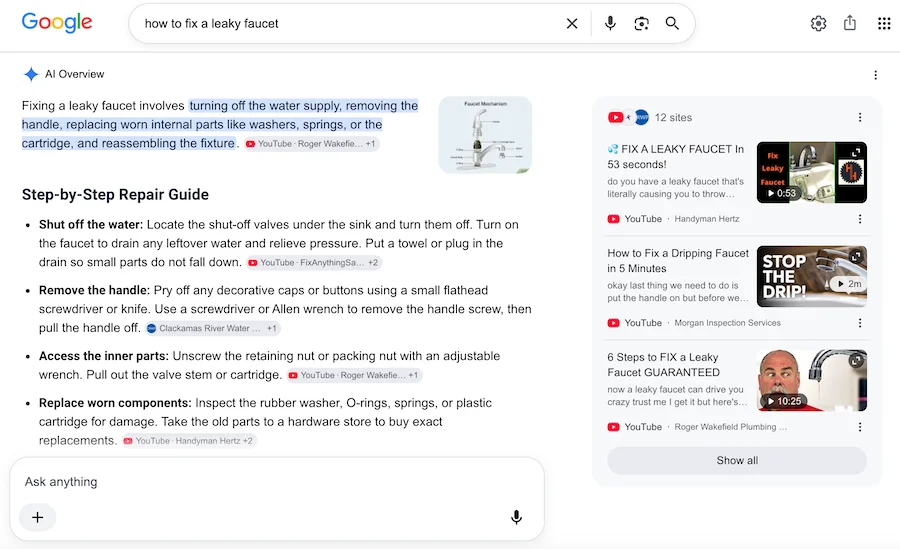
A quick examination of Google’s search results for such queries today reveals a significant change. Instead of a list of articles, users are often presented with an AI-generated overview. This comprehensive answer includes step-by-step instructions, recommendations for tools, embedded DIY videos, and a rundown of common mistakes to avoid. Essentially, AI now equips homeowners with all the information they need to tackle the leaky faucet themselves, rendering the original need for a plumber obsolete for that specific search intent. This leaves businesses in the precarious position of owning a top-ranking page for a query that no longer requires their professional services.

This phenomenon is not an isolated incident but represents a significant SEO challenge for small businesses across various sectors. AI has begun to effectively absorb entire categories of informational keywords, and many businesses continue to invest in these keywords as if the search ecosystem remains unchanged. The data supporting this shift is compelling. Reports indicate that when AI Overviews appear in search results, organic click-through rates can plummet by over 60%, even for pages holding the top positions. Furthermore, statistics show that over 80% of searches now conclude without a single click, as users find their answers directly on the search results page. For queries that trigger AI summaries, approximately one in four searches now ends without any further user action on external websites.
However, not all keywords are impacted equally. Some have been fully claimed by AI, effectively becoming a closed loop within the search results. Others are undergoing a transformation, where AI provides a summary but still prompts further investigation. Crucially, a segment of keywords continues to drive calls, bookings, and revenue because they inherently require the intervention of a human expert or a physical business to resolve.
To navigate this evolving landscape, businesses need a strategic framework to differentiate between these keyword categories. This involves a tiered system for classifying keywords based on the degree of AI influence, a methodical audit to identify the most valuable SEO keywords in the current environment, and concrete examples from various small business industries to illustrate which keywords merit continued investment.
The Imperative for Evolving SEO Keyword Strategies
The immediate reaction for many small businesses experiencing traffic drops is to assume a technical SEO issue. Common culprits cited include slipping rankings, algorithm changes, or increased competition. While these factors can indeed impact performance, the current wave of traffic anomalies is frequently rooted in a more subtle, yet significant, shift: the keyword itself has ceased to behave as it once did. The role a keyword plays in a user’s journey has quietly changed, and failing to recognize this distinction can lead to misdiagnosis and ineffective solutions. When these changes are lumped together as mere "traffic loss," the underlying cause—the changing nature of the query’s resolution—is easily missed.
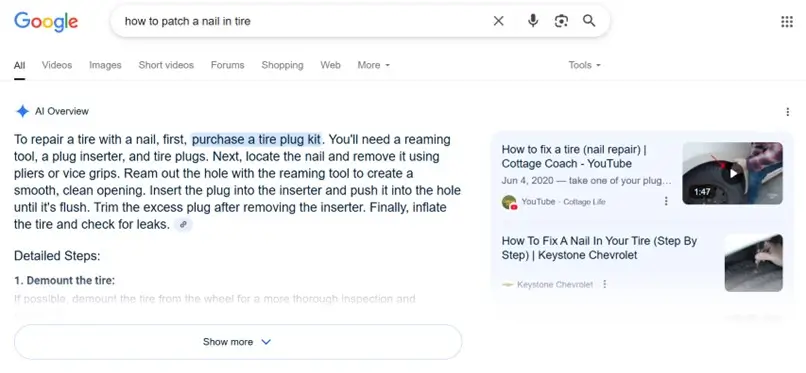
Category 1: Queries Fully Claimed by AI
A distinct category of keywords has, in essence, been reclaimed by AI and no longer directly benefits external websites. These are the classic informational queries, often characterized by phrases like "what is," "how to," and "why does." Historically, these "how-to" and "definitional" keywords formed the bedrock of content strategies, driving early-stage research traffic to websites. However, the advent of AI Overviews means that when a user searches for "what is a dental crown" or "how to fertilize your lawn," they are often provided with a complete, structured answer directly on the search results page. This summary is typically detailed enough to satisfy the user’s immediate need, negating the necessity of clicking through to a website.
In such cases, even if a website ranks number one, it functions merely as a source of information for the AI, rather than a destination for the user. Traffic loss in this category is not a matter of optimization but a structural change in how the query is answered. The AI has effectively become the provider of the solution, leaving websites in the role of background data.
Category 2: Queries Partially Affected by AI
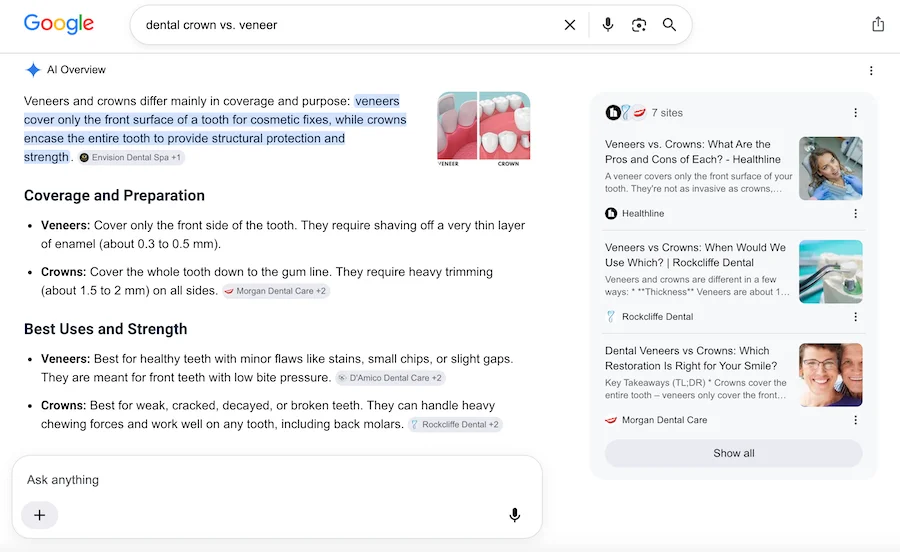
Not all keyword categories have been so cleanly resolved. A second tier of keywords exists where AI provides a competent summary but does not fully satisfy the user’s decision-making process. These are typically research and comparison queries, such as "best CRM for small business" or "dental crown vs. veneer." While AI may present a summary of options, pros, and cons, it cannot definitively answer the user’s specific needs, budget, or personal circumstances.
AI Overviews are undoubtedly reducing click-through rates for these queries. However, they have not entirely eliminated them. Because the AI’s summary lacks personalization, users often still click through to websites to gather more specific information, compare options further, or validate the AI’s output. While the volume of clicks may decrease compared to pre-AI eras, the users who do click through are often further along in their decision-making journey. This makes these keywords still valuable, albeit with a different click dynamic.
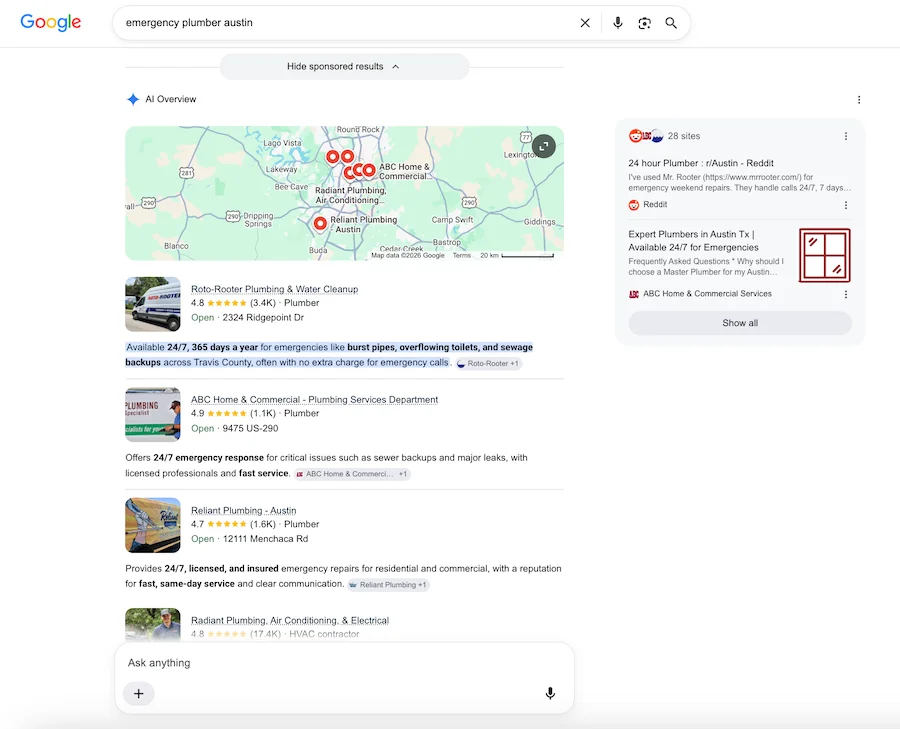
Category 3: Queries Requiring Business Intervention
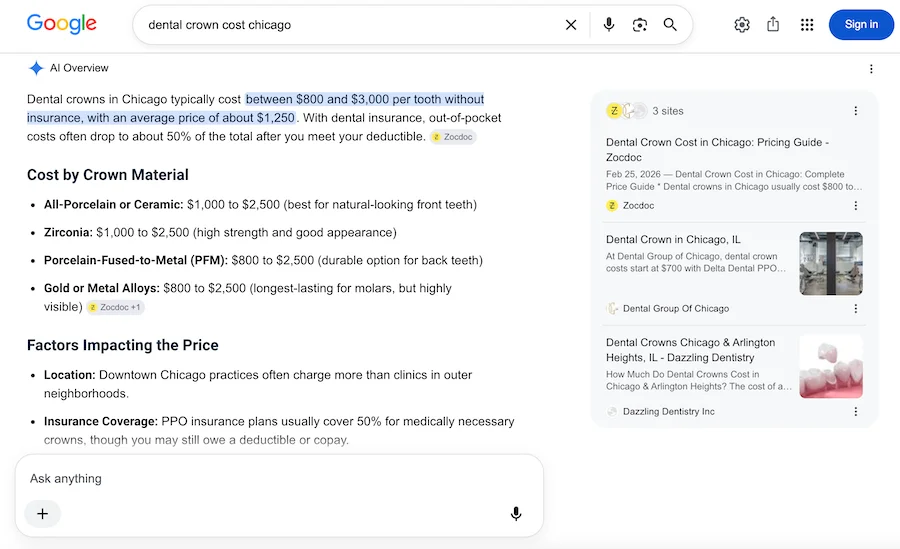
The third and arguably most critical category for small businesses comprises queries that inherently demand direct interaction with a business. Searching for terms like "emergency plumber Austin" or "dental crown cost Chicago" signals a user intent that transcends mere information gathering; it signifies a problem requiring immediate resolution or a decision requiring professional consultation. While AI can offer context, explain expected processes, and provide general cost estimates, it cannot perform the service itself.
These keywords behave much more like traditional search queries, where visibility directly correlates with tangible outcomes. Clicks still matter, and ranking for these terms leads to concrete actions like phone calls, appointment bookings, or in-person visits. For businesses, these keywords represent the most direct path to revenue and should be the primary focus of their SEO efforts.
The Critical Distinction: Why This Matters
Treating all keywords uniformly in the face of AI integration leads to an inability to accurately diagnose traffic fluctuations. A decline in traffic from an informational query can appear identical in reports to a decline from a transactional one. However, the underlying causes and the appropriate responses are vastly different. One category is largely lost to AI, another is evolving, and the third remains a direct driver of business. Failing to differentiate these categories can result in continued investment in areas with diminishing returns while underfunding those that still generate real business value.
A foundational framework for understanding this shift is a three-tiered system:
- Tier 1: Informational/Definitional Keywords. These are fully resolved by AI and offer low direct business value.
- Tier 2: Research/Comparison Keywords. AI reduces clicks but still leaves room for user engagement, offering medium business value.
- Tier 3: Local/Transactional/Action Keywords. These inherently require a business and possess high business value.
The primary mistake small businesses are making is over-investing in Tier 1 keywords, which historically offered a clear path to traffic and authority. In the current AI-driven search environment, these keywords often provide visibility without tangible outcomes. The strategic shift is therefore clear: redirect focus and resources towards keywords that necessitate human intervention and business engagement.
Auditing Keywords for the AI Search Era: A Step-by-Step Approach
Traditional keyword audits often focus on improving rankings and identifying missing keywords, assuming that better rankings directly translate to better results. In the AI era, this assumption is no longer universally true. A keyword audit must now answer a more critical, and often uncomfortable, question: "Does this keyword still require a user to contact a business, or can the query be fully satisfied on the search results page?"
Step 1: Extract Existing Keywords from Google Search Console
Begin by accessing Google Search Console to identify keywords that are currently driving traffic to your website. Focus on the pages that are actively generating clicks, as these are the ones that will reveal the disconnect between perceived performance and actual business contribution. This step often highlights pages that appear to be successful based on ranking and traffic metrics but are failing to generate leads or sales, indicating a keyword problem rather than a conversion issue.
Step 2: Manually Inspect Google Search Results
For each identified keyword, perform a direct, unadulterated Google search. Observe the results page from the perspective of a customer seeking a solution. Crucially, avoid using SEO tools or reports at this stage; a clean search reveals the true user experience. For instance, searching "how to fix a leaky faucet" now frequently presents an immediate, AI-generated answer with all necessary steps and information. If the AI provides a complete solution, your ranking becomes largely irrelevant because the user’s problem is already solved. The key question to ask is: "If I were trying to solve this problem, would I need to click on any of these results?" If the answer is no, the keyword has likely been effectively claimed by AI.
Step 3: Classify Keywords Based on AI Impact
As you review your keyword list, you’ll notice that keywords within the same general topic can exhibit vastly different behaviors. For example, in the dental field:
- "What is a dental crown?" (Tier 1 – Fully resolved by AI)
- "Dental crown vs. veneer" (Tier 2 – AI provides summary, prompts comparison)
- "Emergency dentist near me" (Tier 3 – Requires immediate business interaction)
Each of these keywords, while related, falls into a different tier with distinct implications for SEO strategy.
Step 4: Rigorous Pressure-Testing of Keywords
Do not rush the classification process. Many keywords do not fit neatly into a single tier, and subtle wording changes can drastically alter their behavior. For instance, "dental crown cost" might still encourage a booking, especially if local pricing is a factor. However, "average dental crown cost" is more easily satisfied by a price range presented in an AI overview. Grouping these together leads to misclassification. It is essential to analyze the actual search results and consider the user’s underlying intent, not just the surface-level wording of the keyword.
Step 5: Quantify the Gap Between Traffic and Value
Once keywords are classified, compare the data on visits against the actual business value generated. This is where the most significant discrepancies often emerge. A keyword like "how to fix a leaky faucet" might drive 1,200 monthly visits but yield zero leads, while "emergency plumber [city]" might generate only 90 visits but result in 14 valuable leads. This stark difference highlights a keyword strategy problem, not a conversion rate issue.
Step 6: Assess Content Allocation
Review your website’s content holistically. Many sites are heavily built around informational queries, a strategy that was highly effective for years. These pages were easier to rank and drove visible traffic growth. The question is no longer "how do we improve these pages?" but rather "what role do these pages now play?" While some informational content can still support other pages, establish expertise, and even be cited by AI, they are unlikely to be the primary drivers of future growth.
Step 7: Determine Strategic Actions for Each Page
Based on the classification and value assessment, clear strategic decisions for each page become apparent.
- Tier 1 Pages: These should be de-prioritized for active SEO investment. They can be maintained for general brand visibility or to serve as supporting content for AI summaries, but they should not be the focus of lead generation efforts.
- Tier 2 Pages: These require content optimization that goes beyond basic information. Content should focus on unique insights, comparative advantages, and detailed evaluations that AI cannot replicate. The goal is to provide value that compels users to click and explore further.
- Tier 3 Pages: These are the cornerstone of any growth-oriented SEO strategy. Content should be highly targeted, action-oriented, and optimized for local search intent. The focus should be on directly addressing user needs that require immediate business engagement.
Real-World Examples: Adapting Keyword Strategies Across Industries
The pattern of AI absorbing informational content and leaving transactional queries for businesses is evident across numerous small business sectors.
Plumbing Company
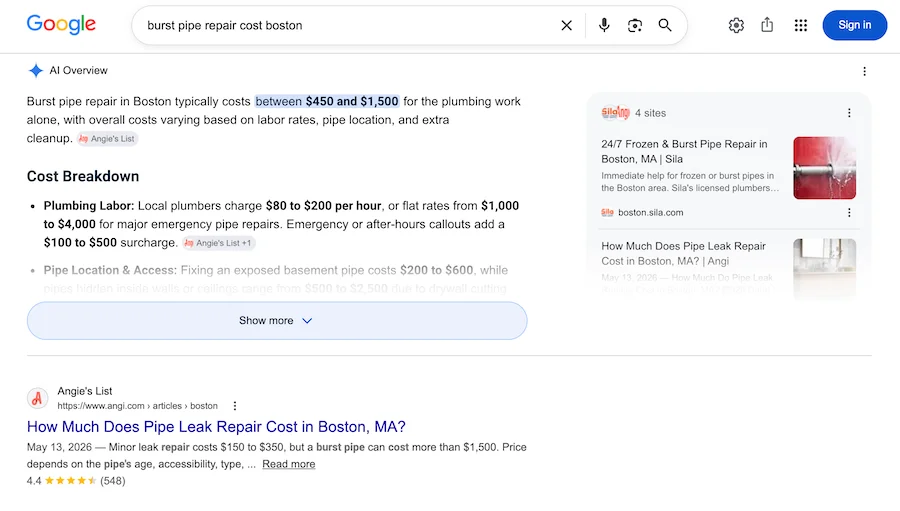
For plumbing businesses, content around basic DIY fixes like "how to fix a leaky faucet" or "why is my sink dripping" used to attract traffic and position the company as knowledgeable. Now, AI often resolves these queries before a plumber is needed. In contrast, keywords like "emergency pipe burst repair Boston," "clogged drain service near me," or "water heater installation cost Chicago" are inherently action-oriented and do not get fully resolved by AI. These queries lead directly to a need for professional services.
Real Estate
Real estate websites are rich with educational content on topics such as "how to buy a house," "understanding mortgage rates," or "what is a home appraisal." AI can effectively summarize these processes, explain financing, and answer common buyer questions, diminishing the need for users to click through. However, queries like "homes for sale in Houston," "best real estate agents Dallas," or "new construction homes Austin" are situational and location-dependent, requiring direct engagement with a real estate professional or a listing service.
HVAC Business
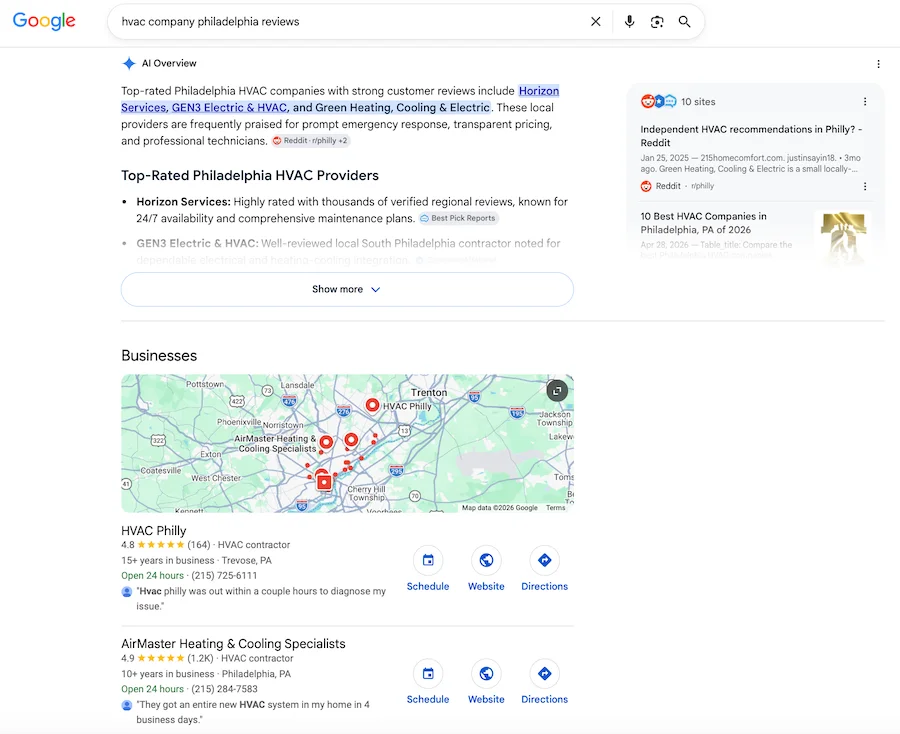
HVAC companies often create content explaining HVAC systems, such as "how does an air conditioner work?" or "what is SEER rating?" These topics are well-suited for AI summarization. In contrast, keywords like "emergency AC repair Philadelphia," "furnace maintenance service near me," or "HVAC company reviews Boston" signal an immediate need for service or a decision requiring local business evaluation.
Dental Practice
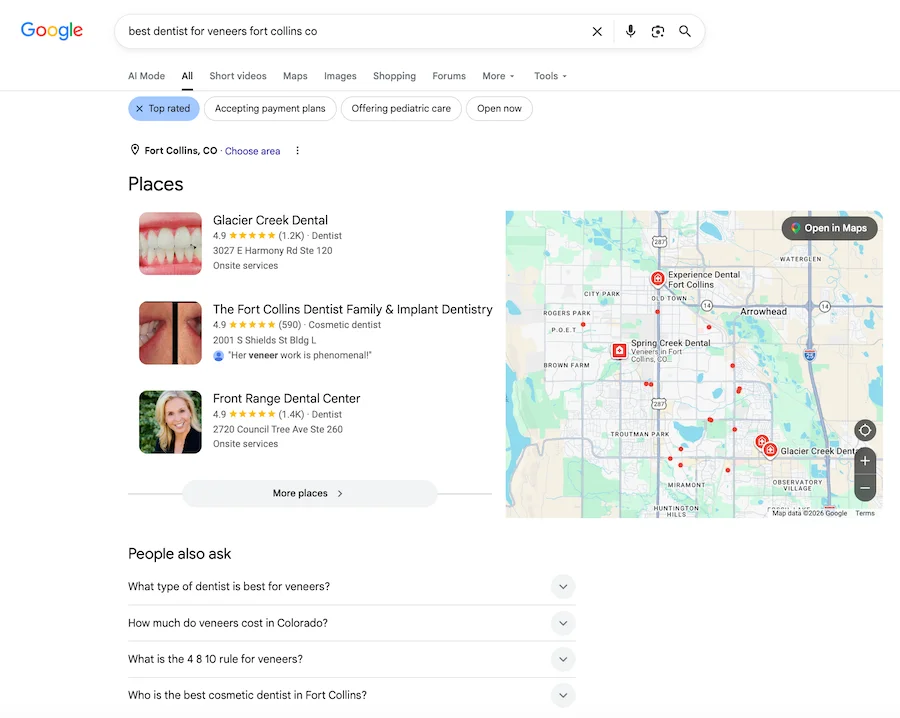
Dental websites frequently feature educational content on procedures like "what are dental veneers?" or "benefits of fluoride treatments." AI can provide clear explanations for these topics. However, queries such as "best dentist for cosmetic dentistry Fort Collins," "dental implant cost Chicago," or "emergency dental appointment Denver" indicate a user ready to make a decision and seek professional care.
Car Dealership
Car dealerships often focus on content related to financing, such as "how to get pre-approved for a car loan" or "understanding car lease terms." AI can easily summarize these financial processes. However, keywords like "best used car dealerships Austin," "new car inventory near me," or "trucks for sale Los Angeles" are transactional and require direct interaction with a dealership.

Strategic Content Adaptation Post-Keyword Audit
A common mistake is assuming that because AI has absorbed informational queries, they are no longer worth targeting. This is incorrect. While they may not drive direct leads, they can still play a role in establishing expertise and supporting AI-generated content. The crucial adjustment is to adapt the content’s purpose and value proposition.
If your content merely reiterates what AI already provides—neutral definitions, neutral options, neutral processes—there is little incentive for a user to click. AI has already performed that function. The key is to create content that offers unique value beyond what AI can deliver. This means:
- Adding unique insights and proprietary data: Offer perspectives and information not readily available in general summaries.
- Providing personalized recommendations and solutions: Focus on how your business specifically addresses user needs, rather than generic advice.
- Showcasing expertise and credibility: Demonstrate deep knowledge and experience that builds trust.
- Creating strong calls to action: Guide users toward the next logical step in engaging with your business.
In essence, your content must fulfill the part of the user’s journey that AI stops short of completing—the part that necessitates human interaction and expertise.
A Simple Pressure Test for Any Keyword
At its core, the filter for determining a keyword’s growth potential in the AI era is straightforward: If a query can be fully answered without engaging a business, it is not a growth keyword. This might seem obvious, but it’s often difficult to apply because content that ranks and drives traffic can still feel valuable, even if it doesn’t lead to business outcomes. If a user can search a query, get all the information they need, and move on without ever contacting a business, that keyword is not contributing to growth in the way most businesses expect.
This doesn’t mean such keywords are useless; they can still serve to build brand awareness or support AI content. However, they should not be the central focus of your growth strategy.
Before committing to a keyword, ask two fundamental questions:
- Can AI fully answer this query on the search results page?
- If the answer is yes, does the user still need to contact a business to solve their problem?
If the answer to the first question is yes, and the answer to the second is no, that keyword has likely been absorbed by AI and should not be at the core of your SEO strategy.
Building the Right Keyword Strategy for the AI Era
The current transformation in SEO is not a temporary glitch but a fundamental structural shift in how search engines handle different types of queries. Some keywords are effectively removed from the "click economy," no longer creating a direct path to a website. Others are evolving, requiring different types of content to capture user attention. And some remain unchanged, as they inherently depend on a business to complete the task.
The widespread issue is that many SEO strategies treat all these keyword types identically, measuring success by rankings and traffic volume without critically assessing what those metrics actually lead to. This disconnect explains why businesses often feel SEO is working on paper but failing in reality.
The solution is not simply to produce more content or optimize existing pages with minor tweaks. It requires a more discerning approach: fewer keywords, but those that are strategically aligned with actual business outcomes. By understanding the impact of AI on search intent and focusing on keywords that necessitate human expertise, small businesses can navigate this new landscape and continue to drive meaningful growth.









