
 Asep Darmawan

In the rapidly evolving landscape of artificial intelligence, a fundamental question has emerged among developers, data scientists, and enterprise leaders: Can a smaller, more power-efficient, and "open" language model truly compete with the industry’s most powerful frontier models? For much of the past two years, the prevailing wisdom suggested that larger parameter counts and massive compute budgets were the only path to superior performance. However, recent shifts in model architecture and a growing skepticism regarding standardized benchmarks are challenging the dominance of high-cost models, such as Anthropic’s high-end "Fable" class models, in favor of specialized, efficient alternatives.

The AI industry is currently at a crossroads where the pursuit of "Artificial General Intelligence" (AGI) is being met by the practical reality of task-specific utility. While frontier models are often marketed as being so capable they represent a potential paradigm shift for humanity, the reality for most businesses involves specific, repetitive workflows where these massive models may be over-engineered, overly verbose, and prohibitively expensive. By shifting toward custom benchmarking and localized evaluation, users are discovering that the "best" model is rarely the largest one.
The Crisis of Standardized Benchmarks and Data Contamination
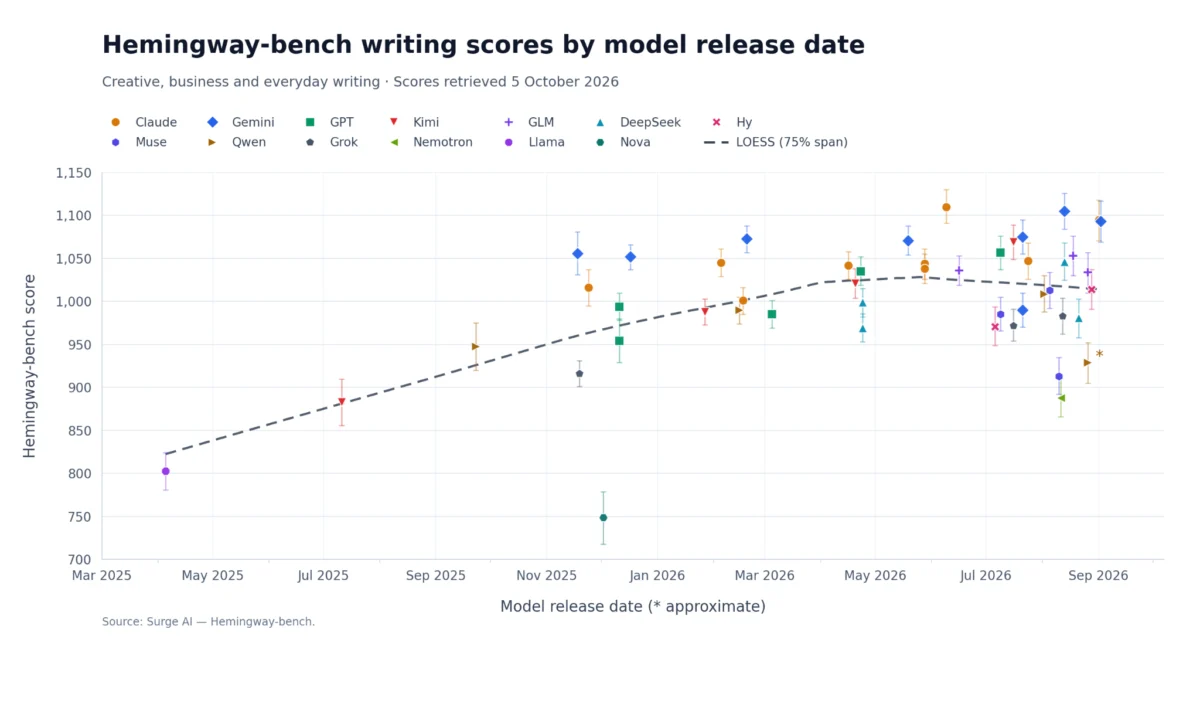
The primary metric for judging AI capability has long been standardized benchmarks like MMLU (Massive Multitax Multitask Language Understanding), HumanEval, and GSM8K. On these leaderboards, frontier models consistently claim the top spots. However, a growing body of research, including recent papers on "benchmark contamination," suggests these scores may be artificially inflated.

Benchmark contamination occurs when the data used to evaluate a model—the questions and answers of the test itself—accidentally or intentionally becomes part of the model’s training set. When a model has "seen" the exam before taking it, its performance reflects memorization rather than genuine reasoning or linguistic capability. This phenomenon has leveled the playing field in unexpected ways. If a frontier model’s dominance is based partly on its exposure to test data, its performance in real-world, novel scenarios may be much closer to that of a well-trained, smaller model than the leaderboards suggest.
Furthermore, the definition of the "best" model is inherently subjective. A model that excels at creative writing may fail at structured data extraction; a model that is excellent at Python coding might be poor at empathetic customer service. This has led to the rise of custom benchmarking—a process where users ignore global leaderboards and instead test a variety of models against their specific, unique prompts and requirements.

A New Methodology: The Custom Benchmarking Process
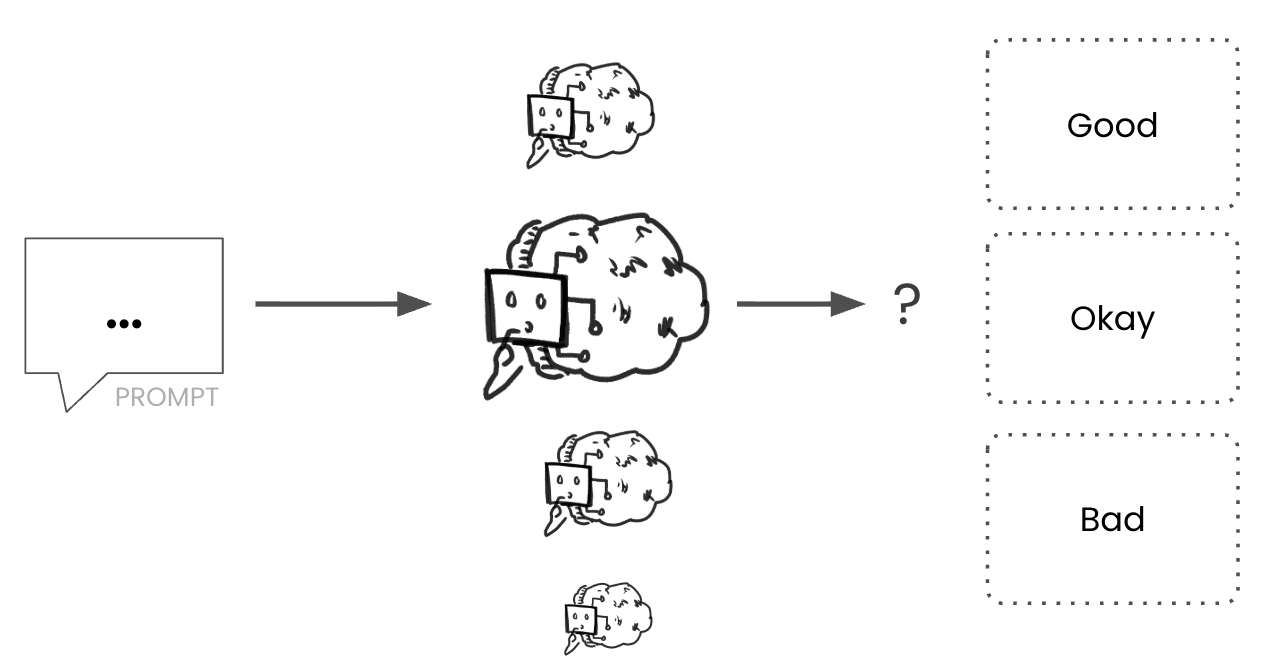
To determine the true utility of an AI model, researchers and practitioners are adopting a three-step methodology designed to isolate performance in specific environments. This process moves away from abstract logic puzzles and toward functional utility.
Step One: Identifying Benchmark Prompts
The first stage of custom benchmarking involves the selection of representative tasks. These are not "trick" questions but are instead derived from actual workflows. For example, in the field of Conversion Rate Optimization (CRO) and digital marketing, a common task involves performing a heuristic audit of a website.

In a typical test scenario, a practitioner might provide a detailed description of a landing page—including its structure, headline, call-to-action (CTA) buttons, and technical stack—and ask the AI to identify the top three areas for improvement. By using a "dummy" site designed with intentional flaws, such as a weak value proposition or confusing navigation, the user creates a controlled environment to measure the model’s "insight."
Step Two: Defining the "Gold Standard" Response
Unlike standardized tests with multiple-choice answers, real-world tasks require a "rubric of quality." Before running the test, the evaluator must define what a "good" response looks like. In the CRO example, a high-quality response would prioritize positioning and value proposition over minor aesthetic concerns. If a model identifies that a "Welcome" headline is less effective than a benefit-driven headline, it demonstrates a higher level of functional intelligence. This non-deterministic measure of quality allows for a more nuanced comparison between a massive model and a smaller competitor.
Step Three: The Model Comparison via Proxy Services
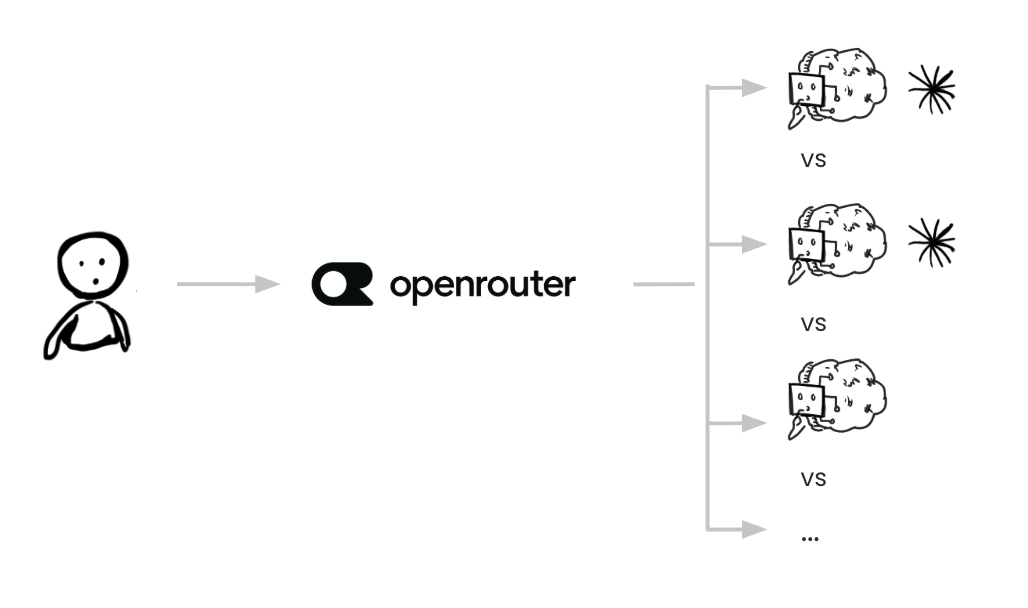
Accessing a wide array of models for testing was once a significant technical hurdle. Today, proxy services like OpenRouter have simplified this process, allowing users to route a single prompt to dozens of different models simultaneously. This allows for a direct "head-to-head" comparison of models from different families, such as:
- Frontier Models: Large-scale, closed-source models (e.g., Anthropic’s Claude/Sonnet, OpenAI’s GPT-4o).
- Open-Weight Models: Models where the architecture is public (e.g., Meta’s Llama, Google’s Gemma, Alibaba’s Qwen).
- Efficient Variants: Smaller versions of these models, often ranging from 7 billion (7B) to 32 billion (32B) parameters.
Technical Factors: Parameters, Openness, and Privacy
When choosing which models to benchmark, three technical factors play a critical role in the decision-making process: parameter count, openness, and security.

Understanding Parameters
The "B" or "T" in a model name (e.g., 31B or 1T) refers to the number of parameters. Parameters are essentially the "levers" or internal variables the model uses to process information. While frontier models are measured in the trillions, smaller models in the 7B to 32B range are becoming increasingly sophisticated. Recent advancements in "distillation"—a process where a smaller model is trained using the outputs of a larger model—have allowed these smaller variants to punch significantly above their weight class.
The Value of Openness
"Open" models allow users to view or download the model weights. This is a critical advantage for organizations with high security requirements or those who wish to fine-tune a model on proprietary data. An open model can be hosted locally on private hardware, ensuring that sensitive prompts never leave the corporate network. In contrast, frontier models are almost exclusively "closed," meaning they can only be accessed via a third-party API, which may retain data for training or monitoring.
Performance and Latency
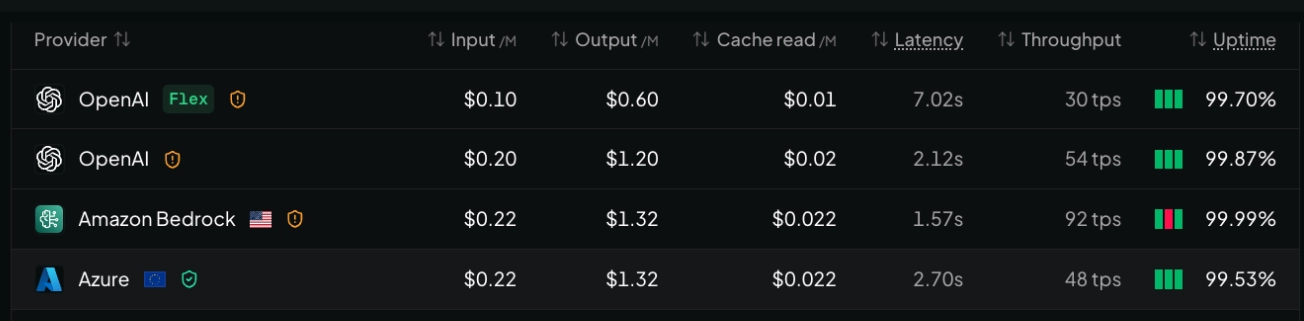
Smaller models offer a massive advantage in terms of throughput and latency. Because they require less memory (VRAM), they can generate text much faster than their larger counterparts. In applications where real-time response is necessary—such as chatbots or automated coding assistants—the speed of a 7B model often outweighs the slightly more "intelligent" but slower response of a frontier model.
The Economic Reality: Cost vs. Utility
Perhaps the most compelling argument for the adoption of smaller models is the economic impact. The cost of running an AI model is typically measured in "tokens"—small units of text roughly equivalent to words. Frontier models are significantly more expensive to run than small, open models.

In many custom benchmarking trials, the "quality gap" between a model like Anthropic’s Claude 3.5 Sonnet and a smaller model like Google’s Gemma 2 27B or Alibaba’s Qwen 2.5 is surprisingly narrow. When the task is specific—such as summarizing a transcript or checking a codebase for syntax errors—the smaller model often produces a result that is 95% as good as the frontier model at 1/10th or even 1/100th of the cost.
For a company processing millions of requests per month, this price difference represents a significant impact on the bottom line. The "danger" of high-end models, therefore, is not just a theoretical concern about AI safety, but the very real risk of "unnecessary technical and financial debt" incurred by using an over-powered tool for a simple task.

Implications for the Future of AI Development
The results of widespread custom benchmarking are beginning to influence how the next generation of AI tools is built. We are moving away from the "one model to rule them all" approach and toward an "ensemble" approach. In this new paradigm, a small, fast model might act as a "router," handling simple queries and only escalating complex problems to a larger frontier model.
Furthermore, the conciseness of smaller models is becoming a preferred trait. Users frequently report that frontier models are prone to "verbosity"—adding unnecessary introductory and concluding text that slows down workflows. Smaller models, which are often trained with a more utilitarian focus, tend to be more direct and to the point.
Conclusion: Re-evaluating the Frontier
The dominance of frontier AI models is no longer an absolute certainty. Through the lens of custom benchmarking, it is becoming clear that for many professional use cases—ranging from SEO audits to automated fact-checking—smaller, open models are not just "good enough," but are often superior when cost, speed, and privacy are factored in.
As benchmark contamination continues to cast doubt on standardized scores, the responsibility falls on the user to verify the utility of these tools. By adopting a rigorous, task-specific evaluation process, organizations can avoid the "frontier trap" and build more efficient, sustainable, and effective AI-driven workflows. The "Fable" of the invincible, all-knowing AI model is being replaced by the reality of a diverse ecosystem of specialized, efficient intelligence.


 Ammar Sabilarrohman
 Neng Nana