rifanmuazin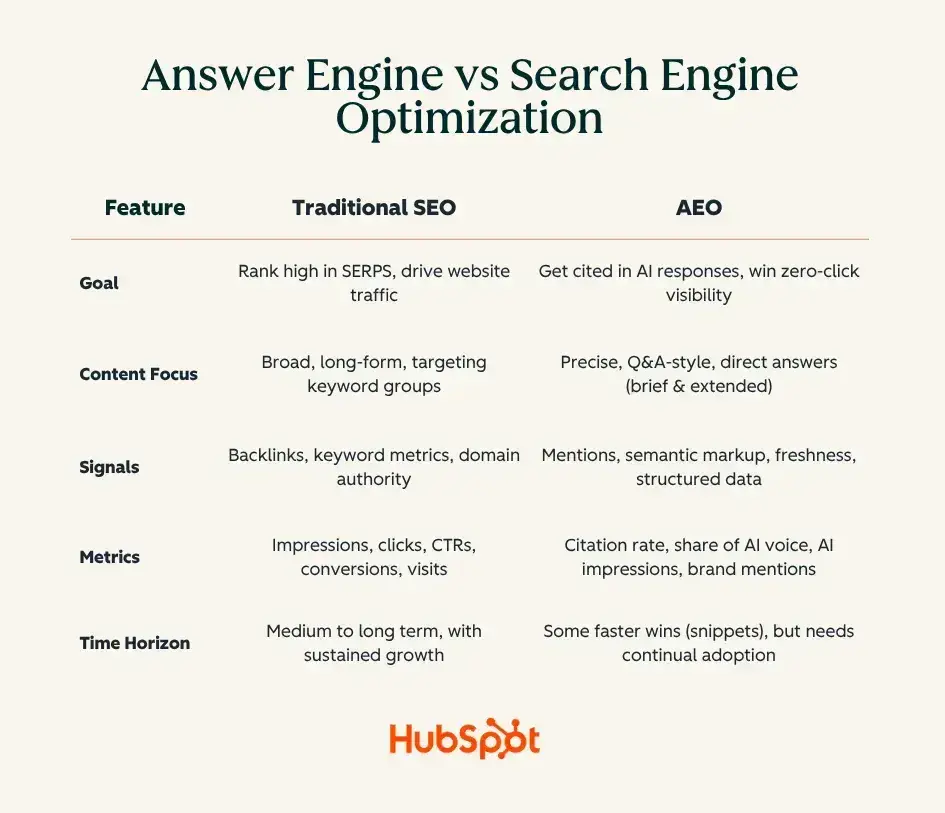
The digital marketing landscape is undergoing a profound transformation, driven by the dramatic evolution of search behavior. Marketers are now challenged to master Answer Engine Optimization (AEO) best practices to remain competitive and visible. While traditional search engines continue to play a crucial role, a significant and growing portion of internet users are increasingly turning to AI-powered tools like ChatGPT for direct answers to their queries. This shift is not merely incremental; a staggering 79% of individuals who currently utilize AI for search believe it offers a superior experience, compelling even industry giants like Google to integrate AI Overviews into its search results to maintain relevance.
This paradigm shift has necessitated a re-evaluation of long-standing digital marketing strategies. For professionals who have spent years perfecting the art of topping traditional search engine result pages (SERPs), this new environment demands a fresh, yet foundational, approach. Fortunately, the principles underlying AEO build upon many of the core tenets of traditional SEO, offering a practical path for content strategies to adapt to this emergent AI-first search landscape. Companies are actively developing tools to assist with this transition; for instance, HubSpot offers AEO capabilities within its Marketing Hub Pro or Enterprise editions, enabling teams to measure progress and implement data-driven adjustments effectively.
Understanding Answer Engine Optimization (AEO)
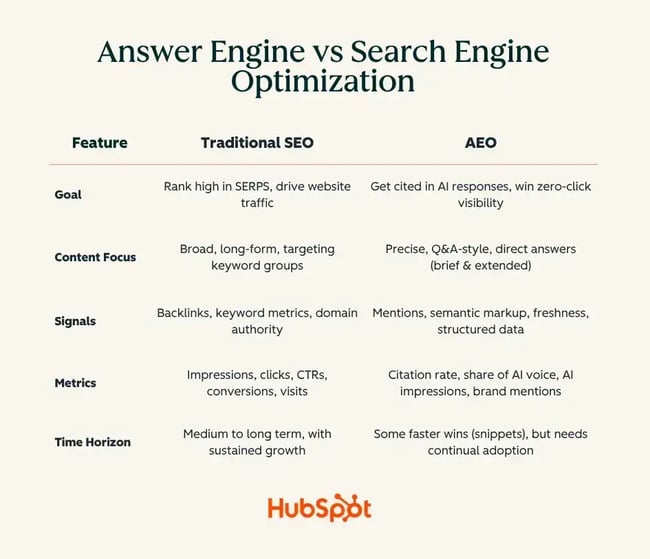
Answer Engine Optimization (AEO) is a specialized process focused on making a brand’s online content easily discoverable, comprehensible, and citable by answer engines. These sophisticated systems include platforms like Google AI Overviews and generative AI tools such as ChatGPT. At its core, AEO involves meticulously structuring web content so that AI-powered algorithms can efficiently extract relevant information and present it as authoritative, direct answers. Unlike its predecessor, traditional Search Engine Optimization (SEO), which primarily aims for higher rankings and increased website traffic, AEO prioritizes inclusion in zero-click results—where users receive their answer directly on the search interface without needing to navigate to an external website. While other terminologies like "generative engine optimization" or "AI search optimization" exist, the focus on delivering a direct "answer" is central to the AEO philosophy.
For brands seeking an initial assessment of their current performance in this new domain, tools like the HubSpot AEO Grader offer a free evaluation. Subsequent optimization can be managed through AEO features available in comprehensive marketing platforms, allowing teams to map user questions, structure content for rapid answers, apply appropriate schema markup, and monitor brand visibility within AI-driven results.

AEO vs. SEO: A Fundamental Distinction
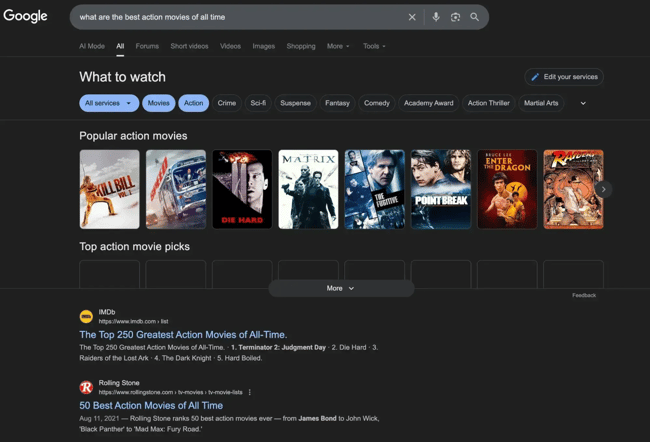
The distinction between AEO and traditional SEO is crucial for marketers to grasp. When users engage with a traditional search engine, the system typically returns a list of what it deems the most relevant resources that could answer the user’s question. Consequently, the primary objective of traditional SEO is to enhance search engine rankings, drive clicks, and ultimately increase website traffic. For example, a search for "best action movies of all time" on a traditional search engine would yield various links to websites, videos, and forum discussions, each potentially offering the desired information. Marketers employing traditional SEO would focus on keyword targeting, backlink building, securing top page rankings, and tracking metrics like impressions, click-through rates, and organic sessions. This approach has historically been the bedrock of digital visibility.
In stark contrast, answer engines transcend merely providing resources; their ambition is to furnish the exact answer the user seeks. Therefore, the ultimate goal of AEO is not clicks, but citations and direct inclusion within these AI-generated answers. If the same query—"best action movies of all time"—is posed to ChatGPT, the AI would synthesize information from numerous sources to generate a compiled list of movies, rather than simply offering links to explore. This fundamental difference extends to search engines themselves, with AEO influencing appearances in Google’s featured snippets, knowledge panels, and even voice search results, such as the "popular action movies" carousel observed in a typical SERP.
Marketers adapting to AEO must strategically structure their content for optimal extraction by AI, implement schema markup to clarify semantic meaning, and cultivate strong authority signals to ensure language models trust and reference their expertise. Success metrics for AEO shift from website traffic to the number of zero-click answers, AI summaries, and voice responses that cite the brand, even if these interactions do not lead to a direct website visit. This strategic divergence means achieving visibility without necessarily generating immediate traffic. A meticulously optimized answer could be cited thousands of times in AI conversations or Google AI Overviews, yet contribute zero sessions to conventional web analytics. This challenges established attribution models but significantly extends a brand’s reach into new contexts where critical buying decisions are increasingly initiated. In essence, while SEO aims to drive traffic, AEO strives to own the answer. To operationalize this new focus, platforms like HubSpot AEO help identify how a brand appears in AI-generated answers, uncover visibility gaps, and optimize content specifically for citation by answer engines.
Why AEO Matters Now More Than Ever: An Economic Shift
The internet economy is visibly transitioning from a click-based model to an answer-based one, a shift that brands cannot afford to overlook. Google’s own data reveals that nearly 60% of searches now conclude without a single click to a website. The rapid user adoption of generative AI tools further underscores this trend; ChatGPT alone saw its weekly average users more than double to 900 million by February 2025, signaling an undeniable acceleration in AI-driven search. Moreover, voice assistants, ubiquitous in smart homes and mobile devices, typically answer queries within seconds, frequently citing a singular, authoritative source. Brand visibility in this evolving landscape is increasingly contingent on being cited and summarized by these AI systems, rather than solely on traditional search rankings.
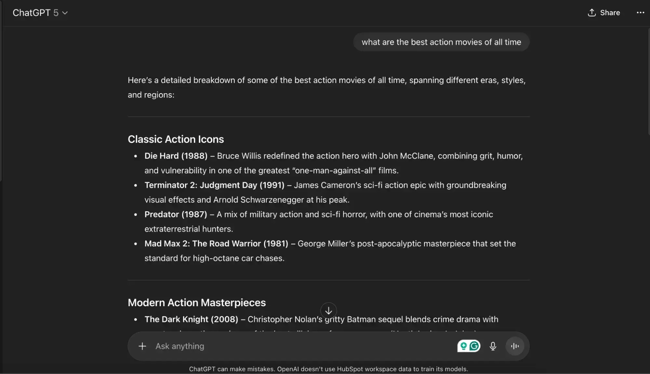
Crucially, AEO is not a replacement for SEO but rather a vital complement to it and to broader inbound marketing strategies. AEO leverages many foundational SEO principles—robust content, domain credibility, internal linking—but reorients priorities to facilitate easy excerpting by answer engines. While traditional SEO remains indispensable for generating website traffic, AEO determines a brand’s presence in the most impactful answers. It should be conceptualized as an essential new layer to an existing content strategy, seamlessly integrating rather than competing for resources. Integrated platforms, such as HubSpot Marketing Hub with its AEO features, enable native tracking of AI visibility, connecting these insights directly to marketing campaigns for continuous performance optimization.
Strategic Best Practices for Answer Engine Optimization
To effectively navigate the AEO landscape, marketers must adopt several key best practices:
-
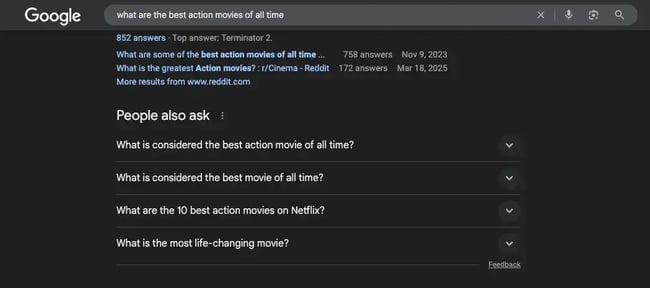
Focus on Questions and User Intent: AEO is inherently question-and-answer driven. Marketers must develop a comprehensive inventory of questions their target audience asks at every stage of the buyer’s journey. Insights from sales teams, customer service interactions, and "People Also Ask" sections in SERPs are invaluable. These questions should then be meticulously mapped to funnel stages to ensure content directly addresses genuine user intent. Existing content should be audited for gaps or opportunities to update and optimize for these questions, while competitor performance in both traditional and AI search should be analyzed. Segmenting questions by funnel stage and buyer persona provides a structured approach. Maintaining this inventory in a shared system, such as a spreadsheet or CRM, allows teams to track progress and identify content gaps. HubSpot AEO features can integrate this question inventory with broader marketing campaigns.
-
Structure Content for Direct Answers and Extractions: Answer engines prioritize content that offers clear, immediate responses in easily digestible formats. Each content section should begin with a concise, direct answer, followed by supporting details, bullet points, lists, and tables to enhance readability. AI algorithms and humans alike can quickly extract valuable information from well-structured content. Google’s AI, for instance, identifies specific answer-like structures (short paragraphs following questions, numbered steps, comparison tables) to determine content relevance. Similarly, Large Language Models (LLMs) like ChatGPT prioritize modular content blocks for confident citation. To optimize, every key section should start with a 40-60 word direct answer, akin to optimizing for Google’s featured snippets. Adopting reusable content block patterns—such as definition blocks, step-by-step guides, or pros-and-cons lists—can serve as semantic signals for AI. HubSpot AEO can help identify high-performing content formats and answer structures, enabling standardization across content production.
-
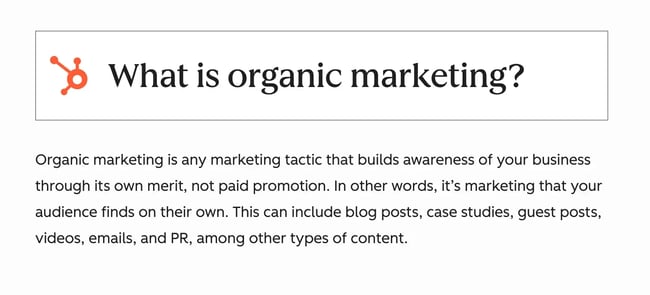
Utilize Schema Markup for AI Engines: Schema markup, a form of structured data added to HTML, explicitly informs search and answer engines about the content’s nature. This markup transforms an engine’s guess about a page’s content (e.g., a how-to guide) into a certainty. Tagging elements like FAQs, how-to steps, and articles simplifies content interpretation for AI. Consistent schema implementation also reinforces brand identity and authority. Key schema types for AEO include Article, FAQPage, HowTo, Product, and Speakable schema. CMS SEO tools, like those in HubSpot, allow for templating schema across content types, automating its application and ensuring clean, crawlable HTML.
-
Target Featured Snippets and "People Also Ask": Google’s featured snippets and "People Also Ask" (PAA) boxes represent its most prominent answer formats and are crucial training data for AI Overviews. Content appearing in a featured snippet is effectively pre-selected as an authoritative answer, significantly increasing its chances of being cited in AI summaries. To secure featured snippets, content should be concise, directly answer specific questions, use numbered lists or tables for step-by-step processes or comparisons, and include relevant keywords naturally. HubSpot AEO helps track pages earning snippets and AI citations, enabling marketers to replicate successful formats and topics. A systematic approach to harvesting PAA questions quarterly, and prioritizing updates to high-authority pages to address these, can yield faster results.
-
Prioritize Credibility: Recent research indicates that content incorporating citations, quotes, and statistics is 30% to 40% more visible in AI search results. Supporting claims with evidence, citing authoritative references, and regularly updating information bolster both accuracy and visibility. Clear formatting further enhances trustworthiness. Marketers should focus on maintaining factual accuracy, updating content regularly, and providing original data or unique perspectives. HubSpot AEO can monitor the impact of credibility signals on a brand’s presence in AI-generated answers.
-
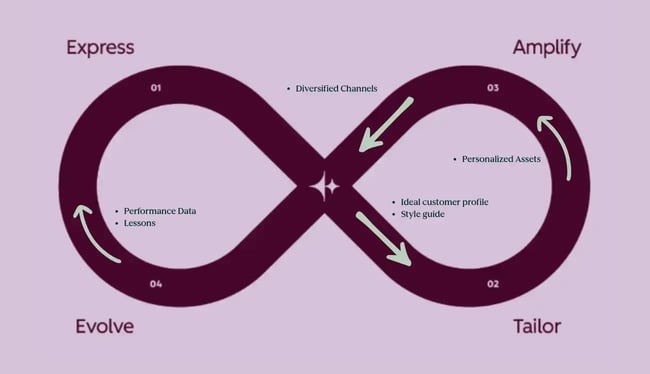
Build a Strong, Positive Online Presence Across Multiple Channels: Answer engines favor brands that are consistently mentioned and referenced across reputable platforms. Off-site authority extends beyond traditional SEO backlinks; it involves establishing a brand as a legitimate subject-matter expert across the digital ecosystem. This necessitates a multichannel distribution strategy, including guest posting on industry publications, active participation in high-quality forums, engagement with academic or government sources, cultivating brand mentions, securing podcast interviews, and developing a robust social media presence. This coordinated approach ensures expertise is visible wherever audiences and AI systems are attentive. HubSpot’s Loop Marketing framework, particularly the Amplify stage, emphasizes multi-channel diversification, and tools like Content Remix can facilitate repurposing content for different platforms. Marketing Hub automation can orchestrate this distribution at scale, tracking engagement and referral traffic.
-
Optimize for Voice Search: With the prevalence of smart speakers and voice assistants, optimizing for voice search is critical. Voice assistants typically cite a single source for queries, and brands aim to be that source. Content should be written in natural, conversational language, avoid ambiguity, and be structured for quick, audible delivery. Speakable schema and testing queries across various voice devices are essential. This includes focusing on conversational keywords, providing concise answers (20-30 words), and using question-and-answer formats.
-
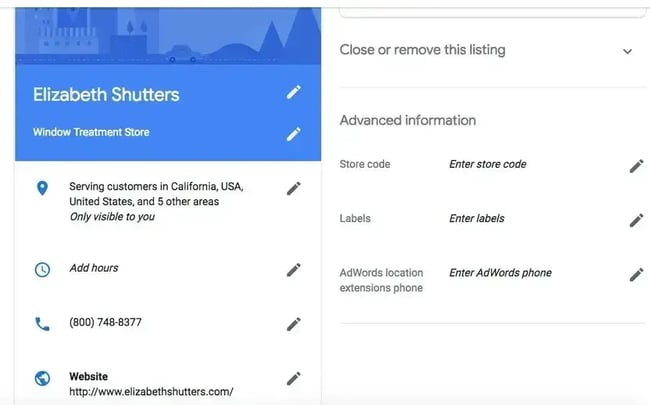
Lean into Localization for Voice: Voice and AI search frequently surface nearby businesses, making local optimization paramount. Accurate and complete business information across platforms significantly enhances visibility in high-intent local searches. Pairing strong local profiles with positive reviews and location-specific content ensures a business appears when users seek nearby solutions. This involves optimizing Google Business Profile (verifying contact info, hours, photos, categories, and keyword-rich descriptions), building a review acquisition and response strategy, creating local landing pages for each service area, and ensuring consistent Name, Address, Phone (NAP) data across all online sources (Google Business Profile, Apple Maps, Bing Places, website, etc.). A quarterly audit schedule for local data is recommended.
Loop Marketing and AEO: A Synergistic Approach

Loop Marketing and AEO are inherently complementary, recognizing that modern buyer journeys are neither linear nor monolithic. Traditional funnel marketing assumes a linear progression from awareness to purchase, with uniform interactions. Loop Marketing, conversely, emphasizes continuous engagement across multiple channels, mirroring how buyers gather information from diverse sources rather than making a singular conversion. In this model, content serves customers before, during, and after a sale, addressing new questions as they emerge and fostering advocacy that feeds back into awareness. AEO is a critical component of Loop Marketing, enabling businesses to meet customers where they are—on social media, forums, podcasts, and through AI assistants. HubSpot AEO supports this by providing insights into a brand’s appearance across AI-driven touchpoints, allowing marketers to refine content and maintain visibility throughout the entire customer journey.
Technical AEO Checklist
Beyond content strategy, a robust technical foundation is essential for AEO:
- Server-Side Rendering: Ensure all critical content (answers, headings, text) is rendered server-side, not solely via JavaScript, to guarantee visibility for all crawlers.
- Semantic HTML: Utilize proper semantic HTML tags (H1, H2, H3,
<article>,<section>,<ol>,<ul>) to clearly define content structure and hierarchy, aiding AI comprehension. - Core Web Vitals: Optimize for speed and user experience. Compress images, minimize render-blocking resources, and use a CDN to achieve excellent Core Web Vitals scores (e.g., LCP under 2.5s, FID under 100ms, CLS under 0.1).
- Descriptive URLs: Create clean, descriptive URLs (e.g.,
/blog/what-is-inbound-marketing) that clearly signal content topics to both users and AI systems. - Strict Heading Hierarchy: Implement a logical heading structure with a single H1, followed by H2s for major sections and H3s/H4s for sub-sections, avoiding skipped levels or using headers purely for styling.
- Internal Links with Descriptive Anchor Text: Use specific, descriptive anchor text for internal links to help AI systems map content relationships and understand topic clusters. HubSpot’s Content Hub and CMS offer tools for managing internal linking at scale.
- JavaScript Accessibility Testing: Verify that essential content remains accessible and readable even with JavaScript disabled, ensuring crawlers and assistive technologies can access it. HubSpot AEO can assist in identifying structural and optimization gaps.
Common AEO Challenges and Solutions
Implementing AEO is not without its hurdles, often more organizational than technical.
- Executive Resistance to "Visibility Without Clicks": The biggest barrier can be convincing stakeholders to invest in a strategy that doesn’t always generate direct website traffic. The solution involves framing AEO as critical for brand awareness and category leadership. Marketers must educate executives on the shift to an answer-based economy, emphasizing that owning AI visibility today translates to owning mindshare tomorrow. Quantifying the appearance of branded answers for high-value queries and illustrating the cost of competitor dominance in this space can build buy-in.
- Unclear Attribution and ROI Measurement: Traditional analytics struggle with AI citations. A hybrid measurement framework combining traditional SEO metrics with new AEO metrics is necessary. HubSpot Marketing Hub offers tools for both. Additionally, surveying new customers about their initial brand discovery (increasingly mentioning AI assistants) and correlating AEO milestones with pipeline velocity can demonstrate business impact.
- Difficulty in Tracking AI Citations: Manually tracking across numerous AI platforms is challenging. Tools like HubSpot AEO provide comprehensive tracking of brand appearances across AI-generated answers, detailing queries, platforms, and sentiment (negative, positive, neutral). For teams without dedicated tools, periodic manual testing of key queries and logging results in a spreadsheet can provide directional insights.
- Limited Capacity for Content Retrofitting: Optimizing thousands of existing pages simultaneously can be overwhelming. Prioritization is key. Start with the top 20 highest-traffic pages and the 20 pages ranking on page one but lacking featured snippets. These offer the highest leverage. Expand to pillar pages and core conversion content thereafter. HubSpot AEO can prioritize efforts by highlighting pages with the highest potential for AI visibility gains.
- Unfamiliarity with Schema and Structured Data: Schema implementation often requires collaboration between content creators and developers. Bridging this gap involves creating schema templates that content teams can populate without coding. Tools like Google’s Schema Markup Generator or HubSpot’s built-in schema modules simplify the process. A validation workflow using Google’s Rich Results Test before publishing is crucial.
- Rapidly Changing AI Answers and Formats: The dynamic nature of AI answers can make teams hesitant. The strategy should be anchored in stable principles that improve user experience and site performance regardless of algorithm changes. These include providing clear answers, maintaining content accuracy, demonstrating authority, and structuring information logically. Focus on making content universally understandable and valuable.
- Legal and Compliance Concerns about AI Misrepresentation: AI systems can sometimes paraphrase incorrectly or cite out of context, posing risks, especially in regulated industries. Mitigation involves extreme precision in the first paragraph of an answer (first 60 words), avoiding nuance and caveats in direct answers. For highly sensitive topics, businesses may consider blocking certain AI crawlers via robots.txt, balancing risk and opportunity with legal counsel, and establishing a monitoring process.
Frequently Asked Questions About AEO Best Practices
- How long to see AEO results? Early wins can appear within 4-8 weeks, with significant momentum building over 6-12 months, depending on the starting point and implementation aggression.
- Schema on every page? Not necessarily. Prioritize pages where structured data offers the most impact, such as those fitting FAQPage, Article, Speakable, and Organization schema. Product, Service, or LocalBusiness schemas are also vital for relevant offerings. HubSpot’s CMS Hub automates schema addition with templates.
- Tracking AI citations without new platforms? A simple spreadsheet and manual process can track key queries across platforms. Google Search Console can monitor featured snippets and "People Also Ask" visibility as proxy metrics, while Google Analytics 4 tracks branded search traffic. HubSpot AEO offers a baseline assessment of AI visibility and sentiment.
- Will AEO replace SEO? No, AEO and SEO are complementary. Both are essential for maximum visibility. Strong SEO fundamentals (technical health, domain authority) are prerequisites for AEO success, as they ensure content is discoverable and trusted by answer engines.
- Best way to keep AEO content fresh? AEO content requires ongoing maintenance. Implement a quarterly review schedule, update content with new data, remove outdated information, and periodically re-optimize key answers based on performance data.
AEO Best Practices: Your Answer to Brand Visibility
AEO is not merely a new trend; it represents an evolution in how brands achieve visibility in the digital age. It builds upon the foundational principles of SEO, requiring marketers to apply them with the unique demands of answer engines in mind. Brands that proactively focus on directly answering user questions, structuring content for optimal AI extraction, and cultivating authority across multiple channels will be best positioned to appear where critical purchasing decisions increasingly originate. Ultimately, this focus on providing direct, authoritative answers aligns with the timeless objective of great marketing: to meet customers precisely where they are, with the information they need. As marketing teams navigate this complex new landscape, integrated tools like HubSpot AEO provide the necessary visibility and capabilities to measure success and continuously refine a brand’s presence in the answers that matter most. The initial panic of this marketing identity crisis can indeed subside as understanding and adaptation take hold.