With 104 games spanning three host nations—Canada, Mexico, and the United States—the 2026 FIFA World Cup ascended to its most expansive iteration yet, potentially solidifying its status as the largest sporting event of all time. Held from June 11 to July 19, the tournament shattered existing viewership records in the United States, a significant boon for advertisers who collectively invested an estimated $1.42 billion in media across the entire event, according to data from MediaRadar. This unprecedented scale and engagement presented a unique opportunity for brands to connect with a global audience, leading to a flurry of marketing initiatives that began months before the opening whistle.
The lead-up to the 2026 World Cup saw a diverse array of marketers, from alcohol and beverage giants to snack and retail companies, launch comprehensive campaigns. These efforts, initiated as early as January, aimed to capitalize on the mounting consumer excitement, regardless of whether they held official FIFA sponsorship status. The true impact of these strategic investments is now beginning to emerge as company executives discuss their financial performance, though the full picture will likely be painted when third-quarter earnings reports are released in the fall, given the tournament’s span across two fiscal quarters. Many brands are anticipating a lasting legacy from their World Cup endeavors.
James May, co-lead of Kantar’s Sports Marketing Practice, offered a nuanced perspective on the investment landscape: "I think a lot of companies are trying to assess whether it’s worthwhile investing in an official partnership, because it is a very crowded commercial space, and if you don’t have a really strong plan, and your creative, in particular, is not connected to the brand, you can spend a lot of money without having a lot of return." This sentiment underscores the critical importance of strategic execution beyond mere financial commitment.
McDonald’s, an official restaurant sponsor and long-standing FIFA partner since 1994, provided a cautionary tale. During an August 4 earnings call, executives attributed approximately one-third of the company’s customer traffic underperformance in the second quarter, relative to expectations, to its FIFA campaign. CFO Ian Borden stated, "While the campaign provided a lift to the business and generated excellent system excitement, the campaign underperformed versus our expectations." This instance highlights that even established partnerships require innovative and resonant creative strategies to achieve desired outcomes.
Despite McDonald’s campaign falling short of its internal targets, other prominent sponsors such as Coca-Cola, Adidas, Unilever, AB InBev, and Home Depot demonstrated marketing prowess through a variety of innovative tactics. These brands leveraged the global appeal of the World Cup to not only drive immediate sales but also to deepen brand equity and consumer engagement.
Coca-Cola’s Hyper-Personalized Approach Drives Record Growth
Coca-Cola ignited the advertising fervor surrounding the World Cup as early as January, continuously iterating on its campaign throughout the pre-tournament period and into the event itself. The beverage giant’s multi-faceted campaign reached over 180 markets and more than 20 million retail outlets. Shakir Moin, chief marketing officer of Coca-Cola North America, previously described their strategy to Marketing Dive as a "de-averaging at scale" approach, utilizing passion-point data at the zip code level to achieve hyper-personalization.
This meticulous, data-driven execution yielded significant results. The World Cup activation contributed to a 5% volume growth for trademark Coca-Cola in Q2 2026, marking the brand’s strongest volume growth in 17 years, excluding pandemic-related recovery periods, according to an earnings call. The campaign, which also incorporated the Powerade brand, achieved an average incidence rate of over 80% at tournament venues across host cities. This impressive figure, equating to roughly one drink per attendee, set a new World Cup record for the company, an official sponsor since 1978. The tournament facilitated the collection of over 25 million first-party data points and generated more than 9 billion views across digital and social media activations.
"These insights give us [a] stronger foundation to better understand consumers, tailor our decisions, and improve how we show up in the marketplace," stated CEO Henrique Braun during the earnings call, emphasizing the long-term value of the data gathered.
Coca-Cola’s early and sustained marketing efforts, beginning well before the tournament commenced, began to influence brand metrics a full month in advance. Data from Kantar indicated that buzz and social media awareness more than doubled during this period. James May of Kantar attributed this success to a combination of Coca-Cola’s extensive World Cup experience, its deep understanding of soccer fandom, and the sophisticated craft of its campaign execution. "Whilst TV was such an anchor for them, among the Gen Z group, it was really the social media activation that drove the buzz," May observed. "We actually see that then feeding through into stronger brand consideration and higher net promoter score, so they’re actually moving those brand health metrics in addition to generating a lot of momentum."
Adidas: Leveraging Endemic Partnership for Global Sales Surge
Adidas boasts the longest and most integrated partnership with the FIFA World Cup, serving as the official ball supplier since 1970 and outfitting 14 national teams in the 2026 qualifiers—more than any other manufacturer. This included the kits for eventual finalists Spain and Argentina.
This deep-rooted connection significantly bolstered Adidas’s financial performance. The company reported a 14% growth in currency-neutral revenues for Q2 2026, culminating in record net sales of approximately 6.7 billion euros ($7.7 billion), according to their earnings report. Adidas also achieved an operating profit of 574 million euros during the quarter, despite a substantial increase of 212 million euros in marketing expenditure compared to the previous year. While this heightened investment initially caused investor apprehension, executives staunchly defended the marketing strategy, noting that such a concentrated spend would not persist through Q3 and Q4.
CEO Björn Gulden articulated the rationale behind the investment during an earnings call: "That doesn’t have a payback in commerciality in the same period. For the brand heat going forward and also during the tournament, we had to invest in media, and we chose to do a lot of activations around the world to showcase the brand."
To promote its extensive range of World Cup merchandise—including the official match ball, team jerseys, specialized soccer boots, and even a line of pet apparel—Adidas executed a global activation strategy. This culminated in a star-studded cinematic campaign that garnered an Emmy nomination, a unique distinction among World Cup-related advertising efforts. While the brand observed positive metrics in awareness and engagement, Gulden acknowledged the difficulty in directly correlating these upper-funnel metrics to immediate sales conversions: "How much of that is marketing and how much of that is organic and how much is that because we have the distribution is very, very difficult to measure. But everything that we do measure—and digital, you can measure much more [accurately] than you can in other parts—everything that is upper funnel has actually helped us all the way down to the lower funnel."
During its record sales quarter, Adidas led in sponsor mention share of voice across the entire tournament and ranked second for engagement share of voice, according to Meltwater data provided to Marketing Dive. The intelligence firm’s analysis suggests that Adidas’s deep embedding within the sport enabled it to drive top engagement through its owned content and football-native formats.
Unilever’s Creator-Centric Strategy Amplifies Brand Reach
Unilever has been at the forefront of a social-first marketing revolution, a strategy that has increasingly dominated the advertising landscape. This approach was prominently showcased during the 2026 World Cup, where the company served as the official personal care sponsor. Building on its prior announcement to shift half of its digital media spend to social channels and engage with 20 times more influencers, Unilever’s strategy aimed to harness the power of content creators.
CEO Fernando Fernandez detailed on the company’s Q2 2026 earnings call that Unilever approached the World Cup not as a singular corporate sponsorship but as an integrated activation. Thirty-five brands were deployed across more than 120 markets, seamlessly blending creator content, social media production, retail distribution, and localized conversion efforts. This expansive initiative involved over 50,000 content creators, reaching a combined audience exceeding 600 million consumers.
"The FIFA World Cup has been a pivotal moment for Unilever," Fernandez declared. "We believe that this is a proof of what Unilever is creating in terms of a new social-first model of reach and engagement for our brands at a scale that I personally believe very few companies can match."
Unilever’s personal care brands experienced a 5.9% increase in underlying sales growth during Q2, a momentum that was significantly amplified by the World Cup marketing efforts. CFO Srinivas Phatak highlighted that this campaign also enabled the company to develop new capabilities in creator-led content and AI-enabled asset creation. The World Cup campaign featured a real-time social content hub across platforms like YouTube and TikTok, complemented by in-person experiences designed to encourage social sharing and engagement.
A particularly visible brand within Unilever’s portfolio was the deodorant Rexona. Its branding appeared not only on substitution boards during matches but also on the armpits of fourth officials, who are responsible for signaling substitutions and announcing added time. The brand also launched a "New York Sweat Club" activation at the House of Fresh experience, fostering connections between creators, athletes, and fans. This initiative built upon Rexona’s "It Won’t Let You Down" platform, reflecting Unilever’s perspective that the tournament would provide an enduring halo effect for its brands.
"We don’t do an event like FIFA for a two-month impact," Fernandez emphasized. "We do this to increase the awareness and differentiation of our brands through the immersion of these brands in a massive cultural event like the World Cup. We believe that there will be a residual effect of this activity in terms of the strengthening of our brands."
AB InBev: Capitalizing on a Beer-Friendly Environment and Brand Equity
In contrast to the 2022 World Cup in Qatar, where a last-minute ban on alcohol sales at stadiums presented significant challenges for AB InBev, the 2026 tournament, hosted in the beer-friendly markets of the U.S., Canada, and Mexico, allowed the beverage marketer to execute its well-established plans. The company strategically rolled out Michelob Ultra across the continent, resulting in a 21% revenue increase for the low-calorie beer outside of its home market. Notably, 40% of its volume growth originated from beyond the U.S., as detailed in the company’s Q2 earnings report.
CEO Michel Doukeris stated during an earnings call, "We continue to execute our category expansion levers to expand choice, occasions and participation in the category by offering superior core brands, innovating balanced choices and expanding our premium and Beyond Beer portfolios. This balanced choice idea is very relevant within our strategy. Michelob Ultra plays a central role on that and the rollout of the brand … will be one of the best outcomes of this investment that we’ve made for FIFA."
Over the past 12 months, AB InBev invested $7.9 billion in sales and marketing, with organic investments increasing by 9% in the first half of the year. CFO Fernando Tennenbaum explained on the call that sales and marketing investments were notably skewed towards Q2 and Q3 due to the World Cup. The tournament is projected to contribute between 20 to 30 basis points to AB InBev’s full-year volume benefit.
Similar to Adidas, AB InBev leveraged its official sponsorship to achieve significant engagement share of voice, ranking at approximately 31% according to Meltwater data. This strong performance was driven by FIFA’s amplification of key assets such as the Michelob Ultra Player of the Match and the Budweiser Celebration of the Match, which placed the brands at the center of fan conversations.
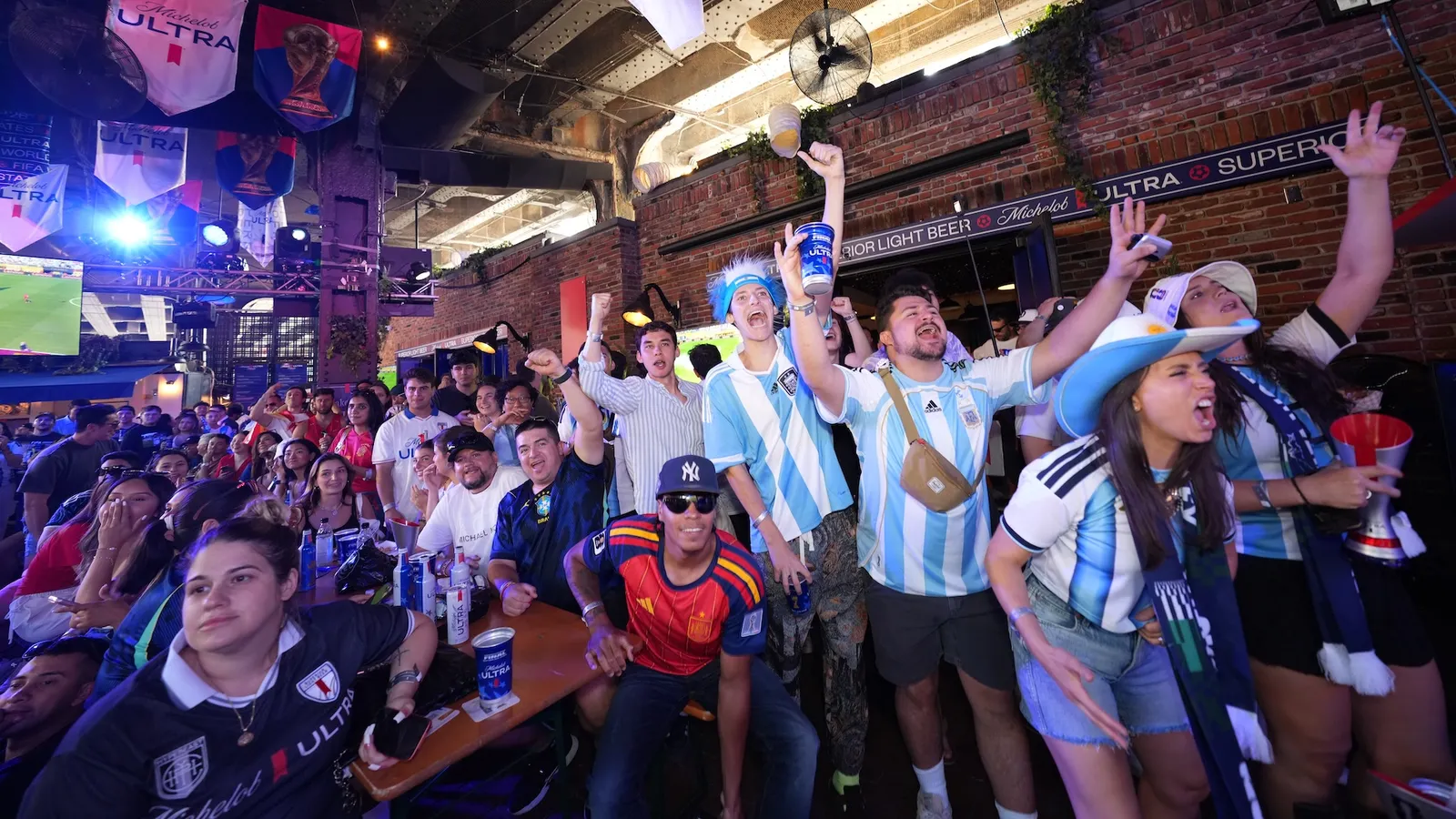
To foster on-the-ground consumer engagement, Michelob Ultra hosted "Pitchside Club" activations in New York and Santa Monica, California. These events served as fan destinations extending beyond the official tournament stadiums. The experiences garnered over 100,000 RSVPs, with the brand distributing thousands of soccer jerseys, trophy cups, and offering numerous photo opportunities. Ricardo Marques, senior vice president of marketing at Michelob Ultra, remarked in a statement, "The FIFA World Cup 2026 wasn’t just a moment for Michelob Ultra—it was a months-long opportunity to build anticipation and create meaningful connections with fans on a national scale. While the matches were played in stadiums, we wanted supporters everywhere to feel part of the tournament journey."
Home Depot’s Strategic Celebrity Endorsement Connects with Gen Z
Even years after his retirement from professional football in 2013, David Beckham remained a prominent figure during the 2026 World Cup, appearing in nearly a dozen advertising campaigns. This widespread celebrity presence posed a challenge for marketers: ensuring their brand, rather than the celebrity, was the primary takeaway from their advertisements.
Mike Griffin, vice president within Kantar’s insights division, noted, "Some brands did a little bit too much in the way of focusing on the celebrity. The celeb ads tend to be the most engaging and deliver the most emotions, so when you’re able to connect the brand effectively to that… you get best-in-class performance."
Home Depot, a first-time World Cup sponsor, successfully navigated this challenge with a campaign launched in March that prominently featured David Beckham. Beyond content creation and "Beckham’s Backyard" experiences, the campaign centered on a television spot that showcased Beckham’s DIY projects, notably aided by Home Depot products. This advertisement propelled Home Depot to become the most-seen brand by TV ad impression share of voice, according to iSpot data. Furthermore, the campaign proved effective in engaging with the Gen Z demographic, as indicated by Kantar.
Kantar’s James May explained the strategic insight behind the campaign’s appeal to younger audiences: "When you think about Gen Z, they’re not buying big houses with the backyards that have the built-in TVs, the awnings and all the rest of it. Even though David Beckham could probably buy 500 houses, [the ad] built on the idea of him doing something very do-it-yourself… I think that was actually a really smart plan." By positioning a global icon in relatable, do-it-yourself scenarios, Home Depot transcended the typical celebrity endorsement, fostering a connection with a key consumer segment.
The 2026 FIFA World Cup proved to be a watershed moment not only for the sport but also for the advertising and marketing industries. While some brands faced challenges in measuring return on investment, others demonstrated the power of strategic planning, data-driven personalization, and authentic integration with the spirit of the game. The tournament’s record-breaking scale provided a fertile ground for innovation, setting new benchmarks for fan engagement and brand activation in the global sporting landscape. The insights gleaned from this expansive event will undoubtedly shape marketing strategies for years to come.