rifanmuazin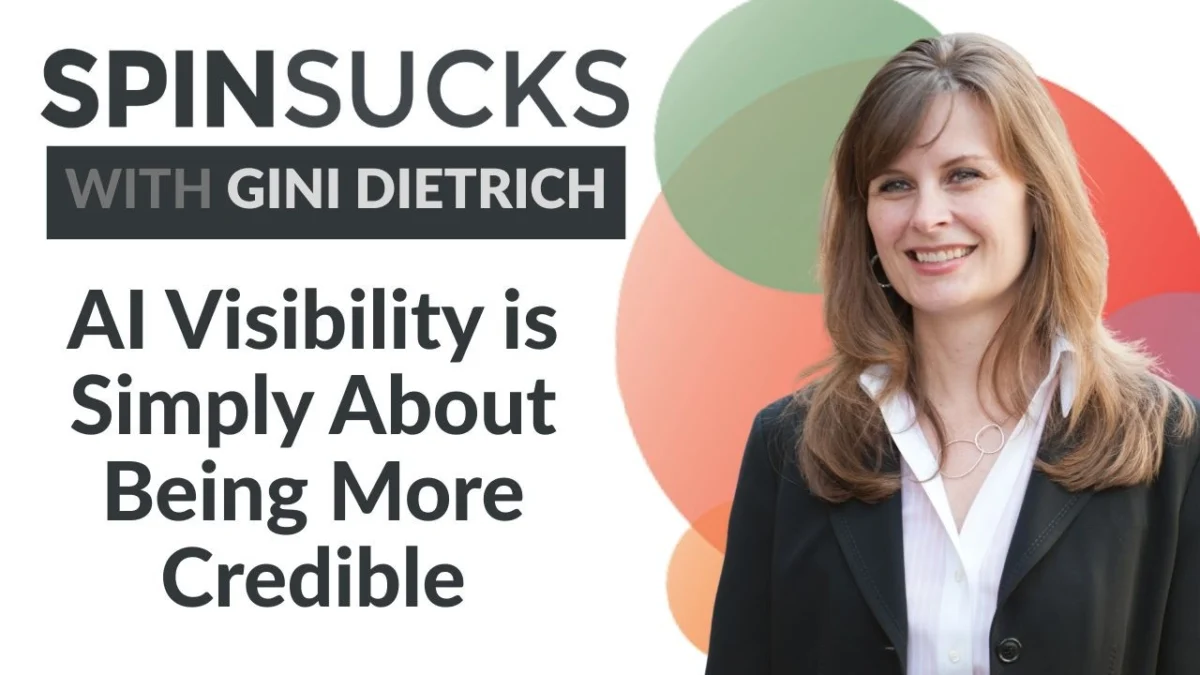
The traditional marketing paradigm that equates content volume with digital visibility is undergoing a fundamental collapse as artificial intelligence (AI) reshapes how information is indexed, synthesized, and delivered to users. For over a decade, digital strategy has been dominated by the "more is better" philosophy—a belief that high-frequency publishing across blogs, social media, and newsletters was the primary lever for capturing search engine real estate. However, as Large Language Models (LLMs) and AI-driven search engines like Perplexity, OpenAI’s SearchGPT, and Google’s AI Overviews become the primary gatekeepers of information, the metrics of success have pivoted from quantity to credibility, structure, and verified authority.
Industry experts now suggest that AI visibility is no longer a "content volume game" but rather a "credibility game." This shift marks the end of the "hustle culture" era of marketing, where speed was prioritized over substance. In the current landscape, AI tools do not merely index keywords; they evaluate the trustworthiness of a brand’s expertise across owned and earned media. To remain visible, brands must transition from being content factories to becoming sources of truth, providing structured, evidence-backed information that both humans and machines can easily verify and cite.
The Evolution of Visibility: From Keywords to Answer Engines
The transition from traditional Search Engine Optimization (SEO) to what is increasingly called Answer Engine Optimization (AEO) or Generative Engine Optimization (GEO) has been building for several years. In the early 2010s, visibility was largely a matter of technical SEO and keyword density. By the late 2010s, the focus shifted toward "content clusters" and topical authority. Today, the emergence of generative AI has introduced a third era: the era of corroborated expertise.
Market data indicates a significant shift in user behavior that necessitates this strategic pivot. According to a 2024 report by Gartner, search engine volume is projected to drop by 25% by 2026 as users increasingly turn to AI chatbots for direct answers rather than clicking through lists of links. This "zero-click" reality means that if a brand’s insights are not synthesized into the AI’s response, that brand effectively ceases to exist for a large segment of the market. Consequently, the pressure to publish frequently has been replaced by the pressure to be "citable."
The chronology of this shift can be traced back to the release of ChatGPT in late 2022, which prompted a "content gold rush." Many firms responded by using AI to generate massive amounts of generic content, hoping to flood the zone. However, search engines and AI aggregators quickly adapted, implementing more sophisticated filters for E-E-A-T (Experience, Expertise, Authoritativeness, and Trustworthiness). The result is a digital environment where mediocre, high-volume content is increasingly ignored or penalized, while structured, authoritative data is elevated.
The Credibility Crisis and the Volume Trap
The core problem with the "volume-first" approach is that it often leads to what communications experts call "brand dilution." When a company prioritizes the speed of publishing over the depth of its insights, it risks sending mixed signals to the market. If a brand’s website says one thing, its leadership team says another on LinkedIn, and its PR efforts focus on a third unrelated trend, AI systems struggle to identify what the brand actually stands for.
AI models are trained to look for patterns and consistency. If an AI cannot find a clear, reinforced narrative about a brand’s expertise across the web, it will not recommend that brand as a definitive answer. This is not a technical glitch; it is a feature of how LLMs process probability and trust. They gravitate toward the "clearest" and "most reinforced" information.
The "Volume Trap" also ignores the psychological state of the modern buyer. In a market characterized by information overload, buyers are increasingly skeptical of generic "how-to" articles. They are looking for proprietary data, real-world frameworks, and expert judgment—elements that AI-generated fluff cannot replicate. When brands respond to AI pressure by cranking out generic content, they are inadvertently proving that their strategic value is low, reinforcing the argument that they can be replaced by a simple prompt.
The PESO Model and the Role of Corroboration Loops
To achieve visibility in an AI-driven market, organizations are increasingly turning to the PESO Model (Paid, Earned, Shared, and Owned media) to create what are known as "corroboration loops." This strategy acknowledges that owned media—content published on a brand’s own website—is the necessary foundation but has a "credibility ceiling."
Owned media serves as the source of truth where a brand establishes its definitive narrative and evidence library. However, because this content is self-published, it lacks the inherent trust of third-party validation. This is where earned media (PR and media relations) becomes critical. When a reputable trade publication, an industry analyst, or a popular podcast reinforces the same themes and data points found on a brand’s website, it creates a powerful signal for both humans and AI.
This "credibility transfer" is essential for AI visibility. AI systems do not just read your website; they scan the entire digital ecosystem to see who else is talking about you and what they are saying. If a brand’s proprietary framework is cited in an industry report or discussed in a major news outlet, the AI views that framework as a verified fact rather than a marketing claim. This makes the brand the "safe" and "obvious" choice for the AI to include in its summaries.
Technical Structure: Making Expertise Usable for Machines
While credibility is the psychological component of visibility, structure is the technical component. Expertise that is buried in a poorly organized, 3,000-word wall of text is invisible to AI. For a brand’s knowledge to be utilized, it must be "structured for consumption."
This involves several key tactical shifts:
- Level-Three FAQs: Moving beyond basic questions (e.g., "What is AI?") to complex, inquiry-based questions that reflect the actual concerns of high-intent buyers (e.g., "How does this implementation affect data privacy in a multi-tenant architecture?").
- Proprietary Data Storytelling: Instead of summarizing existing information, brands must publish original research, benchmarks, and internal usage data. These are citable assets that AI tools actively look for to provide "fresh" answers.
- Semantic Clarity: Using clear definitions, tight theses, and explicit takeaways. AI rewards the source that is the easiest to summarize accurately.
- Schema and Metadata: Utilizing structured data markups to tell search engines exactly what a piece of content is, who the author is, and what specific questions it answers.
Professional Perspectives and Industry Reactions
The shift toward "Visibility Engineering" has sparked a debate within the communications and marketing sectors. Many professionals in text-heavy roles feel the pressure of AI-generated competition. However, Gini Dietrich, founder of Spin Sucks and creator of the PESO Model, argues that this moment actually proves the value of strategic communications.
"The job is not just to make content; the job is to make meaning," Dietrich has noted in recent industry discussions. This sentiment is echoed by many CMOs who are shifting budgets away from "content factories" and toward high-impact, original research and executive thought leadership. The consensus is that while AI can handle the "volume," only humans can provide the "judgment" and "original inquiry" that build true authority.
Analysts from firms like Forrester have similarly observed that B2B buyers are now completing 70% or more of their journey before ever contacting a salesperson. This makes the "AI summary" of a brand’s reputation perhaps the most important touchpoint in the modern sales funnel. If the AI’s summary is vague or cites a competitor, the battle is lost before it begins.
Implications and Future Outlook
As we look toward 2025 and 2026, the brands that dominate their categories will not be those that published the most blog posts, but those that became the most "corroborated" across the web. The future of digital visibility lies in "disciplined communication"—the ability to articulate a clear point of view, support it with undeniable evidence, and repeat it consistently across every channel.
The broader impact of this shift will likely include a consolidation of the content marketing industry. Agencies that specialize in low-cost, high-volume SEO content are likely to see their business models collapse. Conversely, firms that specialize in "visibility engineering"—combining deep subject matter expertise with technical structure and aggressive earned media strategies—will become indispensable.
For brands, the immediate directive is clear: stop asking how much more content is needed and start asking if the existing content is unmistakably clear and credible. The goal is to build an "authority anchor"—a body of work so well-structured and well-supported that it becomes the baseline for any AI-generated answer in that specific niche. In the age of artificial intelligence, the ultimate competitive advantage is not speed; it is the ability to be trusted.
Ultimately, AI visibility is an exercise in brand alignment. It rewards organizations that have the discipline to decide what they stand for and the strategic patience to build a corroborated story around that expertise. The loudest voices are being replaced by the clearest ones, and the "volume game" has officially been superseded by the "credibility game."