rifanmuazin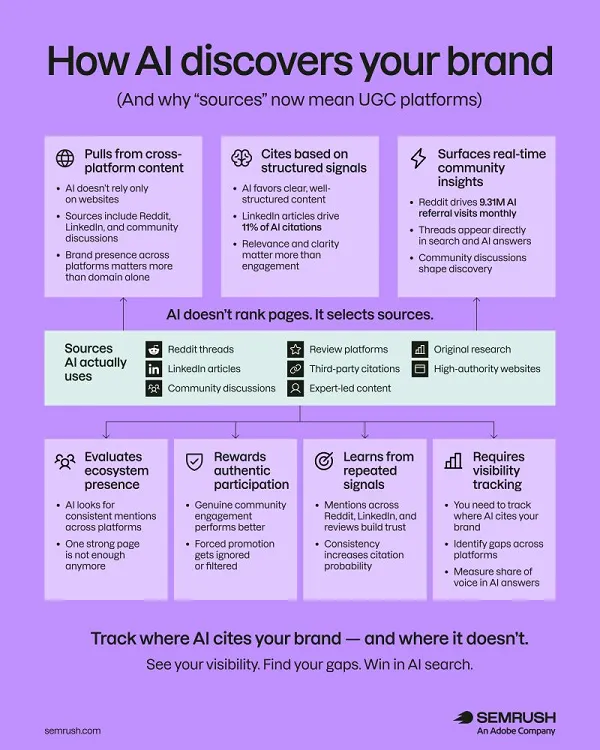
The digital marketing ecosystem is undergoing a profound transformation as the widespread adoption of artificial intelligence (AI) chatbots fundamentally alters how users seek and discover information online. This paradigm shift necessitates a critical re-evaluation of traditional search engine optimization (SEO) strategies, compelling brands to embrace new methodologies such as Answer Engine Optimization (AEO) and Generative Engine Optimization (GEO) to maintain visibility and relevance in an increasingly AI-driven search environment. Data from leading analytics firms underscores this monumental shift, revealing an accelerated user migration towards conversational AI for information retrieval.
The Ascendance of AI in Information Discovery
The trajectory of AI chatbot adoption has been nothing short of explosive, marking a significant departure from conventional keyword-based search engine queries. ComScore’s Q1 2026 report provided compelling evidence of this trend, indicating that U.S. desktop searches conducted via AI chatbots reached an astonishing 76 billion within that single quarter. This figure alone highlights a substantial diversion of user activity from traditional search interfaces. Complementing this, Sensor Tower’s “State of Mobile report for 2026” revealed that AI is rapidly becoming an entrenched habit for millions of users, demonstrating a remarkable 3.6x year-over-year increase in mobile AI usage in 2025 compared to 2024. This rapid integration of AI into daily mobile routines underscores its growing ubiquity and influence. Furthermore, a December 2025 report from Pew Research shed light on demographic-specific adoption, finding that an overwhelming 64% of teenagers now regularly engage with AI chatbots, signaling a generational shift in information-seeking behavior that will undoubtedly shape future digital landscapes. These statistics collectively paint a clear picture: AI chatbots are no longer a nascent technology but a dominant force in online information discovery, reshaping user expectations and interactions.
A Brief History of Search and the AI Inflection Point
To fully appreciate the current disruption, it is essential to contextualize the evolution of online search. Early internet navigation relied heavily on curated web directories, manually categorized by human editors. The late 1990s and early 2000s saw the rise of algorithmic search engines like Google, which revolutionized discovery through keyword matching and sophisticated ranking algorithms based on factors like backlinks and content relevance. This era solidified the practice of SEO, focusing on optimizing websites for these algorithms. Over time, search engines advanced to incorporate semantic understanding, aiming to grasp user intent beyond mere keywords. However, the advent of sophisticated large language models (LLMs) in the 2020s, exemplified by tools like OpenAI’s ChatGPT, Google’s Bard (now Gemini), and Microsoft’s Copilot, represents a new inflection point. These AI chatbots moved beyond simply indexing and presenting links; they began to synthesize information, answer complex queries directly, and engage in conversational dialogue, fundamentally altering the user’s journey from “searching” to “getting answers.” This shift from a list of links to a single, synthesized response is the core driver behind the imperative for AEO and GEO.
The Imperative for Answer Engine Optimization (AEO) and Generative Engine Optimization (GEO)
Given this profound shift in user behavior and the underlying technology, brands can no longer solely rely on traditional SEO tactics designed for listing-based search results. The emergence of AEO and GEO reflects the urgent need for a strategic pivot. Answer Engine Optimization (AEO) focuses on optimizing content to be directly answerable by AI chatbots. This means structuring information in a way that AI models can easily parse, understand, and use to formulate concise, accurate, and comprehensive responses. It prioritizes clarity, factual accuracy, and the direct addressing of common questions. Generative Engine Optimization (GEO), on the other hand, extends this concept to the realm of content generation by AI. It involves optimizing content not just for direct answers but also for its potential to be integrated into AI-generated summaries, creative outputs, or even as a foundational source for AI to build upon when generating new text. This requires content to be authoritative, well-referenced, and structured in a way that facilitates AI’s ability to synthesize and generate novel responses based on the provided data.
The core distinction lies in the output: traditional SEO aims for higher rankings in a list of links, while AEO and GEO aim for content to be the answer or to inform the answer directly presented by the AI. For brands, this translates into ensuring their factual information, product details, service explanations, and thought leadership pieces are readily discoverable and accurately represented within AI-generated responses. Failing to adapt risks digital invisibility, as users increasingly receive direct answers from AI without ever navigating to a brand’s website through traditional search results. This has significant implications for website traffic, brand awareness, and ultimately, conversion funnels.
SEMRush’s Strategic Guidance for the AI Era
In response to this evolving landscape, industry leaders are providing critical insights to guide brands through this transition. SEMRush, a prominent visibility management and content marketing SaaS platform, has emerged as a key resource. Through new insights shared via LinkedIn by their experts, SEMRush has detailed what AI chatbots prioritize when sourcing data and how marketers can align their content strategies to maximize discovery opportunities. Their comprehensive guidance emphasizes understanding the underlying mechanisms by which AI models process and synthesize information.
SEMRush’s analysis highlights several critical factors:
- Data Sourcing Mechanisms: AI tools do not browse the web in the same way humans do. They are trained on vast datasets of internet content and continually update their knowledge bases by crawling and indexing new information. However, their internal logic prioritizes certain types of content and structures.
- Types of Data Sources Sought: AI chatbots exhibit a strong preference for authoritative, credible, and well-structured data. This includes:
- Authoritative Websites: Domains with high domain authority, a strong history of producing accurate information, and recognized expertise in their respective fields are favored. This aligns with Google’s E-E-A-T (Experience, Expertise, Authoritativeness, Trustworthiness) principles, which become even more critical in an AI-driven environment.
- Structured Data: Content organized with structured data markup (e.g., Schema.org) is significantly easier for AI to parse and extract specific pieces of information. This includes FAQs, product specifications, how-to guides, and event details.
- Factual and Verifiable Information: AI models are designed to provide accurate answers. Therefore, content that is fact-checked, supported by evidence, and free from ambiguity or hyperbole is prioritized.
- Comprehensive and Concise Answers: While AI can synthesize complex information, it often seeks clear, direct answers to specific questions. Content that directly addresses common user queries in a straightforward manner is highly valuable.
- Most Commonly Cited Platforms: While the specific image provided by SEMRush illustrates particular citation patterns, the general trend indicates a reliance on established news outlets, academic institutions, government websites, and reputable industry publications. This reinforces the need for brands to cultivate a strong online reputation and publish content that stands up to rigorous scrutiny.
The implications for content creators are clear: content must not only be engaging for human readers but also inherently machine-readable, verifiable, and authoritative. This means investing in rigorous research, clearly articulating facts, and ensuring that all published information adheres to the highest standards of accuracy and credibility. Brands should also consider implementing more robust structured data strategies across their digital properties.
Broader Impact and Implications for the Digital Ecosystem
The shift towards AI-powered search has profound implications across the entire digital ecosystem. For content publishers, the challenge lies in ensuring their work is discovered and attributed when AI models directly answer user queries. This might necessitate new business models or partnerships with AI providers to ensure fair compensation and visibility. The value proposition of traditional organic search traffic, which relies on users clicking through from search results to websites, could diminish if AI answers become sufficiently comprehensive, leading to fewer direct website visits.
This scenario raises questions about the future of digital advertising. If users are spending less time navigating websites and more time interacting with AI interfaces, advertisers will need to find new ways to reach their target audiences within these conversational environments. This could involve sponsored AI responses, integrated product recommendations within chat, or new forms of native advertising that blend seamlessly with AI-generated content.
Moreover, the rise of AI search intensifies the focus on content quality and authenticity. As AI models learn from the vastness of the internet, the propagation of misinformation or biased content becomes a significant concern. Consequently, the emphasis on E-E-A-T (Experience, Expertise, Authoritativeness, Trustworthiness) will only grow. Brands and publishers that can demonstrate genuine expertise and provide trustworthy information will likely be favored by AI algorithms, making content integrity a paramount strategic objective. The ethical considerations surrounding AI-generated content, attribution, and potential biases are also critical areas of ongoing discussion and development that will shape the regulatory and operational landscape.
Statements from Related Parties (Inferred)
While specific official statements on these granular strategy shifts are still evolving, the actions and general pronouncements of major players offer insights. Search giants like Google and Microsoft have explicitly integrated generative AI capabilities into their core search offerings (e.g., Google’s Search Generative Experience, Microsoft’s Copilot in Bing), signaling their commitment to this future. Their ongoing investments in AI research and development confirm that the direction of search is irrevocably intertwined with artificial intelligence. Industry analysts and digital marketing experts have consistently highlighted the need for businesses to pivot, often echoing SEMRush’s sentiments. For instance, many marketing thought leaders have stressed that “brands must shift from merely optimizing for keywords to optimizing for concepts and direct answers,” or that “the future of digital visibility hinges on being a trusted source for AI.” Businesses themselves, particularly those in competitive online markets, are increasingly allocating resources towards AI-driven content strategies, investing in tools and expertise to analyze AI’s content preferences, and adapting their content creation workflows to produce AI-friendly information. This proactive stance reflects an understanding that adapting is not optional but essential for survival and growth in the new digital frontier.
Conclusion
The confluence of escalating AI chatbot adoption and the inherent capabilities of generative AI marks a watershed moment for digital marketing. The traditional SEO playbook, while still relevant for certain aspects of online visibility, is being rapidly augmented and, in some cases, superseded by the demands of Answer Engine Optimization and Generative Engine Optimization. Data from ComScore, Sensor Tower, and Pew Research unequivocally demonstrates that user behavior has shifted, with billions of queries now flowing through AI interfaces. SEMRush’s insights provide a critical roadmap for brands seeking to navigate this new terrain, emphasizing the importance of authoritative, structured, and factual content that AI models can readily consume and utilize. As the digital landscape continues its rapid evolution, brands that proactively embrace AEO and GEO, prioritizing content quality, structured data, and demonstrable expertise, will be best positioned to thrive in an era where AI is not just a tool, but a primary gateway to information and discovery. The challenge is clear: adapt or risk becoming invisible in the AI-powered future of search.