rifanmuazin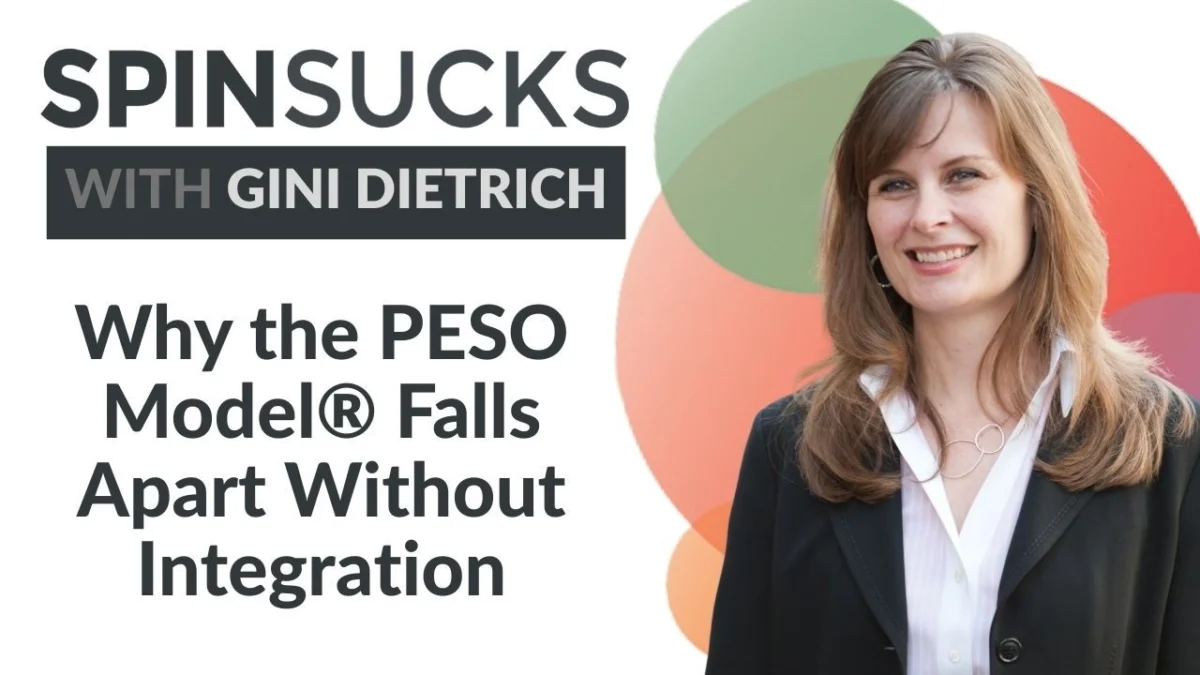
The modern communications landscape has reached a critical inflection point where the mere execution of marketing tactics no longer guarantees institutional momentum. For many organizations, the implementation of the PESO Model®—comprising Paid, Earned, Shared, and Owned media—has devolved into a series of disconnected activities rather than a unified strategy. When a communications department produces a blog post, a social media update, and a boosted advertisement as isolated tasks, they are not operating under a strategic framework; they are simply managing a checklist of outputs. Industry experts now argue that the true value of the PESO Model® only compounds when these four pillars function as a singular, integrated operating system where each media type actively feeds and reinforces the others.
The Evolution of the PESO Model® and the Shift to Integration
Launched in 2014 by Gini Dietrich, founder of Spin Sucks, the PESO Model® was originally conceived to provide a visual and conceptual framework for the evolving responsibilities of public relations and marketing professionals. At its inception, the model served primarily as a categorization tool, listing various tactics under each of the four media headings. However, the digital ecosystem has undergone radical shifts over the past decade. The rise of sophisticated search algorithms, the dominance of social media "walled gardens," and the recent emergence of Large Language Models (LLMs) and generative AI have necessitated a move from tactical categorization to systemic integration.
In the current environment, visibility is no longer a matter of being present on multiple channels; it is about building a "visibility engine." This engine relies on Owned media as the controlled foundation of authority and Earned media as the external validation that provides credibility. Without a formal operating system to connect these elements with Shared and Paid media, communications teams often find themselves trapped in a cycle of "busywork" that fails to move the needle on organizational goals.
The Economic and Operational Cost of Fragmented Communications
Running the PESO Model® as four separate silos is not merely an organizational inconvenience; it is a significant financial drain. When departments operate independently, the first casualty is efficiency through duplication. Teams often find themselves recreating messaging, content briefs, and creative assets for different channels because there is no centralized "source of truth." Research into corporate productivity suggests that fragmented workflows can lead to a 20% to 25% decrease in team efficiency, as employees spend a disproportionate amount of time on internal alignment meetings and status updates rather than strategic execution.
Beyond internal inefficiency, fragmentation breeds public confusion. Inconsistent messaging across a website (Owned), social media (Shared), and press coverage (Earned) undermines brand trust. This inconsistency is particularly detrimental in the age of AI. LLMs and search engines prioritize entities that demonstrate high levels of E-E-A-T (Experience, Expertise, Authoritativeness, and Trustworthiness). If an organization’s narrative is disjointed, search algorithms may struggle to categorize the brand effectively, leading to lower visibility in both traditional search results and AI-generated answers.
Furthermore, the "siloed" approach leads to wasted advertising spend. In a disconnected system, Paid media is frequently used as a "panic button" to bolster underperforming content or to manufacture reach for a narrative that lacks organic credibility. When Paid media is treated as a standalone tactic rather than an accelerant for an already functioning system, the return on investment (ROI) inevitably plateaus.
The Mechanics of a Unified Operating System
To transition from tactical activity to a compounding operating system, organizations must treat the intersections of the PESO Model® as the primary focus of their work. Integration occurs when the output of one media type becomes the direct input for another.
Owned Media: The Strategic Destination
In an integrated system, Owned media—such as white papers, long-form articles, and proprietary research—serves as the anchor. It is the destination where the full context and proof of a brand’s authority reside. Rather than being "content for content’s sake," Owned media provides the linguistic and factual foundation for all other activities.
Earned Media: The Validation Layer
Earned media is no longer viewed as a temporary "win" to be celebrated and forgotten. Instead, it serves as external corroboration. A mention in a major trade publication or a guest appearance on an industry podcast is repurposed to strengthen the authority of the Owned media assets. This validation is then funneled back into the system to build trust with both human audiences and search algorithms.
Shared Media: The Distribution and Feedback Loop
Shared media serves as the portable version of the brand’s core narrative. It is the distribution mechanism that carries the story into the world in digestible formats. Crucially, Shared media provides a real-time feedback loop. Engagement metrics, comments, and questions from the community inform the next iteration of Owned media, ensuring the brand remains responsive to market needs.
Paid Media: The System Accelerant
In the integrated PESO Model®, Paid media is the final step, not the first. It is used exclusively to scale what is already working. By putting budget behind content that has already proven its value through Earned validation and Shared engagement, organizations ensure that their advertising spend is amplifying a high-performing asset rather than trying to salvage a weak one.
Establishing an Operating Rhythm and the "Stop List"
Maintaining this level of integration requires a disciplined operating rhythm. Many communications teams fail because they are reactive, responding to "emergency" requests from stakeholders that pull them away from the integrated strategy. A functional PESO operating system requires a consistent cadence of decision-making. This includes weekly reviews to determine which Owned assets are being prioritized, how Earned efforts are supporting those priorities, and which Shared insights are necessitating a pivot in strategy.
A critical component of this rhythm is the "Stop List." Integration is not an additive process; it is a subtractive one. To make room for the high-impact, connected work that creates momentum, teams must identify and eliminate disconnected tactics. This includes one-off social posts that do not point back to a central narrative, reactive assets created for a single stakeholder request, and "random acts of marketing" that fail to reinforce the broader system. By stopping disconnected work, teams can focus on building long-term assets that deepen the brand’s narrative over time.
The Integration Map: Visualizing the Workflow
The final requirement for a PESO operating system is a one-page Integration Map. Unlike a traditional content calendar, which focuses on dates and channels, an Integration Map focuses on the connective tissue between activities. It provides a shared view of:
- The core narrative or "big rock" content being prioritized.
- The specific Earned media targets that will validate that narrative.
- The Shared media plan for distributing the message and gathering feedback.
- The Paid media triggers that will be activated once success is measured.
This map serves as a diagnostic tool. If a proposed idea cannot be mapped to the other three pillars of the model, it is likely a distraction that belongs on the Stop List. This visual framework allows leadership to see the "visibility engine" in action, shifting the conversation from a list of outputs to a demonstration of systemic growth.
Broader Implications for the Communications Industry
The shift toward the PESO Model® as an operating system reflects a broader trend in professional services toward accountability and data-driven strategy. As organizations face increased pressure to prove the ROI of their communications spend, the ability to demonstrate a compounding system is becoming a competitive necessity.
The updated PESO Model Certification® by Spin Sucks is a direct response to this market demand. By focusing on sequencing, standards, and operational rhythms, the certification aims to move the industry away from the "viral" chase and toward sustainable brand authority. In an era where AI-driven search and information overload are the norms, the organizations that survive will be those that treat their communications not as a series of chores, but as a robust, integrated system designed for long-term momentum.
The transition from activity to momentum is not a matter of working harder; it is a matter of working within a system where every action reinforces the last. As the digital landscape continues to evolve, the PESO Model® provides the blueprint for that system, ensuring that communications professionals can build trust, authority, and measurable value in an increasingly fragmented world.