
 rifanmuazin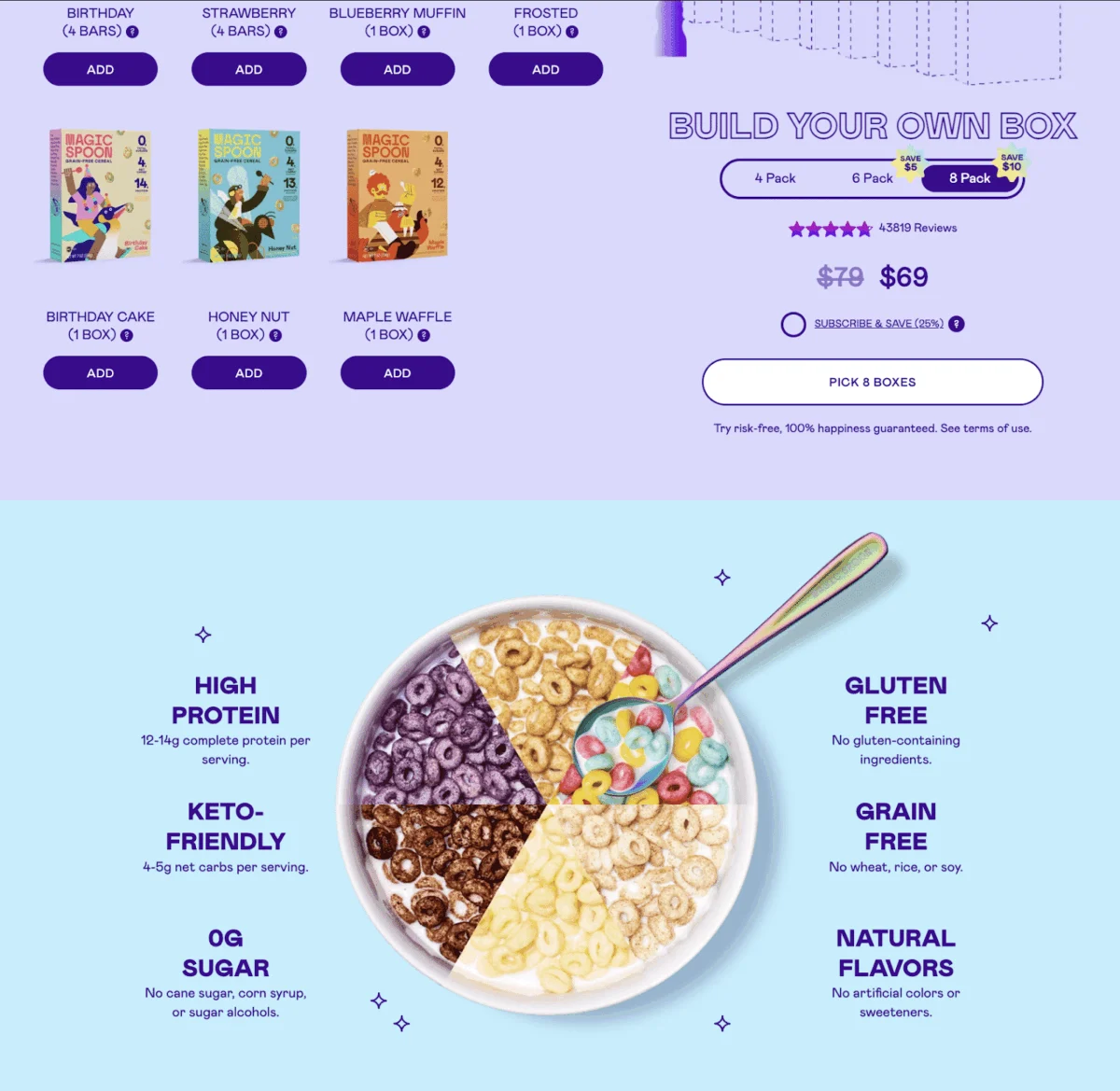
The digital storefront has evolved from a simple catalog into a complex, data-driven ecosystem where the user’s journey is dictated by the efficiency of navigation and the clarity of presentation. At the heart of this ecosystem lies the e-commerce category page, a critical intermediary that can either facilitate a seamless path to purchase or serve as a significant point of friction. Industry data suggests that while homepages often receive the highest volume of direct traffic, category pages frequently serve as the primary entry point for organic search visitors, making their optimization a cornerstone of modern digital retail strategy.
The difference between a high-converting store and one with high bounce rates often comes down to the structural integrity of these pages. A poorly designed category page—characterized by slow loading times, irrelevant filters, and visual clutter—forces potential customers to abandon their search. Conversely, an optimized page that allows for intuitive filtering by style, size, and price, supported by high-quality imagery, transforms the browsing experience into a streamlined transaction. As global e-commerce competition intensifies, mastering this design framework is no longer optional but a fundamental requirement for business scalability.

The Strategic Importance of Defining Clear Objectives
Effective e-commerce design begins with a rigorous definition of objectives. Before a single pixel is placed, retailers must align their category page architecture with both user expectations and business KPIs. This process involves a deep dive into audience segmentation to understand the specific needs of the target demographic. For instance, a luxury fashion retailer’s audience may prioritize high-resolution aesthetic imagery and brand heritage, while a hardware store’s audience may require technical specifications and compatibility filters.
To identify these needs, industry analysts recommend a multi-pronged approach: analyzing site search data to see what terms users use within specific categories, conducting surveys to gauge user satisfaction, and performing competitive benchmarking. Once the audience profile is established, businesses must set measurable goals. Key performance indicators (KPIs) for category pages typically include the click-through rate (CTR) to product detail pages, the bounce rate, and the average time spent on the page.
Furthermore, “Revenue per Visitor” (RPV) has emerged as a vital metric. By integrating upsell and cross-sell opportunities directly into the category layout, retailers can increase the average order value (AOV). This strategic alignment ensures that the page serves a dual purpose: providing a superior user experience while simultaneously driving the bottom line.
Structural Optimization and Layout Engineering
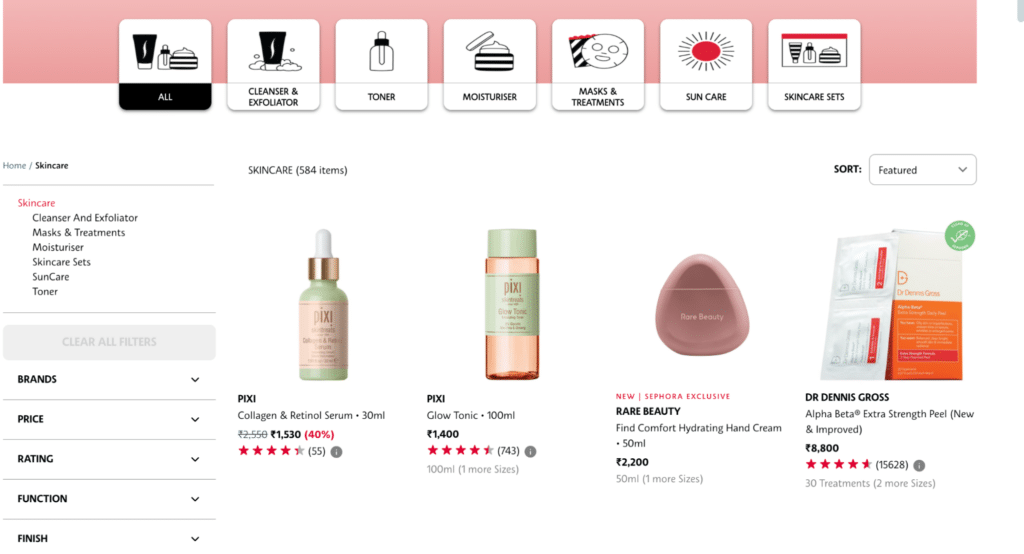
A well-structured category page functions as a digital concierge, guiding the customer through an overwhelming array of choices. The layout must be engineered to reduce cognitive load, allowing the user to process information quickly and move toward a purchase decision.
The Role of the Header and Category Titles
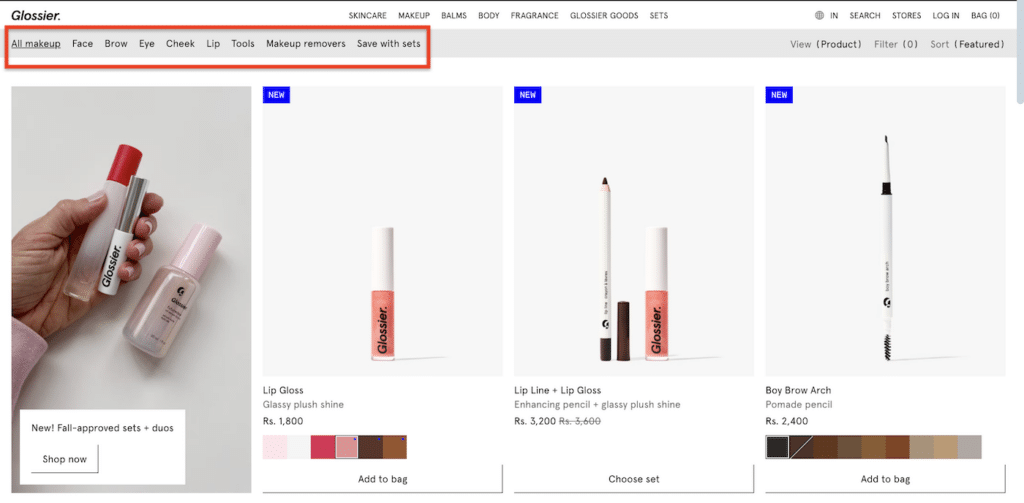
The category title is the first point of orientation for the shopper. It must be clear, precise, and optimized for both human readability and search engine algorithms. Leading brands like Glossier have set a standard in this area by utilizing simple, descriptive titles such as “Face” or “Eyes” rather than industry-specific jargon. This clarity aids in navigation and ensures the page aligns with common search queries, thereby enhancing SEO performance.
Advanced Filtering and Sorting Mechanisms
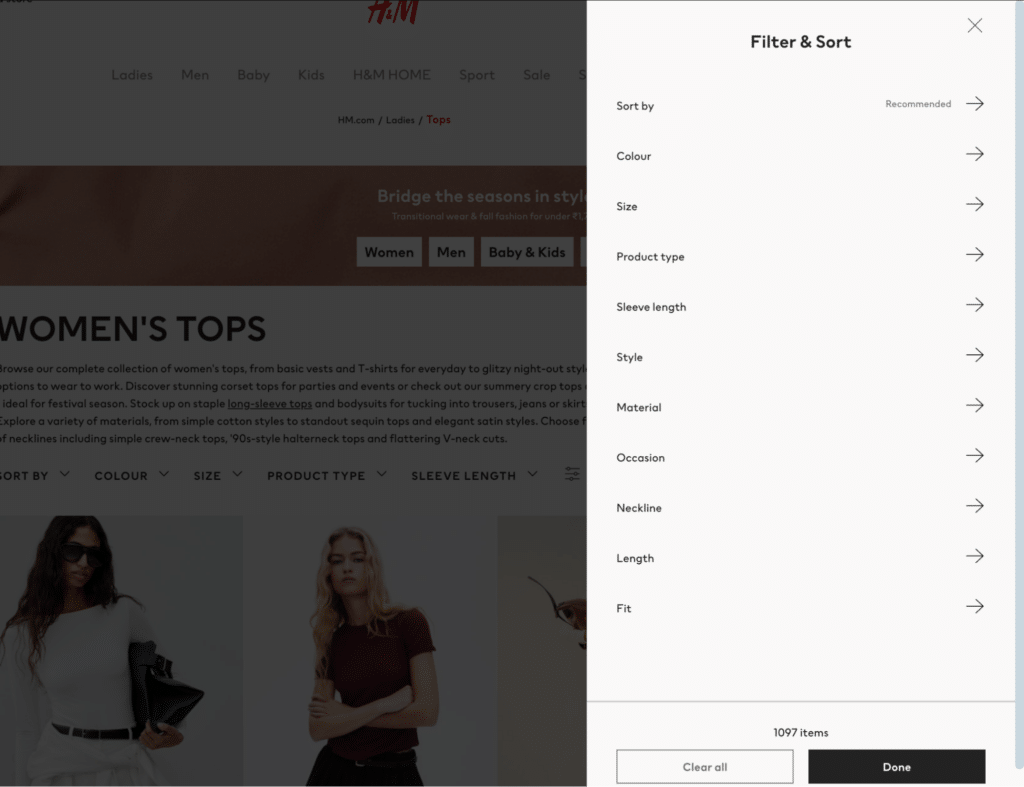
As product catalogs grow, the importance of robust filtering systems cannot be overstated. When a category contains hundreds or thousands of SKUs, the ability to narrow down choices becomes the primary driver of conversion. Retailers like H&M provide a blueprint for this by offering granular filters that include not only size and color but also material type, occasion, and neckline. This level of detail allows users to personalize their shopping experience in real-time, significantly reducing the time to find a desired product.
Product Listing Excellence
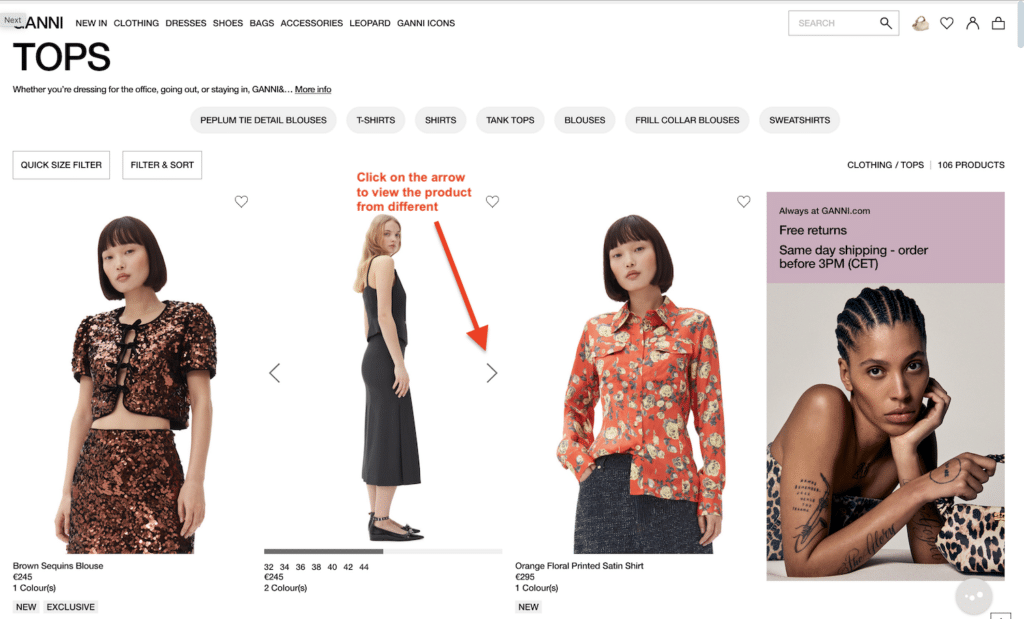
The presentation of individual products within the grid is where the visual sale happens. High-quality, zoomable images are the industry standard, but the most successful sites go further. Contemporary brands like Ganni utilize multi-angle shots and “hover-to-zoom” features directly on the category page. These visual cues, paired with concise descriptions that highlight key benefits—such as sustainable materials or specific fits—provide enough information to build confidence without requiring the user to click away to a separate page.
The Mobile-First Imperative and Minimalist Design
The shift toward mobile commerce is no longer a trend; it is a market reality. Current projections indicate that nearly 79% of all e-commerce sales will be generated via mobile devices by 2025. This transition necessitates a “mobile-first” design philosophy. A responsive layout is insufficient; the design must be optimized for touch interfaces, with large, tappable buttons and legible text.
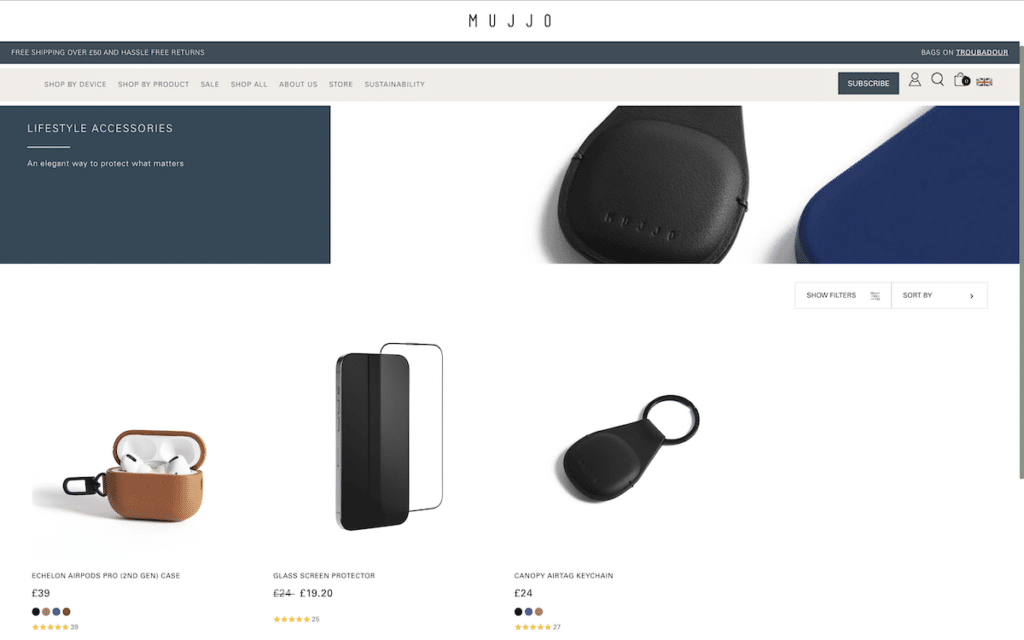
Minimalism plays a crucial role in mobile optimization. Brands like Mujjo exemplify this approach by utilizing ample white space and removing unnecessary distractions. A clean design not only improves the aesthetic appeal but also has a direct impact on technical performance. Fewer heavy design elements mean faster loading speeds, which is a known ranking factor for search engines and a critical component of user retention. Statistics show that a one-second delay in page load time can lead to a 7% reduction in conversions, making speed a primary objective for any category page redesign.
Enhancing User Experience Through Intuitive Navigation
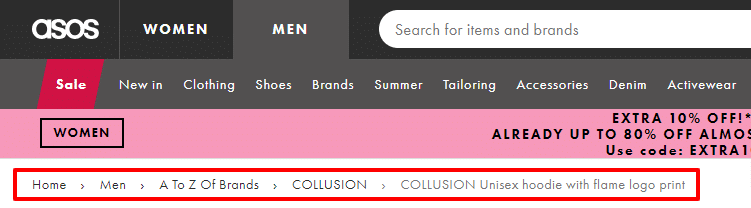
Navigation is the skeletal structure of the e-commerce experience. If a user feels lost within a category, the likelihood of abandonment increases exponentially. To prevent this, professional designers implement clear “breadcrumb” trails. These navigational aids show the user exactly where they are in the site hierarchy (e.g., Home > Men’s Shoes > Running) and allow for easy backtracking.
Additionally, for categories with extensive listings, the inclusion of a “Back to Top” button and persistent navigation menus ensures that the user never feels trapped at the bottom of a long scroll. These small but significant UX elements contribute to a sense of control and ease, fostering a positive brand perception.
Content Strategy: Engagement and Psychological Triggers
Beyond the technical layout, the content on a category page serves to inform and persuade. Category descriptions should be crafted to satisfy both the user’s curiosity and the search engine’s requirements. This involves using relevant keywords naturally while focusing on the benefits of the product range.
Magic Spoon, a disruptor in the cereal industry, utilizes category content to communicate its unique value proposition—high protein and low carb—while maintaining a playful, brand-consistent tone. This approach turns a functional page into a storytelling platform.
Furthermore, the strategic use of promotions can act as a powerful psychological nudge. ASOS is a prime example of a retailer that uses category pages to highlight limited-time offers and “stock alerts.” By placing banners that announce “30% off” or “Limited time only” at the top of a category, they create a sense of urgency and scarcity. When combined with value-added services like “Free Worldwide Delivery,” these promotional elements significantly lower the barrier to purchase.
Search Engine Optimization (SEO) and Discoverability
A category page is only effective if it can be found. SEO best practices are the engine that drives organic traffic to these pages. This begins with comprehensive keyword research using tools like SEMrush, Ahrefs, or Google Keyword Planner. Retailers must identify high-volume, high-intent keywords that match their product offerings.
The optimization process includes:
- Title Tags and Meta Descriptions: Crafting compelling, keyword-rich snippets that encourage users to click from the Search Engine Results Page (SERP).
- Internal Linking: Using category pages as hubs to distribute link equity to individual product pages.
- Image Alt-Text: Ensuring all product images are indexed and searchable.
- Schema Markup: Implementing structured data to help search engines understand the products listed, which can lead to rich snippets in search results.
Data-Driven Iteration: The “Analyze and Adjust” Cycle
The launch of a category page is not the end of the process, but the beginning of an iterative cycle of improvement. Continuous analysis of user behavior is essential for maintaining a competitive edge. Conversion Rate Optimization (CRO) tools, such as FigPii, allow retailers to view heatmaps and session replays.
These tools reveal where users are clicking, how far they are scrolling, and where they are getting stuck. For example, if a heatmap shows that users are frequently clicking on a non-linked image, that is a clear signal to make that element interactive. A/B testing different layouts, CTA button colors, or filtering options allows businesses to make decisions based on empirical data rather than intuition.
Chronology of E-commerce Category Page Evolution
The evolution of the category page reflects the broader history of the internet.
- 1995–2005 (The Directory Era): Category pages were simple, text-heavy lists with low-resolution thumbnails. Navigation was strictly hierarchical and lacked any real-time filtering.
- 2005–2012 (The Grid and Filter Era): As bandwidth increased, high-quality images became standard. The introduction of “faceted navigation” allowed users to filter products by attributes for the first time.
- 2012–2018 (The Mobile Revolution): Responsive design became mandatory. The “infinite scroll” and “hamburger menus” were introduced to accommodate smaller screens.
- 2019–Present (The Personalization Era): Modern category pages use AI to reorder products based on individual user behavior. Visual search and integrated video content are becoming the new standard.
Broader Impact and Industry Implications
The optimization of e-commerce category pages has broader implications for the retail industry. For small and medium-sized enterprises (SMEs), a well-designed category page can level the playing field, allowing them to compete with giants like Amazon by offering a more curated and user-friendly experience. For large retailers, the cumulative effect of small improvements in category page conversion rates can result in millions of dollars in additional annual revenue.
As artificial intelligence and machine learning continue to integrate with e-commerce platforms, we can expect category pages to become even more dynamic. Future pages may automatically adjust their layout and content based on the weather in the user’s location, their previous browsing history, or even real-time social media trends. In this rapidly changing landscape, the core principles of clarity, speed, and user-centric design remain the most reliable path to success. The e-commerce category page is no longer just a list of items; it is a sophisticated sales tool that, when properly tuned, serves as the engine of digital growth.








