Siti Muinah

The digital marketing landscape is currently grappling with a significant discrepancy in performance data that threatens the accuracy of multi-billion dollar advertising ecosystems. For months, agencies and internal marketing teams have observed a perplexing trend: while website traffic remains stable or even increases, conversion rates are experiencing a steady, unexplained decline. Investigations into campaign settings, landing page performance, and user experience often yield no obvious culprits. However, recent technical analyses and industry studies suggest that the root cause is not a failure of marketing strategy, but rather a fundamental shift in the composition of web traffic. The rise of sophisticated Artificial Intelligence (AI) agents, which mimic human browsing behavior, has begun to pollute Google Analytics 4 (GA4) data at an unprecedented scale, leading to what experts are calling a "denominator crisis" in conversion rate optimization.
The Evolution of Web Analytics and the Rise of Automated Traffic
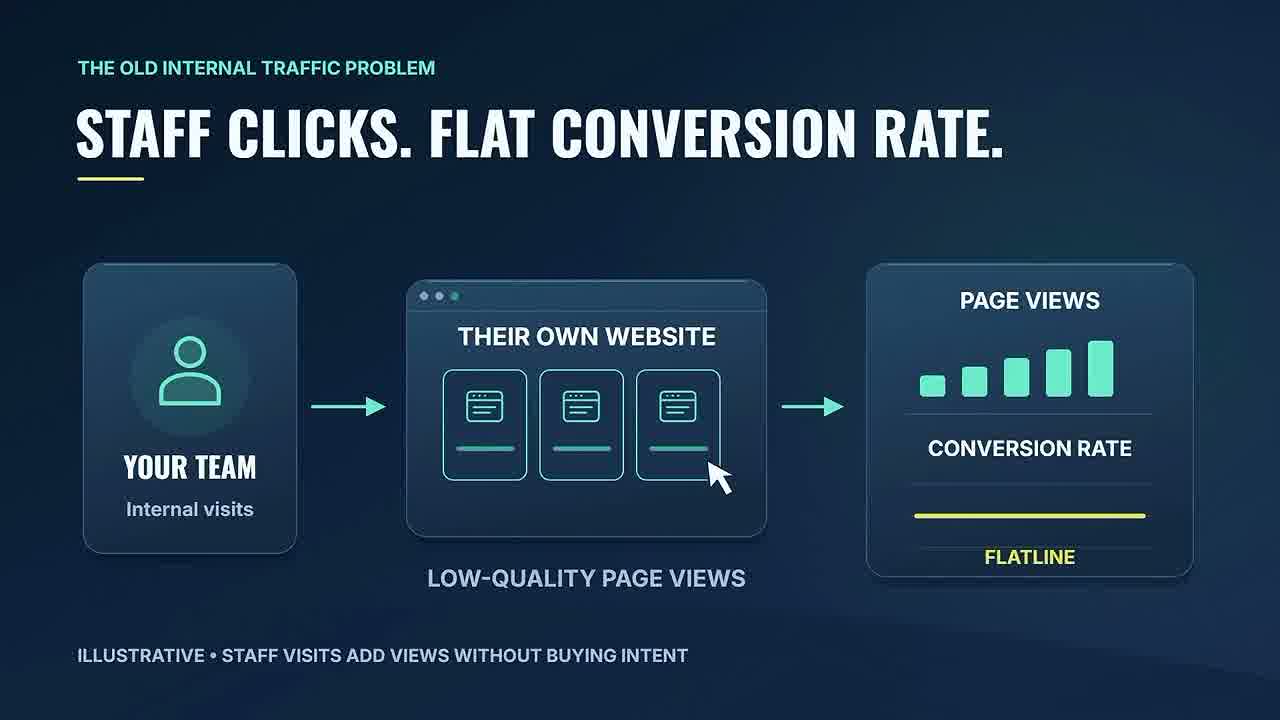
To understand the current crisis, one must look at the historical context of web measurement. Since Google Analytics became the industry standard in 2006, the primary goal of data filtering was to remove "internal traffic"—the visits from a company’s own employees or agency partners that would artificially inflate pageviews and deflate conversion rates. For nearly two decades, the industry operated under the assumption that most non-human traffic was generated by simple "bots" or "crawlers" that did not execute JavaScript and were therefore easily ignored by analytics platforms.
However, the transition from Universal Analytics to Google Analytics 4, completed for most users in mid-2023, coincided with a massive explosion in generative AI and automated browsing tools. Unlike the rudimentary bots of the past, modern AI agents—powered by Large Language Models (LLMs) and automated browser frameworks—operate within real browser environments. They can load pages, execute JavaScript, trigger scroll events, and interact with elements exactly as a human user would. This technological leap has rendered traditional bot filters, including the built-in IAB (Interactive Advertising Bureau) known-bot list used by GA4, increasingly obsolete.

Chronology of the Data Integrity Shift
The current challenges in data accuracy can be traced through a series of industry shifts over the last four years:
- 2021: The Privacy Reset: Apple’s release of iOS 14.5 and the App Tracking Transparency (ATT) framework began the process of "removing" real humans from analytics data. By allowing users to opt out of tracking, a significant portion of high-value human traffic became invisible or anonymized.
- 2022-2023: The Cookie Deprecation Era: The rise of sophisticated ad blockers and the implementation of stringent cookie consent banners further reduced the visibility of legitimate human visitors.
- Late 2023: The GA4 Migration: As the industry moved to GA4, a platform built on event-based tracking, the reliance on automated bot filtering became more pronounced. Users lost the ability to manually toggle bot filtering off, leading to a "black box" approach where marketers blindly trusted Google’s ability to identify non-human traffic.
- 2024: The AI Agent Explosion: The widespread adoption of AI tools that "browse the web" to summarize content, check prices, or perform research has introduced a new class of traffic that is automated but appears human to standard tracking scripts.
Analyzing the Denominator Problem: The 20% Discrepancy
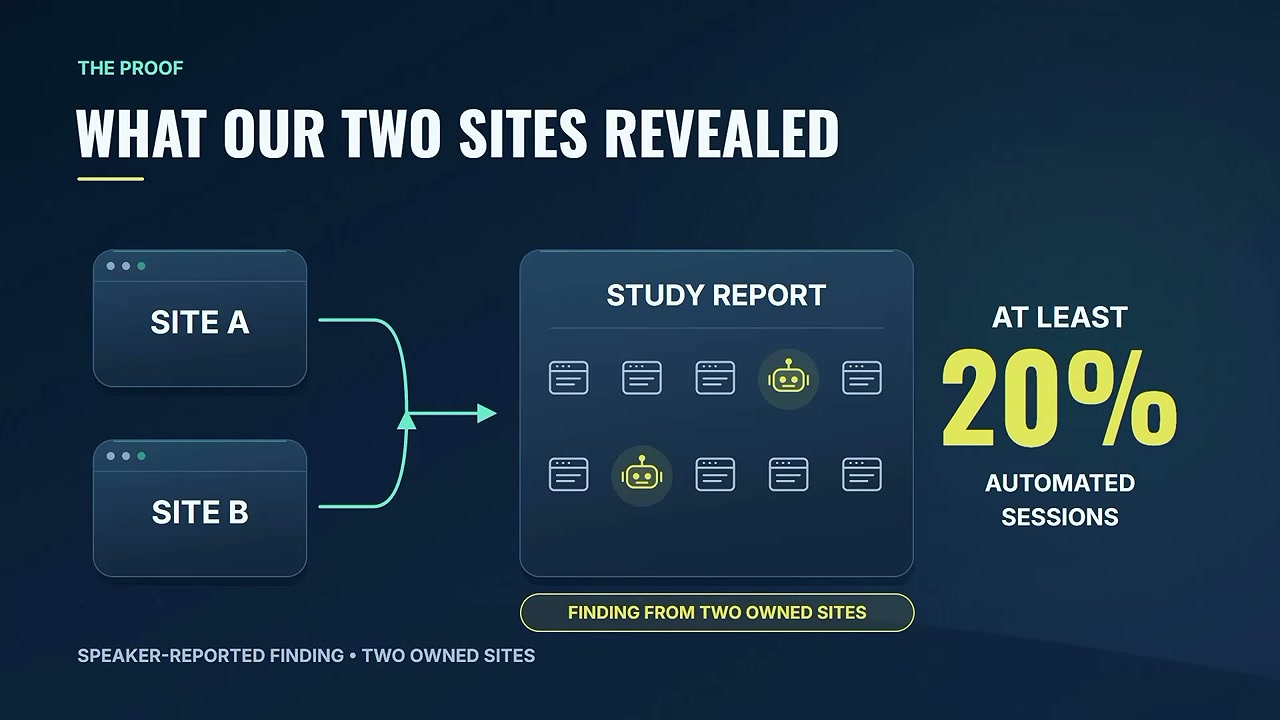
A recent study conducted across multiple high-traffic websites has provided empirical evidence of this shift. By implementing advanced server-side tagging and custom identification scripts, researchers labeled automated visits to separate them from human sessions. The results were startling: at least 20% of the sessions reported in GA4 were identified as automated traffic that had bypassed Google’s native filters.
This 20% "ghost traffic" creates a mathematical distortion known as the denominator problem. The conversion rate is calculated by dividing the number of successful actions (leads, sales, sign-ups) by the total number of sessions. When 20% of those sessions are AI agents that have no intention of purchasing or converting, the denominator is artificially inflated. Consequently, even if a marketing campaign is performing perfectly among human visitors, the reported conversion rate will continue to slide as AI traffic grows.
For example, if a site previously had 1,000 human sessions and 50 conversions, the rate was 5%. If that same site now receives 1,000 human sessions and 250 AI agent sessions, but still generates 50 conversions, the reported rate drops to 4%, despite no change in human behavior.
Technical Limitations of GA4 Bot Filtering
The primary issue lies in the methodology GA4 uses to identify bots. The platform relies on the International Advertising Bureau’s "Known Bots and Spiders" list. While this is effective for legacy crawlers like search engine indexers, it is not designed to catch dynamic AI agents.
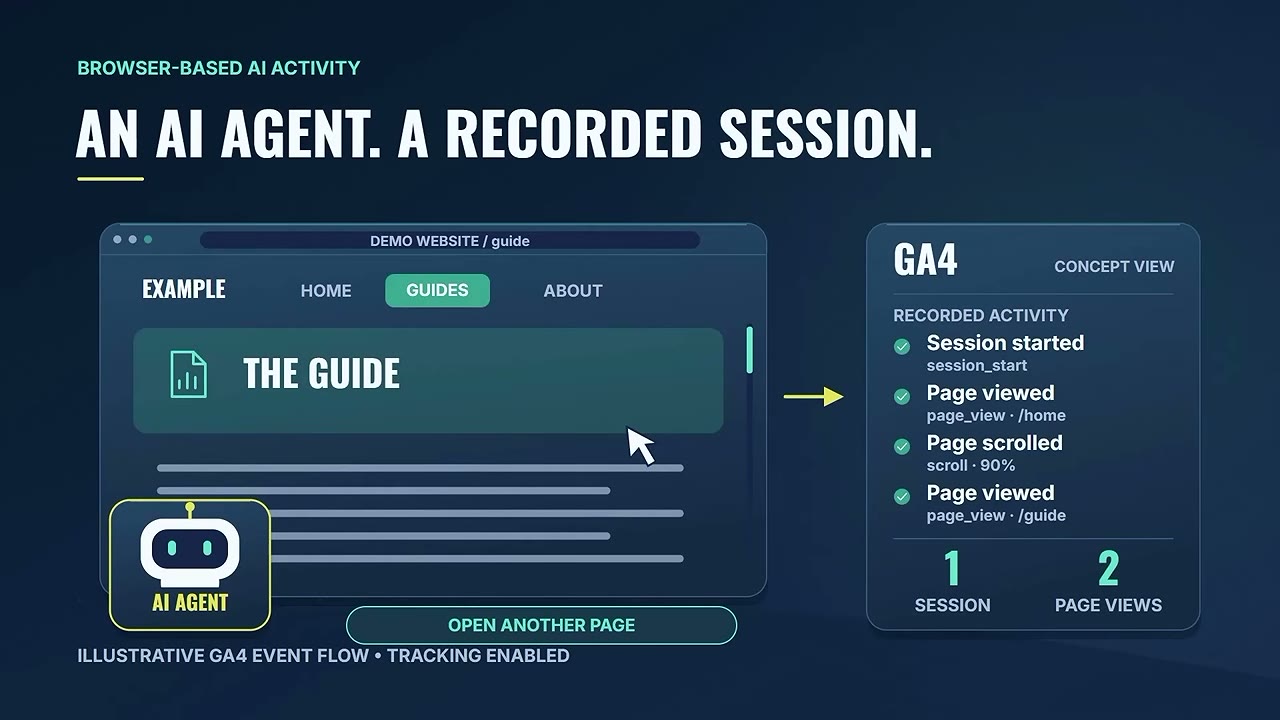
Furthermore, a long-standing industry assumption held that bots could not execute JavaScript. In the modern era, tools like Puppeteer, Playwright, and various AI-driven browsing extensions are designed specifically to run JavaScript to access "hidden" content or bypass basic security measures. Because GA4 records a session as soon as the tracking script is executed, these agents are logged as legitimate users. They often trigger "session_start," "page_view," and even "scroll" events, which are the primary metrics GA4 uses to determine engagement.
Industry Reactions and Expert Analysis
Data analysts and digital agency leaders are increasingly vocal about the need for a "discovery-led" approach to client reporting. The prevailing sentiment among experts is that agencies must move away from treating GA4 as an infallible source of truth and instead view it as a raw data stream that requires rigorous cleaning.
"The conversation with clients has to change," says one senior data strategist. "We aren’t just reporting numbers anymore; we are defending the integrity of those numbers. If we don’t account for AI traffic, we are essentially telling our clients that their marketing is failing when, in reality, their analytics are just being flooded with noise."
Market analysts suggest that this trend will lead to a surge in demand for server-side tracking and third-party bot detection services, such as Cloudflare’s Bot Management or specialized cybersecurity tools. The goal is to move the filtering process "upstream," identifying and labeling traffic before it ever reaches the GA4 dashboard.
Implications for Advertising Spend and ROI
The implications of unfiltered AI traffic extend far beyond mere reporting. Modern advertising platforms, including Google Ads and Meta Ads, rely heavily on conversion data to optimize their machine-learning algorithms. If an algorithm is fed "dirty" data—such as sessions that look highly engaged but never convert—it may begin to optimize for the wrong audience, leading to wasted ad spend and a decrease in actual Return on Investment (ROI).
Furthermore, the "Dead Internet Theory"—the idea that the majority of web activity is now bot-to-bot interaction—is becoming a practical concern for marketers. As AI agents begin to interact with other AI-driven chat bots on websites, the potential for a feedback loop of non-human data increases, making it nearly impossible to distinguish real consumer demand from automated activity without advanced intervention.
Strategic Recommendations for Data Accuracy
To combat the erosion of data quality, industry leaders are recommending a three-pronged strategy for digital marketers and business owners:
1. Implementation of Advanced Labeling
Marketers should implement custom dimensions in GA4 to flag suspicious traffic. This involves using signals such as browser fingerprinting, unusual navigation patterns (e.g., instantaneous page jumps), and the presence of automation-specific properties in the user agent string. By labeling this traffic, analysts can create "Human-Only" segments to view more accurate conversion rates.
2. Integration of Server-Side Measurement
Moving tracking from the client-side (the user’s browser) to the server-side allows for a more robust verification of traffic. Server-side environments can cross-reference IP addresses against known data center ranges and perform more complex bot-detection logic that is invisible to the AI agents themselves.
3. Reframing the Client-Agency Dialogue
Agencies are being encouraged to lead with the "discovery" of AI traffic rather than waiting for clients to ask why conversion rates are dropping. By proactively identifying and filtering automated traffic, agencies can demonstrate a higher level of technical competence and provide clients with a "clean" view of their business performance. While this may result in reporting lower overall traffic numbers, it ensures that the traffic being reported is actionable and real.
The Future of Web Measurement
As AI agents become more integrated into daily life—performing tasks like booking flights, researching products, and summarizing news—the definition of a "visit" will likely need to be redefined. The industry may eventually move toward a model where "Human Sessions" and "Agent Sessions" are reported as two distinct, valuable metrics. Until then, the burden of proof lies with the marketers to ensure that the data driving their decisions is as free from automated noise as possible.
The current 20% discrepancy identified in recent studies is likely only the beginning. As AI capabilities continue to scale, the gap between reported analytics and human reality will continue to widen, making advanced traffic control not just an optional enhancement, but a fundamental requirement for any data-driven organization.


 Suro Senen

 Nana Muazin