rifanmuazin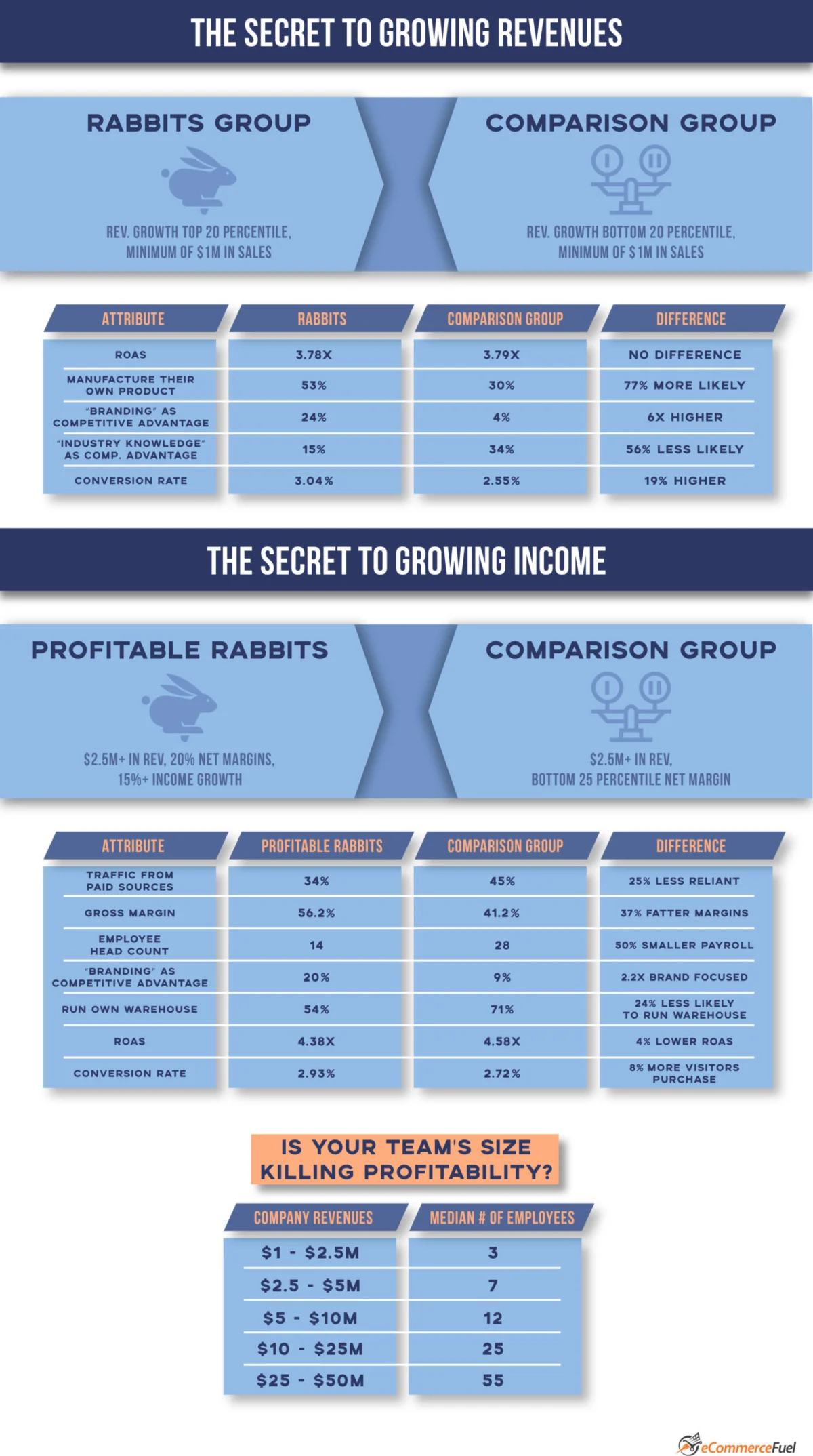
In the competitive landscape of e-commerce, conventional wisdom often dictates that scaling a business necessitates an expanding workforce and aggressive marketing expenditure. However, a growing body of evidence and the experiences of highly profitable online retailers suggest a counter-intuitive truth: operational leanness and strategic tax planning can be far more impactful drivers of profit than sheer revenue growth or sophisticated marketing campaigns. This analysis delves into the strategies employed by top-performing e-commerce businesses, revealing how a focus on reduced overhead, optimized staffing, and proactive tax management can unlock unprecedented profitability and reduce owner stress.
A compelling case study illustrates this paradigm shift. A prominent e-commerce store owner, who preferred to remain anonymous to protect proprietary strategies, once managed a team of 35 employees. While revenue was robust, profitability remained stubbornly tight, a persistent source of anxiety for the owner. The constant demands of managing a large team, in addition to the day-to-day operational challenges, created an unsustainable workload. In response, the owner initiated a strategic overhaul. This involved a decisive move to a remote operational model, the outsourcing of warehouse and fulfillment operations to a third-party logistics (3PL) provider, and a significant shift from full-time employees to a more flexible model of freelancers and independent contractors. The outcome was transformative. Today, the business operates with a lean core team of one employee and eight contractors. This restructuring has led to a significant surge in profits and a dramatic reduction in the owner’s stress levels, underscoring the power of a leaner operational structure.
This narrative challenges the widely held assumption that business growth is directly proportional to headcount. The notion that “scale requires headcount” is being re-evaluated as e-commerce businesses increasingly prioritize efficiency and strategic resource allocation. This is not an isolated incident but rather a reflection of broader trends observed across hundreds of successful e-commerce ventures.

The Data Behind Operational Leanness
A comprehensive study analyzing the operational and financial metrics of hundreds of e-commerce businesses revealed a striking correlation between profitability and workforce management. Contrary to expectations that superior marketing prowess would be the primary differentiator, the research found that the Return on Ad Spend (ROAS) between top-performing and struggling stores showed negligible differences. Similarly, leading profitable businesses were not necessarily employing more advanced Facebook advertising or SEO techniques.
Instead, the most significant predictor of high profitability was a lean operational structure. The study indicated that top performers maintained payrolls that were, on average, half the size of their less profitable counterparts. Furthermore, these highly efficient businesses were 25% more likely to outsource their warehouse operations and demonstrated a 25% lower reliance on paid traffic for customer acquisition. This data strongly suggests that “operational leanness” consistently outperforms “marketing cleverness” when it comes to maximizing profit margins.
The forthcoming eComFuel Trends Report is set to refresh this data, offering current insights into these patterns. Businesses interested in contributing to the validation or refutation of these trends are encouraged to participate in the ongoing research.

Defining “Lean” Beyond Headcount
The concept of operational leanness often gets misinterpreted as simply resorting to layoffs. However, the principle extends far beyond employee numbers to encompass all forms of overhead. This includes seemingly innocuous expenses that can accumulate over time, such as underutilized office spaces, redundant software subscriptions, and inefficient logistical arrangements.
For instance, maintaining a large physical office space that was once deemed essential may become a significant overhead in a post-pandemic world where remote work has proven effective. Similarly, investing in proprietary warehouse infrastructure when a 3PL can offer more cost-effective and scalable solutions represents an avoidable expense. The recurring charges for SaaS tools, often forgotten after initial implementation, can also represent a substantial drain on resources.
A critical filter for identifying areas of potential leanness is to assess what functions are truly core to a brand’s unique value proposition. If a company’s competitive advantage lies in its product design, retaining in-house design talent makes strategic sense. However, if the primary business is selling products online and fulfillment is not a core differentiator, outsourcing this function to specialists can be a far more efficient and cost-effective approach. Profitable e-commerce leaders are not cutting costs indiscriminately; they are making deliberate decisions about where to allocate resources based on what genuinely contributes to their brand’s success and competitive edge.

The Imperative of Proactive, Difficult Conversations
The ability to achieve sustained success in business, much like in life, is often measured by the willingness to engage in difficult conversations. Many entrepreneurs tend to postpone these conversations until circumstances force their hand, such as during economic downturns, cash flow crises, or when profitability declines to an existential threat level.
However, highly profitable business owners adopt a proactive stance. They initiate these challenging discussions before they become crises. This involves critically evaluating the necessity of each role within the organization, questioning whether positions were created out of genuine need or simply due to a perceived sense of busyness. They scrutinize the ongoing necessity of various tools and subscriptions, distinguishing between essential investments and habitual expenditures. Crucially, they engage in hypothetical scenario planning, asking themselves what essential functions would be cut if a 25% reduction in expenses were mandated overnight. The key differentiator is that these owners then translate these proactive assessments into concrete actions, making strategic cuts not out of distress, but out of intentionality and a commitment to maintaining optimal operational efficiency.
Unlocking Hidden Value Through Tax Efficiency

Beyond operational efficiency, another often-overlooked lever for enhancing profitability lies in strategic tax management. Many business owners view taxes as a fixed cost, a percentage of income that is paid regardless of strategic planning. However, this perspective overlooks the significant opportunities for reducing tax liabilities through deliberate and informed decision-making.
Consider the case of two identical e-commerce businesses, each generating $2.5 million in revenue and $250,000 in profit, with owners in similar personal financial situations. Owner A, adhering to a conventional approach, might pay upwards of $75,000 in taxes annually. In stark contrast, Owner B, who actively engages in tax-efficient strategies, could reduce their tax burden to as little as $21,000. This substantial difference is not achieved through illicit means but through the intelligent application of tax planning principles.
Assuming a marginal tax rate of approximately 30%, Owner B’s savings can be attributed to several key strategies:
- Profit Sharing into Retirement Accounts: By contributing $45,000 into retirement accounts through profit-sharing plans, far exceeding standard 401(k) limits, Owner B achieves significant tax deferral, saving approximately $13,500 annually.
- Donating Appreciated Stock: When making charitable donations, Owner B opts to donate stock that has increased in value rather than cash. This strategy allows them to avoid capital gains tax entirely while still receiving the full tax deduction, resulting in savings of around $3,500.
- Maximizing Health Savings Accounts (HSAs): Contributing the maximum family limit of $8,500 to an HSA provides a triple tax advantage (deductible contributions, tax-free growth, and tax-free withdrawals for qualified medical expenses). This strategy alone can save Owner B approximately $2,550.
- Paying Children for Work: Owner B employs their three children for legitimate work within the business, paying each $7,000 annually. These payments are deductible business expenses, and the children can invest this income in Roth IRAs, benefiting from tax-free growth over decades. This strategy yields savings of approximately $6,300.
- Donating Obsolete Inventory: For $60,000 worth of slow-moving inventory, Owner B chose to donate it to a charity rather than liquidating it at a loss. This deduction at fair market value can generate significant tax savings, estimated at $18,000. This underutilized strategy in e-commerce offers substantial benefits.
The cumulative effect of these intentional tax planning measures results in an annual tax saving of approximately $54,000 for Owner B, demonstrating the profound impact of proactive financial strategy.

The Invisibility of Tax Optimization Opportunities
The reason many business owners overlook these tax optimization opportunities is the fragmented nature of tax management. Tax obligations are spread across personal tax returns, business filings, brokerage accounts, and payroll reports, often lacking a centralized dashboard for a holistic view. This dispersion prevents owners from fully comprehending their total tax expenditure and identifying areas for reduction. Owner A, while not unintelligent, likely never consolidated all their tax-related information to gain a comprehensive understanding of their financial obligations. While a competent accountant ensures compliance, they may not proactively present strategic tax-saving ideas, instead focusing on processing provided information.
A Simple Test for CPA Effectiveness
A straightforward method to assess the value of one’s Certified Public Accountant (CPA) is to consider their proactivity. Has the CPA recently approached the business owner with a novel idea or suggestion for improvement, beyond simply answering questions or accurately filing tax returns? If such proactive engagement is infrequent or non-existent, it may indicate that the accountant is merely providing a satisfactory service, rather than actively contributing to the business’s financial optimization. While a “fine” accountant fulfills basic requirements, they can inadvertently cost businesses significant sums through missed opportunities. The substantial financial disparities, such as the $54,000 difference observed between Owner A and Owner B, are not due to complex financial maneuvers but rather to deliberate, intentional planning. If a CPA is not actively generating ideas, it may be time to seek out a professional who can.

The Two Overlooked Levers of Profitability
While marketing metrics such as ROAS, Customer Acquisition Cost (CAC), and Lifetime Value (LTV) dominate industry discussions and solver efforts, the most impactful levers for sustainable profitability are often less glamorous. For e-commerce businesses that consistently achieve exceptional profit margins, the focus shifts from acquiring more customers to retaining more of what is already earned. This is achieved through maintaining significantly leaner teams, paying a fraction of the taxes that their less strategic counterparts do, and ultimately keeping a larger percentage of their revenue. While enhanced marketing efforts are certainly beneficial, the foundational strategy of maximizing retained earnings through operational efficiency and intelligent tax planning often represents a more immediate and impactful path to robust profitability.
For e-commerce entrepreneurs seeking to cultivate leaner, more profitable operations, ongoing insights from a community of seven- and eight-figure business owners can be invaluable. Staying connected with such resources can provide a continuous stream of actionable strategies for optimizing business performance.