The contentious relationship between artificial intelligence and human creativity was recently thrust into the spotlight through a viral social experiment that exposed a deeply ingrained psychological bias: the "effort heuristic." This phenomenon reveals that public perception of quality can be heavily influenced by the perceived effort behind a creation, often overriding objective aesthetic judgment. A classic Claude Monet painting, intentionally mislabeled as an AI-generated image, became the unwitting subject of widespread criticism, only for its true identity to provoke a collective re-evaluation and highlight the complex challenges facing the art world in the age of AI.
The Genesis of the Digital Deception: A Viral X Post
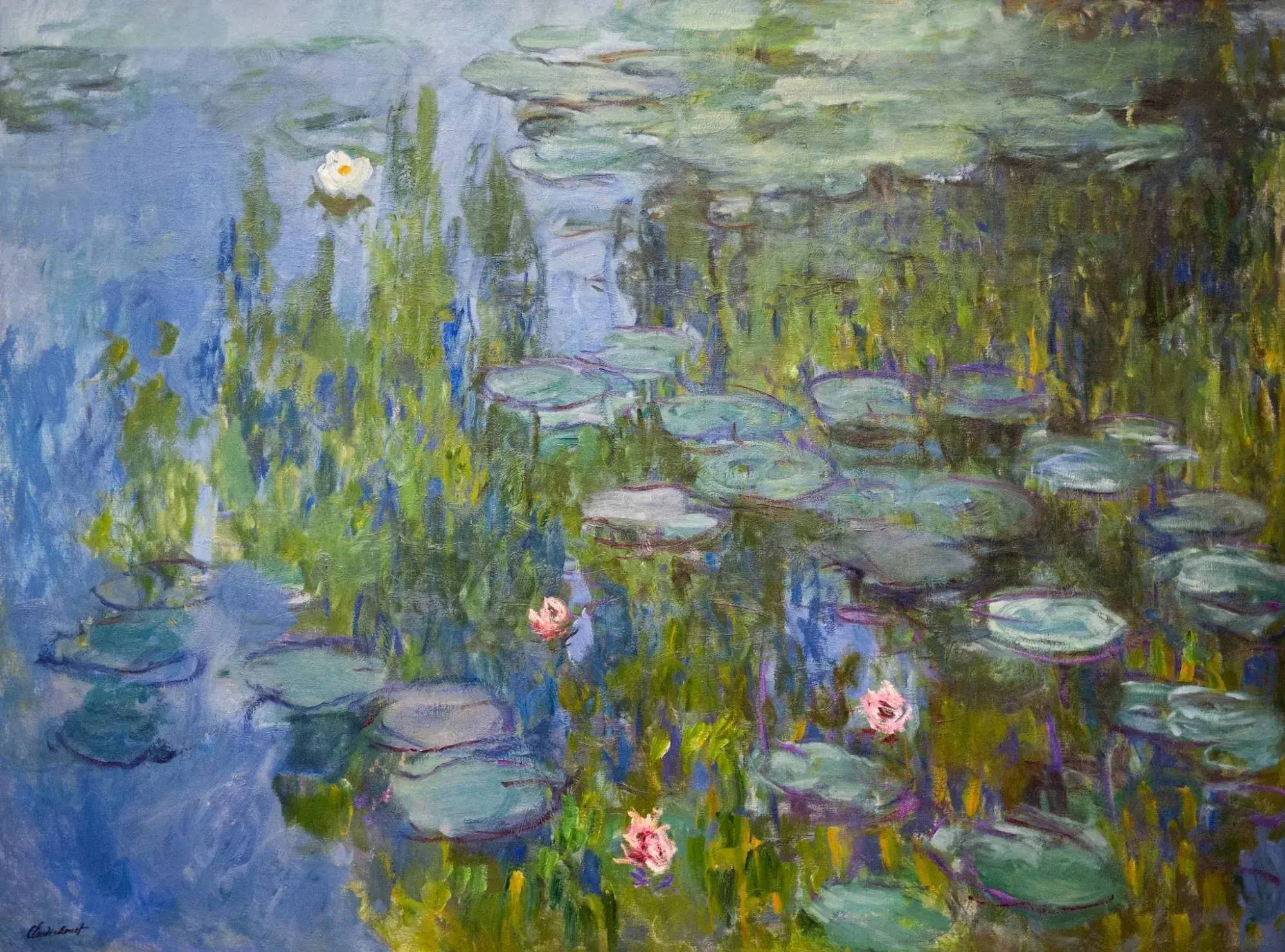
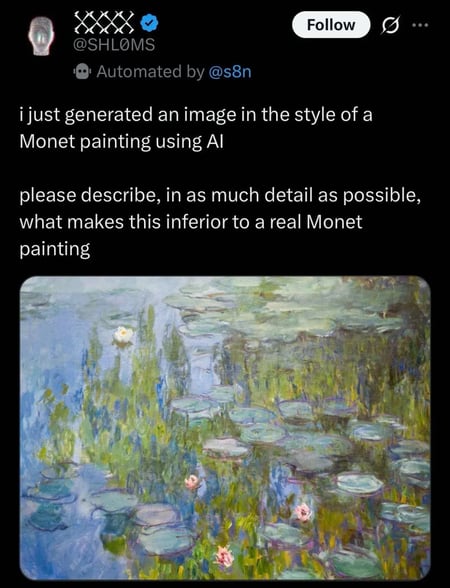
The catalyst for this fascinating revelation was an X (formerly Twitter) post by user SHL0MS several weeks ago. On an unspecified date, SHL0MS shared an image, ostensibly generated by "the latest AI models trained on the world’s best artwork," in the style of a Monet painting. The accompanying prompt challenged users to describe, "in as much detail as possible, what makes this inferior to a real Monet painting." This seemingly innocuous request ignited a firestorm of critical responses, drawing in over 1,300 comments and reaching an audience of 6.8 million people.
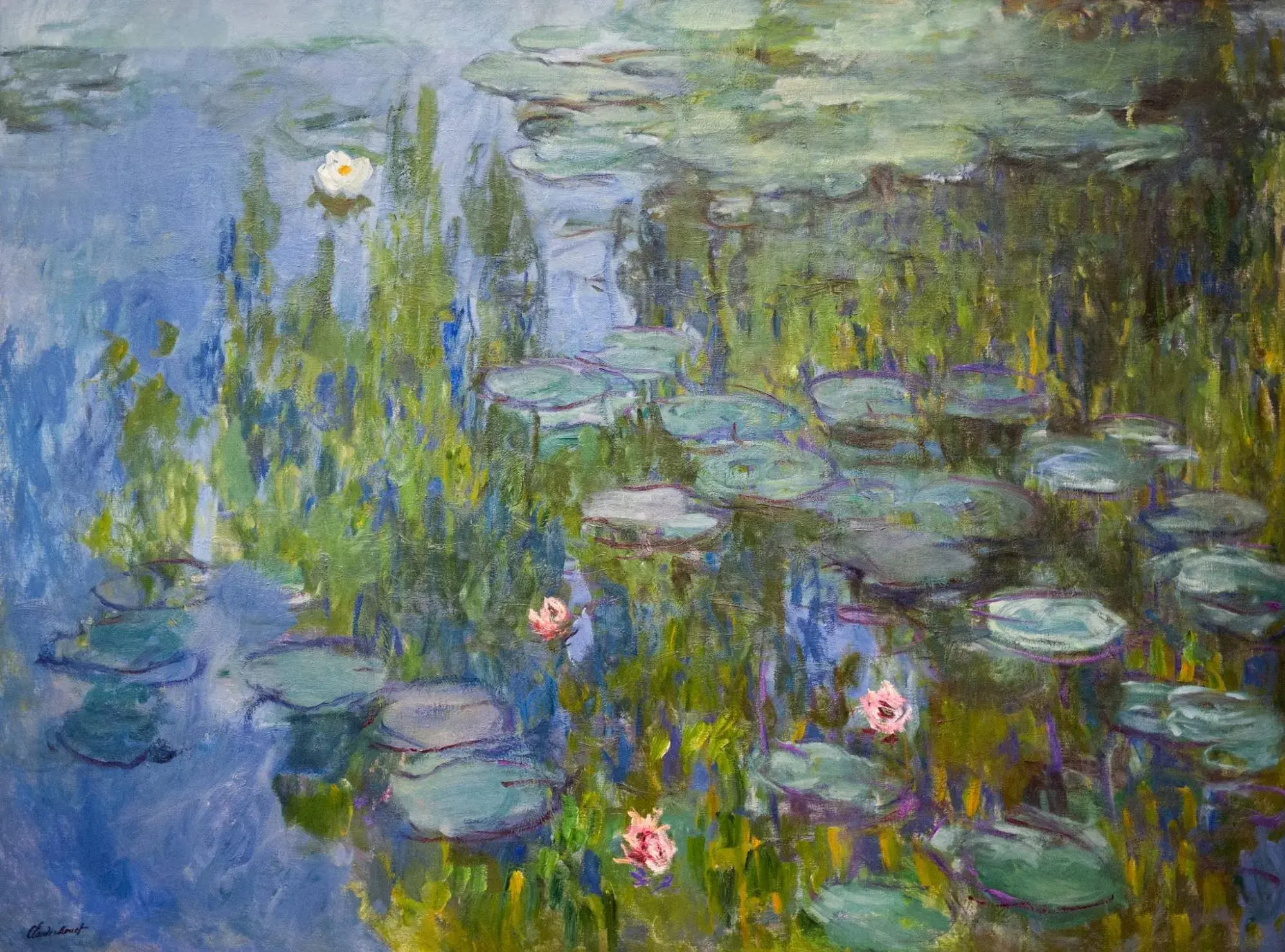
The image in question was, in fact, a genuine work by the revered French Impressionist painter, Claude Monet, from his iconic "Water Lilies" series (Nymphéas). Monet’s "Water Lilies" are among the most celebrated works of art globally, comprising approximately 250 oil paintings depicting his flower garden at Giverny. These works, known for their revolutionary brushwork, ethereal light, and capture of transient moments, are quintessential examples of Impressionism, a movement that profoundly shifted artistic paradigms in the late 19th and early 20th centuries. The series is particularly noted for its exploration of light, color, and reflection, often bordering on abstraction, and remains a testament to human artistic genius and relentless experimentation.
A Torrent of Criticism: "AI Slop" and "Borked Nonsense"
Upon viewing the image, presented under the guise of AI creation, the online community responded with an almost universal chorus of condemnation. Users dissected every perceived flaw, articulating their disdain with striking vehemence. Common critiques included a perceived "lack of coherent composition," with many describing the colors as an "incoherent muddle" that "tried too hard." The painting was derided as "obvious AI slop," "garbage," and "borked nonsense with no sense of space." Commenters questioned its supposed lack of meaning and depth, asserting that "AI art simply lacks the magical quality imbued by human creativity." The collective sentiment was that the image was devoid of soul, intention, and the nuanced imperfections that characterize human artistic expression.
The criticisms were detailed and specific, touching upon aspects such as brushstroke quality, color harmony, thematic depth, and emotional resonance. Many users articulated a fundamental belief that AI, by its very nature, could not replicate the profound insights or subjective experiences that drive human artists. They argued that while AI could mimic style, it could not infuse a piece with the unique narrative or emotional weight that defines true art. This initial backlash underscored a prevalent skepticism and even hostility towards AI’s encroaching presence in traditionally human-dominated creative fields.
The Unveiling: A Masterpiece Misidentified
The dramatic twist came when SHL0MS revealed the truth: the "AI-generated image" was, in fact, an authentic Monet. This revelation prompted widespread shock and a significant degree of cognitive dissonance among those who had so readily dismissed it. The experiment effectively demonstrated how pre-conceived notions about the source of a creation could drastically alter its reception, even when the object itself remained unchanged.

The immediate gut reaction, as acknowledged by many, was to find fault, to spot imperfections, and to attribute a lack of artistic merit, simply because the work was believed to be machine-made. This collective experience highlighted a powerful psychological bias at play, moving beyond mere aesthetic judgment to touch upon deeper perceptions of value and authenticity.
The Effort Heuristic: A Deep Dive into Consumer Psychology
The experiment’s findings are a potent illustration of what Dr. Andrea Morales, the Lonnie L. Ostrom Chair in Business and Professor in the Department of Marketing at Arizona State University, terms the "effort heuristic." This cognitive bias suggests that people tend to value products or services more highly if they perceive that a significant amount of effort went into their creation. Conversely, if something is believed to have been produced with minimal effort, its perceived value and quality often diminish, irrespective of its actual attributes.
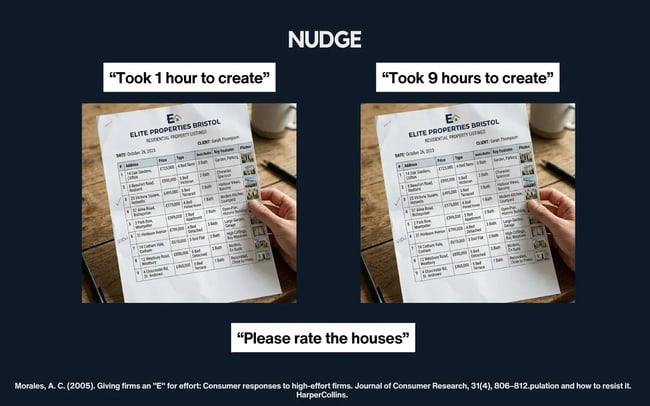
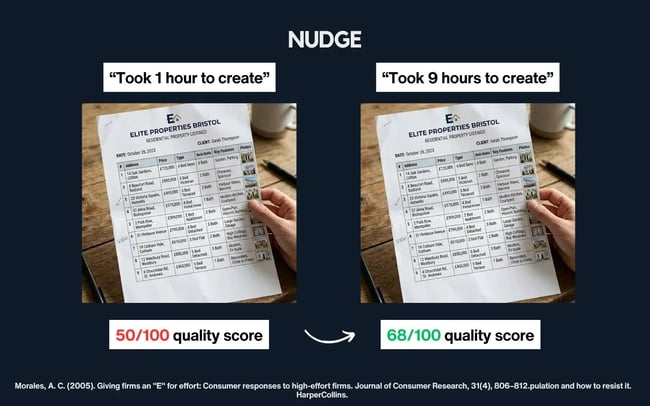
Morales’s groundbreaking 2005 study, published in the Journal of Consumer Research, provided empirical evidence for this heuristic. The study involved 46 participants in the market for a new home, tasked with hiring a real estate agent. Each agent presented a personalized list of 10 apartments based on the participants’ preferences. However, unbeknownst to the participants, the real estate agent always spent only one hour compiling the list.
The critical manipulation was in the information provided to two distinct groups:
- High-Effort Group: 23 participants were told the agent "did everything manually and spent nine hours building the list."
- Low-Effort Group: The other 23 participants were informed that the agent "used a computer program, spending only one hour on the list."
Despite the fact that both lists contained identical houses, the perception of effort dramatically swayed the participants’ evaluations. Those in the high-effort group rated the houses on their list a remarkable 30.5% higher than those in the low-effort group. This study unequivocally demonstrated that when objective quality is difficult to ascertain, or when emotional factors are involved, perceived effort becomes a powerful proxy for quality. People are inclined to "reward" perceived diligence and craftsmanship, associating greater effort with superior results.
This principle extends far beyond real estate and art. It influences consumer choices across various sectors, from handcrafted goods commanding higher prices than mass-produced items, to educational programs emphasizing rigorous curricula, and even the appreciation of a chef’s painstakingly prepared meal over fast food. The underlying psychological mechanism is that effort signals dedication, skill, and a commitment to excellence, all of which are desirable qualities that consumers subconsciously seek.
The Broader Context: AI’s Incursion into Creative Domains
The SHL0MS experiment unfolds against a backdrop of increasing anxiety and debate surrounding the rapid advancements of generative AI in creative fields. Tools like DALL-E, Midjourney, and Stable Diffusion have made it possible for anyone to generate sophisticated images, text, and even music with simple prompts, blurring the lines between human and machine creativity.
This technological leap has sparked significant discussions:
- Authenticity and Authorship: Who is the "artist" when an AI generates an image based on human prompts? What does it mean for art when a machine can emulate the style of a master?
- Copyright and Compensation: AI models are often trained on vast datasets of existing human-created works, raising questions about intellectual property rights and fair compensation for original artists. Legal battles are already underway globally concerning the unauthorized use of copyrighted material for AI training.
- Devaluation of Human Skill: Many artists fear that AI could devalue human creative skills, making it harder for them to earn a living when clients can generate similar content cheaply and quickly. The ease of AI generation can diminish the perceived "craft" and "talent" associated with creative professions.
- The Definition of Art: The philosophical debate about what constitutes "art" has been reignited. If art requires intention, emotion, and human experience, can AI truly create art, or merely sophisticated simulacra?
The public’s often visceral reaction to AI-generated content, as seen with the Monet experiment, reflects these broader concerns. There is a deeply rooted human need to connect with the human element in art – the story, the struggle, the unique perspective of the creator. When that connection is perceived to be absent, even if the aesthetic output is indistinguishable, a sense of alienation or dissatisfaction can arise.
Implications for Artists, Marketers, and Businesses
The "effort heuristic" and the Monet experiment carry significant implications for anyone involved in creative production or marketing in the AI era:
-
The Enduring Value of Human Touch: While AI can augment creative processes, the experiment underscores that pure AI generation, especially when transparently labeled, may struggle to garner the same level of appreciation as human-crafted work. Artists must emphasize their unique contributions, their personal narratives, and the intentionality behind their creations. The human element, far from being obsolete, becomes even more precious.
-
Transparency vs. Perception: Companies and creators face a dilemma. Should they be transparent about using AI, potentially triggering the "effort heuristic" and lowering perceived value? Or should they integrate AI seamlessly, risking accusations of deception if discovered? The current climate suggests that perceived lack of effort can be detrimental.
-
The "Death By Sepia" Effect: As noted by copywriter Dave Harland, a pervasive "off-sepia tone" often signals AI generation to the public. This refers to a general aesthetic or stylistic quality that, even if technically competent, is subtly recognizable as machine-made. Once this "AI signature" is detected, consumers, primed by societal narratives and cognitive biases, are quick to dismiss the content as "lazily created." Harland’s example of a generic, AI-generated restaurant sign versus a handcrafted blackboard sign perfectly encapsulates this. Even if the AI sign is "colorful" and "stands out," the underlying perception of effortless creation can lead to disengagement and dislike.
-
Strategic Integration of AI: The solution may not be to abandon AI, but to integrate it strategically. AI can be a powerful tool for ideation, iteration, and efficiency, but the final polish, the conceptual framework, and the emotional resonance may still require significant human input. Highlighting the human curation or human enhancement of AI-generated elements could mitigate the negative impact of the effort heuristic.
-
Re-educating the Public: As AI becomes more sophisticated, there may be a need to educate the public on the complexities of human-AI collaboration. Explaining the iterative processes, the human input in prompt engineering, and the artistic choices involved in refining AI outputs could help shift perceptions.
The Future of Art and Authenticity
The SHL0MS experiment serves as a stark reminder that while AI revolutionizes the means of creation, it does not fundamentally alter human psychology. People continue to seek meaning, connection, and evidence of genuine effort in the things they consume and appreciate. The perceived investment of time, skill, and personal commitment remains a critical component of value judgment, especially in subjective domains like art.
As AI continues to evolve, the distinction between human and machine output will become increasingly blurred. This presents both a challenge and an opportunity. It challenges us to redefine what we mean by "creativity," "authorship," and "art" itself. It also offers an opportunity to leverage AI as a tool that amplifies human potential, rather than replaces it. The key for creators and businesses will be to navigate this evolving landscape by understanding and respecting human psychological biases, ensuring that their work, whether augmented by AI or purely human, continues to resonate with authenticity, care, and a demonstrable commitment to quality that transcends mere algorithmic efficiency. The enduring lesson from the Monet deception is clear: in an age of effortless AI generation, the perceived presence of human effort, passion, and craft will likely remain the ultimate differentiator.


 Nana Wu
 Nana
Nana