Iffa Jayyana
The global technology landscape is currently witnessing a fundamental shift in the economic structure of artificial intelligence, mirroring the aggressive growth and subsequent price corrections previously seen in the ride-sharing industry. As venture capital subsidies begin to wane, the era of "cheap" AI is transitioning into a more complex, metered reality. This evolution follows a documented pattern of market disruption where massive capital injections allow companies to scale rapidly by offering services below cost, only to adjust pricing once market dominance and user habits are firmly established.
The Historical Context of Subsidized Growth
The trajectory of modern AI development bears a striking resemblance to the business model popularized by Uber Technologies Inc. during the previous decade. Founded in 2009, Uber did not report its first full-year operating profit until 2023. During the intervening years, the cost of consumer rides was largely subsidized by a massive influx of capital from major institutional investors, including SoftBank’s Vision Fund, Alphabet, and the Saudi Arabian sovereign wealth fund.
This strategy allowed "disruptors" to bypass the traditional requirement for sustainable, organic growth. By offering services at prices that did not cover operational costs, these firms effectively thinned out competition from local "mom and pop" taxi firms that lacked the liquidity to compete with artificially low fares. However, once the competition was marginalized and consumer habits were entrenched, a correction followed. Research from Columbia Business School, analyzing approximately 37,500 trips, indicated that Uber’s price per mile rose 53% between early 2023 and early 2026, while wait times simultaneously increased by 19%.
Industry analysts suggest that the leading firms in the artificial intelligence sector—most notably OpenAI, Anthropic, and Google—are currently operating within the "honeymoon period" of this same playbook. Since the launch of ChatGPT Plus in early 2023, consumer-facing AI has been marketed using a flat-rate subscription model, often compared to gym memberships. This approach provides a low-friction entry point for users while the true cost of compute is absorbed by investors who anticipate long-term returns.

The Shift Toward Metered Usage and Tiered Pricing
The transition from flat-rate subscriptions to more aggressive monetization is already underway. In late 2026, OpenAI restructured its subscription tiers, re-opening premium plans with adjusted usage limits and introducing high-end tiers priced at $500 per month. These moves signal a departure from the generous, all-you-can-use models that characterized the early adoption phase.
Simultaneously, the industry is pushing corporate users toward pay-per-use Application Programming Interfaces (APIs). API pricing allows providers to adjust costs dynamically based on token consumption. A token, the fundamental unit of measurement in Large Language Models (LLMs), represents approximately three-quarters of a word. The cost disparity between different models is substantial; for instance, Anthropic’s flagship model, Claude Opus 5.5, has been priced at $4 per million input tokens and $20 per million output tokens. In contrast, its more efficient Haiku 5.5 model costs $0.10 and $0.50 respectively—a 40-fold difference in expenditure for the same volume of text.
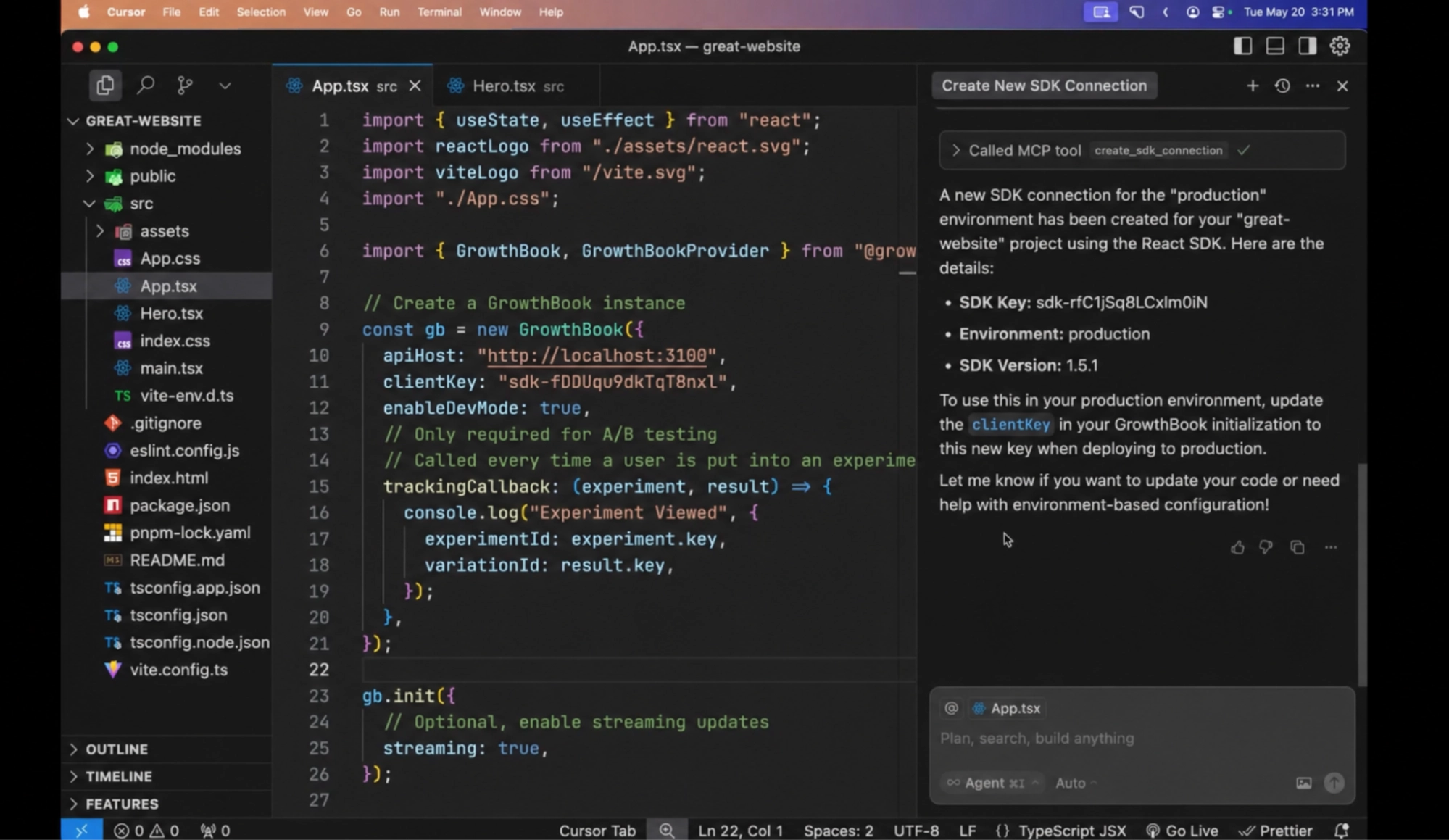
Further complicating the pricing landscape is the introduction of "credits" by third-party vendors. Credits often act as an abstraction layer that can obscure the actual cost of the underlying API calls. This was evidenced in June 2025 when the AI development environment Cursor replaced fixed "fast requests" with a monthly credit pool. Users reported that premium models rapidly depleted these pools, creating unpredictability in operating costs. Following SpaceX’s acquisition of Cursor in August 2026, the platform began nudging users toward its own "Grok" models by placing competitors like Claude and GPT into separate, more expensive billing pools.
The Rise and Fall of Tokenmaxxing
In early 2026, a controversial trend known as "tokenmaxxing" emerged within Silicon Valley. Encouraged by hardware manufacturers and venture capitalists, some tech firms began measuring AI adoption by the sheer volume of tokens consumed. NVIDIA CEO Jensen Huang famously suggested that high-earning engineers should be expected to spend hundreds of thousands of dollars annually on tokens.
Internal initiatives at companies like Meta included leaderboards that celebrated high-volume users with titles such as "Token Legend." However, this focus on consumption over utility quickly proved unsustainable. By mid-2026, the "tokenmaxxing" bubble began to burst as the financial reality of these bills hit corporate balance sheets.

Significant organizational reactions followed:
- Amazon: Scrapped internal AI leaderboards in May 2026 after discovering staff were padding token counts with redundant or pointless tasks.
- Microsoft: Discontinued internal licenses for certain high-cost models like Claude Code, citing excessive costs.
- Uber: Reportedly exhausted its entire 2026 AI budget by the end of April, necessitating a drastic re-evaluation of its automation strategy.
This phenomenon illustrates Goodhart’s Law: "When a measure becomes a target, it ceases to be a good measure." By prioritizing token spend, organizations incentivized waste rather than innovation.
Financial Realities of the AI Hyperscalers
The aggressive push for higher monetization is driven by the staggering capital requirements of the AI industry. Combined spending by the major "hyperscalers"—including Microsoft, Google, and Amazon—topped $700 billion in 2026, according to Reuters. While Microsoft reported an AI revenue run rate of $37 billion, this remains a fraction of the total investment.
The situation for specialized model labs is even more precarious. Anthropic’s leaked IPO filings revealed a $42 billion net loss for 2025 against $4.6 billion in revenue, with over $500 billion committed to future compute costs. Critics have pointed out that recent claims of quarterly profitability often rely on creative accounting measures rather than sustainable cash flow. To achieve long-term viability, these labs must transition their massive user bases from subsidized flat rates to high-margin, usage-based billing.
Strategies for Token Optimization and Sustainability
As the "metered" era of AI approaches, businesses are being advised to move away from vendor-locked ecosystems and toward outcome-based metrics. Industry experts recommend several practical approaches to minimize waste:
1. The Adoption of Small Language Models (SLMs)
Research indicates that massive models are often unnecessary for routine tasks. A March 2026 study found that models with 0.5 to 3 billion parameters—such as Microsoft’s Phi-4-mini or Google’s Gemma 4 E2B—provided the best balance of accuracy and speed for tasks like data tagging, routing support tickets, and summarizing research. These models can often be run locally, eliminating API costs entirely.
2. Open-Weight and Local Hosting
Running open-weight models (models whose weights are publicly available for download) on internal servers or local hardware ensures that data remains private and costs remain fixed to electricity and hardware maintenance. Alibaba’s Qwen 3.8 and OpenAI’s gpt-oss 20B have emerged as powerful alternatives that do not require a recurring subscription or per-token fee.
3. Vendor Independence through Aggregators
Tools like OpenRouter allow businesses to access multiple models through a single API key, enabling them to switch to the most cost-effective provider instantly. This prevents "vendor lock-in" and allows for the use of "Auto Routers" that automatically select the cheapest model capable of completing a specific task.
4. Discipline-Specific Efficiency
- Development: Engineers are encouraged to point AI agents at specific files rather than entire repositories to reduce "context burn," which is one of the primary drivers of high API bills.
- Marketing: Experts suggest using AI for information sourcing and research rather than wholesale copy generation, which often results in lower-quality output and high token waste.
- Conversion Rate Optimization (CRO): Professionals are increasingly using AI for deterministic tasks—sorting and tagging—while reserving human intelligence for complex psychological analysis and hypothesis testing.
Broader Implications and Future Outlook
The trajectory of the AI industry suggests a future defined by transparency and utility rather than subsidized experimentation. Gartner has projected that the costs for "agentic workflows"—where AI agents perform multi-step tasks autonomously—will rise more than fivefold by 2028. This is due to the fact that autonomous agents typically consume 5 to 30 times more tokens than simple chatbots for the same output.
The "Uber-ification" of AI is reaching its logical conclusion. The period of aggressive, subsidized customer acquisition is giving way to a mature market where the "real cost" of compute must be borne by the end-user. For businesses and individual developers, the path forward involves a strategic retreat from "tokenmaxxing" and a move toward owning the tools of production through local hosting and open-source integration.
As the industry moves toward usage-based pricing, the successful organizations will be those that measure success not by the volume of AI they consume, but by the tangible outcomes—shipped features, saved hours, and validated hypotheses—they achieve. The era of the "blank check" for AI development is closing, replaced by a rigorous focus on return on investment and technological self-sufficiency.

 Layla Zulfa
 Dwi Wanna