The pursuit of efficiency in marketing has long been a central tenet for leaders striving to maximize output with limited resources. However, a fundamental reevaluation of what true efficiency entails is underway, moving beyond the simplistic metric of "doing more with less." The modern approach emphasizes not just increased activity, but a more intelligent and human-centric operational framework. This involves optimizing processes, refining operating models, and strategically integrating Artificial Intelligence (AI) to empower individuals, reduce frustration, and ultimately drive superior business performance.
By Maria Geokezas, Chief Operating Officer at Heinz Marketing
The prevailing narrative around efficiency often centers on achieving higher output with the same or fewer resources. This perspective, while understandable in a resource-constrained environment, risks overlooking a more profound and sustainable path to effectiveness. A truly efficient marketing organization is not one where every individual is operating at peak capacity, but rather one where clarity reigns, ownership is well-defined, necessary information is readily accessible, and the daily grind of avoidable complexity is significantly reduced.
At Heinz Marketing, our work has consistently focused on helping organizations establish predictable, repeatable, and scalable revenue systems. This typically translates into discussions about enhanced conversion rates, stronger sales and marketing alignment, increased accountability, and more consistent growth. These outcomes are undeniably critical. However, an equally significant benefit, and one that is gaining increasing recognition, is the direct correlation between well-designed operating models and the ability of talented individuals to perform at their best. Effective systems serve to diminish unnecessary friction, reduce ambiguity, and imbue teams with greater confidence in their decision-making and a more robust sense of control over their time. As experience has shown, improvements in the fundamental way work is executed invariably lead to superior business results.
The Misconception of Efficiency as Mere Productivity
For several years, the term "efficiency" has frequently been used as a synonym for "doing more with less." This has manifested in questions such as: How can this team produce more content? How can we launch more campaigns at a faster pace? How can sales cover a greater number of accounts? What is the maximum throughput we can achieve with our current organizational structure without adding headcount? While these questions might lead to individuals being busier, they do not automatically guarantee that their time is being allocated to activities that generate the most value.
Research consistently highlights the significant portion of the workday consumed by what is termed "work about work." Asana’s "Anatomy of Work" study, for instance, revealed that knowledge workers dedicate 58% of their time to activities such as communicating about tasks, searching for information, context-switching between tools, managing shifting priorities, and coordinating efforts, rather than engaging in the core skilled work for which they were hired. The same research estimated that improved processes alone could liberate nearly five hours per week for these individuals.
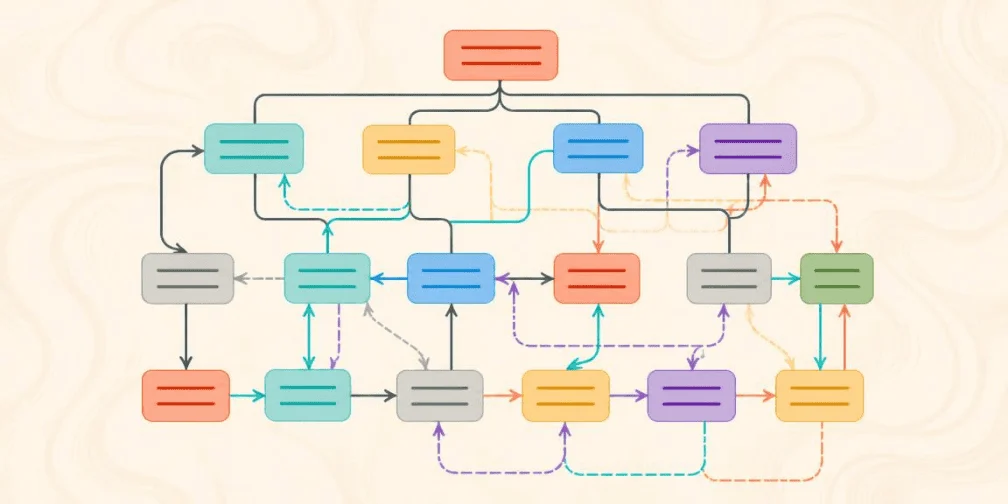
Consider the scenario of a skilled marketer who spends a substantial part of their day navigating the labyrinth of obtaining approvals, reconciling disparate spreadsheets, locating the most current version of a marketing asset, updating multiple disparate systems, trying to determine who is responsible for the next action item, or attending yet another meeting due to a lack of clarity on procedural next steps. While each of these individual tasks may not be inherently detrimental, their cumulative dominance of the workday points not to a deficiency in individual capability, but rather a fundamental flaw in the underlying systems. A more accurate metric for efficiency, therefore, might be the extent to which we can eliminate unnecessary work, thereby enabling individuals to dedicate more time to value-generating activities.
The Human Cost of Systemic Chaos
When operational processes falter, the impact on the business is often quantifiable: diminished lead volumes, lower conversion rates, extended sales cycles, reduced pipeline value, and smaller deal sizes. However, there is a less visible, yet equally significant, cost associated with these breakdowns – the toll they take on the individuals operating within these systems. Unclear ownership can lead to hesitancy, while constantly shifting priorities can erode confidence in the longevity of any given directive. When processes rely heavily on undocumented, "tribal knowledge," experienced employees can inadvertently become bottlenecks. Furthermore, a perpetual cycle of "firefighting" prevents individuals from ever feeling truly on top of their workload.
This dynamic is frequently observed in organizations that have undergone significant restructuring, leadership changes, or the implementation of new technologies. While the organizational chart may have been redrawn, the underlying processes often lag, forcing employees to compensate through workarounds, an increase in meetings, and a general lack of clarity regarding ownership and operational flow. Initially, these workarounds may suffice to keep operations functioning. However, over time, they can become the de facto operating model, entrenching inefficiencies.
Research from Atlassian’s "State of Teams 2024" report underscores the pervasive nature of this challenge. The study found that 64% of knowledge workers reported their teams were constantly being pulled in too many directions, and 55% found it difficult to locate necessary information, even when aware that colleagues within the company possessed it. This widespread diffusion of information and the fragmentation of focus highlight a systemic issue that impacts individual and team effectiveness.
Repeatability: A Foundation for Empowerment, Not Rigidity
The very notion of "process" can sometimes be misconstrued, evoking images of rigid bureaucracy and stifled creativity. However, when implemented effectively, the goal of establishing repeatable workflows and robust operating models is not to control individuals, but rather to liberate them from making repetitive, low-value decisions. A well-designed operational framework should provide clear answers to fundamental questions such as:
- What is the objective of this task or project?
- Who is responsible for each stage of the process?
- What are the key decision points and approval workflows?
- Where can relevant information and resources be found?
- What are the established communication channels and protocols?
- How are exceptions or deviations from the standard process handled?
When these questions have clear, accessible answers, employees can redirect their cognitive energy from the mechanics of task execution to areas where human judgment, creativity, and expertise are truly indispensable.

Consider the example of a Business Development Representative (BDR) tasked with identifying and engaging potential clients. In a less optimized environment, their morning might be consumed by a complex process of checking intent signals, reviewing CRM data, conducting background research on contacts, analyzing recent account activity, determining prior engagement levels, and ultimately deciding on the most promising course of action. However, when equipped with a clear prioritization model, readily available account context, and a defined workflow, that BDR is freed to apply their skills where they matter most: building rapport, understanding client needs, and fostering meaningful conversations.
Predictability as a Catalyst for Autonomy
Predictability is typically viewed as a desirable outcome for the business – predictable pipeline, predictable conversion rates, predictable forecasting, and predictable execution. However, predictability also yields significant benefits for individuals. When employees possess a clear understanding of their responsibilities, the scope of their decision-making authority, the accessibility of necessary information, the flow of work across teams, and the protocols for addressing challenges, the need for constant oversight diminishes.
Clarity and autonomy are not mutually exclusive; rather, clarity serves as the bedrock upon which autonomy can be built. At Heinz Marketing, a key observation over time has been the growth of individuals into roles where they require less direct supervision. Our frameworks and systems are not designed to dictate every action, but to provide sufficient structure, context, and a shared understanding that empowers intelligent individuals to confidently arrive at their own informed decisions.
This shift has profound implications. Managers can transition from task supervision to more impactful coaching and development. Employees gain the ability to make decisions more rapidly. Teams become less reliant on key individuals who possess implicit knowledge of complex operational nuances. The business, in turn, becomes more scalable as its people become more capable and empowered.
The Transformative Potential of AI in Redesigning Work
Artificial Intelligence presents a monumental opportunity to enhance organizational efficiency. However, a crucial distinction must be made between the automation of existing tasks and the fundamental redesign of work itself. McKinsey & Company estimates that, at current capability levels, AI agents could potentially handle tasks accounting for approximately 44% of U.S. work hours. Critically, this does not necessarily imply a proportional reduction in jobs. More often, it signifies a transformation in the composition of roles, with specific activities being managed differently. The pivotal question becomes: If we were to design this job and its associated workflow today, with the availability of AI, how should the work be structured?
Revisiting the BDR example, imagine an AI agent performing the labor-intensive overnight work of gathering account information, cross-referencing signals, researching contacts, reviewing historical engagement, and identifying potential starting points. The BDR could then begin their day with a prioritized work queue, comprehensive account intelligence, essential buyer context, and actionable next steps. This scenario allows the BDR to dedicate a greater portion of their day to the core function for which they were hired: engaging with potential clients and driving sales.
The current landscape reveals a significant opportunity for improvement. Salesforce’s "State of Sales" research indicates that the average sales representative spends only 40% of their workweek actively engaged in selling, with the remaining 60% allocated to activities such as planning, quote generation, data entry, and other non-selling tasks. The overarching objective should be to reclaim this time, enabling sales professionals to focus on higher-value activities.
A New Metric for Operational Excellence
When organizations implement process improvements, adopt new technologies, or redesign their operating models, the natural inclination is to measure success against traditional business outcomes such as:
- Increased revenue and profit
- Improved customer acquisition costs
- Higher conversion rates
- Enhanced sales cycle velocity
- Greater market share
However, it is imperative to incorporate an additional, human-centric measure into the evaluation of any operational change: Did we make it easier for good people to do good work? This question prompts a consideration of:
- Reduced employee frustration and burnout
- Increased job satisfaction and engagement
- Greater clarity and sense of purpose in daily tasks
- Enhanced opportunities for skill development and growth
- A more collaborative and supportive work environment
Over years of experience, it has become evident that the most effective operating systems achieve both of these objectives. They foster business predictability and, concurrently, render work more manageable and meaningful for the individuals within the organization. Efficiency, therefore, should not be confined to merely finding ways to produce more with existing resources.
The more significant opportunity lies in architecting marketing organizations where talented individuals can dedicate more of their time to leveraging the judgment, creativity, expertise, and human connection that they were initially hired for. When this occurs, individual effectiveness is amplified, business performance improves, and the overall experience of work is fundamentally enhanced.
Organizations seeking to develop a marketing operating model that fosters greater team effectiveness are encouraged to explore Heinz Marketing’s Marketing Orchestration services or reach out directly to [email protected] for further discussion.