The rapid evolution of digital communication has positioned social media sentiment analysis tools as indispensable assets for organizations seeking to understand and respond to public opinion. These sophisticated software solutions are designed to collect and analyze the underlying emotion, tone, and context within online conversations about a brand, product, or topic. Moving beyond simple quantitative metrics like mention counts, sentiment analysis delves into the qualitative aspects of online discourse, providing critical insights into how audiences truly feel. This growing field is increasingly reliant on advancements in artificial intelligence (AI) and natural language processing (NLP), allowing businesses to process vast amounts of data and derive actionable intelligence in real-time.

The Rise of Algorithmic Emotion Detection
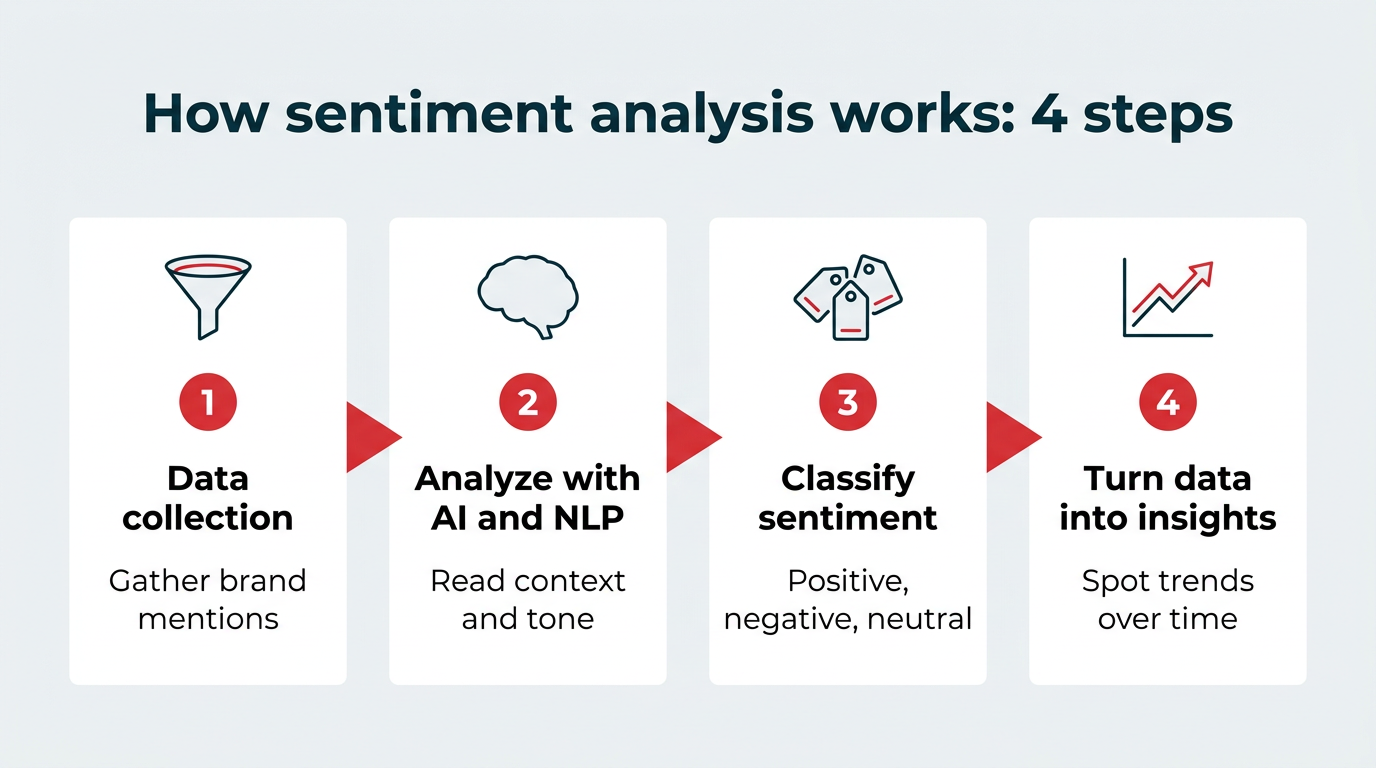
Sentiment analysis tools leverage a combination of AI, machine learning (ML), and natural language processing (NLP) to scan social mentions across a multitude of digital platforms, including major social networks, blogs, forums, news sites, and review platforms. This process involves several key stages: data collection, text preprocessing, feature extraction, and finally, sentiment classification, where an algorithmic score is assigned to each piece of text. Historically, sentiment analysis relied on rule-based systems that matched words against predefined lists of positive and negative terms. While foundational, these methods often struggled with the nuances of human language.

Modern sentiment analysis has largely shifted towards machine learning models, which are trained on enormous datasets of labeled text. This training allows them to identify complex patterns and relationships in language that rule-based systems would miss. A significant trend is the integration of generative AI, which enhances these tools by summarizing themes and insights in plain language, making the findings more accessible to non-technical users. This technological leap is occurring within a burgeoning market; Gartner projected the worldwide AI platforms and models market to reach an estimated $64 billion in 2026, underscoring the massive investment and rapid development in this sector. Hybrid approaches, combining the precision of rules for known edge cases with the adaptability of machine learning for broader analysis, represent the cutting edge of the technology.
The ability to track sentiment changes as they happen provides an invaluable competitive advantage. Whether evaluating the public reception of a new product launch, assessing the impact of a public relations campaign, or gauging reactions to a crisis, sentiment analysis offers immediate feedback. This real-time monitoring capability allows organizations to swiftly adapt strategies, mitigate negative sentiment, and capitalize on positive trends.
Diverse Approaches to Unpacking Digital Emotions
The complexity of human emotion and expression online necessitates various types of sentiment analysis, each designed to answer specific questions:
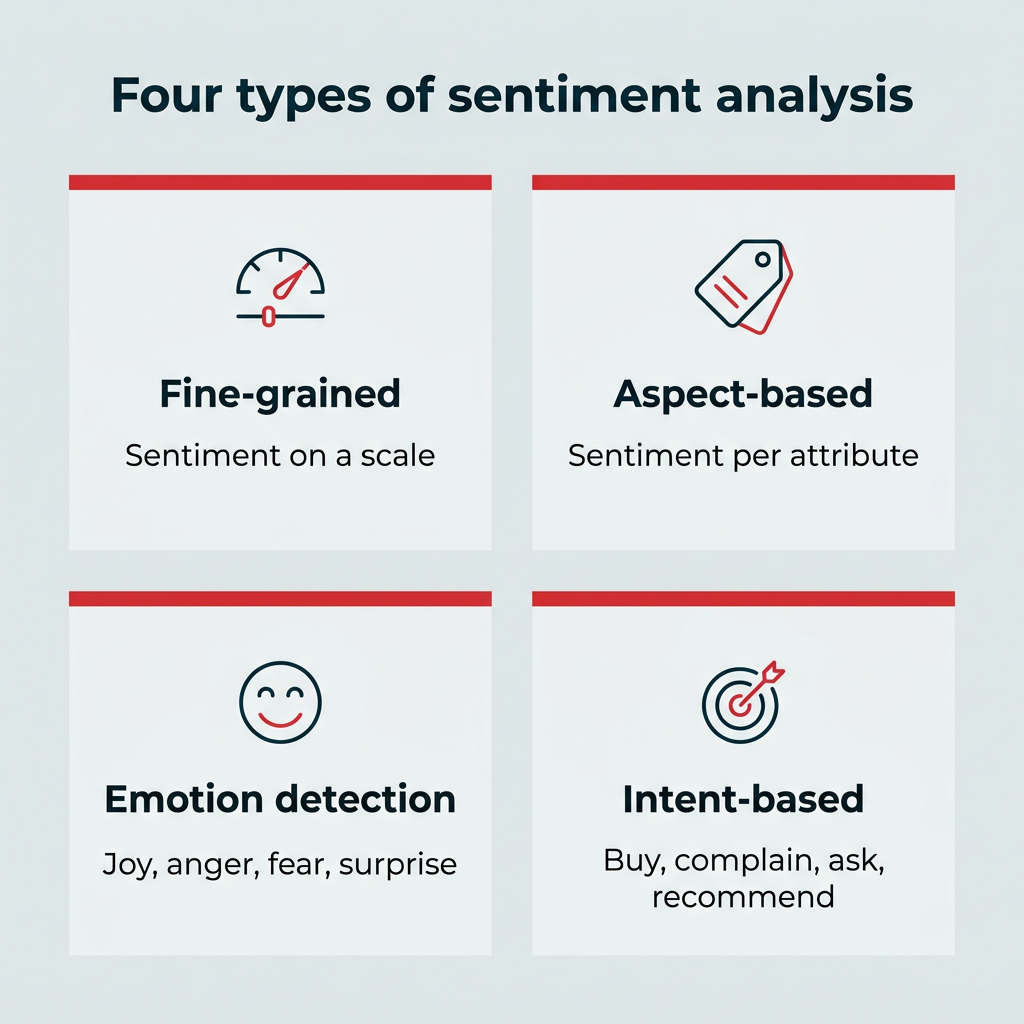
- Fine-grained Sentiment Analysis: This method moves beyond a simple positive, negative, or neutral classification, scoring mentions on a granular scale. Instead of merely labeling a comment as "negative," fine-grained analysis can distinguish between mild disappointment and intense anger, providing a more nuanced understanding of emotional intensity. This is particularly useful for tracking subtle shifts in public opinion over time or mapping social sentiment against quantitative survey scores.
- Aspect-based Sentiment Analysis: A single online comment can contain multiple sentiments related to different aspects of a product or service. Aspect-based analysis dissects a mention, identifying and scoring sentiment for individual attributes such as price, quality, shipping, or customer support. For instance, a customer might praise a product’s quality but criticize its delivery time. This detailed breakdown is highly valuable for product development and customer experience teams, directly pinpointing areas for improvement.
- Emotion Detection: Going beyond basic polarity, emotion detection aims to identify specific emotions conveyed in text, such as joy, anger, fear, surprise, or sadness. This deeper emotional understanding is crucial during high-stakes events like product launches or brand crises, where a shift from surprise to anger, for example, conveys more critical information than a general dip in overall sentiment. Leading tools like Brand24, Meltwater, and Buffer are increasingly incorporating this capability.
- Intent-based Sentiment Analysis: This advanced form of analysis determines the user’s underlying intent within a mention. A comment might signal purchase intent, a complaint, a question, or a recommendation. Differentiating these intents allows organizations to route conversations effectively—sending purchase inquiries to sales, complaints to support, or feedback to product teams—optimizing engagement and response strategies. For enterprise operations, a tool supporting multiple analysis types is often essential to address the multifaceted nature of real-world use cases.
Strategic Imperatives: The Benefits of Sentiment Intelligence
Integrating sentiment analysis into an organization’s strategic toolkit offers a multitude of benefits, transforming raw social data into actionable business intelligence. These tools enable companies to move beyond superficial "vanity metrics" and gain a profound understanding of audience perception.
Key advantages include:
- Enhanced Customer Satisfaction: By identifying and addressing negative sentiment swiftly, companies can proactively resolve customer issues, improve service, and foster loyalty.
- Robust Reputation Management: Monitoring sentiment allows brands to track their public image, identify potential crises early, and manage their reputation effectively by responding to critical feedback and amplifying positive mentions.
- Informed Product Development: Aspect-based analysis helps pinpoint specific product features or service elements that resonate positively or negatively with customers, guiding future development and improvements.
- Optimized Marketing Campaigns: Understanding audience sentiment towards campaigns, messaging, and content allows marketing teams to refine strategies, improve engagement, and maximize return on investment.
- Competitive Intelligence: Analyzing competitor sentiment provides insights into market positioning, customer preferences, and potential areas for differentiation.
- Crisis Prevention and Management: Early detection of negative trends or escalating complaints can help prevent minor issues from spiraling into full-blown public relations crises.
Collectively, these insights empower organizations to better understand their audience, identify what strategies are working, pinpoint areas needing attention, and allocate resources more effectively, driving data-driven decision-making across the enterprise.
Choosing the Right Tool: Precision, Scope, and Integration
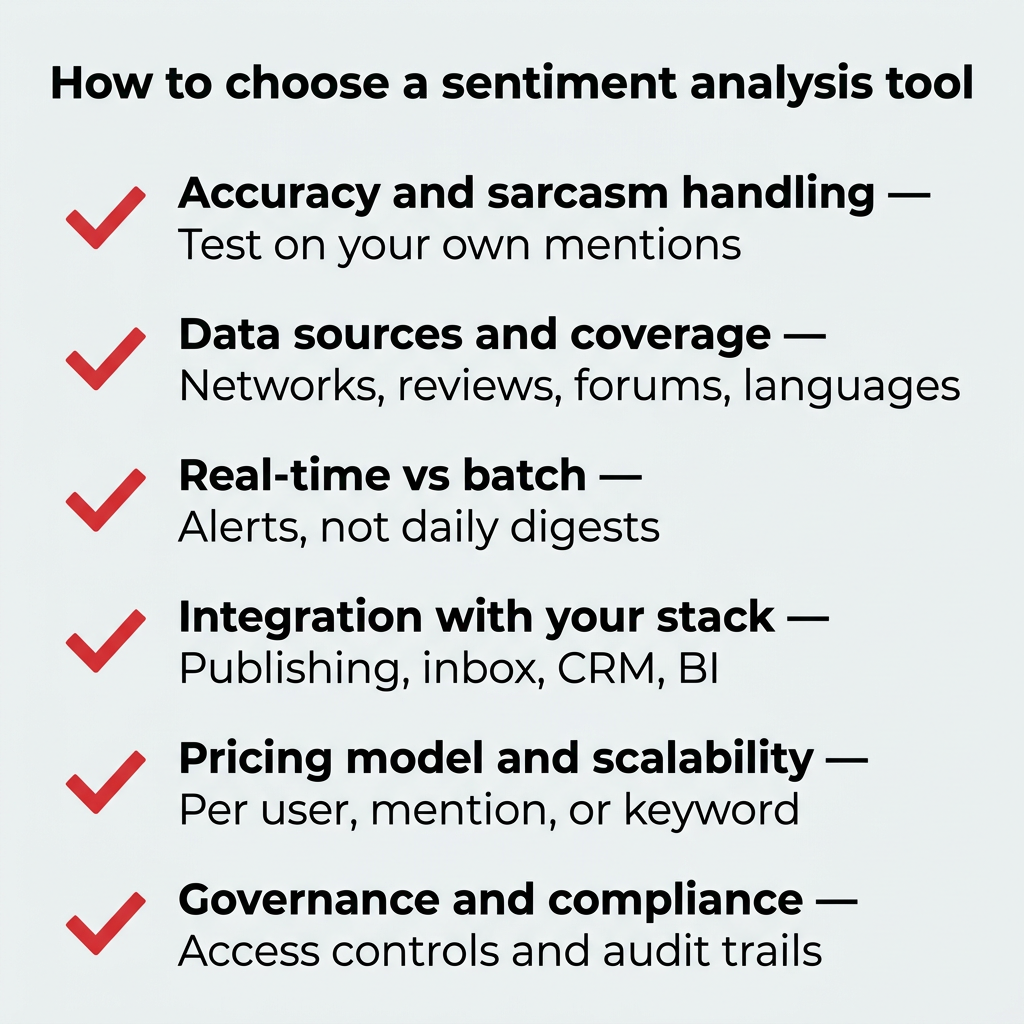
Selecting an appropriate sentiment analysis tool is a critical decision that hinges on matching the platform’s capabilities with an organization’s specific needs regarding accuracy, data coverage, and workflow integration. Prioritizing price alone often leads to dissatisfaction when a tool fails to capture comprehensive data or integrate seamlessly into existing operational workflows.
Key factors to consider include:
- Accuracy and Reliability: The ability of the tool to correctly interpret sentiment, especially nuanced language, sarcasm, and mixed emotions.
- Data Source Coverage: The breadth of platforms and websites the tool monitors, from major social media networks to niche forums, news sites, and review platforms.
- Scalability and Performance: The tool’s capacity to handle vast volumes of data and perform analysis efficiently, especially for large enterprises or during peak events.
- Integration Capabilities: How well the tool integrates with existing social media management platforms, CRM systems, and business intelligence dashboards.
- Reporting and Visualization: The clarity and customizability of dashboards and reports, enabling easy interpretation and sharing of insights.
- Multilingual Support: For global brands, the ability to accurately analyze sentiment in multiple languages and account for regional linguistic nuances.
- User Interface and Ease of Use: An intuitive interface that allows various team members, regardless of technical expertise, to leverage the tool effectively.
- Governance and Security: Especially crucial for enterprise users, ensuring data privacy, compliance, and controlled access within organizational workflows.
As Gartner predicts that 40% of enterprise applications will feature task-specific AI agents by 2026, the importance of robust integration and governance in sentiment analysis tools is amplified. For teams requiring sentiment data to trigger actions across multiple departments, seamless integration and strong governance are paramount. Conversely, if the primary need is a general understanding of brand perception, accuracy and comprehensive source coverage may take precedence.

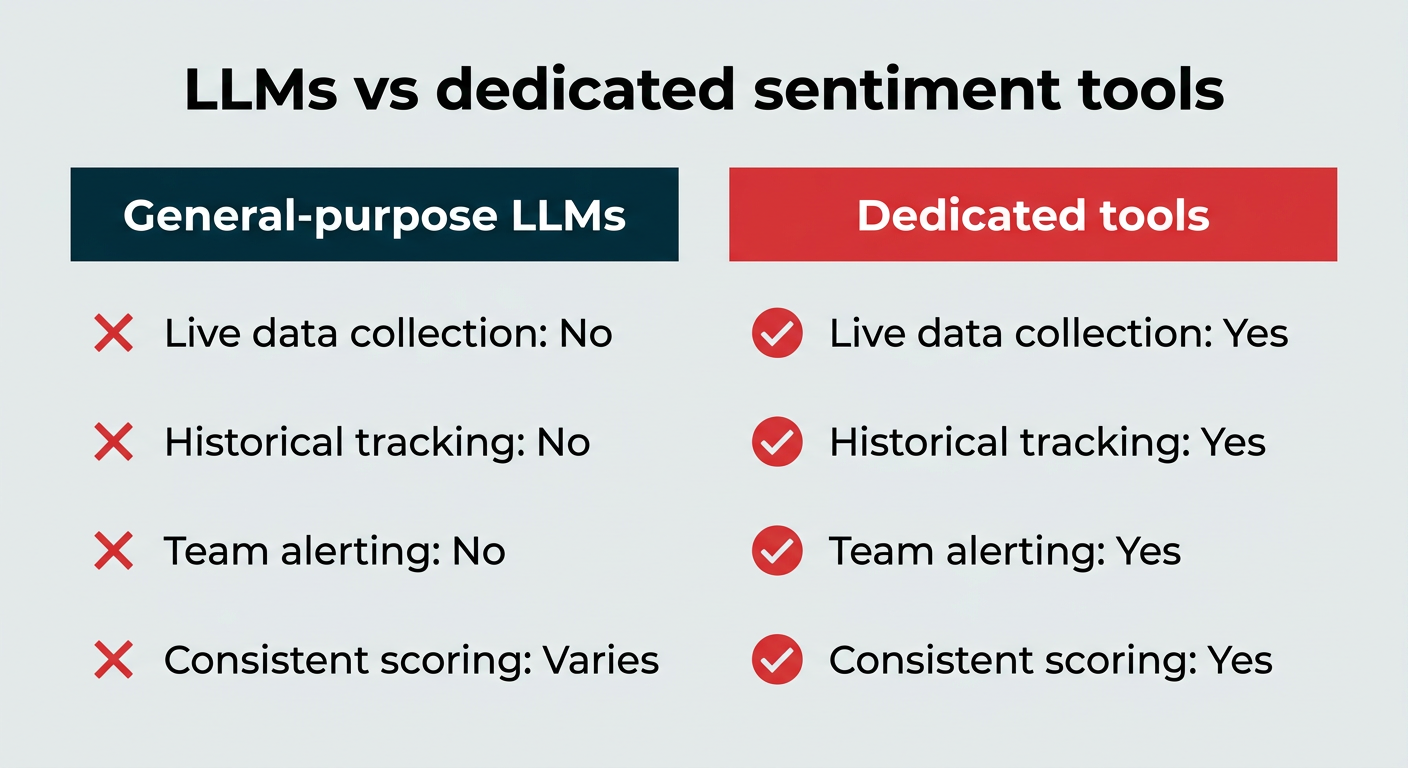
Dedicated Platforms vs. General-Purpose LLMs: A Governance Divide
The advent of powerful large language models (LLMs) like ChatGPT has raised questions about their utility in sentiment analysis. While LLMs can indeed perform sentiment analysis on text, often demonstrating impressive nuance with individual passages, a critical distinction exists between these general-purpose models and dedicated sentiment analysis platforms.

The primary divergence lies in the surrounding infrastructure and enterprise-grade functionalities. Dedicated sentiment analysis tools offer:
- Automated Data Collection: Continuously gather data from diverse sources without manual input.
- Historical Data Access: Maintain archives of past mentions for trend analysis and benchmarking.
- Scalability: Efficiently process millions of mentions, far beyond what manual input into an LLM can achieve.
- Customizable Dashboards and Reporting: Provide tailored visualizations and shareable reports for various stakeholders.
- Workflow Integration: Connect insights directly to social media management, CRM, or customer support systems.
- Governance and Security: Operate within defined security protocols, ensuring data privacy and compliance.
In contrast, LLMs typically require manual input of text, lack automated data feeds, offer limited historical context, and critically, pose significant governance and security risks for enterprise data. Pasting sensitive customer conversations into a public consumer chatbot creates data handling vulnerabilities that most legal and security teams would not approve. Solutions like Hootsuite’s Wisdom AI, built specifically for social data, offer the analytical power of advanced AI within governed workflows, connecting insights to the personnel and processes equipped to act on them.
Leading Tools in the Sentiment Analysis Ecosystem
The market for sentiment analysis tools is dynamic, catering to a wide range of needs from individual creators to multinational corporations. Leading platforms combine robust AI capabilities with broad data coverage and user-friendly interfaces.

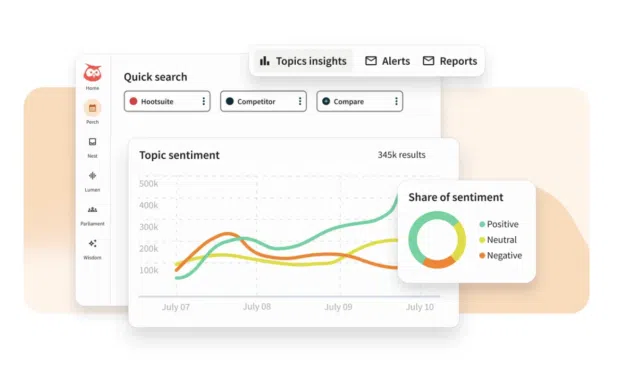
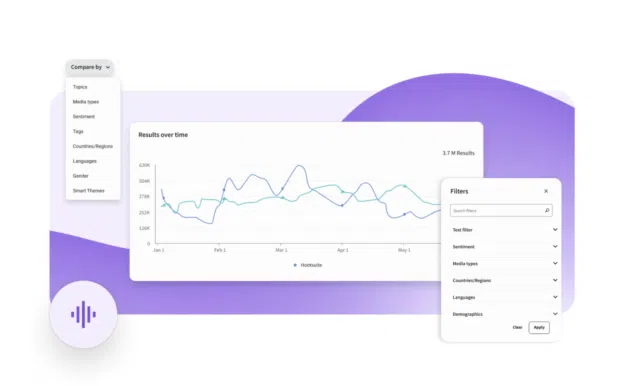
For enterprise teams, solutions like Perch by Hootsuite and Lumen by Talkwalker stand out. Perch integrates audience insights, content performance, and reporting within the broader Hootsuite Social OS, allowing marketers to swiftly move from understanding what people are discussing to strategizing the next content piece. Its connection to Wisdom AI further streamlines content creation based on trending topics. Lumen, the standalone insights platform from Talkwalker, monitors over 150 million websites and 30+ social channels, offering deep listening capabilities including video and text analysis, making it ideal for comprehensive brand monitoring across the web.
Multi-brand companies often require tools that can segment data while providing a consolidated view. Brand24 excels in tracking thousands of mentions and leveraging deep learning to assess influence alongside sentiment. Meltwater, a global media listening powerhouse, offers multilingual analysis across an extensive range of sources, including traditional media like TV and radio, powered by sophisticated machine learning models, albeit at a premium price point.

Small teams and businesses seeking budget-friendly solutions that integrate basic sentiment analysis into their existing workflows find value in platforms like Buffer and Awario. Buffer provides essential sentiment insights within its streamlined social media scheduling platform, making it accessible for business owners managing social media on the side. Awario offers dedicated brand monitoring with basic sentiment analysis, appealing to small teams focused on social selling.
Creators and influencers, who prioritize impact metrics for brand collaborations, benefit from specialized tools. Exolyt focuses exclusively on TikTok, providing competitive insights and sentiment tracking tailored for the platform’s unique dynamics. Keyhole offers a strong suite of social media analytics, including sentiment tracking for hashtags and creator accounts, helping influencers demonstrate campaign effectiveness.

Agencies require tools that facilitate clean client data separation and efficient reporting. Agorapulse is a lightweight social media management platform with collaboration features suitable for agency-client workflows, offering basic sentiment analysis. Mentionlytics provides a full-featured brand monitoring and sentiment analysis solution with customizable dashboards and separate client accounts, streamlining client reporting and satisfaction tracking.
For quick, one-off checks or beginners, free tools like the Hootsuite brand sentiment analyzer offer a basic overview of sentiment for a given brand or topic. Social Searcher provides a limited free plan for monitoring a single brand or topic per month, offering a starting point for exploring sentiment analysis.

Navigating the Nuances: Overcoming Analytical Challenges
Despite significant advancements, sentiment analysis faces inherent challenges, primarily stemming from the complexities of human language. These limitations underscore the importance of selecting tools with sophisticated AI models and, at times, requiring human oversight.

- Sarcasm and Tone: Sarcasm and irony remain the most formidable obstacles. Phrases like "Great, another outage" can be incorrectly flagged as positive by basic models. Purpose-built AI models, such as those powering Lumen and Perch, are better equipped to detect these nuances than general-purpose NLP systems, but no tool is foolproof. Manual review of flagged mentions is often necessary when accurate sarcasm detection is critical.
- Negation and Mixed Sentiment: Simple keyword matching struggles with negation, misinterpreting "not bad" as purely negative. Similarly, mixed sentiment, where a single post contains both positive and negative feedback (e.g., "The product is amazing, but the customer service was terrible"), presents a challenge. Aspect-based analysis is the most effective solution here, as it evaluates sentiment for each attribute independently, preventing an overall average from obscuring critical details.
- Multilingual and Regional Nuance: Sentiment does not translate uniformly across languages and cultures. Slang, idioms, and varying cultural norms regarding directness of criticism can significantly alter how a mention should be scored. For global brands, it is crucial to inquire about the specific languages and regional dialects a vendor’s models are trained on, rather than simply their language detection capabilities.
Cultivating Positive Brand Sentiment: Expert Strategies
Beyond merely identifying sentiment, organizations must proactively manage and shape public perception. Social media consultant Ruth Kim of Rebrandly emphasizes four key strategies to improve brand sentiment:

- Set Benchmarks: Sentiment scores are most meaningful when contextualized. Establishing a baseline by tracking sentiment over several weeks, and comparing it against competitors or industry averages, provides a reference point to measure the significance of any shifts.
- Respond to Negative Mentions Quickly: Timeliness is crucial in addressing negative feedback. Real-time monitoring and prompt, empathetic responses to complaints can transform frustrated customers into brand advocates and demonstrate responsiveness to a wider audience.
- Amplify Positive Conversations: Positive sentiment should be celebrated and leveraged. Sharing user-generated content, testimonials, and expressing gratitude encourages more positive interactions. User-generated content often carries more credibility than branded messaging, making its amplification a powerful strategy.
- Close the Loop with Your Team: Sentiment data must drive action. Regular sharing of insights with product development, customer support, and marketing teams ensures that customer feedback, whether about slow shipping or confusing interfaces, reaches the departments empowered to implement solutions.
In conclusion, social media sentiment analysis has evolved from a nascent technological concept into a core component of modern business strategy. As AI continues to advance, these tools will become even more sophisticated, offering deeper, more accurate insights into the complex tapestry of online public opinion. For businesses aiming to foster customer loyalty, protect their reputation, and drive informed decision-making, mastering the art and science of sentiment analysis is no longer optional but an imperative for success in the digital age.