
 rifanmuazin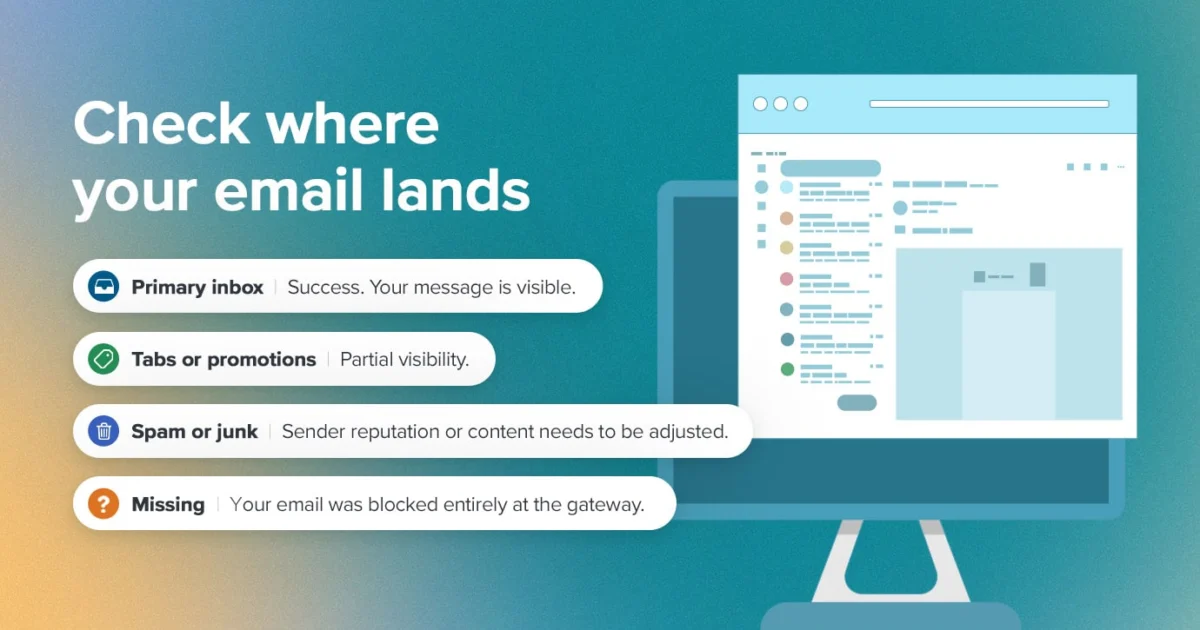
In the complex landscape of digital marketing, email campaigns remain a cornerstone for engagement, lead generation, and sales. Marketers often celebrate a high email delivery rate, assuming that if an email hasn’t bounced, it has successfully reached its intended audience. This perception, however, represents a critical misunderstanding of modern email deliverability. A high delivery rate merely signifies that an email has been accepted by the recipient’s mailbox provider, not that it has landed in the coveted primary inbox where it can be seen and acted upon. The real metric of success, and one that directly impacts a campaign’s efficacy, is inbox placement rate. Understanding this crucial distinction is paramount for any organization aiming to maximize its email marketing return on investment (ROI).
The journey of an email from sender to recipient is far more intricate than many realize. When an email is sent, it first travels to the recipient’s mailbox provider (e.g., Gmail, Outlook, Yahoo). The delivery rate measures whether this initial handshake is successful – whether the server accepts the email. If the server rejects the email, it "bounces." Bounces come in two primary forms: hard bounces, indicating a permanent issue like an invalid or non-existent email address, and soft bounces, signifying a temporary problem such as a full inbox or an overloaded server. While a low bounce rate and thus a high delivery rate are positive indicators of a relatively healthy email list, they offer only a partial view of performance. They tell you your message reached the building, but not if it made it to the right office, or if it ended up in the junk mail bin.
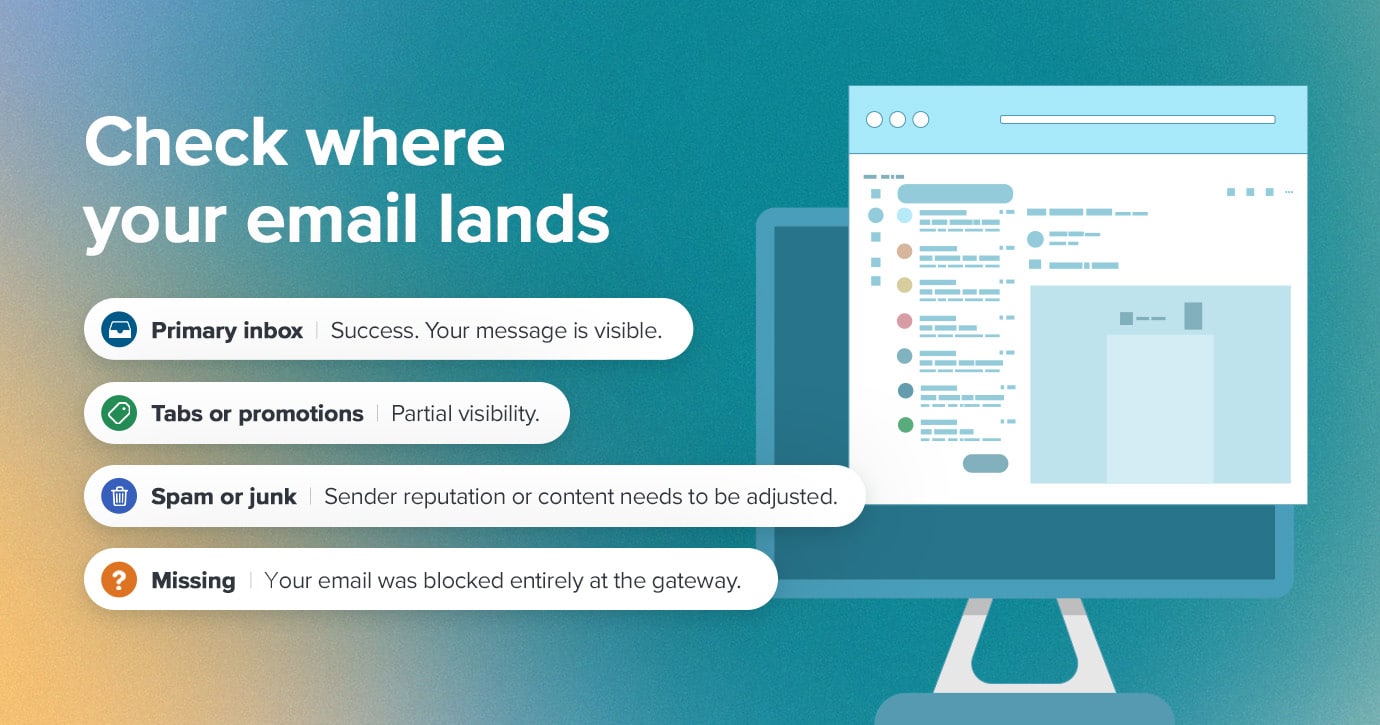
Inbox placement, conversely, goes a significant step further. It measures whether, after being accepted by the mailbox provider, an email successfully navigates the provider’s sophisticated filtering systems and lands in the primary inbox, rather than being shunted to a promotions tab, a spam folder, or blocked entirely. This nuanced outcome is heavily influenced by a confluence of factors, including the sender’s reputation, the email’s content, the recipient’s historical engagement with the sender, and the technical authentication of the email itself. Mailbox providers meticulously evaluate these elements to determine the trustworthiness and relevance of an incoming message, ultimately deciding its fate.
The evolution of email filtering systems has been a direct response to the persistent challenge of spam. In the early days of email, sheer volume and simple keyword filters were the primary defenses. However, as spammers grew more sophisticated, so too did the countermeasures. Today, artificial intelligence and machine learning algorithms analyze countless data points for each incoming email, building a comprehensive profile of both the sender and the message. This constant arms race between legitimate marketers and malicious actors means that achieving high inbox placement is an ongoing, dynamic challenge requiring continuous vigilance and adaptation.
The Crucial Role of Sender Reputation
At the heart of inbox placement lies sender reputation. This digital trustworthiness score is a composite of many signals that mailbox providers use to assess a sender. Key components include:
- IP Address Reputation: The history of emails sent from a particular IP address. Sending from an IP previously used for spam or with a history of high complaint rates will negatively impact reputation.
- Domain Reputation: Similar to IP reputation, but tied to the sending domain (e.g., yourcompany.com). A strong, consistent domain reputation built over time is invaluable.
- Authentication Records: The proper setup of technical protocols like SPF, DKIM, and DMARC demonstrates legitimacy and prevents spoofing.
- Spam Complaint Rates: How often recipients mark an email as spam. Even a small percentage can severely damage reputation.
- Bounce Rates: High bounce rates signal a poorly maintained list, which can lead to lower trust.
- Engagement Metrics: The most critical factor. Mailbox providers closely monitor how recipients interact with emails. Opens, clicks, replies, and emails being moved from spam to inbox are positive signals. Deletions without opening, moving to spam, or ignoring emails are negative.
A strong sender reputation is akin to a good credit score in the financial world – it opens doors and ensures smoother transactions. For email, it means preferential treatment from mailbox providers, increasing the likelihood of landing in the primary inbox. Conversely, a poor reputation can lead to messages being consistently filtered to spam or blocked entirely, rendering marketing efforts invisible. Industry analysis consistently shows that companies with strong sender reputations experience significantly higher inbox placement rates, translating directly into better campaign performance and increased revenue.
Why Email Service Providers Prioritize Engagement
Email Service Providers (ESPs) such as Gmail, Outlook, and Yahoo are driven by a singular mission: to provide the best possible user experience for their subscribers. A cluttered inbox filled with unwanted, irrelevant, or malicious emails detracts from this experience. Therefore, ESPs have developed highly sophisticated algorithms that filter emails based heavily on anticipated user behavior.
Messages that are consistently opened, read, clicked, and even replied to, signal to ESPs that the content is valued by the recipient. This positive interaction acts as a powerful endorsement, making it more likely that future emails from the same sender will land in the primary inbox. It’s a continuous feedback loop: positive engagement improves sender reputation, which in turn leads to better inbox placement, further encouraging engagement.
Conversely, emails that are frequently ignored, deleted without being opened, or worse, marked as spam, send strong negative signals. These actions indicate to ESPs that the sender’s content is not relevant or desired. Over time, this negative feedback can severely degrade a sender’s reputation, resulting in more emails being diverted to spam folders, even for active subscribers. Mailbox providers, by prioritizing engagement, essentially crowdsource their filtering decisions, relying on the collective actions of millions of users to identify what content is legitimate and desired.
The Tangible Impact on Revenue and Brand Visibility
The direct correlation between inbox placement and business outcomes cannot be overstated. Visibility is synonymous with revenue in email marketing. An email that consistently lands in the primary inbox is exponentially more likely to be opened, clicked, and to drive the desired action – whether that’s a purchase, a sign-up, a download, or a brand interaction. According to recent marketing benchmarks, emails delivered to the primary inbox can see open rates upwards of 20-30%, while those routed to promotions or spam folders often languish with single-digit or even sub-1% open rates.
Consider a campaign with a compelling offer and a meticulously crafted message. If 20% of these emails are diverted to spam, that’s a direct loss of potential engagement and conversion from one-fifth of the audience. This not only represents wasted marketing spend on content creation and list management but also a lost opportunity for revenue. Furthermore, consistent failure to reach the inbox can erode brand trust. Recipients who expect emails but don’t receive them might assume the brand is unreliable or that their subscription has lapsed, leading to disengagement and potentially unsubscribes.
Tracking inbox placement provides an early warning system for potential issues with sender reputation or content strategy. By monitoring this metric, marketing teams can proactively identify and address problems before they escalate, safeguarding their email program and ensuring sustained performance. In a competitive digital landscape, maximizing every touchpoint with the customer is crucial, and email, when delivered effectively, remains one of the most cost-effective channels for driving business growth.
Measuring True Inbox Placement: Beyond ESP Metrics
Relying solely on an Email Service Provider’s (ESP) "Delivered" metric is a significant blind spot. While your ESP can confirm acceptance by the mailbox provider, it cannot tell you where within that mailbox your email landed. To gain a truly unbiased view of your email’s visibility, a dedicated testing strategy is essential.
Step 1: Deploy a Seed List Test
The industry standard for measuring deliverability is the seed list test. This involves sending your actual campaign content to a carefully curated collection of test email addresses (a "seed list") across all major mailbox providers, including global giants like Gmail, Outlook, and Yahoo, as well as smaller, regional providers. These seed accounts are monitored to report on where the email lands. It is crucial to send the exact same email content, subject line, and sending parameters to the seed list as you would to your actual subscribers to ensure an accurate representation of your campaign’s performance.
Step 2: Analyze Folder Placement
Upon sending to the seed list, specialized diagnostic tools are used to analyze the folder placement for each test mailbox. Did the email successfully reach the primary inbox? Was it relegated to a "Promotions" tab (as is common with Gmail for marketing emails)? Or, more critically, was it filtered directly into the spam/junk folder? Because these test inboxes are controlled by the testing service, they provide an objective, real-time view of precisely how different mailbox providers are treating your message. This granular insight reveals the extent of your actual reach.
Step 3: Calculate Your Inbox Placement Rate (IPR)
Based on the analysis of folder placement across your seed list, you can then calculate your Inbox Placement Rate (IPR). This metric represents the percentage of emails that successfully reach the primary inbox. For example, if your email landed in the primary inbox for 80 out of 100 seed addresses, your IPR would be 80%. This figure, not the delivery rate, should serve as your definitive benchmark for campaign performance. A healthy IPR is generally considered to be above 90%, with top-performing campaigns aiming for 95% or higher. Consistent tracking of IPR over time allows marketers to observe trends, identify performance degradation, and measure the effectiveness of their deliverability improvement strategies.
Fundamental Strategies to Improve Inbox Placement
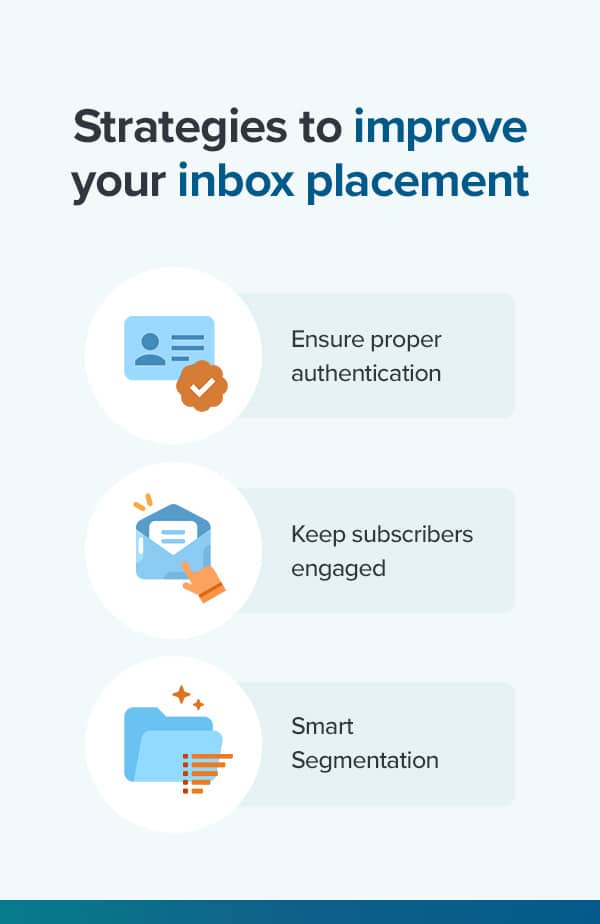
Achieving and maintaining high inbox placement requires a multi-faceted approach, grounded in best practices and continuous optimization.
1. Ensure Proper Email Authentication
Authentication acts as a digital identity card for your emails, verifying that you are who you claim to be and that your message hasn’t been tampered with. Without proper authentication, your emails are likely to be flagged as suspicious or outright rejected. The three critical authentication protocols are:
- Sender Policy Framework (SPF): An email authentication method that specifies which mail servers are authorized to send email on behalf of your domain.
- DomainKeys Identified Mail (DKIM): A method that allows an organization to take responsibility for transmitting a message in a way that can be validated by recipients. It adds a digital signature to your email headers.
- Domain-based Message Authentication, Reporting, and Conformance (DMARC): Builds on SPF and DKIM, providing instructions to mailbox providers on how to handle emails that fail authentication (e.g., quarantine, reject) and allowing senders to receive reports on authentication failures.
As of February 2024, Google and Yahoo have implemented stringent new requirements for bulk senders, mandating proper SPF, DKIM, and DMARC authentication. Failure to comply with these foundational steps will result in emails being systematically routed to spam folders or blocked entirely. Implementing these protocols correctly is the non-negotiable first step in building trust with mailbox providers and ensuring basic deliverability.
2. Cultivate and Maintain Subscriber Engagement
Engagement is the most powerful signal to mailbox providers about the value of your content. A list filled with disengaged or inactive subscribers can be detrimental. Mailbox providers interpret a lack of opens and clicks as a sign of irrelevance, which negatively impacts your sender reputation. Furthermore, old, abandoned email addresses can sometimes be converted into "spam traps" by mailbox providers. Hitting a spam trap is a severe indicator of poor list management and can cause significant damage to your reputation, leading to widespread spam filtering even for your active subscribers.
To mitigate this:
- Regular List Hygiene: Periodically identify and remove inactive subscribers (those who haven’t opened or clicked in 6-12 months). Before removal, consider running re-engagement campaigns with compelling offers or a clear "Do you still want to hear from us?" message.
- Proactive Verification: Implement email verification tools at the point of signup to prevent invalid or misspelled email addresses from entering your database. This reduces hard bounces and helps maintain a clean, responsive list from the outset.
- Monitor Feedback Loops: Actively participate in feedback loops (FBLs) offered by major mailbox providers (e.g., Google Postmaster Tools, Microsoft SNDS). These tools inform you when a recipient marks your email as spam, allowing you to promptly remove that individual from your mailing list and prevent further complaints.
3. Implement Smart Segmentation and Personalization
In today’s crowded inboxes, generic, one-size-fits-all emails are rarely effective. Personalization and relevance are paramount for driving engagement. By segmenting your audience based on demographics, interests, past behavior, or lifecycle stage, you can send highly targeted content that resonates deeply with specific groups of subscribers.
For example, instead of sending a general product update to your entire list of 50,000 subscribers, segment it to the 10,000 active users who actually use the feature being updated. This targeted approach dramatically increases the likelihood of opens, clicks, and positive interactions. High engagement metrics from segmented campaigns send strong signals to mailbox providers that your content is valued, boosting your sender reputation and improving inbox placement across all your sends. This strategy ensures that recipients receive content that aligns with their actual interests, fostering a healthier sender-recipient relationship.
Advanced Strategies for Enterprise-Level Placement at Scale
For organizations with high sending volumes, complex global footprints, or those operating in highly competitive sectors, foundational strategies are necessary but often insufficient. True enterprise-level deliverability requires more advanced tactics to solidify sender reputation and adapt to the constantly evolving filtering algorithms of mailbox providers.
1. Sender Certification Programs
Sender certification is a whitelist program where vetted email senders receive preferential treatment from participating mailbox providers. These programs, such as Validity Sender Certified, involve a rigorous testing and auditing process to confirm that a sender consistently adheres to best practices in email marketing and deliverability. Once certified, senders are recognized as highly reputable, which translates into numerous benefits:
- Enhanced Inbox Placement: Certified senders often bypass key spam filters, leading to significantly higher inbox placement rates, even during peak sending times or with larger volumes.
- Increased Trust and Reputation: Certification acts as a powerful trust signal, not only to mailbox providers but also implicitly to recipients, enhancing overall brand perception.
- Reduced Filtering: Emails from certified senders are less likely to be subject to aggressive filtering or rate limiting.
- Improved Campaign Performance: Higher inbox placement directly translates to better open rates, click-through rates, and ultimately, conversions.
- Competitive Advantage: In a crowded inbox, being a certified sender can give a distinct edge over non-certified competitors.
Data consistently supports the efficacy of certification; for instance, certified senders reportedly deliver millions more emails to the inbox annually compared to their non-certified counterparts, underscoring the tangible advantage this premium status provides.
2. Brand Indicators for Message Identification (BIMI)
BIMI is an emerging email standard that allows senders to display their brand logo next to the subject line in the recipient’s inbox. This visual confirmation of brand identity is a powerful tool for building trust and standing out. In an era plagued by phishing and email fraud, BIMI provides an immediate visual cue that an email is legitimate, helping subscribers quickly identify trusted communications.
To implement BIMI, a sender must have strong email authentication policies in place, specifically DMARC set to an enforcement policy (quarantine or reject). This requirement ensures that only brands with robust security measures can leverage BIMI, further reinforcing its status as a strong trust signal. The benefits of BIMI include:
- Enhanced Brand Recognition: Your logo immediately grabs attention in a busy inbox.
- Increased Open Rates: Visual recognition and trust can encourage recipients to open your email over others.
- Improved User Confidence: Helps combat phishing by visually confirming the sender’s authenticity.
- Consistent Brand Experience: Reinforces brand identity across all email interactions.
3. Real-time Feedback Loops (FBLs)
Beyond managing your own list, engaging with mailbox provider feedback loops is crucial. FBLs are mechanisms provided by major ESPs (like Google Postmaster Tools and Microsoft’s Smart Network Data Services – SNDS) that notify senders when their emails are marked as spam by recipients.
These real-time alerts are invaluable for:
- Identifying Problematic Segments: Pinpointing specific users or segments that are generating high complaint rates.
- Rapid List Cleaning: Allowing immediate removal of subscribers who have marked your emails as spam, preventing further complaints from those individuals.
- Content Strategy Adjustment: High complaint rates can signal issues with your email content, frequency, or audience targeting, prompting necessary adjustments.
By actively monitoring and responding to FBL data, senders can proactively maintain a healthy sender reputation, significantly reduce spam complaints, and ensure their emails continue to reach the inboxes of their engaged audience. High complaint rates are a major red flag for mailbox providers, and swift action based on FBL data is critical for long-term deliverability success.
Conclusion: Taking Control of Your Email’s True Reach
The era of simply measuring delivery rate is long past. In today’s sophisticated email ecosystem, inbox placement is the definitive metric for gauging the true reach and impact of any email marketing campaign. It’s the difference between sending messages into a void and establishing direct, meaningful connections with your audience.
Organizations that prioritize inbox placement by implementing robust authentication, nurturing subscriber engagement through smart segmentation, and leveraging advanced strategies like sender certification and BIMI, are those that will unlock the full potential of their email marketing efforts. This strategic shift transforms email from a mere communication channel into a powerful engine for visibility, engagement, and ultimately, revenue growth.
Tools like Litmus Deliverability offer the essential insights needed to pinpoint exactly what factors are affecting sender reputation and inbox placement. By providing a clear, data-driven understanding of how mailbox providers perceive your emails, marketers can refine their strategies with confidence, ensuring their meticulously crafted messages consistently land where they matter most – in the primary inbox. Investing in these capabilities is not merely a technical adjustment; it is a strategic imperative for any business serious about maximizing its digital marketing impact and securing its competitive edge in the evolving digital landscape.









