
 rifanmuazin
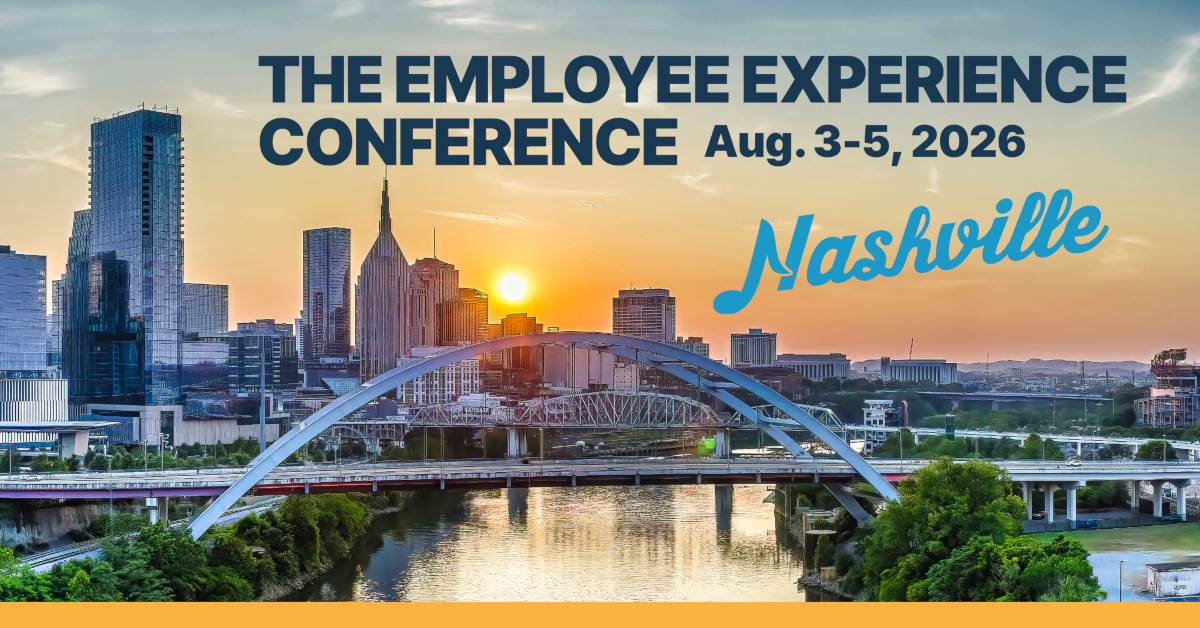
Ragan Communications has announced the full agenda for its upcoming Employee Experience Conference, a three-day intensive summit scheduled for August 3–5. Set against a backdrop of rapid technological transformation and shifting workforce expectations, the event serves as a critical gathering for Human Resources (HR) leaders, internal communicators, and executive strategists. The 2026 iteration of the conference focuses heavily on the integration of “Agentic AI,” the refinement of the Employee Value Proposition (EVP), and the necessity of “human-centric” leadership in an increasingly automated professional landscape.
As organizations grapple with the long-term implications of hybrid work and the accelerating pace of digital disruption, the conference aims to provide a roadmap for building trust and maintaining performance. The sessions are designed to move beyond theoretical discussions of engagement, focusing instead on measurable ROI and the practical application of data-driven strategies.
The Pre-Conference Intensive: Foundations of Change and Frameworks for Trust
The conference commences on Monday, August 3, with a series of deep-dive workshops aimed at establishing the foundational elements of a modern employee experience. The opening session, led by Ryan Poe, APR, Director of Executive Communications, and Hilary Hamblin, Manager of Organizational Change Management at St. Jude Children’s Research Hospital, addresses the critical need for new change communication frameworks. As organizations in 2026 face unprecedented volatility, the St. Jude team argues that the ability to pivot depends entirely on a balance of communication cadence, channel selection, and emotional intelligence.

Following the discussion on change, the focus shifts to the evolution of the Employee Value Proposition. Industry experts suggest that the traditional EVP—often relegated to a marketing tagline—must be transformed into a tangible system that employees can “see, feel, and measure.” This involves aligning physical, emotional, and financial wellbeing with organizational growth.
A significant highlight of the pre-conference schedule is the exploration of the “AI-driven employee journey.” Adam Perrow, Senior Director of Employee Experience at Ally Financial, will lead a workshop on auditing and building employee personas using behavioral data. This reflects a broader industry trend where HR departments are increasingly adopting the methodologies of customer experience (CX) teams to personalize the workplace. The day concludes with an interactive content platform workshop, encouraging attendees to rethink internal newsletters and intranets as “dynamic engagement ecosystems” rather than mere distribution channels.

Day One: The AI Era and the New Employee-Employer Contract
The first full day of the conference, Tuesday, August 4, tackles the most pressing challenge of the current decade: the “New Employee-Employer Contract.” As AI reshapes roles and workflows, employees are demanding greater transparency regarding how decisions are made and how their careers will evolve in an automated environment.
A key case study from Stanley Black & Decker will be presented by Alyssa Winterstein, Senior Communications Manager. Winterstein will detail a “100-Day Roadmap” for CEO transitions, a critical period that often determines the long-term stability of an organization. Following the retirement of a long-standing leader, the communications team at Stanley Black & Decker developed a coordinated strategy to reassure stakeholders and maintain mission consistency, a template that has become a benchmark for enterprise-wide change.

Simultaneously, the conference addresses the “performance gap” phenomenon. Experts note that high performers rarely decline suddenly; instead, they are often victims of unclear expectations or overloaded systems. A session dedicated to identifying these root causes aims to help HR leaders intervene before top talent disengages.
The afternoon sessions delve into the technical and human skills required for the future. Samantha Stark, Founder and Chief Strategist at Phyusion, will discuss the scaling of AI workflows. Stark posits that the failure of AI adoption is rarely a technical issue but rather a failure of “change comms leadership.” This is complemented by a panel discussion on the “Human OS,” where Kelly Collins, VP of Communications at Macmillan Publishers, and other experts will debate the rising importance of judgment, adaptability, and emotional intelligence over technical “table stakes” like data analysis.

The day concludes with an “Interactive Build Sprint” focused on Agentic AI. This session moves participants from theory to practice, tasking them with designing autonomous agents in platforms like Zapier to solve real-world workflow problems.
Day Two: Data Storytelling, Reputation, and Generational Dynamics
The final day of the conference, Wednesday, August 5, focuses on the “Employee Experience Equation”—the move from “engagement theater” to empirical proof of ROI. Veronica Blankenship, Chief People & Communications Officer at Talking Rain Beverage Co., will present a case study on turning disconnected EX signals into a scorecard that executive leadership can utilize for strategic planning.

The link between employee sentiment and corporate reputation is another central theme. Madeleine Goff, Director of Strategic Communications at Mark-Taylor Residential, will explore how internal disengagement can manifest as external brand risk. In an era where Glassdoor reviews and social media leaks can significantly impact market valuation, Goff argues that employee experience is a core component of risk management.
Generational diversity also takes center stage. With five generations currently in the workforce, communication gaps are frequent. Julie Rosa, Vice President for Communication at Purdue University, will lead a panel on navigating these culture gaps. The discussion will focus on setting up “early warning systems” to detect potential crises before they escalate, accounting for the different communication norms of Gen Z, Millennials, Gen X, and Boomers.

The conference will also address the modernization of the “Town Hall” and the rise of short-form video for executive thought leadership. As remote and hybrid work persist, the traditional one-way update is being replaced by dynamic, hybrid experiences designed to build trust.
Broader Industry Context and Implications
The Employee Experience Conference 2026 arrives at a time when the “S” in ESG (Environmental, Social, and Governance) is under intense scrutiny. Investors and boards are increasingly viewing employee retention and satisfaction as leading indicators of financial health. According to recent industry data, organizations with high employee engagement scores see 21% higher profitability than those with low engagement.

The heavy emphasis on AI at this year’s conference reflects the “second wave” of implementation. While 2024 and 2025 were characterized by experimentation with Large Language Models (LLMs), 2026 is the year of integration and “Agentic” systems—AI that can execute tasks independently. The challenge for internal communicators is to frame this shift not as a threat to job security, but as an evolution of human roles.
Furthermore, the focus on “Trauma-Informed Communications” and “Resilience” highlights the lingering effects of global instability on the workforce. Nick LaFave, Senior Director of Organizational Communications at Children’s Minnesota, will close the event with a fireside chat on “Leading with Humanity.” His insights into guiding teams through community crises underscore the conference’s ultimate message: while technology provides the tools, humanity provides the foundation.

Chronology of Key Events and Themes
- Monday, August 3 (Pre-Con): Focus on Change Frameworks, EVP Systems, AI Personas, and Content Ecosystems.
- Tuesday, August 4 (Day 1): Focus on the New AI Contract, CEO Transitions, Performance Gaps, AI Scaling, Manager Toolkits, and the “Human OS” Debate.
- Wednesday, August 5 (Day 2): Focus on EX Data Scorecards, Reputation Risk, Generational Gaps, Newsletter Transformation, and Human-Centric Leadership.
Official Stance and Strategic Direction
The overarching strategy presented by Ragan’s editors and the featured speakers suggests a shift toward “Total Experience” (TX). This approach integrates the employee experience, customer experience, and user experience to drive business transformation. The conference emphasizes that internal communications is no longer a “support function” but a strategic driver of business outcomes.
By the conclusion of the event, attendees are expected to leave with a “Baker’s Dozen” of actionable takeaways, ranging from AI prompt engineering for internal comms to frameworks for measuring the financial impact of a successful onboarding program. As the professional world moves deeper into the late 2020s, the Employee Experience Conference 2026 stands as a pivotal moment for leaders to recalibrate their strategies for a high-tech, high-touch future.










