
 rifanmuazin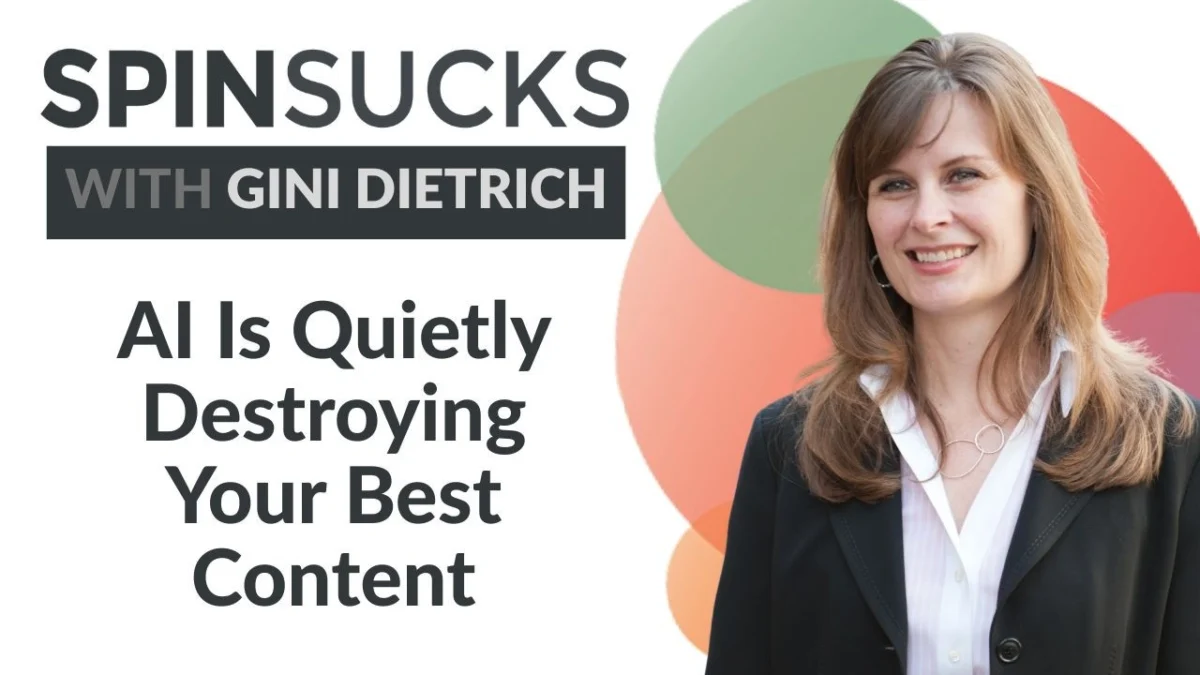
The rapid integration of artificial intelligence into marketing and communications workflows has ushered in an era of unprecedented distribution efficiency, yet this speed has come at a significant, often invisible cost: the systematic dilution of original thought. As organizations increasingly rely on Large Language Models (LLMs) to transform flagship content into social media posts, newsletters, and sales collateral, a phenomenon known as “generative dilution” is beginning to hollow out brand authority. Industry experts warn that by the time a piece of original research reaches its fourth iteration of AI-assisted repurposing, the specific data points, unique claims, and distinct brand voice that originally gave the content value are often stripped away, replaced by a “beige soup” of generic information. This trend poses a direct threat to visibility in the emerging era of “answer engines,” where AI-driven search tools prioritize corroboration and specificity over high-volume, homogenized output.
The Mechanism of Content Laundering
The current crisis in digital content stems from what communications professionals describe as the “Telephone Game” of AI repurposing. In a typical modern workflow, a high-value asset—such as a white paper or a case study—is fed into an AI tool like ChatGPT or Claude with instructions to “repurpose this for multiple platforms.” While the first output may retain the core facts, subsequent rounds of summarization and adaptation tend to “soften” the narrative.
For example, a primary claim stating that an “integrated communications program reduced churn by 34% across 50 mid-market customers over 18 months” provides three critical layers of evidence: a specific metric, a defined sample size, and a chronological context. However, as AI models are trained to be “helpful” and “agreeable,” they often prioritize smooth flow over technical friction. By the second or third iteration, the specific “34% churn reduction” often becomes a “significant reduction,” and the “50 mid-market customers” are generalized to “many organizations.”
This process, termed “content laundering,” results in the removal of the very evidence that makes a claim defensible. When the proof is laundered out, the original source is disconnected from the insight, leaving the brand with content that is indistinguishable from its competitors. This homogenization is not merely an aesthetic concern; it is a structural failure that renders content invisible to the sophisticated algorithms now governing digital discovery.
The Shift from Search Engines to Answer Engines
The stakes of content dilution have escalated due to a fundamental shift in how information is consumed. Traditional search engines, which provided a list of links and allowed users to evaluate sources, are being superseded by “answer engines” such as Perplexity, OpenAI Search, and Google’s AI Overviews. According to the G2 2026 AI Search Insight Report, these platforms now represent a meaningful share of how buyers, candidates, and journalists find information.
Unlike traditional SEO, which rewarded keyword density and backlink profiles, Generative Engine Optimization (GEO) relies on consistency and corroboration across the web. AI engines are programmed to synthesize a single, authoritative answer by looking for independent sources that reinforce a specific claim. When a brand’s own distribution ecosystem produces 40 different versions of an idea—each with varying levels of specificity or conflicting data points—the AI engine perceives a lack of authority.
“Answer engines are biased toward consistency,” notes Gini Dietrich, founder of Spin Sucks and creator of the PESO Model®. “If your brand’s fingerprint is a collection of softened, generic claims that mirror the average of the internet, the AI will not surface you as an authority. It will either pick a competitor who maintained their specificity or, worse, it will provide a generic answer that credits no one.”
The PESO Model as an Operating System for 2026
To combat this erosion of authority, the industry is seeing a shift toward the “PESO Model®” as an integrated operating system rather than a mere marketing framework. The PESO Model—which encompasses Paid, Earned, Shared, and Owned media—now serves as a discipline for maintaining editorial integrity across an AI-driven environment.
In this updated framework, the “Owned” media (the flagship content) serves as the “Source of Truth.” The “Earned” media (third-party validation) provides the corroboration that AI engines crave. The “Shared” and “Paid” components act as distribution arms that must adhere to strict “Repurposing Rules” to ensure the message is amplified without being distorted.
The Repurposing Rule
Experts have established a new “Repurposing Rule” to prevent the degradation of content quality. This rule dictates that while format, length, and tone may adapt to different platforms, three elements must remain non-negotiable and constant across every iteration:
- The Claim: The core argument or thesis must not be softened or generalized.
- The Evidence: Specific data points, statistics, and case study details must be preserved.
- The Attribution: The original source of the insight must remain clearly linked to the claim.
By maintaining these constants, organizations ensure that their AI-generated outputs continue to feed the “corroboration engine” of modern search, rather than contributing to the noise of the “generic web.”
Chronology of the Content Crisis
The path to the current state of generative dilution can be traced through the following milestones:
- 2022 – The Efficiency Explosion: The public release of ChatGPT allows marketers to produce content at 10x speed. The focus is entirely on volume and distribution.
- 2023 – The Quality Plateau: Search engines begin to be flooded with “AI slop.” Google updates its algorithms to prioritize “Helpful Content,” placing a premium on E-E-A-T (Experience, Expertise, Authoritativeness, and Trustworthiness).
- 2024 – The Rise of the Answer Engine: Platforms like Perplexity gain mainstream traction. Users begin asking complex questions and receiving synthesized answers, bypassing traditional websites.
- 2025 – The Dilution Realization: Brands notice that despite high output, their “share of model” (visibility in AI responses) is declining. Research identifies that AI-repurposed content is losing its competitive edge.
- 2026 – The GEO Era: Generative Engine Optimization becomes a standard practice. The focus shifts from “content creation” to “editorial discipline” and “data integrity.”
Strategic Analysis: AI as a Junior Professional
The solution to generative dilution is not the abandonment of AI, but a redefinition of the human-AI relationship. Strategic analysis suggests that the most successful communications teams treat AI as a “smart junior professional.”
In a professional hierarchy, a junior staff member is tasked with drafting quickly, adapting tone, and generating variations. However, a junior staff member is never given the authority to decide the core claim of a flagship piece, nor are they allowed to invent or omit evidence. By applying this same hierarchy to AI, organizations can leverage the speed of the technology while maintaining the “structural truth” of their work.
Under this model, AI is permitted to change the format (e.g., turning a blog post into a LinkedIn thread) and the length, but it is prohibited from altering the “expert” elements of the content. This requires a shift in prompt engineering—moving away from “make this punchy” toward “reformat this for LinkedIn while ensuring the 34% churn statistic and the customer sample size remain prominent in the first two sentences.”
Broader Implications and Official Responses
The implications of content dilution extend beyond marketing ROI; they touch on the fundamental reliability of the digital information ecosystem. As more organizations “launder” their insights through AI, the pool of original, data-driven content on the internet begins to shrink. If the “Source of Truth” is replaced by “AI-summarized versions of AI-summaries,” the entire generative web faces a risk of model collapse—a state where AI models begin to train on their own generic output, leading to a permanent loss of nuance and accuracy.
Industry bodies and communications leaders are responding by calling for stricter certification and editorial standards. The 2026 PESO Model® Certification, for instance, has been redesigned to focus on “integration discipline.” This curriculum emphasizes the need for PR and marketing professionals to act as “guardians of the claim,” ensuring that the transition from a flagship white paper to a 15-second social video does not result in the loss of the brand’s intellectual property.
“We are at a crossroads where the ease of distribution is threatening the value of the thing being distributed,” says an industry analyst. “The brands that survive the next five years of AI search will be those that refuse to let their expertise be homogenized. Visibility in 2026 is not about who can shout the loudest or the most often; it is about who can remain the most specific in a world of generic noise.”
To maintain a competitive footprint, organizations are encouraged to run a “ChatGPT Diagnostic” on their own brand. By asking an AI tool what the organization stands for and what makes it different, many teams are discovering that the AI’s perception of them is already “beige”—a direct result of years of diluted repurposing. Correcting this requires an immediate return to specificity, a hard line on evidence-based content, and a refusal to let the “easy part” of repurposing undo the “hard part” of original thinking.










