rifanmuazin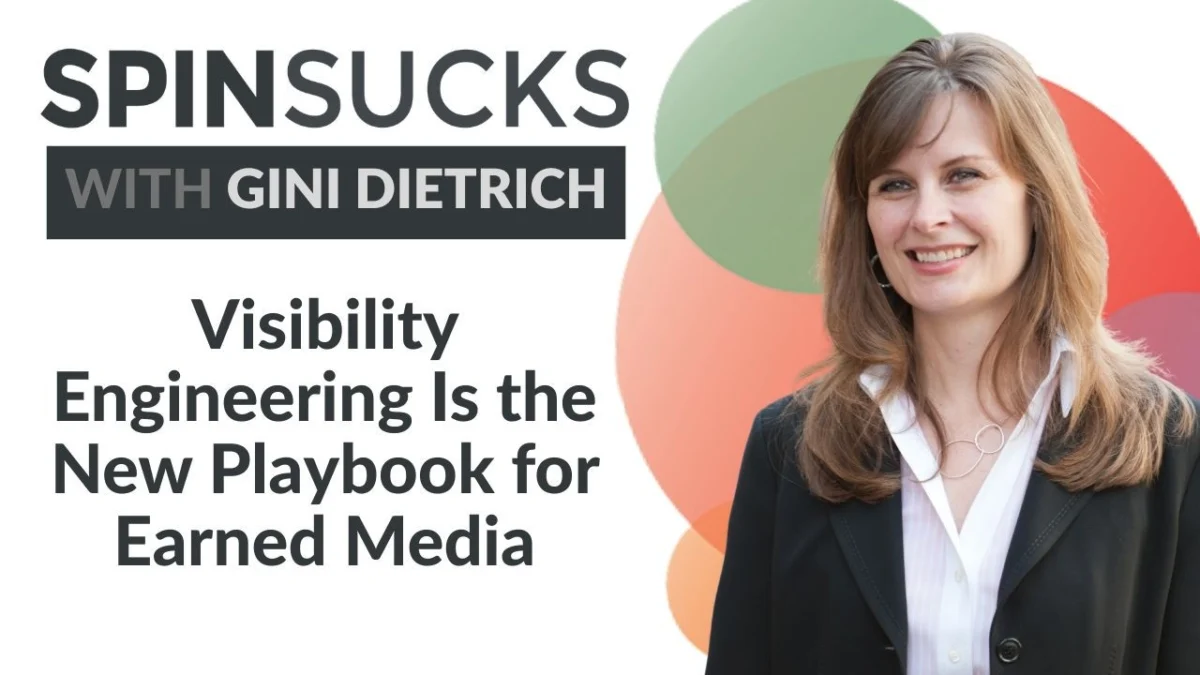
The traditional paradigm of public relations, once centered on the pursuit of isolated media placements to establish brand authority, is undergoing a fundamental transformation as artificial intelligence redefines the mechanics of discovery and trust. In a market increasingly shaped by Large Language Models (LLMs) such as ChatGPT, Claude, and Gemini, the singular "media hit" is no longer a sufficient catalyst for building lasting credibility. Instead, industry experts are advocating for a strategic pivot toward "visibility engineering," a systemic approach that integrates owned and earned media to create a cohesive, defensible, and machine-readable narrative of expertise.
The core challenge facing modern communication teams is the shift in how prospects and search systems validate information. Historically, a high-profile mention in a trade publication or a quote from a reputable news source served as both a discovery mechanism and a seal of approval. However, in the current digital ecosystem, potential clients often form opinions and establish shortlists through AI-driven summaries and social media comparisons before ever visiting a company’s primary website. This shift necessitates a move away from "trophy case" PR—where placements are treated as static wins—toward "credibility loops," where every earned mention reinforces a centralized "anchor hub" of owned content.
The Chronological Evolution of Media Discovery and Trust
To understand the necessity of visibility engineering, one must examine the three distinct phases of media evolution over the last two decades.
In the Traditional Press Era (pre-2010), discovery was governed by gatekeepers. Credibility was a byproduct of editorial selection; if a reputable journalist chose to feature a brand, that brand was viewed as legitimate. The process was linear: discovery led to a website visit, which led to a conversion.
The Digital Content Explosion (2010–2022) introduced the era of Search Engine Optimization (SEO) and social media virality. Discovery moved to Google and LinkedIn. Credibility was measured by search rankings and engagement metrics. Brands responded by producing high volumes of content, focusing on keywords and backlinks to maintain visibility.
The AI-Shaped Market (2023–Present) represents the third phase. Discovery is now mediated by AI agents that synthesize vast amounts of data to provide direct answers. In this environment, volume is secondary to signal consistency. AI systems look for patterns across multiple sources to determine who is an "obvious answer" to a user’s query. This phase marks the end of the isolated media hit as a primary driver of authority.
Supporting Data: The Decline of the Single Placement and the Rise of AI Search
Recent market data highlights the urgency of this shift. According to research by Gartner, search engine volume is projected to drop by 25% by 2026 as consumers migrate toward AI-powered search engines and chatbots. This "zero-click" reality means that brands must ensure their expertise is indexed and recognized by LLMs, which prioritize consistent data patterns over sporadic news mentions.
Furthermore, the 2024 Edelman Trust Barometer indicates a growing skepticism toward corporate messaging, with a significant percentage of respondents stating they require proof of expertise from multiple independent sources before trusting a brand. Visibility engineering addresses this by ensuring that the signals sent through earned media (third-party validation) align perfectly with the signals sent through owned media (first-party proof).
Industry analysis suggests that B2B buyers now complete approximately 70% of their journey before ever engaging with a sales representative. If a brand’s visibility is disconnected—featuring an executive in one outlet on a topic unrelated to the company’s core service—AI summaries will reflect that fragmentation, potentially excluding the brand from the consideration set entirely.
The Mechanics of Visibility Engineering and the Anchor Hub
Visibility engineering is defined as the deliberate practice of building authority in a manner that humans, search engines, and AI systems can simultaneously recognize and validate. The foundational element of this system is the "anchor hub."
An anchor hub is not a standard blog post or a generic services page. It is a deep, defensible, and comprehensive resource on a company’s website dedicated to a single, high-intent buyer question or industry topic. This hub serves as the "home base" for a brand’s expertise. It provides the definitions, frameworks, and evidence that characterize the brand’s unique methodology.
The strategic value of the anchor hub lies in its ability to anchor earned media. When a company representative is interviewed for a podcast or quoted in a trade journal, the expertise shared should directly mirror and point back to the anchor hub. This creates a "credibility loop." Instead of a series of random mentions that create "noise," the brand produces a unified signal that AI systems can easily identify as a pattern of authority.
Official Responses and Industry Perspectives
Marketing and communication leaders are increasingly adopting the PESO Model® (Paid, Earned, Shared, Owned), an integrated framework developed by Gini Dietrich, to manage these complexities. Experts within the Spin Sucks community argue that the problem is not that earned media is "dead," but rather that "disconnected earned media" is inefficient.
"Earned media is still the proof you cannot buy," the Spin Sucks analysis notes. "But when it’s disconnected from a bigger story—something you can repeat, defend, and point back to—it becomes a moment instead of momentum."
This sentiment is echoed by digital strategists who emphasize that LLMs are "pattern-matching machines." If a brand claims to be an expert in "sustainable logistics" on its website but its earned media mentions are exclusively about "general supply chain management," the AI may fail to associate the brand with the specific niche of sustainability. Visibility engineering ensures that the "owned" foundation and the "earned" validation are perfectly synchronized.
Broader Impact and Implications for Corporate Communication
The shift toward visibility engineering has profound implications for how organizations allocate their marketing budgets and measure success.
From Quantity to Quality of Signals
The metric of "placement count" is becoming obsolete. Organizations are moving toward measuring "reuse" and "topic ownership." Success is no longer defined by how many times a brand was mentioned, but by whether those mentions reinforced the core anchor hub and whether the brand is now the "obvious answer" provided by AI search agents.
The Role of the Subject Matter Expert (SME)
Visibility engineering requires a human face. AI systems and human audiences alike look for named experts associated with specific topics. This necessitates a more strategic use of executive profiles and bylined articles. Companies must decide which experts will "own" which topics and ensure that their external presence consistently supports that ownership.
Future-Proofing Against AI Volatility
As AI models are updated, they will become more adept at identifying and discarding low-quality, AI-generated content used to "game" the system. Visibility engineering relies on "reusable proof"—high-quality, human-led insights that are cited by reputable third parties. This creates a durable layer of credibility that is less susceptible to changes in search algorithms.
Practical Steps for Implementation
For organizations looking to transition from traditional PR to visibility engineering, experts recommend a three-step audit process:
- AI Audit: Conduct an "incognito" search using various LLMs to determine how the brand is currently perceived. Asking questions like "Who are the leaders in [Industry Topic]?" or "What is [Company Name] known for?" reveals the current baseline of visibility and identifies gaps in the brand’s signal.
- Anchor Hub Development: Identify one primary topic or buyer question that the brand wants to own. Rather than producing 20 shallow blog posts, the focus should be on building the most useful, citable, and complete resource on the internet for that specific topic.
- Connection Strategy: Every subsequent earned media opportunity—whether a guest article, a speaking engagement, or a media quote—must be evaluated based on its ability to reinforce the anchor hub. If a placement does not support the core narrative, its value in the AI era is significantly diminished.
Conclusion: Building Proof That Compounds
The transition from a trophy case of media hits to a engineered system of visibility represents a maturation of the communications profession. In an environment where information is synthesized in seconds by machines, the brands that thrive will be those that provide clear, consistent, and reinforced proof of their expertise.
Visibility engineering does not replace the art of storytelling or the value of media relations; rather, it provides the structural integrity required for those efforts to succeed in a digital-first world. By connecting owned and earned media through a centralized anchor hub, organizations can build a compounding engine of authority that ensures they remain the trusted answer, regardless of where the audience—human or machine—is looking.