rifanmuazin
For seasoned e-commerce professionals, the integration of a Customer Relationship Management (CRM) system is a pivotal decision, capable of either doubling sales or becoming a significant drain on resources and time. The ability of a CRM to centralize lead generation, email communications, and sales data is transformative. Conversely, a poorly implemented or ill-suited CRM can lead to fragmented workflows and missed opportunities. This comprehensive analysis delves into two leading platforms, HubSpot CRM and ActiveCampaign, examining their strengths, weaknesses, and suitability for growing e-commerce brands. While both offer robust features, the evidence presented here suggests that HubSpot CRM ultimately emerges as the superior choice for comprehensive e-commerce management.
A Swift Overview: HubSpot vs. ActiveCampaign at a Glance
To provide an immediate understanding of how these platforms stack up, a comparative table highlights key features and functionalities. This snapshot serves as a foundational reference before a deeper exploration of each platform’s capabilities.
| Feature | HubSpot Marketing Hub | ActiveCampaign |
|---|---|---|
| Setup & Onboarding | Guided onboarding, free CRM ready in minutes, unified workspace | Quick campaign setup, CRM integration needed for full tracking |
| AI Tools | Breeze AI Agents (Content, Social, Prospecting), AI CPQ, Data Hub Intelligence | Predictive Sending, Content Optimization, Active Intelligence agents |
| Marketing Automation | Full inbound engine – email, ads, SEO, landing pages, workflows | Strong email automation and branching; solid CRM layering |
| Omnichannel Messaging | Email, social, ads, SMS (via integration) | Native email + SMS + WhatsApp + transactional email |
| CRM & Pipeline Mgmt. | Native Smart CRM; pipelines capped by plan | Built-in CRM with unlimited pipelines on all plans |
| Reporting & Analytics | Multi-touch attribution, custom dashboards, Data Hub integration | Campaign-level analytics; excellent for email flows, limited cross-channel view |
| Integrations & Ecosystem | 2,000+ apps; deep two-way data sync (Shopify, Slack, Stripe etc.) | 1,000+ apps; good email integrations, heavier reliance on Zapier |
| Pricing & Cost | Free CRM, tiered hubs (users + features) | Contact-based pricing; cheaper start but scales fast |
| Onboarding & Support | HubSpot Academy, docs, partner network, optional paid migration | Free 1:1 migration (Pro +), good support for email teams |
| Deliverability & Localization | Strong deliverability; web content translation via DeepL | Excellent deliverability; native support for 75 languages |
| Best For | Growing e-commerce or B2B brands needing unified data + automation | Email-driven teams needing fast, powerful flows on a budget |
Core Philosophies: Understanding the Design Intent
At their core, HubSpot and ActiveCampaign represent distinct approaches to CRM and marketing automation. HubSpot Marketing Hub is an integral component of HubSpot’s comprehensive Smart CRM ecosystem, designed for seamless integration across all customer touchpoints: emails, advertisements, sales opportunities, and even payment processing. This unified architecture is its primary strength. When a customer interacts with the platform, such as filling out a form, HubSpot automatically logs the activity, scores the lead, and initiates a pre-defined workflow. This could trigger an email response or generate a task for a sales representative, ensuring immediate and coordinated action.
The integration of HubSpot’s Breeze AI further enhances this capability. The system moves beyond mere activity tracking to proactive engagement, offering insights and suggestions that facilitate informed decision-making. For e-commerce businesses, this translates into a clear, chronological view of the customer journey, from the initial ad click to the final purchase.
ActiveCampaign, conversely, operates with a more focused and agile approach, primarily catering to marketing professionals, particularly those deeply invested in email marketing automation. The platform is renowned for its speed and efficiency in setting up campaigns. Users can quickly configure a campaign, define branching logic, and deploy personalized automations within a remarkably short timeframe, often under an hour.
ActiveCampaign particularly excels in scenarios where precise timing is critical, such as post-purchase follow-ups, nurturing sequences, and time-sensitive promotional offers. Its Predictive Sending and Active Intelligence tools, which have seen significant enhancements in recent years, demonstrate a sophisticated understanding of customer behavior. These features intelligently determine optimal send times and content variations based on individual contact engagement patterns.
The Crucial First Steps: Setup and User Experience
The initial setup of CRM software can often be a daunting hurdle. Some platforms present a complex array of settings that can overwhelm new users, hindering their ability to engage with the core functionalities. In contrast, intuitive systems guide users through the process, making adoption feel natural and efficient.
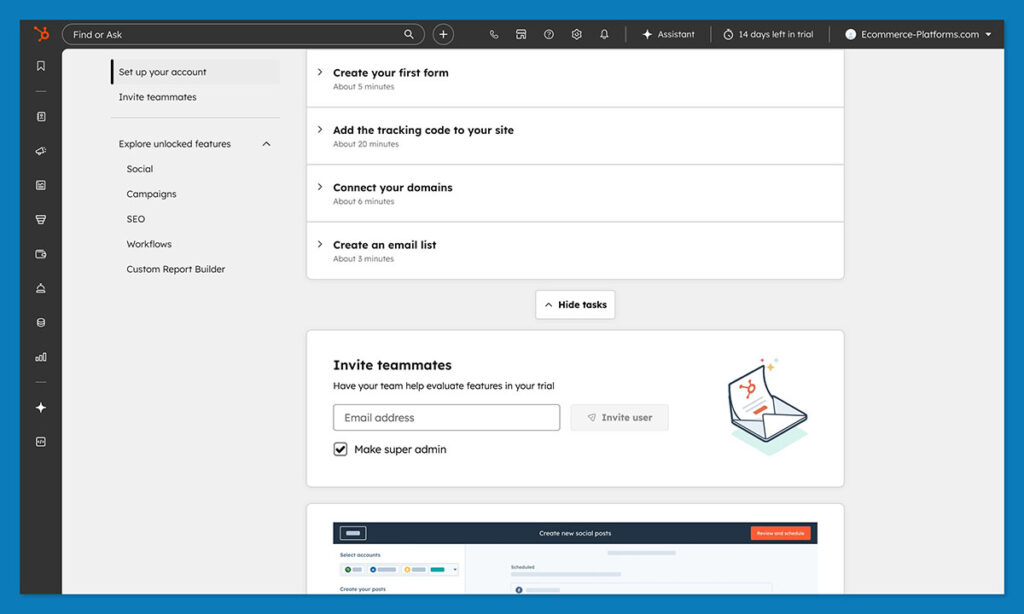
HubSpot’s setup experience is designed to be remarkably fluid. Upon creating a free account, users can integrate their e-commerce store, email services, and advertising platforms. The system then automatically begins consolidating this data, creating a unified view of customer interactions. Within a short period, patterns emerge, revealing lead sources, effective sales-driving pages, and products that consistently attract repeat customers.
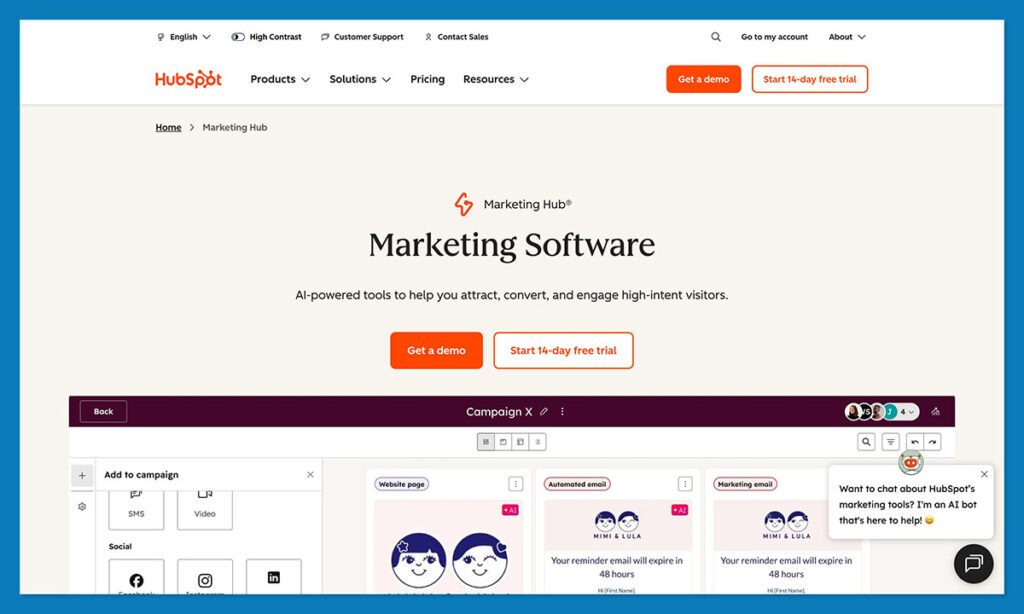
The onboarding process is highly practical, allowing users to prioritize essential tasks like building their first automation workflow or customizing the sales pipeline to align with their team’s specific needs. The workspace is highly customizable, enabling users to tailor dashboards to display metrics most relevant to their business, such as average order value and abandoned cart recovery rates, rather than solely focusing on basic email engagement. Crucially, all HubSpot hubs – Marketing, Sales, and Commerce – share a single data repository, eliminating the need for cumbersome data exports and re-imports between disparate systems.
ActiveCampaign adopts a more streamlined approach to initial setup. Users can typically launch a campaign within minutes, and its automation builder is designed for immediate intuitive use. However, the complexity increases when integrating deeper e-commerce data. Mapping store fields and synchronizing purchase history can require more extensive trial-and-error, and users may need to meticulously verify that automated triggers are functioning as intended.
The Power of Intelligence: AI and Automation in Action
HubSpot’s AI capabilities are seamlessly integrated into its daily operational tools, feeling less like an add-on and more like an inherent feature. When drafting campaign content, the editor proactively suggests enhancements, such as optimizing subject lines or refining paragraph structure. The Breeze AI tools are conveniently located within the editing interface, allowing users to adjust tone or translate messages without leaving the current page.
The Social Agent functions similarly, offering recommendations for post timing and wording that have historically performed well with the target audience. Over time, this feature acts as a virtual assistant, learning and adapting to the brand’s unique communication style. All AI-driven insights and data are consolidated through HubSpot’s Data Hub, providing a singular, comprehensive record of customer activities. This enables the creation of sophisticated automations, such as identifying customers who repeatedly view a specific product, increasing their lead score, assigning a task to sales, and initiating a personalized follow-up. This automation operates unobtrusively in the background, freeing up marketing teams to focus on strategic campaign planning rather than manual data management.
ActiveCampaign’s AI tools are more narrowly focused but highly effective. The Predictive Sending feature analyzes individual contact engagement patterns to determine the optimal time to send emails, maximizing open rates. Predictive Content allows for dynamic adjustments to headlines and call-to-action buttons based on past performance data. While these features are potent for email-centric strategies, HubSpot’s automation provides a broader perspective, encompassing the entire customer lifecycle before and after email interactions.
Crafting Campaigns: The Art of Marketing Automation
As users begin building marketing campaigns, the distinct personalities of HubSpot and ActiveCampaign become more apparent. Both platforms offer robust automation capabilities, but their methodologies and user experiences differ significantly.
HubSpot’s approach to campaign building is characterized by its holistic scope. It empowers users to design intricate marketing ecosystems where every element is interconnected. For instance, a customer who views a product multiple times without purchasing can trigger a sequence involving an AI-generated email, a sales task assignment, and even a targeted social media advertisement if no immediate response is observed. This entire process is managed within a single, cohesive interface, providing a clear visual representation of each interconnected step.
The recent enhancements to HubSpot’s Marketing Studio further streamline this process. Users can now utilize a visual drag-and-drop interface to map out customer journeys, with each action represented on a unified canvas. The Living Segments feature ensures that audience lists are dynamically updated based on real-time customer behavior, such as purchases, clicks, or unsubscribes. Content creation is also integrated, with the Content Hub enabling the development of landing pages and blog posts directly within the platform, eliminating the need for manual tracking code integration or separate analytics setup.
ActiveCampaign presents a more minimalist and focused experience. Its automation builder is exceptionally fast and user-friendly, particularly for email-centric workflows. Users can easily construct a sequence where contacts who open a campaign and click a product link receive a discount offer two days later, while those who do not open receive a gentler reminder. This visual builder is quick to learn and highly effective for single-channel marketing.
However, ActiveCampaign’s primary limitation lies in its focus on the inbox. For advanced advertising, landing page creation, or comprehensive SEO reporting, users will likely need to integrate additional tools. While this is manageable for businesses heavily reliant on email marketing, HubSpot’s integrated approach significantly reduces the need to switch between multiple applications, saving valuable time and effort as customer interactions span various touchpoints.
The Backbone of Business: Sales and CRM Integration
The true differentiation between these platforms becomes evident when examining their sales and CRM integration capabilities. While basic marketing automation can sustain early-stage businesses, the influx of leads necessitates a robust system for tracking progress and understanding revenue impact.
HubSpot excels in this regard with its native Smart CRM. This system is at the heart of the HubSpot ecosystem, providing a comprehensive view of each contact’s journey. A contact record displays a complete history, from the initial ad click and landing page visit to every email exchanged, deal progression, and payment processed, particularly when utilizing Commerce Hub. This data is updated in real-time, allowing for seamless deal sorting, task assignment, and pipeline management, moving customers from initial interest to secured deals without any loss of context. The platform even facilitates direct quote generation and payment processing within the CRM, a feature that significantly streamlines sales operations. The only noted limitation is that the number of customizable pipelines is tied to the subscription plan, though this rarely poses an issue for most e-commerce operations.
ActiveCampaign’s CRM, while functional, often feels like an add-on rather than an integrated component. It supports basic pipeline management, note-taking, and deal tracking. However, achieving seamless synchronization with broader e-commerce data, such as full order details or detailed website behavior, typically requires the implementation of several background integrations.
Unpacking Performance: Reporting, Analytics, and Data Management
The effectiveness of a CRM is often best assessed through its reporting and analytics capabilities. A well-designed system provides a clear, actionable view of performance, while a less sophisticated one can obscure crucial insights.
HubSpot offers an effortless data experience. All customer, campaign, and deal information is consolidated into a unified dashboard, eliminating the need for time-consuming data retrieval. Marketing Hub reports clearly delineate which campaigns generate revenue, which pages drive conversions, and which emails lead to purchases rather than mere clicks. The recent updates to Data Hub, introduced at the INBOUND conference, further enhance this by enabling seamless integration with platforms like Shopify, Google Ads, and data warehouses, ensuring continuous data synchronization. Features such as drag-and-drop dashboards, multi-touch attribution models, and AI-powered trend summaries provide actionable insights in clear, understandable language, effectively replacing manual CSV exports.
ActiveCampaign provides strong visibility into campaign-specific metrics, including opens, clicks, and goal completions. However, its cross-channel reporting capabilities are more limited. Connecting campaign performance directly to sales figures or repeat customer orders often necessitates the use of additional tools. While effective for marketers focused primarily on email data, it does not offer the same cohesive view of a customer’s entire journey as HubSpot.
Expanding Horizons: Integrations and Ecosystem
The initial phase of adopting a new CRM often involves connecting it with existing business tools, including e-commerce platforms, email marketing services, advertising accounts, and payment processors. Both HubSpot and ActiveCampaign offer extensive integration capabilities, but HubSpot provides a broader and more deeply integrated ecosystem.
HubSpot boasts over 2,000 integrations, with major platforms like Shopify and Slack connecting with minimal effort. What distinguishes HubSpot is the "native" feel of these integrations. Rather than appearing as bolted-on functionalities, they are seamlessly woven into the CRM experience. For instance, integrating QuickBooks ensures that invoices are automatically populated within the CRM timeline. Similarly, connecting Meta Ads automatically attributes conversions to specific campaigns. This level of integration creates a tidy, efficient, and highly satisfying user experience.
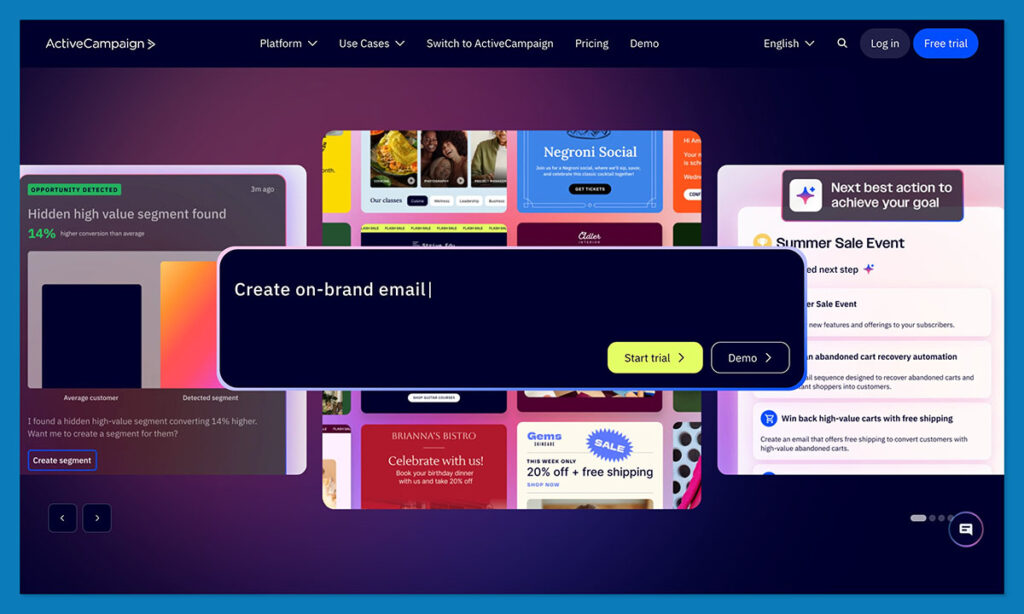
ActiveCampaign offers approximately 1,000 integrations, covering most common e-commerce and marketing tools. While essential platforms like Shopify and WooCommerce connect smoothly, deeper data synchronization often requires intermediary solutions like Zapier or manual field mapping. While not overly complex, these steps involve additional configuration and potential troubleshooting. For users who prioritize lightweight setups and primarily focus on email-driven triggers, ActiveCampaign can meet their needs. However, for businesses seeking a single, cohesive system that quietly manages inter-tool communication, HubSpot’s ecosystem offers a more stable and less labor-intensive solution.
The Art of Connection: Email and Messaging Performance
Email remains a cornerstone of e-commerce marketing, yet customers increasingly engage across multiple channels, including direct messages and text. An effective platform not only delivers messages but also strategically determines the optimal channel and timing for each interaction.
ActiveCampaign’s origins in email marketing are evident in its robust deliverability rates. Campaigns are dispatched promptly, consistently reach inboxes, and rarely trigger spam filters. The platform incorporates advanced features such as list cleaning, bounce management, and engagement tracking, contributing to consistently high open rates. In testing, ActiveCampaign messages demonstrated a slight edge in inbox placement reliability, particularly for high-volume dispatches.
Furthermore, ActiveCampaign offers superior native support for omnichannel messaging. Users can send SMS and WhatsApp messages directly from the automation builder. For transactional emails, seamless integration with services like Postmark ensures that order confirmations and shipping updates are handled separately from marketing communications, a significant advantage for brands relying on timely notifications.
HubSpot adopts a broader strategic approach to messaging. While its deliverability is excellent, its primary strength lies in intelligent audience segmentation. By leveraging the rich context available in its CRM—including purchase history, lead scores, and service interactions—users can segment audiences based on detailed behaviors rather than solely engagement metrics. This typically results in fewer, more impactful sends and consequently higher click-through rates, as the focus shifts from mass communication to targeted outreach. HubSpot’s messaging capabilities are also expanding, with SMS and WhatsApp integration through third-party connectors, all feeding into a unified inbox. While not as immediate as ActiveCampaign for outbound texts, this provides a single, cohesive record of all customer communications.
The Financial Equation: Pricing and Total Cost of Ownership
HubSpot offers a fundamentally free CRM, providing essential functionalities for contact management, basic email marketing, deal tracking, and reporting without any initial financial commitment. The true investment begins with the addition of specialized hubs, such as Marketing, Sales, and Service. These hubs scale based on user count and feature complexity. For smaller teams, starter tiers are often sufficient, with pricing typically starting around $20 per user per month for Sales Hub and slightly more for Marketing Hub. However, unlocking advanced automation, AI capabilities, and sophisticated reporting necessitates upgrading to Professional or Enterprise tiers, which can represent a significant investment.
While the upfront cost of HubSpot’s advanced tiers may appear substantial, it often proves more economical in the long run. By consolidating multiple functionalities within a single platform, businesses can reduce or eliminate subscriptions to standalone tools, thereby lowering their overall technology expenditure.
ActiveCampaign employs a contact-based pricing model, which offers a lower entry point. Businesses can begin for approximately $39 per month for up to 2,500 contacts. This model is advantageous for businesses with smaller contact lists. However, as the contact list grows, the pricing escalates rapidly. Consequently, a few thousand additional subscribers can quickly push businesses into higher pricing tiers. While ActiveCampaign provides essential marketing automation features, the need for separate tools for landing pages, advanced CRM functions, and deeper analytics can lead to accumulating costs.
Over time, the economic advantages of a unified platform like HubSpot become increasingly apparent. While the initial investment might be higher, the ability to replace multiple disparate software subscriptions often results in a lower total cost of ownership and a more streamlined operational workflow.
Conclusion: HubSpot CRM’s Enduring Advantage for E-commerce
While ActiveCampaign is an exceptional tool, particularly for email-centric marketing teams seeking rapid deployment and powerful automation, its limitations become apparent when a broader, integrated approach to e-commerce management is required. Its strength lies in its focused efficiency within the inbox, but as businesses scale and customer interactions diversify, ActiveCampaign begins to rely on supplementary applications to bridge functional gaps.
HubSpot CRM, conversely, is architected as a central control hub rather than a collection of independent plugins. Its Smart CRM forms the nucleus, seamlessly connecting marketing, sales, support, and e-commerce operations. Data flows autonomously, and all team members operate with a consistent, unified view of customer interactions. This integrated framework significantly reduces operational friction and confusion, ultimately saving time and resources. The inherent interconnectedness of HubSpot’s various hubs fosters a more cohesive and efficient business environment.
The accessible free tier of HubSpot CRM allows businesses to experience its core benefits firsthand. Many e-commerce teams find that within the first week of implementation, the platform demonstrably simplifies their workflows and enhances overall operational efficiency, leading to its long-term adoption as the preferred solution.
Frequently Asked Questions
What are HubSpot’s primary strengths for e-commerce?
HubSpot’s core advantage lies in its ability to centralize and unify all aspects of a business’s operations. For e-commerce, this means seamlessly integrating marketing, sales, and customer service within a single platform. It eliminates the need to track lead origins across disparate tools or investigate post-purchase activities, providing a clear and comprehensive overview.
Can HubSpot facilitate e-commerce store management?
Yes, HubSpot integrates directly with platforms like Shopify and Stripe, enabling businesses to send quotes, process payments, and automate abandoned cart recovery emails without leaving the CRM. This integration creates a remarkably calm and efficient operational environment where processes largely manage themselves.
Is HubSpot’s CRM platform free?
HubSpot offers a robust, free CRM that includes contact management, email tools, and deal tracking. This is not a limited-time trial. Paid "hubs" (Marketing, Sales, Service) unlock advanced features like in-depth automation, AI capabilities, and sophisticated analytics for businesses that require them.
Which platform offers superior AI capabilities?
The definition of "superior AI" depends on specific needs. ActiveCampaign’s AI is tailored to optimize email marketing through intelligent timing and content personalization. HubSpot’s AI, however, is more comprehensive, extending across content creation, lead prospecting, reporting, and sales data analysis, functioning as an all-encompassing strategic assistant.
When is HubSpot a more logical choice than ActiveCampaign?
HubSpot is the superior choice when marketing, sales, and CRM functions need to operate in unison within a single system. While ActiveCampaign is a strong contender for businesses primarily focused on sending campaigns, HubSpot provides a more integrated and scalable solution for comprehensive e-commerce growth.