rifanmuazin
The global mobile application landscape has reached a point of saturation, with millions of apps competing for user attention across the Apple App Store and Google Play Store. In this hyper-competitive environment, mobile app professionals have historically relied on quantitative analytics to gauge success, tracking metrics such as daily active users (DAU), churn rates, and session lengths. However, a significant paradigm shift is occurring as industry experts recognize a fundamental flaw in traditional data-driven workflows: numbers alone cannot explain the "why" behind user behavior. To address this gap, a new standard of "Qualitative Analytics" has emerged, combining traditional data points with visual behavioral tools like touch heatmaps and user session recordings to provide a comprehensive view of the mobile user experience.
The Quantitative Limitation and the Need for Context
For over a decade, quantitative analytics served as the bedrock of mobile product management. These tools are designed to provide statistical evidence of app performance, highlighting where users drop off in a conversion funnel or identifying which operating systems experience the most crashes. While invaluable for identifying what is happening within an application, quantitative data is inherently limited by its lack of context.
For instance, a developer might observe a 40% drop-off rate on a registration screen. While the quantitative data confirms the loss of potential users, it fails to specify if the abandonment was caused by a confusing user interface (UI), a technical bug in a specific field, or a lack of clarity regarding the value proposition. This "analytical blind spot" often leads to guesswork, where development teams iterate on features based on assumptions rather than observed reality. The integration of qualitative analytics seeks to eliminate this ambiguity by providing the visual evidence necessary to diagnose the root causes of friction.
The Mechanisms of Qualitative Analytics: Heatmaps and Session Replay
Qualitative analytics is primarily defined by two core technologies that transform abstract data into visual narratives: touch heatmaps and user session recordings.
Touch Heatmaps and Interaction Analysis
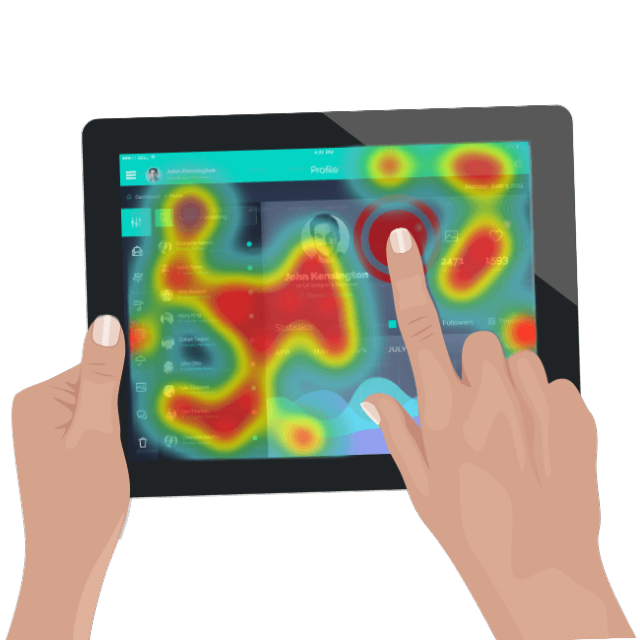
Touch heatmaps aggregate every gesture made by users—including taps, double-taps, swipes, and pinches—across every screen of an application. By overlaying this data onto the app’s interface, developers can visualize "hot" and "cold" zones of activity. This allows product teams to determine if users are engaging with the primary Call to Action (CTA) buttons or if they are being distracted by secondary elements.
A critical subset of heatmap data is the "unresponsive gesture." This occurs when a user taps an element—such as an image or a text block—expecting an action that the app does not provide. High frequencies of unresponsive gestures are a leading indicator of "UI friction," suggesting that the app’s design is not intuitive. By identifying these points of frustration, developers can either add functionality to those elements or redesign the interface to better align with user expectations.
User Session Recordings
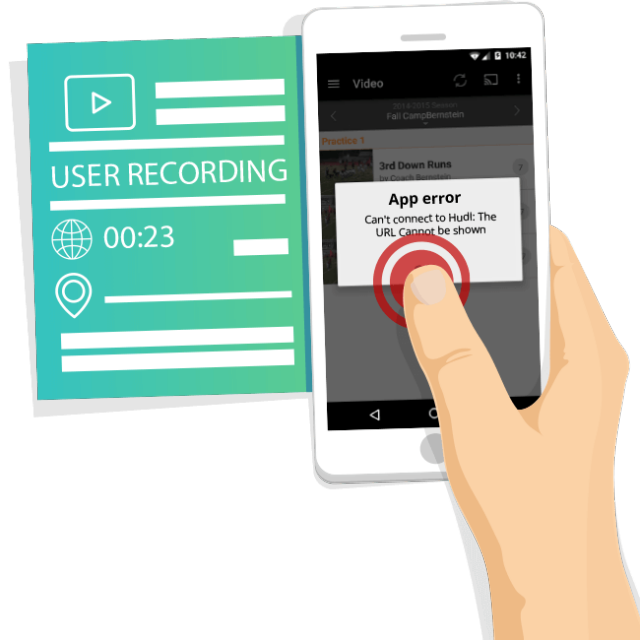
User session recordings provide a literal video representation of the user’s journey through the application. Unlike traditional screen recording, modern qualitative tools capture the technical events and UI rendering in the background, allowing for an unbiased view of the user experience without impacting device performance.
These recordings are instrumental in troubleshooting complex issues. When a quantitative tool flags an app crash, a session recording allows a developer to watch the exact sequence of events leading up to the failure. This "reconstruction of the crime scene" drastically reduces the time spent on bug reproduction and allows for more surgical fixes to the codebase.
A Chronology of Mobile Analytics Evolution
The transition from simple data logging to advanced qualitative analysis has followed a distinct historical timeline:
- 2008–2011: The Log Era. Early mobile apps relied on basic server logs and rudimentary tracking scripts ported from web analytics. Data was focused on total downloads and basic crashes.
- 2012–2014: The Event-Tracking Era. The rise of platforms like Mixpanel and Flurry allowed developers to track specific "events" (e.g., "Button Clicked"). This introduced the concept of the conversion funnel.
- 2015–2017: The Emergence of Qualitative Tools. Companies like Appsee (later acquired) and FullStory pioneered the integration of session replays for mobile. This period marked the realization that visual context was necessary for mobile-first UI/UX.
- 2018–Present: The Integrated Workflow Era. Modern analytics suites now prioritize a "hybrid" approach, where quantitative alerts automatically trigger qualitative investigations. This era is also characterized by increased focus on data privacy and GDPR/CCPA compliance in session recording.
Supporting Data: The Economic Impact of App Friction
The necessity of qualitative analytics is supported by current industry benchmarks regarding user retention and acquisition costs. According to industry data from Statista and various mobile marketing firms, the average mobile app loses approximately 77% of its daily active users within the first three days after installation. By the 90-day mark, that number often climbs to over 90%.
Furthermore, the Cost Per Install (CPI) has seen a steady increase as the market becomes more crowded. In sectors like e-commerce or gaming, acquiring a single user can cost several dollars. When a user abandons an app due to a preventable UI flaw or an unresponsive button, the company effectively loses its entire marketing investment for that individual. Research indicates that apps utilizing qualitative tools to optimize their onboarding flows see a 15% to 30% improvement in long-term retention rates compared to those relying solely on quantitative data.
Strategic Workflows: Optimization and Troubleshooting
The integration of qualitative data facilitates two primary professional workflows that are essential for maintaining a high-performance mobile product.
Data-Fueled Optimization
In this workflow, quantitative and qualitative tools act as a "detective and witness" duo. The quantitative tool acts as the detective, identifying a statistical anomaly—such as a sudden spike in cart abandonment. The qualitative tool acts as the witness, showing the developer exactly why the abandonment happened.
A common scenario involves a checkout process where a "Promo Code" field is too prominent. Qualitative recordings might show users leaving the app to search for a discount code on Google, only to never return. Without the recording, the developer might have assumed the payment gateway was broken; with the recording, the solution is a simple UI adjustment to make the promo field less distracting.
Proactive Troubleshooting
While traditional troubleshooting is reactive—fixing bugs after they have affected thousands of users—qualitative analytics allows for a proactive approach. By regularly auditing session recordings and heatmaps, product teams can spot emerging issues before they reach a critical mass.
For example, a developer might notice a small segment of users on a specific device model struggling to click a "Submit" button because it is partially obscured by the device’s notch or navigation bar. By catching this early through visual inspection, the team can issue a hotfix before the quantitative crash or abandonment rates begin to climb, thereby protecting the brand’s reputation and user base.
Official Responses and Industry Sentiment
Leading Product Managers and Chief Technology Officers (CTOs) have increasingly voiced the importance of this holistic approach. In various industry forums and tech summits, the consensus among mobile leaders is that "data without empathy is useless."
"We used to spend weeks debating why our conversion rates were dipping," noted one senior product manager at a leading fintech firm. "Once we implemented qualitative session replays, the debates stopped because the evidence was right there on the screen. It shifted our culture from ‘I think’ to ‘I see.’"
Furthermore, the developer community has emphasized the role of these tools in bridging the gap between design and engineering. Designers can see where their aesthetic choices conflict with user habits, while engineers can see the exact state of the app during a failure, fostering a more collaborative environment.
Broader Impact and Future Implications
The shift toward qualitative analytics has broader implications for the future of software development. As artificial intelligence (AI) and machine learning become more integrated into analytics platforms, the next frontier will likely involve "Automated Qualitative Analysis." Future systems may be able to automatically watch thousands of session recordings and use computer vision to flag specific patterns of user frustration, such as "rage clicking" or "circular navigation."
Moreover, the emphasis on qualitative data is forcing a renewed focus on user privacy. Modern qualitative tools now include robust masking features that automatically hide sensitive information—such as credit card numbers or passwords—during the recording process. This ensures that companies can gain behavioral insights without compromising the security or trust of their users.
In conclusion, the integration of qualitative analytics into the standard mobile development workflow represents the maturation of the industry. By moving beyond the "what" of quantitative numbers to the "why" of human behavior, mobile professionals are better equipped to build intuitive, stable, and successful applications. In an era where user experience is the ultimate differentiator, the ability to see the app through the eyes of the user is no longer a luxury—it is a technical and commercial necessity.