In today’s hyper-connected world, where digital presence dictates commercial viability, the question for businesses and content creators alike is no longer if they need an online presence, but how effectively they can be found. For those aiming to attract a wider audience and drive business growth, Search Engine Optimization (SEO) stands as an undisputed cornerstone of modern marketing strategy. It is the critical mechanism for building brand visibility and directing qualified traffic to digital properties, yet its fundamental principles require a clear understanding for effective implementation.
The acronym SEO encapsulates Search Engine Optimization, a discipline that has evolved significantly since its inception. Alex Moss, Principal SEO at Yoast, succinctly defines it as: “SEO is both the art and science of improving a website, and pages within, to be as visible as possible for when people search for a relevant topic within any search platform. SEO covers many areas from technical aspects including optimizing a site’s performance and structure, to enhancing brand authority by providing great content and matching it with that person’s search intent.”
In essence, SEO is the ongoing practice of refining a website and its content to ensure it is discoverable, comprehensible, and trustworthy to search engines and, by extension, to users actively seeking information. While traditionally focused on established search engines like Google and Bing, the scope of SEO has broadened considerably. It now encompasses optimization for AI-powered search experiences, conversational chatbots, social media platforms, and other burgeoning discovery mechanisms. This multifaceted approach integrates technical improvements, strategic content optimization, and robust brand-building initiatives to enhance online visibility, attract targeted audiences, and ultimately support overarching business objectives.
The Mechanics of Search: How Digital Discovery Works
At the heart of SEO lies the intricate workings of search engines like Google. The process fundamentally consists of three interconnected stages: crawling, indexing, and ranking. An online bot, often referred to as a “crawler” or “spider,” constantly scours the vast expanse of the internet, systematically discovering and collecting web pages. This collected data is then stored in a colossal database known as the index, which is perpetually updated to reflect new content or modifications to existing pages.
When a user initiates an online search query, the search engine taps into this immense index. Sophisticated algorithms then analyze the query, interpret user intent, and determine which indexed pages are most relevant and authoritative to display. This complex computation dictates the ranking of results presented to the searcher. For instance, a search for “sustainable phone case” will prompt Google to draw upon its index and algorithms to present what it deems the most pertinent and high-quality results based on the keywords and the implied intent of the query. These results are carefully curated to provide the best possible answer or solution to the user’s specific need.
Organic vs. Paid Search: A Critical Distinction
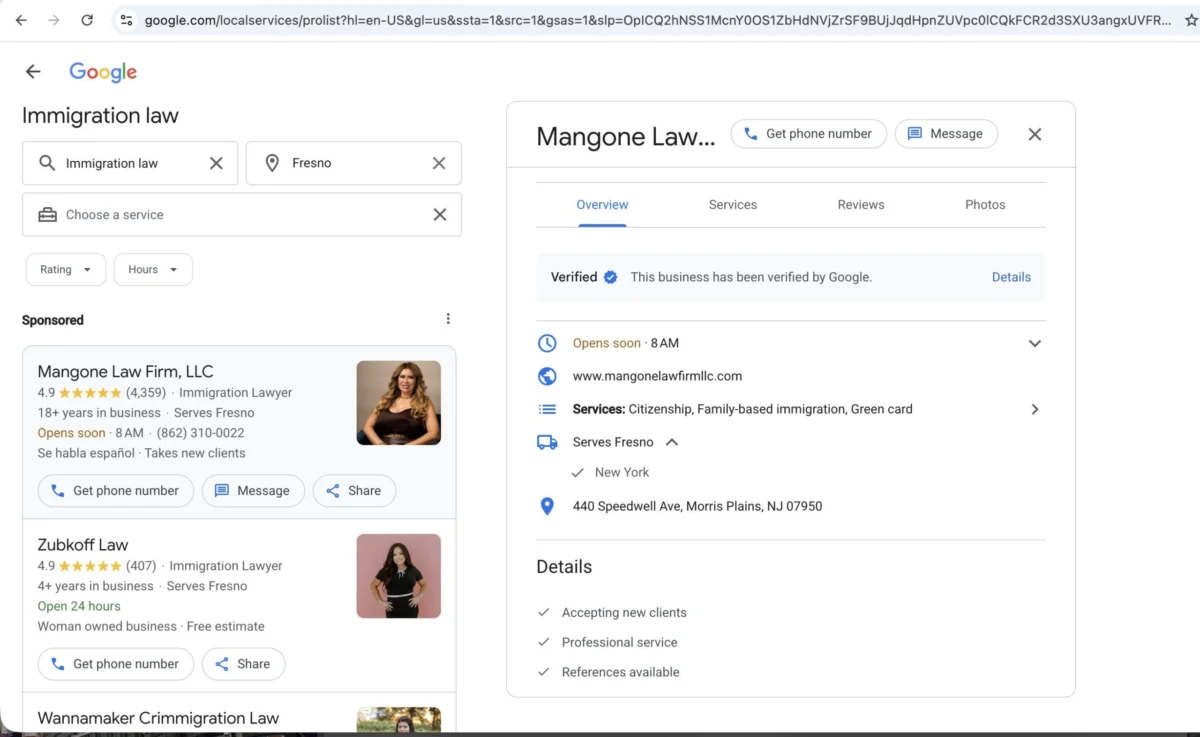
SEO primarily targets the acquisition of “organic traffic”—visitors who arrive at a website via unpaid search results. However, search engine results pages (SERPs) are often a mix of organic listings and advertisements. Paid results, frequently appearing at the top of the page, are generated through pay-per-click (PPC) advertising models. While PPC offers immediate visibility for specific search terms, it incurs a cost for every user click.
The strategic comparison between SEO and PPC reveals distinct benefits and drawbacks for each. SEO is a long-term investment that builds sustainable, compounding traffic, brand authority, and trust without direct per-click costs. PPC, conversely, offers rapid results, precise targeting, and scalable campaigns. While seemingly disparate, these two approaches are often complementary. A holistic digital marketing strategy frequently leverages both SEO for foundational organic growth and PPC for immediate impact, promotional pushes, or competitive keyword targeting.
Navigating the Future: SEO and Generative AI
The rapid ascent of AI-powered search experiences has introduced new terminology into the digital marketing lexicon. One such term, Generative Engine Optimization (GEO), has gained traction in discussions surrounding AI-generated responses and chatbots. GEO specifically refers to optimizing content for improved visibility within AI-generated outputs. However, industry experts, including those at Yoast, emphasize that GEO is not a replacement for SEO, but rather an evolution within its existing framework. The core principles of SEO — technical soundness, high-quality content, and user-centricity — remain paramount. The shift merely requires an awareness of how these principles apply to new platforms, including AI interfaces and social media. The fundamental goal of connecting users with valuable, relevant information persists, irrespective of the platform delivering it.

The Indispensable Role of SEO for Website Owners
The enduring importance of SEO for site owners stems from several compelling factors that underpin digital success:
- Immense Search Volume: The sheer scale of global search activity is staggering. Google, the world’s dominant search engine, processes over 8.5 billion searches daily in 2024. This figure represents an exponential increase since 1998, underscoring the critical need for any website to be discoverable within this vast ecosystem. Appearing prominently in Google and other search platforms is no longer optional but essential for reaching potential customers.
- Intent-Driven Engagement: Unlike many other marketing channels, such as social media, where brand messages often interrupt a user’s experience, search is inherently intent-driven. Users actively seek specific information, products, or solutions. This makes SEO an incredibly powerful inbound marketing strategy, as it positions businesses directly in front of an audience already expressing demand. The pre-existing intent of searchers translates into higher engagement rates and, crucially, a greater likelihood of conversion, making SEO a prime channel for attracting high-quality leads.
- Competitive Advantage and Brand Authority: In a crowded digital landscape where new websites emerge constantly, simply having an online presence is insufficient. SEO provides a sustainable competitive advantage by boosting online visibility, cultivating a stronger brand image, establishing authority within a specific field, increasing touchpoints with the target audience, and driving higher quality traffic. These cumulative benefits contribute significantly to enhanced brand loyalty and, ultimately, increased revenue.
- Beyond the Click: Brand Awareness and Influence: Modern SEO extends beyond merely generating clicks to a website. Content optimized for search may be cited in AI-generated answers, referenced in AI overviews, or discovered across diverse platforms like social media. Even if a user doesn’t immediately navigate to the website, being recognized as a trusted source significantly enhances brand awareness, builds credibility, and can drive future demand for a business’s offerings. This shift underscores the growing importance of brand presence and authority in the broader digital ecosystem.
The Foundational Pillars of SEO: A Structured Approach
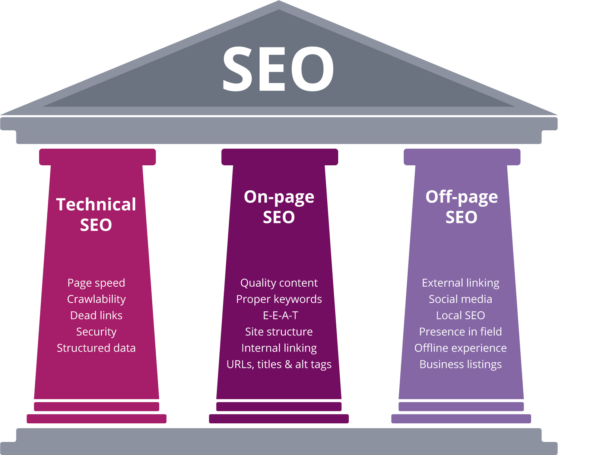
Optimizing a website for increased online visibility is a comprehensive endeavor that can be systematically divided into three primary areas: Technical SEO, On-Page SEO, and Off-Page SEO.
1. Technical SEO: This foundational pillar focuses on optimizing the technical aspects of a website to enhance user experience and facilitate search engine comprehension. Key elements include:
- Crawlability and Indexability: Ensuring search engine bots can efficiently access and add pages to their index.
- Site Speed: Optimizing loading times for a seamless user experience, a critical component of Google’s Core Web Vitals.
- Mobile-Friendliness: Guaranteeing a responsive and intuitive experience across all devices.
- Site Architecture: Structuring the website logically for easy navigation and content discovery.
- HTTPS: Implementing secure connections to protect user data and enhance trust.
- Structured Data (Schema Markup): Using standardized formats to provide search engines with explicit information about page content, enabling rich snippets and improved visibility.
- XML Sitemaps: Providing search engines with a roadmap of the website’s content.
- Canonicalization: Preventing duplicate content issues by specifying preferred URLs.
Search engines prioritize these technical aspects because they directly impact user experience. A fast, secure, mobile-friendly, and well-structured site provides a superior experience, which search engines reward with higher rankings.
2. On-Page SEO: While technical SEO addresses the “under-the-hood” aspects, On-Page SEO concentrates on optimizing the actual content and elements on a specific web page. This includes:

- Content Quality and Relevance: Creating valuable, comprehensive, and original content that directly addresses user intent.
- Keyword Optimization: Strategically integrating relevant keywords into content, headings, and meta descriptions naturally.
- Title Tags and Meta Descriptions: Crafting compelling and keyword-rich titles and descriptions that entice users to click.
- Header Tags (H1, H2, H3, etc.): Structuring content logically with clear headings to improve readability and signal topic hierarchy.
- Image Optimization: Using descriptive alt text, compressing file sizes, and choosing appropriate formats.
- Internal Linking: Connecting related pages within the website to improve navigation, distribute link equity, and enhance content discovery.
- URL Structure: Creating clean, descriptive, and keyword-friendly URLs.
On-Page SEO is primarily driven by content SEO, ensuring that the elements surrounding the core content are optimized for discoverability for relevant search terms.
3. Off-Page SEO: This pillar encompasses all SEO activities performed outside of a website to boost its authority and reputation. Key components include:
- Link Building: Acquiring high-quality backlinks from other reputable and relevant websites. These links act as “votes of confidence,” signaling to search engines that the linked-to content is valuable and trustworthy.
- Brand Mentions: Generating mentions of the brand across various online platforms, even without direct links.
- Social Media Engagement: While not a direct ranking factor, active social media presence can drive traffic, build brand awareness, and increase opportunities for organic mentions and links.
- Local SEO: Optimizing for local search queries, crucial for businesses with physical locations. This involves managing Google Business Profile, ensuring consistent business listings (NAP: Name, Address, Phone) across directories, and cultivating positive online reviews.
- Public Relations and Outreach: Engaging in activities like speaking at events, conducting interviews, or guest blogging to showcase expertise and expand reach.
Off-Page SEO focuses on building external trust signals, expanding brand reach, and enhancing overall online reputation, all of which indirectly contribute to improved search rankings.
Key SEO Ranking Factors: Navigating the Algorithm’s Nuances
Search engines utilize a complex interplay of “ranking factors” or “ranking signals” to determine the relevance and order of search results. While the exact algorithms are proprietary and constantly evolving, a consensus exists on the most influential factors:
- Content Quality and Relevance: The paramount factor. Content must be comprehensive, accurate, unique, and directly address the user’s search intent.
- User Experience (UX): Encompasses factors like page speed, mobile-friendliness, intuitive navigation, and overall site usability. Google’s Core Web Vitals (Largest Contentful Paint, First Input Delay, Cumulative Layout Shift) directly measure aspects of UX.
- Backlink Profile: The quantity and quality of backlinks pointing to a site. Links from authoritative and relevant domains significantly boost a site’s credibility.
- Search Intent Alignment: How well the content matches what the user is truly trying to find or accomplish with their search query.
- Domain Authority and Trustworthiness (E-E-A-T): Google’s emphasis on Experience, Expertise, Authoritativeness, and Trustworthiness. This signals that content is produced by credible sources.
- Mobile Optimization: The site’s performance and appearance on mobile devices.
- Security (HTTPS): A secure website connection is a ranking signal and a user trust factor.
- Structured Data: Use of Schema markup to help search engines understand content context.
- Content Freshness: For certain topics, recently updated or published content can be favored.
- Local SEO Signals: For local businesses, factors like proximity, relevance, and prominence (reviews, citations) are crucial.
Regularly auditing these aspects and implementing improvements is crucial. Tools like Yoast’s SEO Checker can provide immediate feedback and recommendations for optimization.
A Brief History of SEO: From Keywords to User Experience
The journey of SEO reflects the rapid evolution of the internet itself.
SEO in the 1990s: The mid-1990s marked the dawn of search engine optimization. In these nascent stages, algorithms were rudimentary, heavily relying on simple metrics like keyword density. The prevailing “trick” was to stuff keywords into content and meta tags as many times as possible to signal relevance. This often led to poor quality, unreadable content designed solely for machines, not humans.
Search Engines Evolving: The limitations of this approach quickly became apparent to the developing search engines. Displaying results based purely on keyword count often failed to provide the best user experience. Consequently, companies like Google embarked on a relentless quest to develop smarter algorithms capable of discerning genuine relevance and quality. This led to a series of pivotal algorithm updates, each designed to make search engines more sophisticated and less susceptible to manipulation.
- Panda (2011): Focused on content quality, penalizing thin, duplicate, or low-quality content.
- Penguin (2012): Targeted spammy link-building practices, penalizing sites with unnatural backlink profiles.
- Hummingbird (2013): Marked a significant shift towards semantic search, allowing Google to better understand the meaning behind queries and user intent, rather than just matching keywords.
- RankBrain (2015): Introduced machine learning and artificial intelligence to process and understand ambiguous search queries.
- Mobile-First Indexing (2018): Google began prioritizing the mobile version of a website for indexing and ranking, reflecting the dominance of mobile browsing.
- Core Web Vitals (2021): Integrated user experience metrics (loading speed, interactivity, visual stability) directly into ranking factors.
These continuous updates underscored a fundamental shift: from manipulating search engines to genuinely serving users with high-quality, relevant content and an excellent user experience.
SEO in 2026: Adapting to the AI Frontier
As we move towards 2026, the trajectory of SEO continues its dynamic evolution. While high-quality content and robust technical factors (site speed, security, mobile parity) remain foundational, a significant development is the expansion of SEO beyond traditional search engine results pages. Users now acquire information through AI assistants, AI-generated search results, and diverse social and video platforms.
The core principles of SEO persist, which is why the term remains relevant. However, the channels for optimization are diversifying. With the increasing adoption of AI tools for online searches and search engines integrating AI-driven experiences (e.g., Google AI Overviews), the landscape is changing. Google AI Overviews, for instance, leverage AI to synthesize and combine information from various sources to provide direct answers to search queries, often presented as a concise overview.
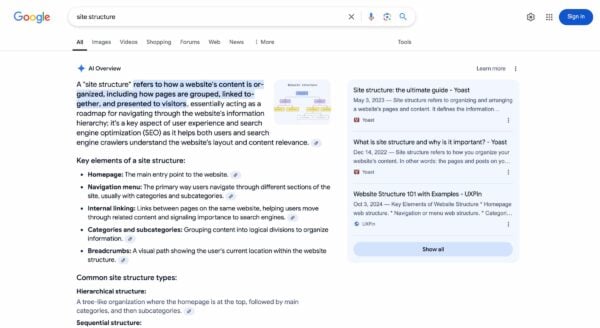
This trend can lead to “zero-click searches,” where users find their answers directly within the search results or AI overview without visiting a website. While this might reduce direct website traffic for some queries, it paradoxically increases the importance of being the source of that answer. This exemplifies the evolving direction of SEO: a strategic shift from solely chasing clicks and specific ranking positions to building a powerful brand that is visible and authoritative across all relevant digital touchpoints. As Carolyn Shelby, Principal SEO at Yoast, states: “Rankings still matter, but they are no longer the end goal. They are a proxy for visibility, not a guarantee of impact. As search shifts from ranking pages to selecting sources, rankings should be interpreted alongside presence, citation, and narrative accuracy.”
Setting Strategic SEO Goals for a Dynamic Future
Historically, SEO professionals meticulously tracked ranking positions, website traffic, clicks, and bounce rates. While these metrics remain valuable, the shift in search behavior and the proliferation of content delivery mechanisms necessitate a broader, more nuanced approach to goal setting. The focus must expand beyond mere numbers to encompass the holistic perception of a brand and its pervasive presence across the digital ecosystem.
Contemporary SEO goals should integrate metrics related to:
- Engagement: Time on page, interaction with content, scroll depth.
- Brand Awareness and Mentions: Tracking how often a brand is cited or discussed, even without direct links.
- User Experience (UX) and Satisfaction: Metrics related to site usability, task completion, and positive user feedback.
- Influence and Authority: Establishing the brand as a go-to source for expertise within its niche.
- Conversions: Leads generated, sales, sign-ups, or other desired user actions.
This comprehensive approach, as detailed in reports like the Yoast Perspective, helps businesses shift their metrics from solely traffic-driven to influence-driven, providing a more accurate measure of long-term SEO success and brand perception by both online tools and the target audience.
Embarking on Your SEO Journey: A Practical Guide

While SEO encompasses a multitude of complex aspects, individuals and small businesses can effectively manage a significant portion of their optimization efforts.
1. Start with the Basics: Technical Foundation First: Before delving into content creation, prioritize the technical health of your website. Ensure proper redirects are in place, page speed is optimized, crawlability is unhindered, security protocols (HTTPS) are active, and structured data is correctly implemented. For those without technical expertise, collaborating with a site builder or a technical SEO specialist is a prudent initial step. Once the technical foundation is robust, attention can shift to site structure and on-page content.
2. Strategic Content Creation through Keyword Research: Conduct thorough keyword research to identify terms and phrases relevant to your business and audience. This process not only informs content creation but also provides a wealth of ideas for blog posts, articles, and service pages. In an era increasingly saturated with AI-generated content, the imperative for creating original, insightful, and expertise-driven content has never been stronger. This approach allows for the development of a coherent SEO strategy and content plan that can be executed consistently throughout the year. SEO is an ongoing process, not a one-time task; therefore, establishing a realistic plan and adhering to it is crucial. The investment in consistent SEO efforts yields not only increased website traffic but also enduring brand building and enhanced customer loyalty.
3. Leveraging Available Resources and Tools: For those seeking to demystify and implement SEO, numerous resources are available. Companies like Yoast aim to make SEO accessible to everyone. The Yoast SEO plugin for WordPress, available in both free and premium versions, offers features such as SEO and readability analyses, providing immediate feedback on content. It also automates many technical SEO aspects. The Premium plugin expands capabilities with AI-powered features, a redirect tool, and support for multiple keywords per page. A dedicated Yoast SEO app for Shopify caters specifically to online stores.
Beyond tools, educational resources are vital. The Yoast SEO academy provides a wealth of courses, including free offerings like “SEO for beginners,” “WordPress for beginners,” and a course on structured data. Premium users gain access to an extensive library of 16 courses that delve into various facets of SEO. Additionally, comprehensive SEO blogs, like Yoast’s own, offer articles on fundamental SEO principles, advanced strategies, new developments, and related topics, ensuring that individuals and businesses have the knowledge and tools required for successful self-managed SEO.
In conclusion, SEO remains an indispensable, albeit continuously evolving, cornerstone of digital strategy. Its transition from a technical niche to a holistic brand-building discipline, particularly in the context of emerging AI technologies, underscores its critical importance. By understanding its mechanics, adhering to its core pillars, and adapting to new frontiers, businesses can ensure their enduring visibility, authority, and success in the ever-expanding digital landscape.