rifanmuazin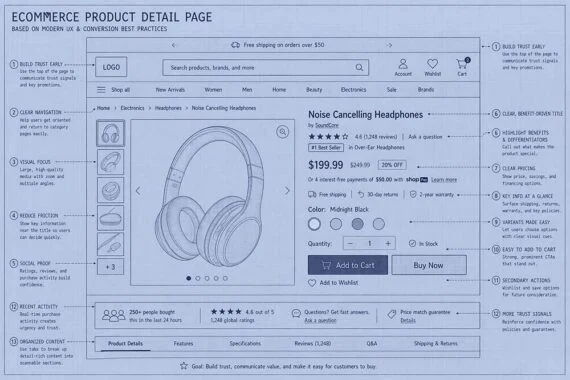
Ecommerce product pages have long been the linchpin of online sales, designed with the singular purpose of converting browsers into buyers. For years, a close second to this primary objective has been the art of ranking within search engine results pages (SERPs), a crucial element for driving traffic and, consequently, potential conversions. However, the digital landscape of 2026 has witnessed a seismic shift, with artificial intelligence fundamentally reshaping how consumers discover and interact with products, elevating the importance of AI visibility to a level on par with, if not exceeding, traditional SEO. This new paradigm demands a radical rethinking of product page strategy, moving beyond mere conversion optimization to embrace a multi-faceted approach that caters to both human and machine intelligence.
The traditional ecommerce product page, a static repository of information intended to persuade and inform, is now at the forefront of a revolution fueled by generative AI. Features like AI Overviews, AI Mode, and increasingly sophisticated AI-powered shopping agents are not merely augmenting the search experience; they are actively redefining it. Consumers, whether seeking luxury goods or everyday necessities, are no longer solely reliant on keyword-driven searches. Instead, they are engaging with AI systems that synthesize information, provide direct answers, and even proactively recommend products. This evolution necessitates that product pages become not just conversion hubs, but also highly structured and easily interpretable data sources for these burgeoning AI entities.
The Tripartite Challenge: Ranking, Extraction, and Understanding
In this dynamic new environment, the humble product detail page must now perform a delicate balancing act, fulfilling three distinct yet interconnected roles. Firstly, it must continue to excel at its traditional function: driving conversions. Secondly, it must maintain and enhance its visibility through established search engine optimization (SEO) tactics, ensuring it can be found by users still navigating traditional search interfaces. Thirdly, and perhaps most crucially, it must be optimized for the new wave of AI-driven discovery. This involves being "AI consumable" – structured in a way that AI systems can readily extract relevant information, understand product attributes as distinct entities, and ultimately, present them accurately and effectively within AI-generated responses and shopping agents.
This tripartite challenge can be broken down into three key optimization strategies:
- Search Engine Optimization (SEO): This familiar discipline focuses on ensuring product pages rank highly in traditional search engine results, attracting organic traffic through keyword relevance, high-quality content, and robust site architecture.
- Answer Engine Optimization (AEO): Emerging as a critical component of AI visibility, AEO centers on making product information easily extractable by AI systems. This means presenting answers to common consumer questions concisely and in a structured format that AI can readily parse and utilize in direct answers.
- Generative Engine Optimization (GEO): This newest frontier focuses on how AI systems "understand" and leverage product data as entities. It involves structuring content in a way that clearly defines product attributes, relationships, and specifications, allowing AI to build comprehensive knowledge graphs and provide more nuanced and intelligent product recommendations and comparisons.
A single product page must now be meticulously crafted to address all three of these crucial objectives simultaneously. Failure to do so risks marginalization in an increasingly AI-centric search and discovery ecosystem.
Content as the Cornerstone: An AI-Driven Analysis
To understand how current ecommerce players are navigating this evolving landscape, an AI-driven review of product detail pages from a diverse range of retailers was conducted. This analysis focused not on technical markup like structured data, but on the inherent quality and structure of the content itself. The goal was to assess how effectively each page supported ranking, extraction, and AI-driven understanding.
The review encompassed major marketplaces like Amazon, large retailers such as Walmart and Target, specialty retailers like L.L.Bean, a selection of direct-to-consumer (D2C) brands categorized by their content strategy (structured, hybrid, and aesthetic-driven), and numerous smaller ecommerce merchants. The AI provided a subjective scoring across the three optimization layers for each segment.
| Segment | Example Sources | Rankable | Extractable | Understandable as Entity |
|---|---|---|---|---|
| Marketplaces | Amazon | Very High | Medium | Very High |
| Large Retailers | Walmart, Target | High | Medium–High | High |
| Specialty Retail | L.L.Bean | Medium | High | Medium–High |
| D2C (Structured) | AG1, Beekman 1802 | Low–Medium | High | Medium |
| D2C (Hybrid) | Casper, Allbirds | Medium | Medium | Medium |
| D2C (Aesthetic) | Vuori, Glossier | Low | Low | Low–Medium |
| Small Merchants | Mixed Shopify stores | Low | Low–Medium | Low–Medium |
This table highlights a clear trend: while conversion remains the inherent goal, the pathways to achieving it are diverging significantly due to AI’s growing influence.
Rankable: The Enduring Power of Traditional SEO
Despite the rise of AI, traditional search engine optimization remains a vital component of product page visibility. The analysis revealed that, almost universally, product pages passed a basic content audit for search engine crawlability and keyword relevance. However, larger retailers and marketplaces demonstrated a clear advantage in this area.
Marketplaces like Amazon and enterprise retailers such as Walmart and Target consistently employ expansive product titles, detailed attribute lists, and strong internal linking strategies. This approach ensures their product pages are not merely optimized for a single, highly specific query, but rather for a broad spectrum of related searches, thereby maximizing their potential to appear in diverse user searches. Amazon, for instance, often features comprehensive product descriptions that can extend to thousands of words, largely driven by customer reviews, but also by detailed specifications, use-case scenarios, and brand-provided information. While the average content length hovers around 2,000 words, the sheer volume and variety of information contribute significantly to their ranking prowess.
In contrast, many D2C brands, while prioritizing clean, brand-consistent language and a streamlined user experience, may inadvertently limit their organic reach. Their concise naming conventions and marketing-focused language, while appealing to existing brand loyalists, can be less effective in capturing the long-tail keywords and broader search queries that traditional SEO thrives on. Smaller merchants often exhibit similar characteristics to D2C brands, suggesting a significant opportunity for them to enhance their visibility by adopting more comprehensive content strategies, perhaps by emulating the detailed approach of larger players.

Extractable: The Clarity Demanded by AI Answers
The ability for AI systems to directly extract relevant information is becoming a critical differentiator. For a product page to be "extractable," it must clearly and concisely answer fundamental questions: What is the product? What are its key functions? Who is it intended for? These answers need to be readily isolatable, often through discreetly labeled sections, clear feature lists, or integrated FAQ formats.
The analysis indicated that many product pages underperform in this crucial area. The exceptions were, once again, the large retail marketplaces and some specialty retailers, which often provided more structured and easily digestible information. These platforms frequently include dedicated sections for "Features," "Specifications," and "Product Details," making it simpler for AI to pinpoint specific attributes. For smaller merchants and many D2C brands, the integration of an FAQ section or clearly delineated feature bullet points could significantly improve their extractability score, making their products more likely to be featured in AI-generated answers.
Understandable: AI’s Grasp of Product Entities
As search engines and AI systems mature, they are increasingly treating products not just as text strings, but as distinct entities with a defined set of attributes. Brand, category, price, technical specifications, and relationships to other products are all crucial elements that AI needs to understand to provide meaningful insights. While structured data markup (e.g., Schema.org) plays a vital role in communicating this information to machines, the content of the product page itself is equally important.
For a product to be "understandable as an entity," its content must consistently and clearly define these attributes. This includes normalized naming conventions for variants (e.g., "Blue, Large" rather than "Navy XL"), precise specifications, and clear indications of product relationships (e.g., "frequently bought together," "compatible with").
Large retailers and marketplaces consistently scored high in this regard, benefiting from standardized product catalogs and established internal processes for data management. Their product pages typically present attributes in a clear, consistent manner, facilitating AI’s ability to recognize and categorize products effectively for inclusion in shopping results, comparison engines, and structured data listings. D2C brands with a more aesthetic-driven approach, while visually appealing, often struggle to present this structured information in a machine-readable format.
The Synthesis: Weaving the Three Layers Together
The ultimate goal is to create product pages that seamlessly integrate these three layers of optimization, driving traffic from both traditional search and the burgeoning generative AI channels. This means a product page must:
- Be rankable: Attract organic traffic through robust SEO practices, including comprehensive keyword targeting and detailed content.
- Be extractable: Provide clear, concise answers to consumer queries, readily digestible by AI for direct response generation.
- Be understandable: Clearly define product attributes and relationships, enabling AI to accurately model and utilize product data as entities.
The AI-driven site review identified clear patterns in how different segments addressed these layers. Marketplaces, due to their inherent structure and scale, often excel at providing rich product information that caters to all three needs. This pronounced difference underscores a critical imperative for all merchants, regardless of size: their product content must be intentionally designed to address SEO, AEO, and GEO.
Implications for the Future of Ecommerce
The shift in search and product discovery paradigms has profound implications for ecommerce businesses. Retailers that fail to adapt their product page strategies risk becoming invisible in the AI-driven future.
For Large Retailers and Marketplaces: While already performing well in many areas, there is still room for improvement, particularly in enhancing the extractability and understandability of product data. Continued investment in content structuring and AI-friendly formatting will be crucial to maintain their leadership.
For Specialty and D2C Brands: These businesses need to critically assess their content strategies. While brand aesthetic and concise messaging are valuable, they must be balanced with the need for detailed, structured information that AI can readily process. Integrating FAQ sections, more detailed feature lists, and ensuring consistent attribute naming are essential steps.
For Small Merchants: The challenge is significant, but the opportunity for growth is equally substantial. By studying the best practices of larger players, small merchants can implement relatively straightforward content enhancements that can dramatically improve their AI discoverability and overall visibility. Mimicking the detailed approach of Amazon in terms of product descriptions and attribute listing, even on a smaller scale, can yield significant returns.
The era of ecommerce product pages solely focused on conversion and traditional SEO is rapidly drawing to a close. In 2026 and beyond, success will hinge on a holistic approach that embraces the power of artificial intelligence. Product pages must be designed not just for human eyes, but for AI algorithms, acting as both persuasive sales tools and precise data repositories. As AI continues its ascent, mastering the art of being rankable, extractable, and understandable will be the defining characteristic of ecommerce success. The future of online retail demands a product page that speaks fluently to both humans and machines.

 Raul Delapena Setiawan
 Ammar Sabilarrohman