rifanmuazin
In a move signaling a significant leap forward in the integration of artificial intelligence within the retail sector, Google and Macy’s have jointly announced the successful development and widespread rollout of "Ask Macy’s," an advanced AI agent designed to transform the online shopping experience. This collaborative effort leverages Google’s cutting-edge Gemini Enterprise for Customer Experience platform to offer a sophisticated, conversational, and visually interactive shopping assistant. The initiative, launched in beta in late March and rapidly scaled to full customer availability, has already demonstrated promising early results, including a substantial increase in revenue per visit for users who interact with the AI.
The "Ask Macy’s" agent represents a strategic partnership aimed at bridging the gap between the curated, personalized experience of in-store shopping and the vast, often overwhelming digital marketplace. Macy’s, a venerable institution in American retail and a significant player in e-commerce, recognized the need to innovate its online presence to better serve its diverse customer base and navigate its extensive product catalog, which boasts over 2.5 million stock-keeping units (SKUs). The core objective behind "Ask Macy’s" is to simplify product discovery, provide tailored recommendations, and ultimately drive customer engagement and sales.
A Rapid Ascent: From Concept to Full Deployment
The development of "Ask Macy’s" has been characterized by remarkable speed and agility. The joint project, officially announced on April 22, was initiated only about five weeks prior, highlighting the companies’ commitment to rapid innovation. The beta phase began with a select percentage of Macy’s website users and a broad deployment among thousands of Macy’s employees. Within a single day, the scope was expanded to encompass half of the site’s user base, and a week later, it reached 100% of desktop and mobile website users, as well as those utilizing the Macy’s app on both iPhone and Android devices.
This accelerated timeline was driven by a strategic pivot. Macy’s had been engaged in developing its own proprietary AI agent for approximately six months. However, upon learning about Google’s Gemini Enterprise for Customer Experience offering, which became available after their internal project had begun, the company recognized a significant opportunity to accelerate and enhance their efforts. Chad Westfall, Senior Vice President of Technology Product Development and Customer Experience at Macy’s, explained the decision to pivot, stating, "We realized we needed to pivot immediately. The pace of change and innovation in AI left no room to stand still, so we adapted. We frankly forgave some of our usual processes in order to go after this with all deliberate haste."
The urgency was further amplified by a strategic target launch date of March 24, 2026, coinciding with the influential Shoptalk retail industry conference. This ambitious deadline, less than six weeks away from the initial team assembly, necessitated an intense period of collaboration. On February 9, dedicated teams from both Macy’s and Google Cloud commenced daily virtual stand-up meetings, working tirelessly to bring "Ask Macy’s" to fruition. This compressed development cycle underscores the potential of AI-powered solutions to rapidly transform customer-facing technologies.
Replicating the In-Store Experience in the Digital Realm
The vision behind "Ask Macy’s" is to meticulously replicate the hallmarks of a positive in-store shopping experience: a curated, visually organized, and deeply personalized journey. In an era where consumers are often inundated with choices, the AI aims to act as a digital shopping concierge, guiding users through Macy’s extensive inventory with unprecedented ease. The companies describe "Ask Macy’s" as "a new digital shopping concierge and a major new leap forward in multimodal, agentic AI technology."
Macy’s vast product catalog, encompassing millions of SKUs, presents a unique challenge for online shoppers. The traditional e-commerce model, often reliant on keyword searches and static filters, can struggle to capture the nuances of customer needs and preferences. "Ask Macy’s" is designed to overcome this by understanding natural language queries, interpreting visual inputs, and offering conversational recommendations that go beyond simple product listings.
"We wanted to show how technology can remove friction and elevate retail shopping for our customers, to help them feel guided, understood, and confident," Westfall stated in the announcement. "We’re bringing the concept of hospitality to online customers at scale." This sentiment emphasizes Macy’s commitment to not just transactional efficiency but also to fostering a sense of customer care and engagement that mirrors the best of human interaction.
To achieve this, Macy’s played a crucial role in refining the AI’s responses, ensuring they are not only accurate but also "warmer and more helpful." An illustrative example provided highlights this enhancement: instead of a generic response like, "Here’s a T-shirt for a 10-year-old," "Ask Macy’s" might respond with, "10-year-olds can have so much fun with color – do you want a brighter or more muted color selection?" This shift from factual delivery to empathetic and context-aware interaction is central to the AI’s design philosophy.

Multimodal Capabilities and Early Revenue Impact
A key differentiator of "Ask Macy’s" is its multimodal capability, meaning it can process and respond to both text and image inputs. This feature significantly expands the ways customers can interact with the AI. For instance, a customer can upload a photograph of an item they are looking for, or even a picture of themselves, and "Ask Macy’s" can then suggest similar products or showcase how an item might look on them.
The AI also incorporates a virtual try-on feature, allowing users to visualize apparel or accessories on their own image. This capability extends to simulating different environments, enabling customers to see how an outfit might appear in various settings – from the office to a restaurant, or even at a prestigious event like the Kentucky Derby. This immersive experience addresses a critical gap in online shopping, where the inability to physically try on items can be a significant barrier to purchase.
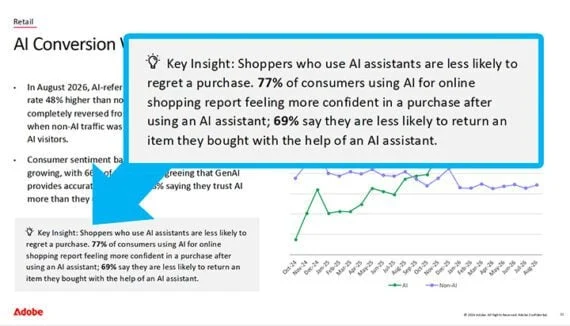
Beyond visual capabilities, "Ask Macy’s" integrates data from customer feedback and Macy’s extensive product catalog to continuously improve its recommendations. The companies have indicated that in the near future, the AI will be equipped to provide crucial sizing advice, alerting consumers if a particular product tends to run large or small and recommending the most appropriate size. This proactive approach to fit and sizing is expected to reduce returns and enhance customer satisfaction.
The initial beta testing phase has yielded compelling data regarding the AI’s impact on revenue. According to the companies, consumers who utilized "Ask Macy’s" demonstrated a revenue per visit that was approximately 4.75 times higher than those who did not. This significant uplift strongly suggests that the AI agent is not merely a novel feature but a powerful driver of commercial success, directly contributing to increased customer spending and engagement. This data point underscores "Ask Macy’s" "potential to drive revenue," a critical metric for any retail initiative.
Broader Implications for the Retail Landscape
The collaboration between Google and Macy’s represents a significant development in the ongoing digital transformation of the retail industry. As a prominent department store chain, Macy’s presence in the Top 2000 Database, where it ranks 17th among North America’s largest online retailers, signifies its substantial influence. The successful implementation of "Ask Macy’s" could serve as a blueprint for other large retailers seeking to enhance their online customer experiences and leverage AI to drive sales.
The "agentic AI" employed in "Ask Macy’s" signifies a shift towards more autonomous and proactive AI systems that can understand context, plan actions, and engage in complex problem-solving. This advanced form of AI moves beyond simple chatbots to become a true digital assistant, capable of anticipating needs and facilitating a more intuitive shopping flow. For a retailer like Macy’s, managing a vast and varied inventory, this capability is invaluable in helping customers navigate choices efficiently.
The rapid development cycle also speaks to the increasing maturity and accessibility of advanced AI platforms like Google’s Gemini Enterprise. The ability to deploy sophisticated solutions in a matter of weeks, rather than months or years, empowers businesses to adapt quickly to market changes and evolving consumer expectations. This agility is crucial in the fast-paced world of e-commerce.
The success of "Ask Macy’s" could lead to a broader adoption of similar AI-powered shopping assistants across the retail sector. As consumers become more accustomed to interacting with intelligent agents for various tasks, their expectations for personalized and efficient online shopping experiences will continue to rise. Retailers that can successfully integrate such technologies are likely to gain a significant competitive advantage.
Furthermore, the focus on "hospitality" in online retail, as articulated by Chad Westfall, suggests a move towards building deeper customer relationships through technology. By making online interactions feel more guided, understood, and confident, retailers can foster loyalty and differentiate themselves in a crowded marketplace. The integration of multimodal capabilities, like virtual try-on, also addresses key pain points in the online purchase journey, potentially reducing cart abandonment and returns, thereby improving operational efficiency and sustainability.
In conclusion, the launch of "Ask Macy’s" by Google and Macy’s is a landmark achievement in the application of AI in retail. It showcases the power of collaborative innovation, the potential of advanced AI to revolutionize customer engagement, and the significant commercial benefits that can be realized. As this technology continues to evolve, its impact on how consumers shop online is poised to be profound, setting new standards for personalization, convenience, and revenue generation in the digital marketplace.