
 rifanmuazin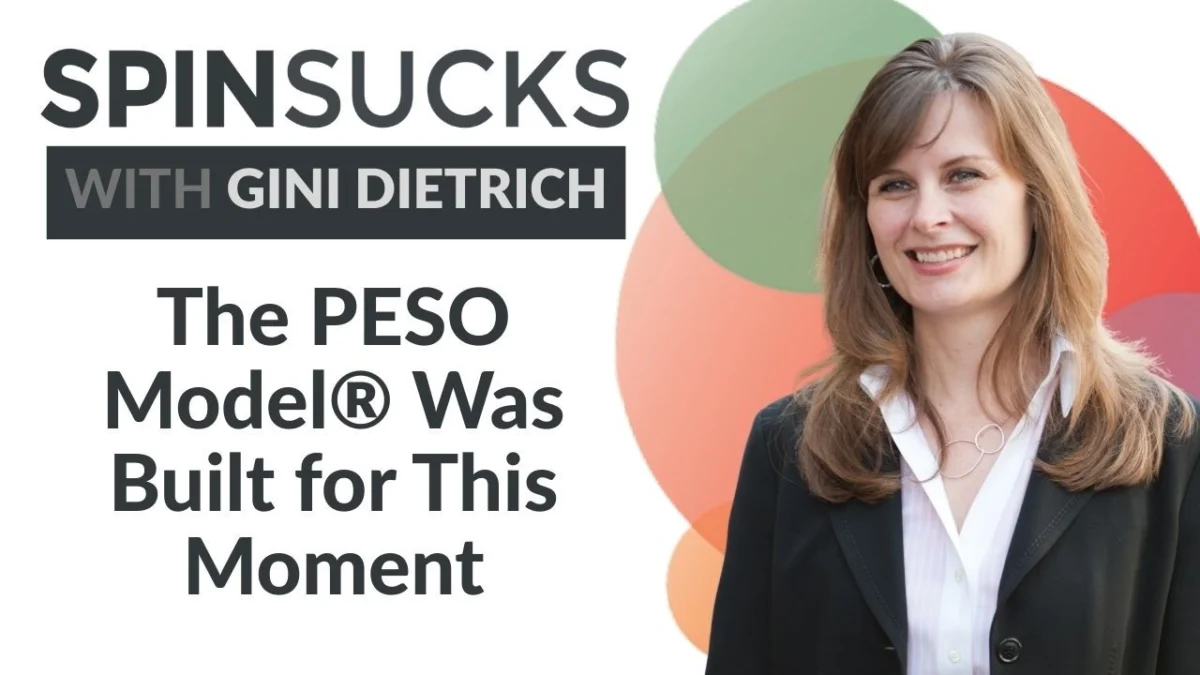
The communications and marketing landscape has undergone a radical transformation driven by the rapid proliferation of generative artificial intelligence, fragmented media consumption, and the rise of zero-click discovery. In this shifting environment, the PESO Model®, a foundational framework for integrated communications, has transitioned from a tactical checklist into a comprehensive strategic operating system. Rather than rendering the model obsolete, the emergence of AI-driven search and automated content generation has intensified the necessity for a unified approach that prioritizes trust, corroboration, and systemic integration.
The Shift from Tactics to a Unified Operating System
For over a decade, the PESO Model—encompassing Paid, Earned, Shared, and Owned media—has served as the industry standard for organizing communications efforts. However, industry experts at Spin Sucks indicate that many practitioners have historically applied the model as a series of disconnected tactics. This "legacy" approach typically involved producing a blog post (Owned), pitching a reporter (Earned), posting on social media (Shared), and boosting the content with a small advertising budget (Paid).
In the current era, this siloed methodology is no longer sufficient. Modern discovery is increasingly defined by AI summaries, such as Google’s Search Generative Experience (SGE) and Perplexity AI, where users receive answers directly on the search results page without ever clicking through to a website. This "zero-click" reality means that a brand’s visibility depends on its ability to project a consistent and corroborated signal across the entire digital ecosystem. The modern PESO Model addresses this by functioning as an operating system where each component reinforces the others to build authority that both humans and AI algorithms can recognize.
Chronology of the PESO Model’s Evolution
The PESO Model was first introduced to the public in 2014 by Gini Dietrich in her book Spin Sucks. Its journey from a conceptual diagram to a global professional standard reflects the broader evolution of the digital economy:
- 2014–2017: The Formative Years. The model gained traction as a way for PR professionals to claim a seat at the marketing table by incorporating paid and owned media into traditional earned media strategies.
- 2018–2022: Digital Integration. As social media algorithms became more complex and organic reach declined, the "Shared" and "Paid" components of the model became essential for distribution, moving beyond simple organic posting.
- 2023–2024: The AI Disruption. The launch of Large Language Models (LLMs) like ChatGPT fundamentally changed how content is produced and discovered. Critics began to question the relevance of traditional frameworks in a world of automated content.
- 2025–Present: The Operating System Era. The model was officially rebuilt and its certification program updated to address AI-driven discovery. The focus shifted from "content volume" to "signal integrity," emphasizing how integrated channels create a "source of truth" that AI tools use to generate summaries and recommendations.
Reimagining the Four Pillars for the AI Era
To remain effective, the four pillars of the PESO Model have been redefined to meet the demands of a high-speed, AI-influenced market.
Owned Media: The Source of Truth
In an age of deepfakes and AI-generated misinformation, Owned media (websites, newsletters, proprietary research) serves as the primary repository of a brand’s authority. It is the "source of truth" that provides the data and perspectives from which all other communications flow. For AI models to accurately represent a brand, the Owned media must be structured, authoritative, and consistently updated.
Earned Media: The Corroboration Layer
Earned media remains the most potent tool for building trust. While AI can generate text, it cannot manufacture the third-party validation that comes from a reputable news outlet or an industry analyst. In the modern framework, Earned media acts as the corroboration that proves to both consumers and AI systems that the brand’s claims are legitimate and recognized by external authorities.
Shared Media: The Signal Mover
Shared media has evolved beyond mere social media management. It is now the mechanism for moving "signals" through networks and communities. By leveraging creator commentary, reviews, and community engagement, Shared media ensures that the brand’s message is being discussed and distributed in environments where trust is high.
Paid Media: The Acceleration Engine
Paid media is no longer used to "blast" messages at cold audiences. Instead, it is utilized to accelerate what is already working. By putting budget behind high-performing Earned or Owned content, organizations can ensure their most credible messages reach a wider audience, further feeding the data loops that AI discovery tools monitor.
Supporting Data: The Rise of Zero-Click and the Trust Deficit
Recent industry data underscores the urgency of adopting an integrated system. According to research from SparkToro and Similarweb, nearly 60% of Google searches now end without a click to a third-party website. This suggests that if a brand’s information is not present within the AI-generated summary or the "Featured Snippet," it effectively does not exist for the majority of searchers.
Furthermore, the 2024 Edelman Trust Barometer highlights a growing skepticism toward traditional information sources. Consumers are increasingly looking for "circles of trust," which include peers, technical experts, and corroborated reports. The PESO Model’s emphasis on integration directly addresses this trust deficit by ensuring that a message heard on a podcast (Shared/Earned) is mirrored on the company website (Owned) and reinforced through targeted messaging (Paid).
Analysis of Implications: Why AI Exposes "Bad Marketing"
The integration of AI into the marketing workflow has acted as a "flashlight," exposing the flaws in traditional, siloed strategies. Organizations that rely on high-volume, low-quality content production—often referred to as "random acts of content"—are seeing diminishing returns. AI tools can easily replicate and drown out generic content, making it harder for brands to stand out.
The strategic implication is clear: visibility is no longer about the volume of output, but the consistency of the system. If a brand’s Owned media says one thing while its Earned media presence is non-existent, AI summaries may perceive a lack of authority or conflicting signals, leading to poor visibility in AI-generated answers. The PESO Model Certification® has been updated specifically to train professionals on how to align these signals so that the brand remains the preferred choice for both human buyers and machine algorithms.
Professional Standards and the Role of Certification
As the complexity of the media landscape increases, the industry is seeing a push toward standardized certification. Spin Sucks argues that "knowing about" the PESO Model is distinct from "knowing how to run it." The certification process is designed to move practitioners away from vanity metrics—such as impressions and likes—toward business-outcome metrics, such as lead generation, conversion, and brand authority scores.
Certified professionals are trained to build "visibility engines" where Owned and Earned media teams work in tandem rather than in isolation. This level of professionalization is seen as a necessary step for the communications industry to maintain its value in a corporate world that is increasingly demanding data-backed results and strategic cohesion.
Official Stance and Future Outlook
Spin Sucks, the primary steward of the PESO Model®, maintains that the framework is more relevant now than at its inception. In an official statement regarding the evolution of the model, the organization noted that AI did not create a new problem but rather exposed an existing "systems problem" within marketing departments. The organization emphasizes that the brands that will win in the coming years are those that send the clearest, most corroborated signals across all media types.
Looking ahead, the integration of the PESO Model is expected to become the baseline requirement for any effective communications strategy. As AI continues to evolve from text-based summaries to agentic systems that make recommendations and even purchases on behalf of users, the need for a brand to have a "system of record" across Paid, Earned, Shared, and Owned media will only intensify.
The transition from a tactical framework to a strategic operating system marks a maturity point for the communications profession. It moves the discipline away from "looking busy" with disconnected campaigns and toward a model of sustainable, scalable, and verifiable influence. The question for modern marketers is no longer whether the model has evolved, but whether their internal systems have evolved to match the new reality of AI-driven discovery.










