Evan Lee Salim
The digital marketing landscape is undergoing a profound transformation, shifting from a keyword-centric approach to one driven by artificial intelligence and user intent. This evolution, spearheaded by advancements like Google’s AI Max, necessitates a strategic reorientation for advertisers seeking to maximize their return on investment. The move towards AI-powered capabilities marks a significant departure from the foundational principles of paid search, demanding a more nuanced understanding of account management and a heightened focus on strategic inputs.
For over a decade, the paid search ecosystem has been in a constant state of flux. Initially, the bedrock of campaign success was the meticulous selection and bidding on specific keywords. This was followed by the integration of audience segmentation, remarketing strategies, and demographic targeting, allowing advertisers to reach more refined segments of potential customers. Today, the industry stands at the precipice of a new era, characterized by intent-driven search powered by sophisticated AI algorithms. This shift signifies a move beyond simply matching search queries to predefined keywords, towards understanding the underlying motivation and context behind a user’s search.
AI Max, a suite of AI-driven capabilities within Google’s Search campaigns, exemplifies this new paradigm. While some advertisers are witnessing incremental growth and revenue boosts through its implementation, others are finding their campaigns inadvertently expanding to include irrelevant or unprofitable traffic. The divergence in outcomes often hinges not solely on the technological prowess of AI Max itself, but more critically, on the strategic acumen and meticulous management of the advertising accounts utilizing these advanced tools. AI Max and similar automation technologies do not negate the need for strategy; rather, they elevate its importance, pushing strategic considerations further up the marketing funnel. Advertisers must adapt their methodologies to align with these evolving capabilities.

Understanding the Mechanics of AI Max
Google’s AI Max is defined by its dynamic and evolving nature, but at its core, it represents a collection of AI-powered features designed to enhance Search campaigns. These capabilities extend beyond traditional keyword matching to encompass elements like query expansion, dynamic ad text customization, and optimized landing page traffic allocation. The fundamental shift lies in AI Max’s ability to look beyond the explicit keywords in a search query. Instead, it leverages a spectrum of signals, including user intent, creative assets, and the context of landing pages, to identify previously untapped opportunities for engagement. This expanded scope presents a dual potential: significant incremental growth on one hand, and the risk of wasted expenditure on the other. The true impact of AI Max is its capacity to amplify the existing state of an advertising account.
AI Max as an Amplifier: The Equation for Success
The function of AI Max can be analogized to an amplifier or a crucial variable within a complex formula. When integrated into a well-structured and optimized account, it demonstrably enhances performance, leading to scaled results. Conversely, a poorly managed account structure can amplify existing inefficiencies and errors, leading to more costly mistakes. The underlying equation for success is straightforward: High-Quality Inputs + AI Max Automation = Scaled Performance or Scaled Revenue.
If an account suffers from deficient conversion data, weak landing pages, or an overly convoluted structure, AI Max automation, despite its sophistication, cannot inherently rectify these foundational issues. Instead, it will amplify these weaknesses, leading to diminished returns. This explains why two advertisers employing the identical AI Max features can achieve vastly different outcomes; the variables within their respective operating environments are fundamentally dissimilar. An advertiser with robust conversion signals, meticulously organized campaigns, compelling landing pages, and effective negative keyword lists (Account A) will experience superior results compared to an advertiser lacking these crucial elements (Account B). Consequently, to harness the full potential of AI Max, advertisers must prioritize building an account structure that complements and enhances its capabilities.
The AI Max Operating Framework: A Structured Approach
Rather than adopting a passive approach, simply enabling AI Max features and observing the results, advertisers are advised to implement a structured, six-stage framework. This systematic methodology ensures a more deliberate and effective integration of AI-powered automation.

Stage 1: Deliberate Onboarding – Strategic Feature Selection
A common initial pitfall is the indiscriminate activation of every available AI Max feature. The recommended approach is to selectively enable features that align with the specific objectives and characteristics of the account and its industry. Capabilities such as Search Term Matching and Text Customization can be valuable for expanding reach and improving ad relevance. However, features like Final URL Expansion require more careful consideration.
The decision to implement specific features should be dictated by the account’s unique circumstances and overarching goals. For instance, the question of how much additional freedom an account can safely accommodate should guide the implementation of URL expansion. This mindful onboarding process prevents unnecessary experimentation with features that may not be suitable or beneficial for a particular campaign.
Stage 2: Establishing Guardrails – Budgetary Control and Risk Mitigation
While AI Max thrives on data and exploration, budgetary constraints remain paramount. Implementing robust guardrails is essential to prevent uncontrolled or wasted expenditure. AI Max operates through three distinct stages or "zones" that it must successfully navigate:
- Exploration Zone: The initial phase where AI Max identifies new opportunities and tests various parameters.
- Learning Zone: The period where the system analyzes performance data to discern patterns and optimize its approach.
- Optimization Zone: The stage where AI Max focuses on refining its strategies based on learned insights to achieve defined objectives.
Effective control mechanisms include setting clear budget caps, establishing target CPA (Cost Per Acquisition) or ROAS (Return on Ad Spend) goals, defining audience exclusions, and implementing negative keyword lists. These guardrails act as crucial safeguards against excessive spending and ensure that AI Max operates within defined financial and strategic boundaries.

Stage 3: Allowing for Learning – The Crucial 2-4 Week Period
Premature optimization, before sufficient data has been collected and analyzed, is a significant impediment to AI Max’s success. A typical learning period for AI Max spans approximately two to four weeks, often progressing through distinct phases:
- Week 1: Exploration: During this initial week, the AI system actively tests a variety of queries, traffic sources, and potential opportunities to gather baseline data.
- Weeks 2-3: Learning and Improvement: As patterns begin to emerge from the exploration phase, performance data becomes more evaluable. The AI starts to identify more effective strategies and refine its targeting.
- Weeks 3-4: Refinement and Scaling: With a clearer understanding of what drives success, advertisers can begin to make more informed decisions about increasing investment in promising areas and further optimizing campaign parameters.
The precise timeline can fluctuate based on the account’s volume and specific characteristics. However, the fundamental principle remains consistent: avoid making hasty judgments based on short-term fluctuations. The objective is to differentiate genuine performance issues from the normal exploration phase inherent in AI-driven systems. Stepping back and analyzing broader trends, rather than overreacting to daily variations, is key to successful AI Max implementation. Google’s AI Max experiments offer a controlled environment to compare the performance of experimental features against existing search setups, providing valuable insights during this learning phase.
Stage 4: Training Through Feedback – Shifting from Optimization to Input Management
This stage represents a significant shift in the mindset of paid search managers. The traditional role often involved extensive manual adjustments to bids, keywords, and match types. In the era of AI Max, the focus transitions to managing more advanced inputs that directly influence the AI’s decision-making process. These inputs include:
- High-Quality Creative Assets: Compelling ad copy, relevant images, and persuasive calls to action provide the AI with better materials to work with.
- Optimized Landing Pages: Landing pages that are user-friendly, relevant to the ad’s message, and facilitate conversions provide strong signals to the AI.
- Accurate Conversion Tracking: Precise measurement of conversions ensures the AI is optimizing towards the most valuable user actions.
- Well-Defined Audiences: Providing clear audience definitions helps the AI identify and target the most relevant user segments.
- Strategic Negative Keywords and Exclusions: These tools prevent the AI from exploring irrelevant or unprofitable areas of the search landscape.
By diligently managing these advanced inputs, advertisers empower AI Max to achieve more significant outcomes. This fundamentally alters the weekly workflow, moving beyond simple setting tweaks to include the review of search terms, auto-generated assets, and performance comparisons across different campaign types. The goal is to continuously improve the AI’s performance by enhancing the quality of the data and parameters it utilizes.

Stage 5: Scaling Winners – Focusing on Profitability, Not Just Volume
By this stage, advertisers will likely have identified successful strategies, including effective targeting methods and high-performing auto-created assets. However, simply increasing spend does not automatically guarantee profitable growth. A more strategic approach involves selective scaling:
- Identify High-Performing Segments: Pinpoint specific audiences, keywords, or creative combinations that consistently deliver strong results.
- Gradually Increase Investment: Incrementally raise budgets or bids for these identified winners, monitoring performance closely.
- Maintain Performance Metrics: Ensure that scaling efforts do not compromise key performance indicators such as CPA, ROAS, or profit margins.
- Test and Iterate: Continuously test new variations and optimize based on evolving data to sustain growth.
This approach necessitates looking beyond standard metrics like CPA, ROAS, CTR, and conversion volume. If the business prioritizes incremental revenue, profit margins, or payback periods, these objectives must directly inform how AI Max is managed. Google itself recommends pairing AI Max with Smart Bidding strategies and emphasizes the critical importance of accurate conversion measurement to facilitate this data-driven scaling. The mantra becomes: scale winners, not just spend.
Stage 6: Building Feedback Loops – Continuous Refinement and Adaptation
The most successful AI Max accounts share common characteristics that foster ongoing improvement:
- Robust Measurement Framework: A comprehensive and accurate system for tracking conversions and key performance indicators.
- High-Quality Inputs: Consistent provision of excellent creative assets, landing pages, and audience data.
- Strategic Guardrails: Well-defined boundaries that guide AI exploration and prevent excessive risk.
- Regular Performance Review: Consistent analysis of campaign data to identify trends and areas for improvement.
- Proactive Input Management: A commitment to continually enhancing the quality of the data fed into the AI system.
When performance begins to decline, it is crucial to first examine these foundational inputs before attributing the issue solely to the automation itself. An effective feedback loop operates as follows: Better Signals → Better Decisions → Better Traffic → Better Results → Better Optimization. The reverse is also true: poor signals can lead to flawed decisions, resulting in suboptimal traffic and diminishing returns, which in turn can lead to incorrect optimizations and further degradation of signals.

A practical weekly checklist for AI Max management might include questions such as:
- Are conversion signals accurate and complete?
- Have landing page experiences been optimized recently?
- Are creative assets fresh and relevant?
- Are audience definitions still appropriate?
- Have negative keyword lists been updated?
- Is the account structure clean and logical?
- Are there any external market changes impacting performance?
These questions help maintain focus on the overall quality of the system rather than getting lost in the micromanagement of individual auction-level decisions.
Who Benefits Most from AI Max?
AI Max may not be the optimal solution for all accounts. It is generally less suitable for campaigns characterized by:
- Limited Conversion Volume: Insufficient data makes it difficult for the AI to learn and optimize effectively.
- Poor Conversion Tracking: Inaccurate or incomplete tracking hinders the AI’s ability to identify successful outcomes.
- Unreliable Signals: Inconsistent or low-quality data inputs lead to suboptimal decision-making.
- Highly Niche or Complex Products/Services: Situations where nuanced human understanding is critical and difficult to automate.
- Very Small Budgets: Insufficient spend may not provide enough data for meaningful learning and optimization.
AI Max is better suited to accounts that possess robust measurement capabilities, reliable conversion signals, disciplined operational management, and sufficient volume to support the learning process. Ultimately, the success of AI Max is largely dependent on the maturity of the account’s infrastructure and the advertiser’s commitment to measurement discipline.

Five Core Principles for AI Max Success
Based on extensive experience and the framework outlined above, five guiding principles emerge for successfully navigating the AI Max landscape:
- Signals Beat Keywords: As automation increases, the quality and relevance of your input signals become significantly more important than granular keyword management.
- Control Beats Freedom: While AI requires room to explore, defining clear boundaries and guardrails is essential for strategic control and preventing waste.
- Structure Beats Automation: Automation functions most effectively when supported by a well-organized and logical account structure that provides clear direction.
- Training Beats Monitoring: Instead of passively observing AI’s actions, actively focus on improving the inputs that shape its behavior and decision-making.
- Profit Beats Volume: The ultimate measure of success is not the quantity of clicks or conversions, but the meaningful business value they generate.
The Evolving Role of the Paid Search Manager
AI Max and similar automation technologies are fundamentally redefining the role of the paid search manager. The focus is shifting away from granular, tactical control over every individual element of a campaign and towards the strategic management of the inputs that influence automated decisions. By providing AI Max with superior inputs – including a well-structured account, high-quality landing pages, compelling creatives, and accurate signals – advertisers can unlock scaled performance and achieve significant business growth.
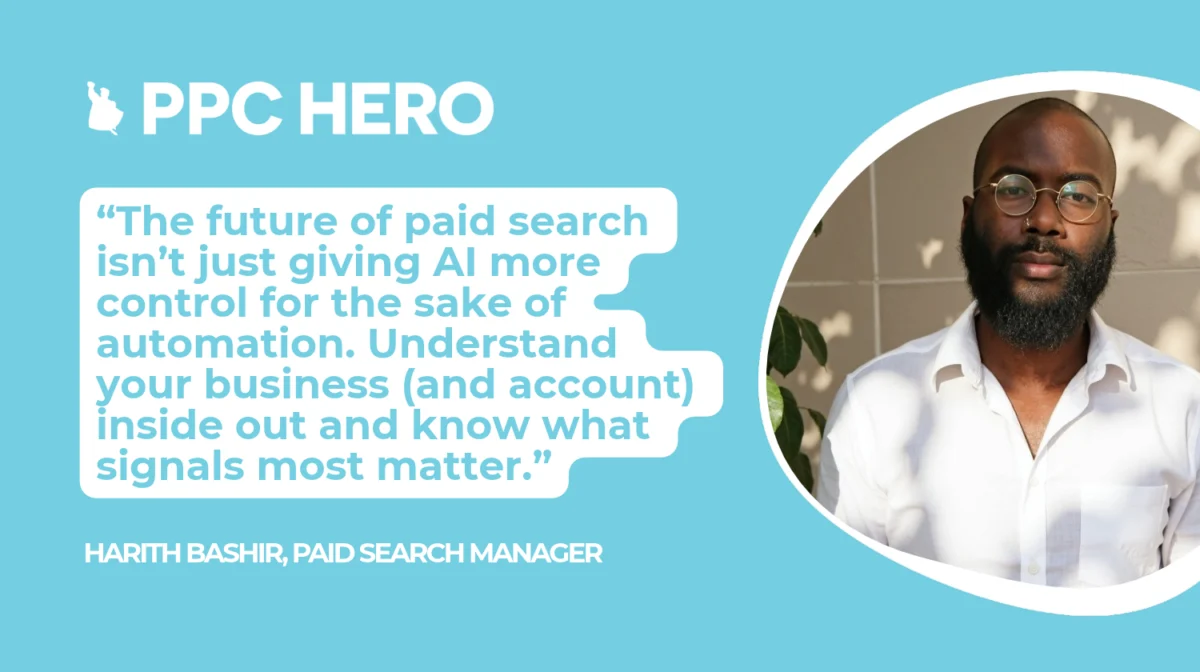
The future of paid search is not about relinquishing control for the sake of automation alone. It is about a deeper understanding of the business, its objectives, and the signals that are most critical for success. By cultivating this profound insight, advertisers can create an environment where AI Max can thrive, while simultaneously retaining the highest possible degree of control over their account’s performance and their business’s ultimate outcomes. This strategic elevation positions paid search professionals as integral architects of business growth in an increasingly intelligent digital ecosystem.


 Nila Kartika Wati
 Azzam Bilal Chamdy