Bluesky, the decentralized text-based social media application initially conceived by former Twitter CEO Jack Dorsey, has transcended its nascent phase to establish itself as a significant player in the evolving landscape of digital communication. With a user base exceeding 44 million as of 2026, the platform is carving out a distinct identity, offering a compelling alternative to centralized giants like X and Threads. Its adherence to the open-source AT Protocol underpins its core philosophy of user control, data portability, and algorithmic transparency, challenging the conventional models that have long dominated social networking.

The Genesis of a Decentralized Vision
The conceptualization of Bluesky emerged from a growing sentiment within the tech community, including its founder Jack Dorsey, for a more open and resilient social media infrastructure. Dissatisfaction with the centralized control, opaque algorithms, and frequent policy shifts of established platforms, particularly following the acquisition and rebranding of Twitter to X, fueled the demand for alternatives. Dorsey’s vision was not merely to create another social app but to develop an underlying protocol – the Authenticated Transfer Protocol (AT Protocol) – that would empower users with true ownership over their data, content, and social graph, irrespective of the front-end application they chose.

Bluesky began its journey as an invite-only application, fostering a curated community during its developmental stages. This controlled rollout allowed the platform to refine its features and build a foundational user base before opening its doors to the public in February 2024. This strategic approach enabled Bluesky to cultivate a distinct culture, often described as less political and ad-heavy than its competitors, contributing to its rapid growth and appeal.
Understanding the AT Protocol and Decentralization

At the heart of Bluesky’s differentiation lies its decentralized architecture, powered by the AT Protocol. Unlike traditional social media platforms where a single company owns and controls all data, servers, and user interactions, the AT Protocol enables a distributed network. This means no single entity holds ultimate authority over the network, allowing for:
- Data Portability: Users retain ownership of their account data, including their handle, followers, and posts. This data can theoretically be migrated to any other application built on the AT Protocol, mitigating the risk of vendor lock-in and offering unprecedented control over one’s digital identity.
- Algorithmic Choice: The protocol supports the creation of custom feeds, empowering users to choose how their content is filtered and presented. This moves away from a single, centrally controlled algorithm, giving individuals and communities the ability to curate their own information streams based on specific interests, topics, or moderation preferences.
- Decentralized Moderation: While Bluesky provides its own moderation tools, the AT Protocol’s design allows for flexible and community-driven moderation. This empowers users to define their own boundaries for content, fostering environments that align with their specific needs and values.
- Interoperability: The long-term vision for the AT Protocol is to enable interoperability between various applications built on its framework, creating a broader “fediverse” where different services can communicate and share data, akin to how email works across different providers.
This architectural shift represents a fundamental challenge to the prevailing models of social media, promising a more open, transparent, and user-centric online experience.

Bluesky’s Distinctive Features and Growth Trajectory
Bluesky’s feature set, while familiar in its microblogging format, integrates its decentralized principles to offer a unique user experience. Posts are short, text-based updates, often accompanied by images or videos (up to 3 minutes), allowing for quick dissemination of information and fostering conversational threads. The platform offers two primary feeds: a chronological “Following” feed and a “Discover” feed that highlights popular content. However, the ability to create and subscribe to custom feeds, curated by other users or AI, truly distinguishes Bluesky, allowing for highly personalized content consumption.
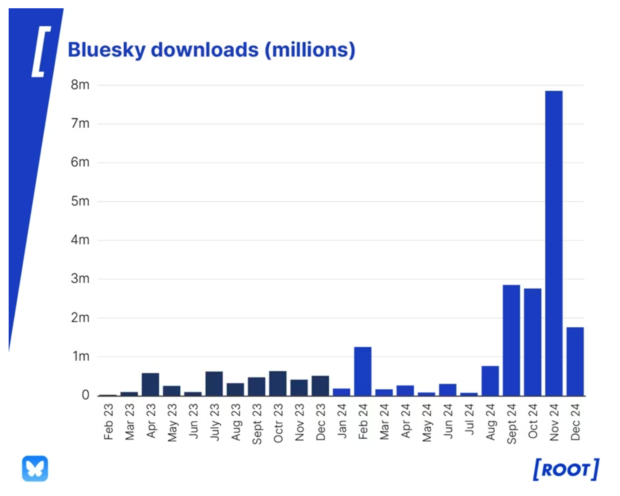
Since its public launch, Bluesky has demonstrated robust growth. From a base of approximately 30,000 users in February 2023, it surged past 1 million users by September 2023, and by May 2026, it boasts over 44 million accounts. This growth was notably propelled by periods of high dissatisfaction with X, leading to significant spikes in downloads. For instance, in November 2024, Bluesky briefly became the #1 free iOS app in Apple’s App Store, accumulating 7.85 million app downloads that month, with Android downloads also seeing a parallel surge. This sustained growth underscores a clear demand for alternatives in the social media market.
Demographics and Key User Segments
As of 2026, Bluesky’s user base exhibits a demographic skew:
- Age: Approximately 56% of its users are aged between 18 and 34, indicating a younger demographic seeking new digital spaces.
- Gender: The platform is predominantly male, accounting for roughly 63% of its users.
- Geography: User concentration remains highest in the United States.
A particularly notable segment that has migrated to Bluesky is journalists and media organizations. The platform’s straightforward domain-based verification process and its algorithmic neutrality towards external links provide a significant advantage for news outlets. Unlike platforms that often demote external links to keep users within their ecosystem, Bluesky allows journalists to effectively drive traffic back to their articles, fostering a healthier ecosystem for news dissemination. This has led to the emergence of specialized feeds, such as “Journalists on Bluesky,” and “starter packs” from publications like TechCrunch, simplifying the process for users to follow key media figures and organizations.

Comparative Analysis: Bluesky Amidst X, Threads, and Mastodon
Bluesky operates within a competitive landscape populated by both established giants and emerging decentralized alternatives. A comparison with X, Threads, and Mastodon highlights its unique positioning:

| Category | Bluesky | Mastodon | Threads | X (formerly Twitter) |
|---|---|---|---|---|
| Users (as of 2026) | 44M+ users | 10.5M users | 150M+ monthly active users | Estimated 550M+ monthly active users |
| Ads | No | No | Yes | Yes |
| Decentralized | Yes (AT Protocol) | Yes (ActivityPub) | Partially (plans for ActivityPub integration) | No |
| Post Char. Count | 300 characters | 500 characters | 500 characters | 280 characters (standard), 25,000 for Premium |
| Videos | Yes (up to 3 minutes) | Yes | Yes (up to 5 minutes) | Yes (up to 3 hours for Premium) |
| Direct Messaging | Yes | Yes | Yes | Yes |
| Hashtags | Yes | Yes | Yes (topic tags) | Yes |
| Verification | Yes (through website/domain) | Yes (through website/domain) | Yes (through Instagram) | Yes (paid subscription/legacy) |
Bluesky and Mastodon share the core principle of decentralization, offering users greater control and an ad-free experience. However, Bluesky’s AT Protocol aims for a more seamless and less fragmented user experience than Mastodon’s ActivityPub, which often requires users to choose and manage specific “instances.” Threads, while backed by Meta’s vast resources and integrating with Instagram, is only partially decentralized and features an ad-supported model, positioning it closer to X in its operational philosophy. X, despite its challenges, retains the largest user base and remains a dominant force, though its shifts under Elon Musk have alienated a significant portion of its original audience.
Driving Factors Behind Bluesky’s Popularity

The growing appeal of Bluesky can be attributed to several key factors that resonate with a segment of the online population seeking refuge from the increasingly commercialized and politicized mainstream platforms.
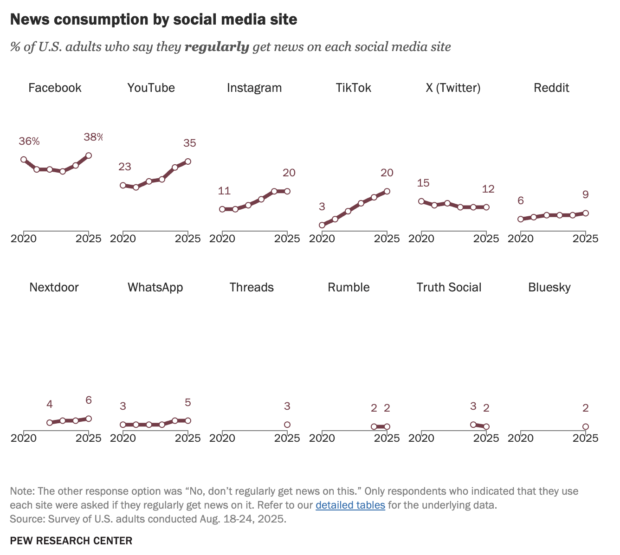
- A Credible Alternative to X: A primary driver of Bluesky’s growth is user dissatisfaction with X. Since the change in ownership, X has faced criticism regarding rising misinformation, a perceived shift in platform tone, and an increase in political content. Pew Research Center data indicates that while 12% of U.S. adults regularly get news on X, only 2% do so on Bluesky. This suggests a less politically charged environment on Bluesky, aligning with consumer preferences for brands to avoid political topics on social media.
- Authentic Engagement: Marketers and users frequently highlight the genuine nature of interactions on Bluesky. Dana Ditomaso, Founder and Lead Instructor at Kick Point Playbook, notes, “What’s particularly notable about Bluesky are the genuine engagement levels, with an audience that shows far more meaningful interaction than what I’ve experienced on X recently.” This sentiment is echoed by Niclas Schlopsna, CEO of spectup, who compares Bluesky to Twitter’s early days, describing it as a “raw, unpolished space where engagement feels more authentic and intimate.”
- Active Niche Communities: Bluesky’s architecture, particularly its custom feeds and starter packs, naturally fosters vibrant niche communities. Users can easily discover or create feeds tailored to highly specific interests, from science and art to tech and hobbies like knitting or coffee gear. While some critics suggest this could lead to echo chambers, it simultaneously offers brands unparalleled opportunities to engage with highly targeted and genuinely interested audiences, enabling more direct and relevant conversations, as observed by Matias Rodsevich, Founder & CEO of PRLab.
Strategic Implications for Businesses
For brands and businesses navigating the evolving social media landscape, Bluesky presents unique opportunities that necessitate a distinct strategic approach, given its ad-free environment and emphasis on authentic interaction.
- Cultivating Thought Leadership: Bluesky’s relatively early stage offers a fertile ground for establishing thought leadership. Being an early, authoritative voice in a specific industry or niche can significantly enhance a brand’s reputation and reach before the platform becomes saturated. The platform’s welcoming stance on outbound links also facilitates sharing longer-form thought leadership content, such as blog posts, driving valuable traffic.
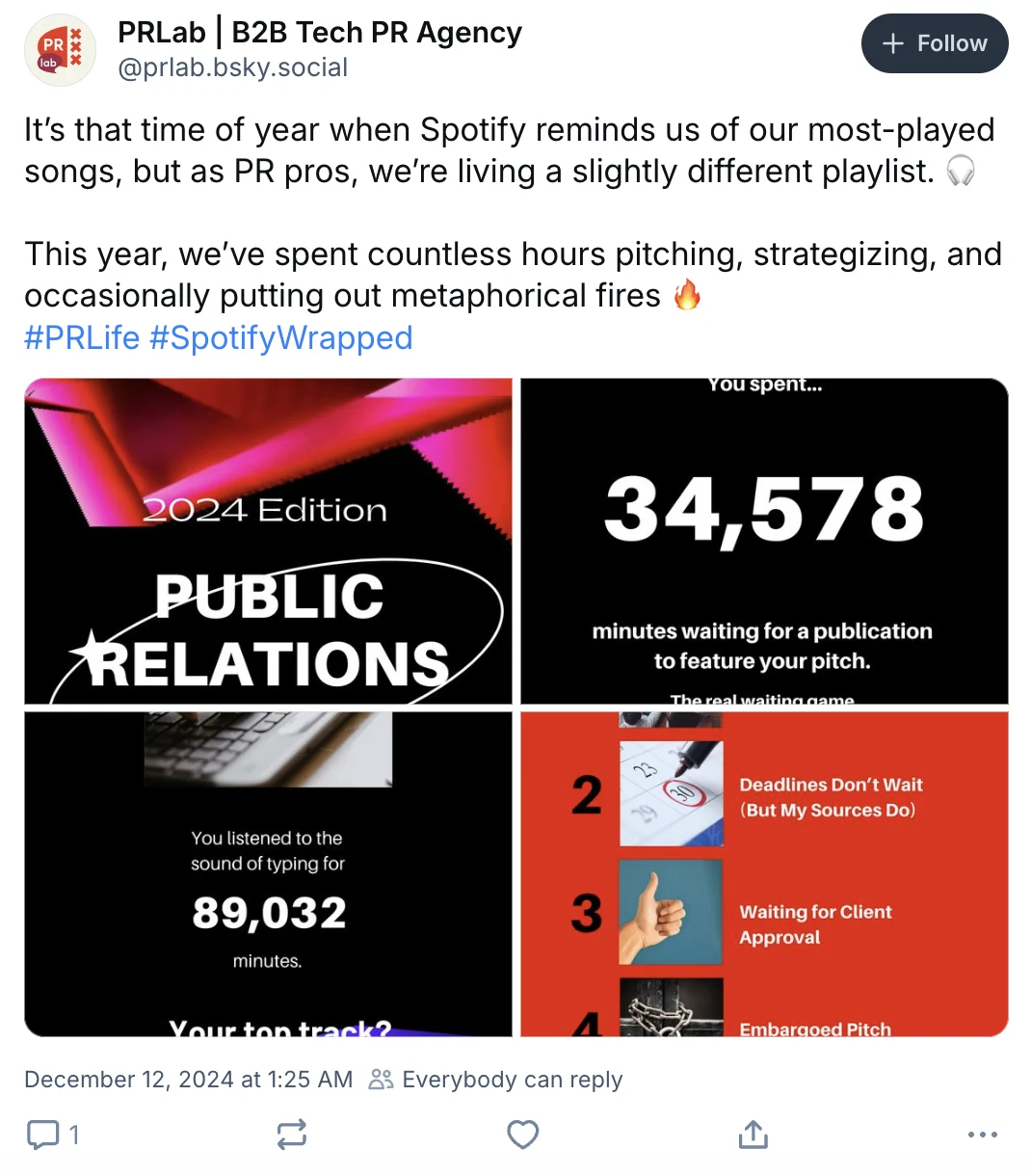
- Connecting with the Press: With its strong journalist presence, Bluesky has become an invaluable resource for media relations. Businesses can leverage custom feeds of journalists, or utilize existing starter packs from media organizations, to identify key contacts, monitor industry news, and effectively pitch stories. This direct access to media professionals can streamline PR efforts.
- Engaging Niche Communities: Bluesky’s community-centric design demands a highly tailored content strategy. Instead of broad, platform-wide campaigns, brands should focus on crafting content that resonates with specific, engaged niche audiences within their custom feeds. Jakob Kapus, CMO of NewsAPI.ai, emphasizes this, stating, “We use X for broader, more mainstream engagement and Bluesky to build deeper, more authentic relationships with specific groups.”
- Embracing a Less Promotional Approach: The ad-free nature of Bluesky means traditional promotional tactics are less effective and potentially unwelcome. Brands should prioritize genuine conversations, soliciting feedback, and sharing thought-provoking content. Matias Rodsevich describes using Bluesky as a “creative workshop” for gathering ideas and gauging audience interest before launching campaigns on larger platforms.
- Utilizing as a Testing Ground: Bluesky’s relatively smaller, highly engaged communities make it an ideal environment for testing new content concepts, messaging, and campaign ideas. Evgeni Asenov, SEO & Content Lead at Resume Mentor, notes, “I’ve been using Bluesky to test out new content concepts and assess audience reactions. This feedback cycle helps improve what is subsequently shared on X.” Wes Wakefield, founder of Pro Coffee Gear, similarly uses it for “behind-the-scenes content” and “more organic, unpolished messaging,” valuing the direct feedback.
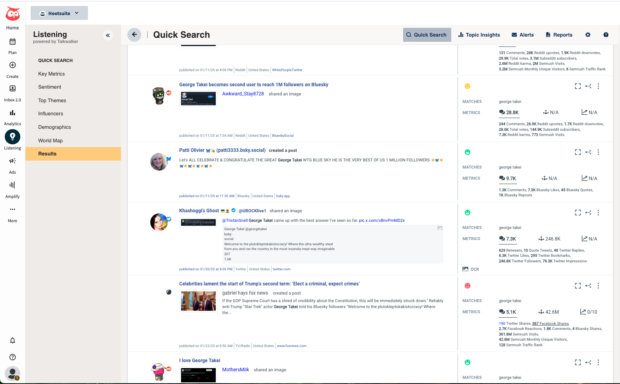
- Advanced Social Listening: With millions of users, Bluesky has become a valuable surface for social listening. Brands can track mentions, monitor competitive intelligence, gauge audience sentiment, and identify emerging industry trends. Tools like Hootsuite Listening, which integrates with Bluesky, provide comprehensive analytics on engagement metrics, enabling businesses to derive actionable insights for their overall social strategy.
- Future-Proofing Brand Identity: Even if immediate active engagement isn’t a priority, securing a brand handle on Bluesky is a prudent strategic move. Reserving digital real estate ensures brand consistency and prepares the organization for future platform shifts or expanded engagement, while allowing for passive observation of community dynamics.
Challenges and the Road Ahead

Despite its promising trajectory, Bluesky faces inherent challenges. Scaling moderation while maintaining its decentralized ethos will be crucial. Competing with the established network effects and vast resources of Meta (Threads) and Elon Musk (X) will require continuous innovation. Moreover, preventing the platform from succumbing to the very issues that plague centralized social media – such as misinformation or toxicity – will be an ongoing task for its community and developers.
Nonetheless, Bluesky represents a compelling vision for the future of social media. Its commitment to user control, data portability, and open protocols offers a refreshing alternative in an increasingly complex digital world. As it continues to mature and expand its user base, Bluesky holds the potential to significantly reshape how individuals and businesses interact online, fostering environments that prioritize authenticity, community, and individual agency.