

The digital marketing landscape in 2026 continues to undergo a seismic shift as the boundaries between data science, consumer psychology, and artificial intelligence blur. At the center of this transformation is Katie Faulkner, an Optimisation Strategist at FORJ Digital, who was recently named the winner of the annual “SpeakUp to Uplevel” competition. This prestigious accolade, hosted in partnership with the Women in Experimentation community, recognizes individuals who demonstrate exceptional skill in navigating the complexities of test design, stakeholder management, and the implementation of scalable experimentation systems. Faulkner’s rise within the Conversion Rate Optimization (CRO) sector provides a compelling case study on how multidisciplinary backgrounds are increasingly becoming the gold standard for success in high-tech industries.
The Multidisciplinary Path to Conversion Rate Optimization
The journey into the specialized field of CRO is rarely linear. For Faulkner, the transition into optimization was what she describes as a “happy accident.” Early in her career, her professional identity was a mosaic of seemingly disparate threads: a foundation in the hard sciences, an analytical approach to data, a creative eye for art, and a practical background in customer service. It was an agency mentor who identified that these specific traits—logic, empathy, and visual intuition—formed the essential toolkit for a successful CRO practitioner.

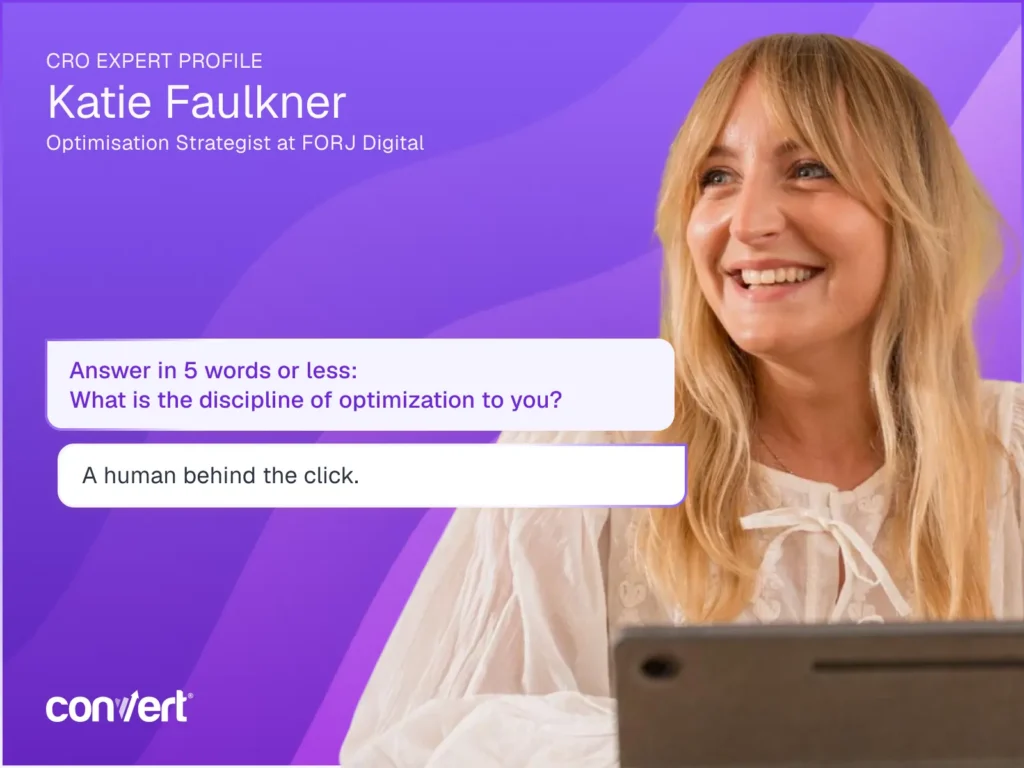
In the mid-2020s, the CRO industry has moved away from simple “button color” testing toward a deep understanding of the “human behind the click.” This philosophy is central to Faulkner’s methodology. As digital interfaces become more complex, the ability to synthesize qualitative human feedback with quantitative data sets has become the primary differentiator between successful brands and those that stagnate. Industry data suggests that companies employing a holistic experimentation strategy—one that incorporates behavioral science and cross-departmental data—see a 20% to 30% higher uplift in conversion rates compared to those focusing solely on isolated UI changes.
The AI Integration: From Tool to Colleague
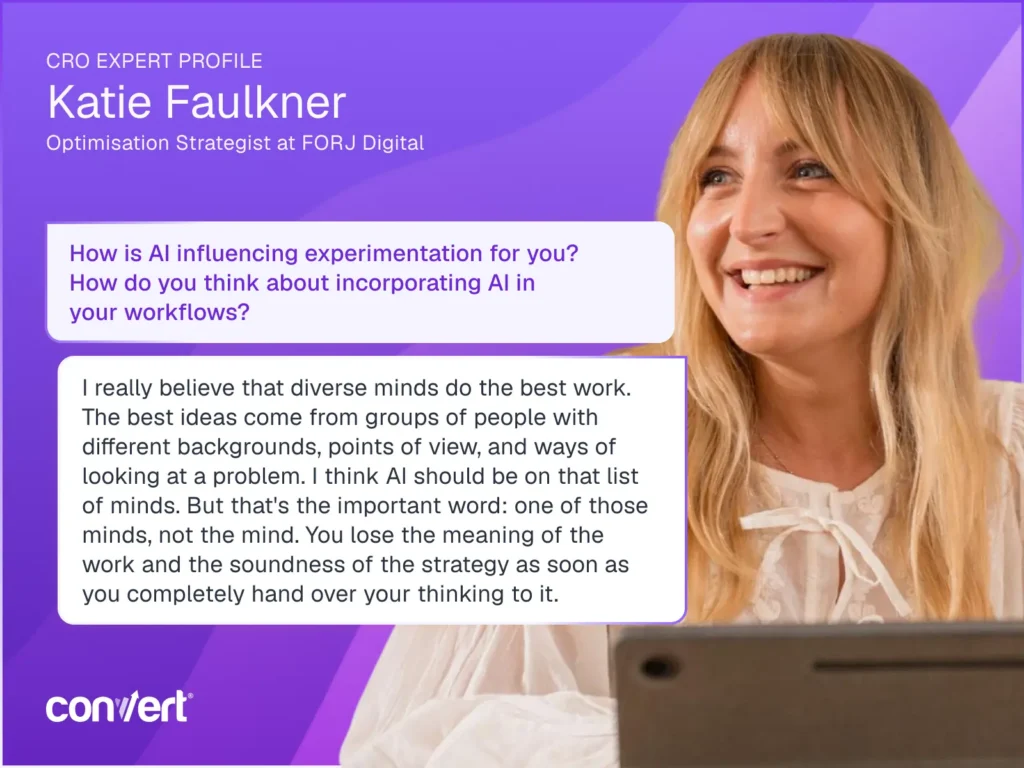
One of the most significant developments in Faulkner’s career and the broader experimentation field is the integration of Artificial Intelligence into daily workflows. Rather than viewing AI as a replacement for human intellect, Faulkner and the team at FORJ Digital treat AI agents as functional members of the strategy team. This approach mirrors a growing trend across global marketing agencies where AI is utilized for “heavy lifting” tasks such as analyzing raw qualitative data, generating initial report drafts, and translating research insights into functional wireframes.
Faulkner advocates for a “meet halfway” approach. While an AI agent processes data or generates a design direction, the human strategist performs the same task independently. The intersection of these two outputs often reveals “blind spots” or unique angles that neither the human nor the machine would have identified in isolation. This collaborative model addresses a critical concern in the age of automation: the potential loss of strategic soundness. By maintaining human oversight, Faulkner ensures that the resulting strategy remains rooted in actual business goals rather than just algorithmic patterns.

Supporting industry research from 2025 indicates that marketing teams using AI to augment their experimentation processes have reduced the time from hypothesis to test launch by nearly 40%. This efficiency gain allows for a higher volume of tests, which statistically increases the probability of discovering significant winning variants.
Predictive Browsing and the Future of Web Architecture
Looking toward the horizon of 2027 and beyond, Faulkner anticipates a fundamental shift in how the internet is experienced. The current model of the web—static templates served to a broad audience—is expected to give way to “generative” or “predictive” web pages. In this future, AI built directly into browsers and website backends will predict user intent in real time, long before a page has finished loading.
This evolution suggests a move toward modular web design, where pages are constructed on the fly based on a user’s past behavior, current context, and predicted future needs. In this scenario, the website itself becomes a continuous, invisible experiment. Faulkner notes that early iterations of this technology are already visible in testing platforms that trigger A/B variants based on real-time behavioral signals. However, she maintains a stance of “curious skepticism,” noting that the technology is currently moving faster than the regulatory and ethical frameworks designed to govern it.
Behavioral Design in Practice: Closing the Expectation-Reality Gap
Faulkner’s work often focuses on companies with complex business models where customer journeys are non-linear and potentially confusing. A standout example from her portfolio involves a budget planner developed for a major amusement park. In this instance, the challenge was not merely a low conversion rate but a “trust gap.” Visitors were often frustrated by unexpected “on-the-day” costs that were not clearly communicated during the initial booking process.
By shifting the online experience from a purely transactional funnel to an honest, conversational guide—much like a high-end personal shopping assistant—Faulkner was able to align visitor expectations with the reality of the experience. This “dynamic journey” approach asks the right questions at the right time, listening to user inputs to serve relevant information rather than forcing them through a rigid site structure.
She also highlights industry-leading examples of behavioral thinking, such as:
- AO’s Comparison Tools: Triggering helpful pop-ups when a user copies a serial number, anticipating the need for price or feature comparison.
- Charlotte Tilbury’s Shade Finder: Using AI and AR to solve the “in-person” problem of matching makeup shades to skin tones.
- Sézane’s Color-Based Navigation: Sorting product listing pages by color rather than price or popularity to reduce cognitive load and enhance the “discovery” aspect of luxury shopping.
Economic Implications: Value and Momentum
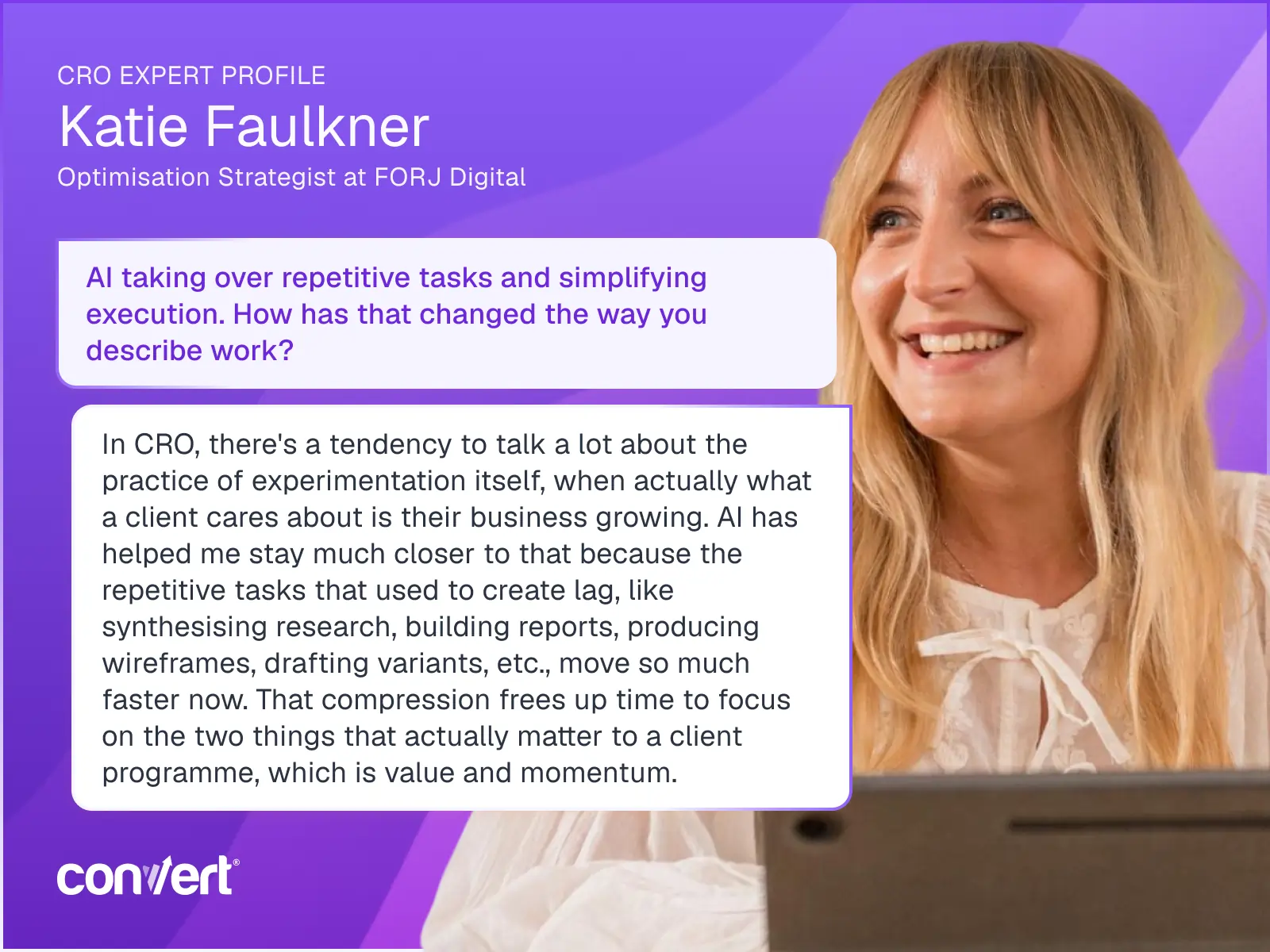
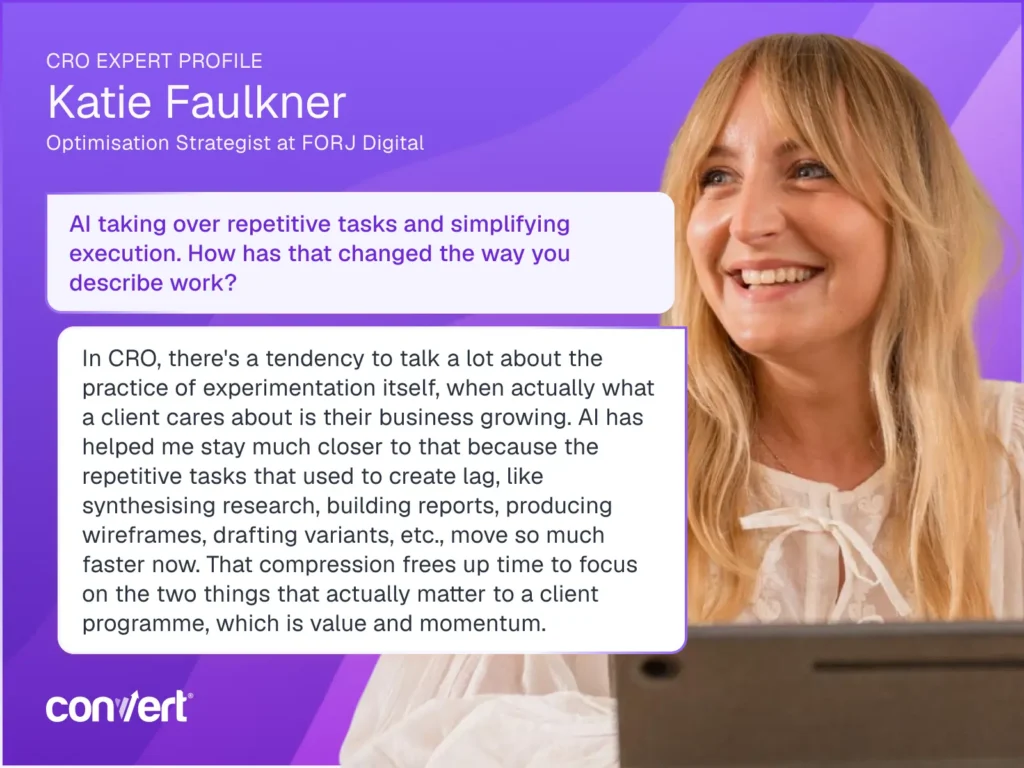
For modern clients, the technical minutiae of an A/B test are often secondary to the bottom-line impact. Faulkner argues that AI has changed the “language of work” by compressing the execution phase. Tasks that previously took days—such as synthesizing research or drafting variants—now take minutes. This compression allows strategists to focus on two pillars of client success: Value and Momentum.
Value is derived from deeper strategic thinking. With production tasks automated, strategists have more time to develop high-quality hypotheses that address core business problems. Momentum refers to the speed of the experimentation cycle. A program that moves quickly builds internal trust within a client organization, which in turn provides the “political capital” needed to run more ambitious, high-risk experiments that can lead to transformative growth.
Building Credibility in a Post-AI World
As a winner of multiple accolades in 2026, Faulkner’s perspective on professional visibility is rooted in authenticity and community building. Despite the data-driven nature of her field, she emphasizes the importance of the “human element.” She openly discusses her experiences with imposter syndrome, suggesting that credibility is built not through a display of infallible confidence, but through a genuine desire to learn and connect.
In an era where “speed to market” is often prioritized, Faulkner advocates for the “slow thinker.” She notes that her best work often comes from sitting back, observing, and processing information before acting—a trait she refuses to apologize for in high-pressure environments. This approach challenges the traditional corporate narrative that volume and speed are the only metrics of success.
Conclusion: The Human-Centric Path Forward
The insights provided by Katie Faulkner suggest that the future of Conversion Rate Optimization is not a choice between human intuition and machine intelligence, but a sophisticated integration of both. As the industry moves toward 2027, the role of the “experimenter” will continue to evolve from a technical executor to a strategic orchestrator of AI, behavioral science, and business logic.
The success of FORJ Digital and Faulkner’s recent award win underscores a critical reality: in a digital world increasingly dominated by algorithms, the most valuable signal in the noise remains the human experience. For practitioners looking to build credible visibility in the coming years, the mandate is clear: be curious, stay human, and focus on the meaning behind the data. The “human behind the click” is no longer just a target audience; they are the fundamental core of every successful digital strategy.







