

The discipline of Conversion Rate Optimization (CRO) is undergoing a fundamental transformation as artificial intelligence redefines the speed of execution and the strategic focus shifts from short-term "wins" to long-term customer understanding. Buse Hizarci, Optimization Manager at the prominent UK-based Direct-to-Consumer (DTC) consultancy and paid media agency Vervaunt, has provided a comprehensive overview of this evolution, detailing how the integration of evidence-based testing and automated workflows is reshaping the e-commerce landscape for major brands such as Adanola, Ancient & Brave, AU Vodka, and YETI UK.
As the digital marketplace becomes increasingly saturated, the ability to turn subjective assumptions into objective evidence has emerged as the primary differentiator for successful retail brands. Hizarci, who transitioned from a technical development background into user experience (UX) and eventually optimization management, argues that the maturity of a testing program is no longer measured by the volume of tests run, but by the depth of consumer insights generated. This perspective reflects a broader industry trend where the "commoditization of execution" via AI allows practitioners to focus more heavily on the psychological and behavioral drivers behind consumer actions.

The Professional Path from Code to Consumer Psychology
The trajectory of Buse Hizarci’s career provides significant context for the current state of the optimization industry. Originally starting as a developer, Hizarci found that the technical aspects of building web pages were often disconnected from the lived experience of the end user. This realization—questioning how a page would appear to a customer and what their internal dialogue might be during the navigation process—led to a pivot toward in-house UX roles.
This transition from "how to build" to "why to build" is a hallmark of modern optimization leadership. At Vervaunt, Hizarci applies this developer-centric logic to a diverse portfolio of DTC brands. The consultancy operates at the intersection of technical implementation and creative strategy, a space where the developer’s eye for detail meets the marketer’s need for conversion. This dual perspective is critical in an era where technical performance (such as site speed and mobile responsiveness) is inextricably linked to user satisfaction and conversion metrics.
AI Integration and the Acceleration of the Design Workflow
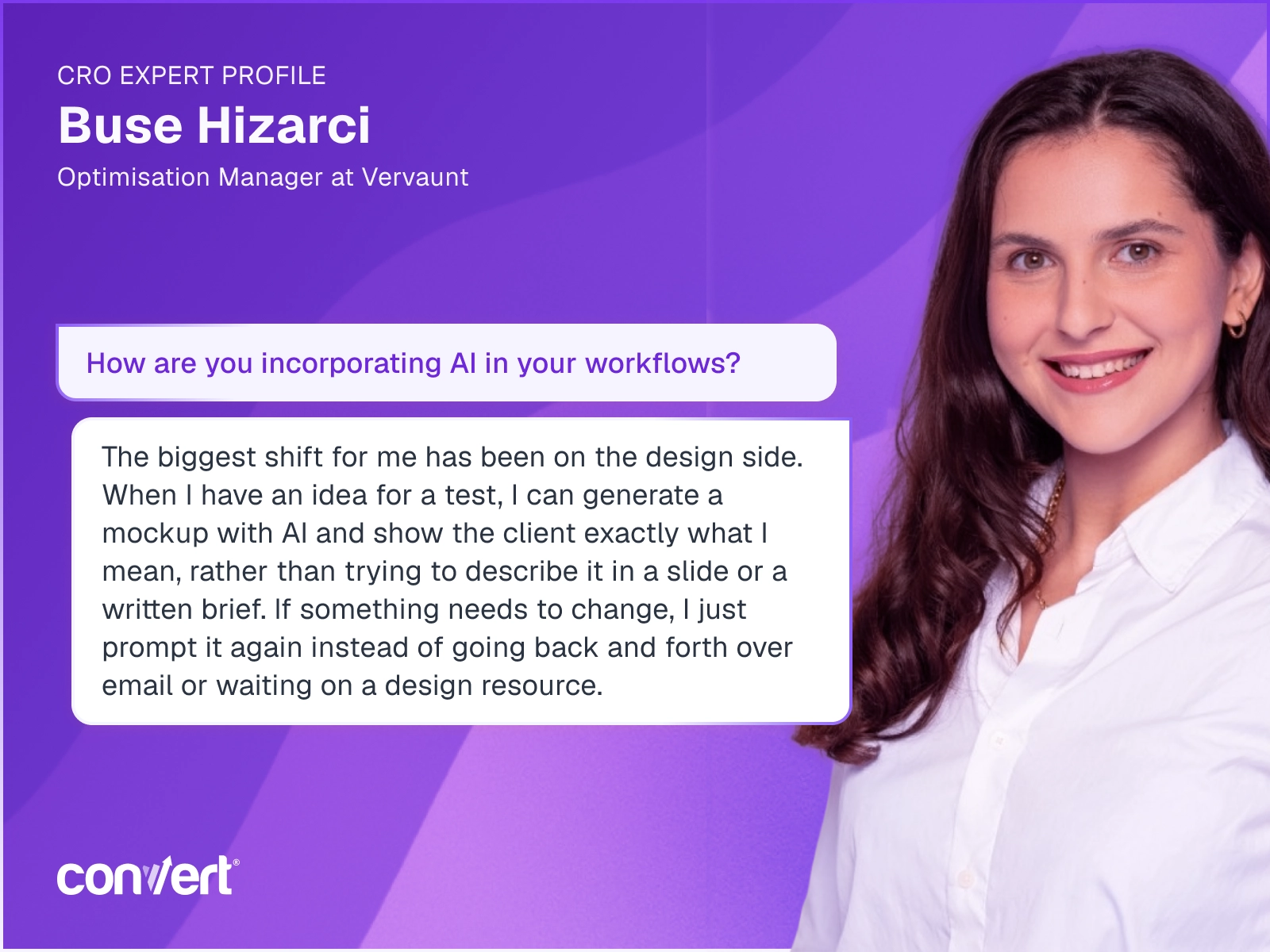
One of the most significant shifts in the day-to-day operations of optimization managers is the role of Generative AI. While much of the public discourse surrounding AI focuses on content creation, Hizarci highlights its utility in bridging the gap between ideation and client buy-in. In traditional agency models, the time elapsed between a strategic idea and a visual mockup could span several days, involving back-and-forth communication between optimization teams and design resources.

By utilizing AI to generate high-fidelity mockups, Hizarci has effectively streamlined the approval process. This allows clients to visualize a test’s potential impact immediately. If a design direction requires adjustment, prompts can be refined in real-time, eliminating the latency typically associated with creative production. This acceleration does not necessarily change what is being tested, but it radically alters the velocity at which a brand can iterate.
Beyond design, AI has been integrated into the analytical framework of Vervaunt’s testing programs. Hizarci utilizes interactive tools preloaded with client-specific traffic and conversion data to automate Minimum Detectable Effect (MDE) calculations. By pulling data directly from platforms like Shopify and Google Analytics 4 (GA4), the agency can predict test durations with high precision. This data-driven scheduling ensures that testing roadmaps are realistic and maximized for statistical significance, rather than based on arbitrary timelines.
The Strategic Hierarchy: Moving Beyond the Flat Backlog
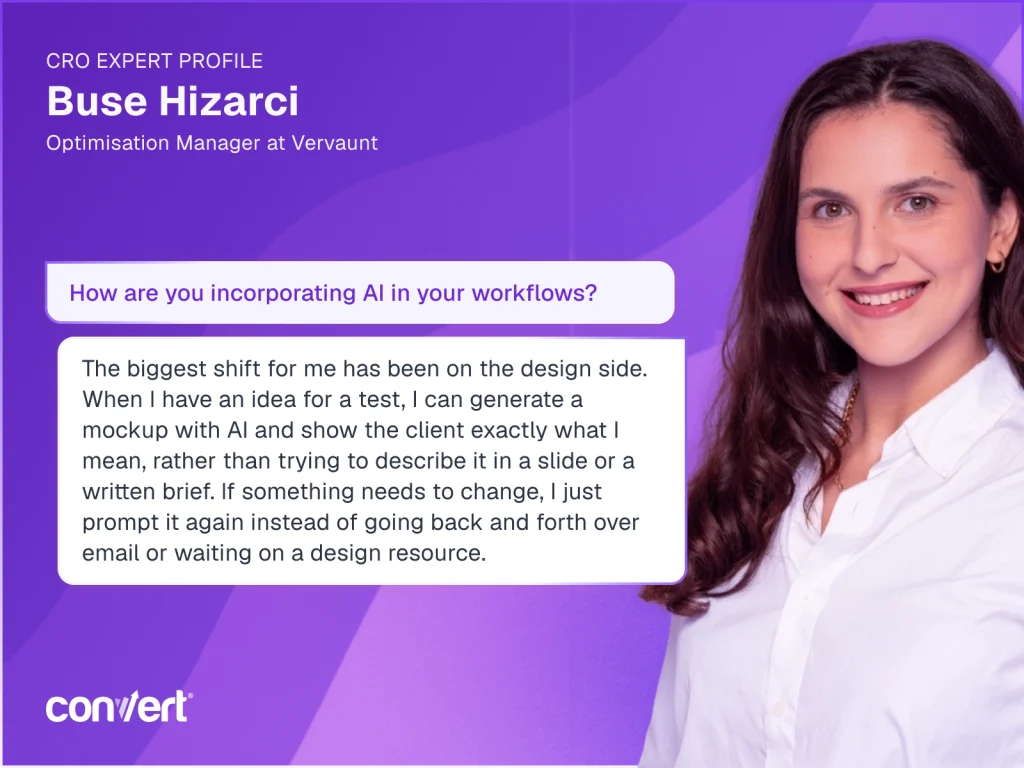
A common pitfall in early-stage CRO programs is the "flat backlog," a list of disconnected test ideas that lack a cohesive goal. Hizarci advocates for a sophisticated hierarchy that aligns individual experiments with overarching business objectives. At Vervaunt, this structure typically follows a top-down approach:
- Business Metric: Identifying the primary KPI to move (e.g., Average Order Value or Customer Lifetime Value).
- Broad Objective: Defining the strategic path to influence that metric.
- Specific Problem Areas: Pinpointing where on the site the friction exists.
- Proposed Solutions: Hypothesizing changes that could alleviate friction.
- Individual Tests: Executing the specific variations.
This hierarchical model ensures that every test result, whether a "win" or a "loss," contributes to a larger body of knowledge. When a test fails to achieve statistical significance or results in a negative lift, it is not viewed as a wasted effort but as a data point that updates the agency’s understanding of a specific problem area. This methodology reflects an industry-wide move toward "knowledge management" in experimentation, where the history of testing informs the prioritization of future hypotheses.
Case Study Analysis: Increasing Customer Investment via Interstitials
A practical application of Hizarci’s philosophy can be seen in a recent experiment designed to increase customer investment during the acquisition phase. The challenge involved a category that successfully attracted new customers but struggled with low repeat purchase rates or low initial basket values.
The solution was the development of a post-“add to bag” interstitial. Rather than a generic upsell, the pop-up surfaced items from the same collection or "look" that the customer had already expressed interest in. To incentivize the behavior, the offer was framed around reaching a free shipping threshold.
The success of this test—which resulted in permanent site implementation—was rooted in the initial question: "How can we make the customer more invested while they are already engaged?" This shift from "selling more" to "deepening investment" illustrates the nuance required in modern DTC optimization. It also highlights the importance of timing; by intervening between the "add to bag" action and the cart page, the brand captured the user at the peak of their intent.
Supporting Data and Industry Context
The trends identified by Hizarci are supported by broader market data. According to industry reports, the global CRO software market is expected to grow at a Compound Annual Growth Rate (CAGR) of over 10% through 2030. Furthermore, a 2023 survey of digital marketers revealed that 74% of practitioners believe that AI has "significantly" or "moderately" increased their testing velocity.
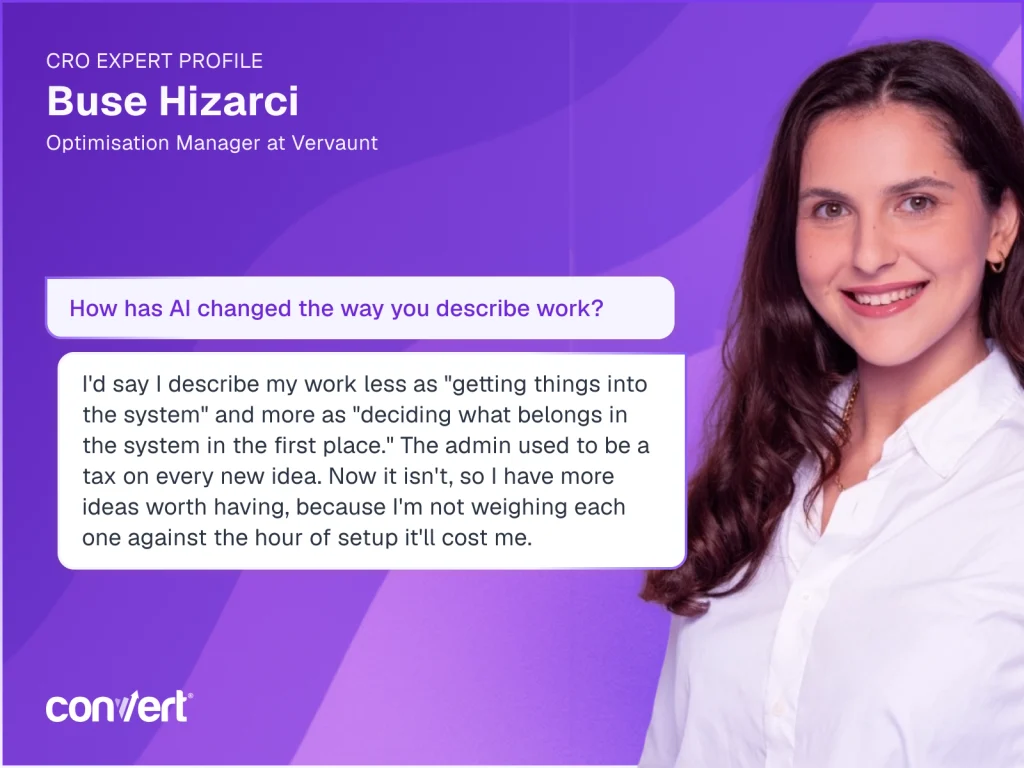
In the DTC sector specifically, the cost of customer acquisition (CAC) has risen by as much as 222% over the last eight years. This surge has made optimization a survival necessity rather than a luxury. Brands can no longer afford to "guess" at what works; they must utilize every visit to build a profile of consumer behavior. Hizarci’s emphasis on "turning assumptions into evidence" directly addresses this economic reality. By automating the administrative and repetitive tasks—such as research documentation and call note synthesis—optimization managers can dedicate more hours to high-level strategic thinking that counters rising acquisition costs.
Chronology of the Optimization Workflow Evolution
The evolution of the optimization workflow can be categorized into three distinct eras:
- The Manual Era (Pre-2015): Testing was limited by technical barriers. Only large enterprises with dedicated engineering teams could run robust A/B tests. Data was often siloed, and results were recorded in static spreadsheets.
- The Tooling Era (2015–2022): The rise of no-code and low-code testing platforms (like Convert, Optimizely, and VWO) democratized testing. The focus was on "volume"—running as many tests as possible to find "winners."
- The Intelligence Era (2023–Present): AI-driven automation handles the execution, mockup generation, and data cleaning. The focus shifts to "insights"—understanding the "why" behind the data and building a cumulative knowledge base.
Hizarci operates firmly in this third era, where the role of the Optimization Manager is becoming more akin to that of a behavioral scientist or a strategic consultant than a technical implementer.
Broader Impact and Future Implications
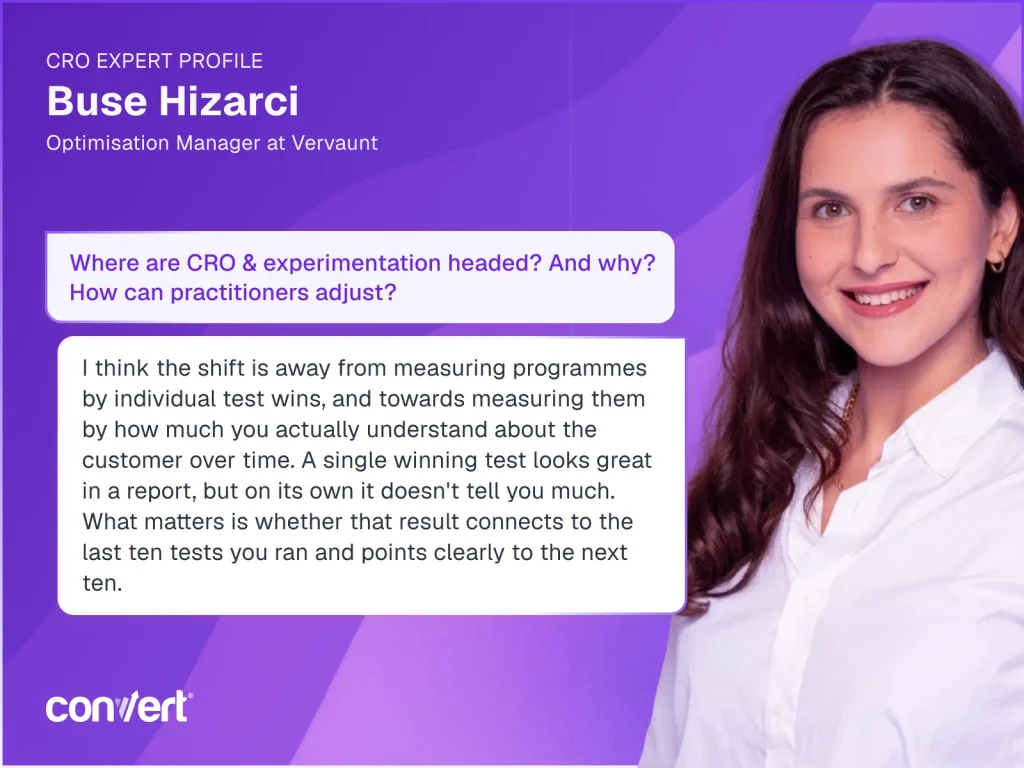
The shift toward measuring programs by "customer understanding" rather than "test wins" has profound implications for how agencies and internal teams are evaluated. Success is increasingly defined by the ability to predict consumer behavior across different segments. For practitioners, this means that the most valuable skill set is no longer just knowing how to set up a test, but knowing how to interpret a complex web of results to form a coherent brand strategy.

Furthermore, the automation of administrative tasks is changing the nature of client-agency relationships. When research documents and meeting follow-ups are handled by AI, the "human" element of the partnership is elevated to focus on creative problem-solving and high-level business alignment.
As Hizarci concludes, the ultimate goal of optimization is to build on history. The programs that will thrive in the coming years are those that do not allow results to be "filed away" in isolation but instead use every data point to reshape the future of the user experience. In the competitive DTC landscape, the winner is not the brand that tests the most, but the brand that learns the fastest.







