Dwi Wanna
The digital marketing landscape is currently undergoing its most significant transformation since the inception of the commercial search engine. As artificial intelligence fundamentally alters how consumers discover brands, products, and services, the industry is shifting from a paradigm of simple keyword matching to one of complex intent synthesis. This transition, driven by the integration of Generative AI into search engines like Google and the rise of standalone answer engines like ChatGPT and Perplexity, has created a new challenge for marketers: the necessity of turning AI-generated discovery into tangible conversions.
The Shift from Navigation to Synthesis
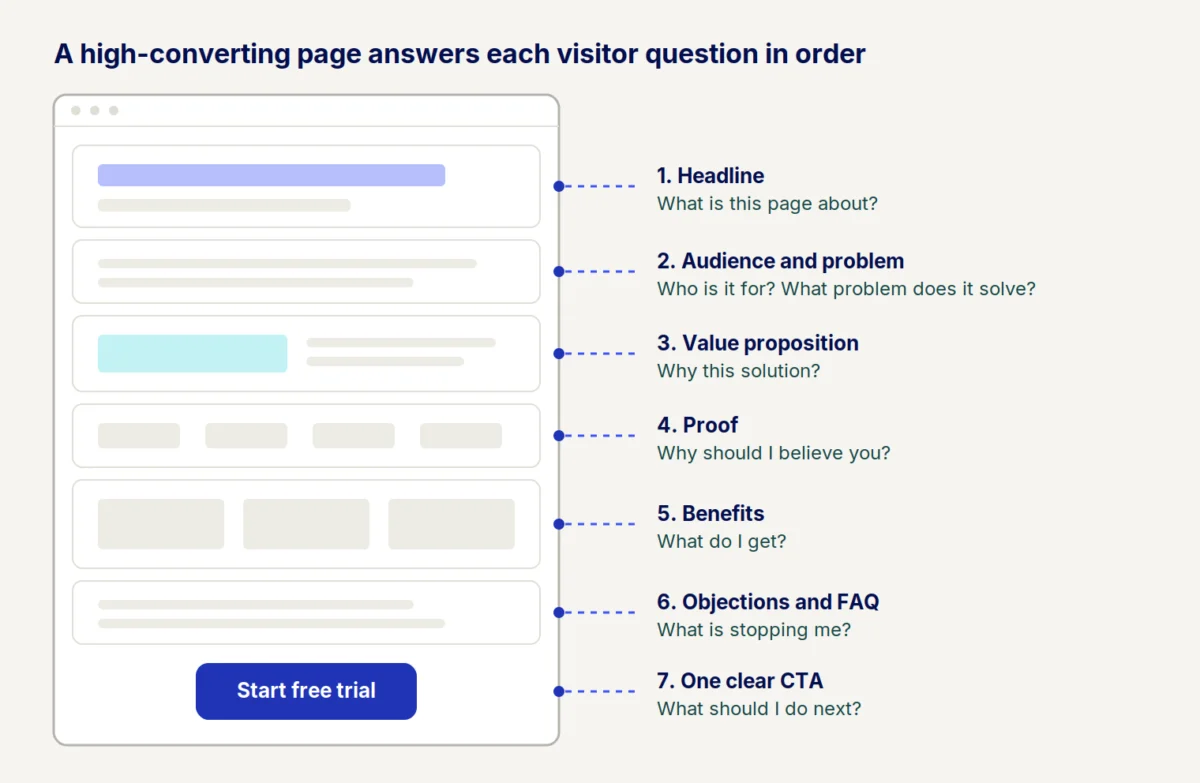
For over two decades, the search journey was a linear process. A user entered a query into a search bar, scanned a list of "ten blue links," and clicked on the most relevant organic listing or advertisement. Marketers focused their efforts on ranking at the top of these lists, knowing that the click was the primary gateway to their brand. Once the user landed on the page, the marketer had a singular opportunity to convert them based on the context of that specific keyword.
In the contemporary era of AI-assisted search, this journey has become multifaceted. Google’s AI Overviews and Search Generative Experience (SGE) now employ a technique known as "query fan-out," where the system executes multiple related searches across various subtopics and synthesizes the findings into a cohesive, conversational answer. Tools like Perplexity and ChatGPT further this by citing specific sources within their narrative responses. Consequently, users are no longer just finding links; they are receiving comprehensive answers that often satisfy their initial curiosity without requiring an immediate click.
This evolution means that by the time a user finally clicks through to a landing page, they are often much further along in the decision-making process than they were in the traditional search model. They have already been briefed by an AI; they have seen comparisons, read synthesized reviews, and understood the general value proposition. The landing page’s role has therefore shifted from basic education to high-level validation and friction reduction.

A Chronology of the Generative Search Revolution
The timeline of this shift is marked by rapid technological deployments that have forced marketers to adapt in real-time.
- November 2022: The launch of ChatGPT by OpenAI introduced the public to conversational discovery, proving that users were willing to bypass traditional search engines for direct answers.
- May 2023: Google announced the Search Generative Experience (SGE) at its I/O conference, signaling the integration of Large Language Models (LLMs) into the world’s most used search engine.
- Late 2023: The rise of "Answer Engine Optimization" (AEO) and "Generative Engine Optimization" (GEO) as distinct disciplines within the SEO community.
- May 2024: Google officially rebranded SGE to "AI Overviews" and began a global rollout, fundamentally changing the layout of the SERP for billions of queries.
- Present Day: Marketers are now grappling with "zero-click" searches and the realization that while visibility in AI summaries is vital, the conversion of the remaining traffic is the only way to maintain ROI.
Supporting Data and Technical Mechanics
Recent industry data suggests that while AI Overviews may reduce the total volume of clicks for informational queries, the traffic that does reach a website is often of significantly higher intent. According to early studies on Generative Engine Optimization, websites that provide structured, authoritative data are up to 40% more likely to be cited in AI-generated summaries.
The technical backbone of this new search environment relies heavily on structured data, or Schema Markup. This JSON-LD code acts as a translator, helping AI systems understand the specific context of a page—whether it is a product, a frequently asked question, an event, or a local business. Platforms like Instapage have responded to this need by integrating automated Schema Markup tools, allowing marketers to generate validated code that makes their pages "readable" for LLMs without requiring manual coding.
Furthermore, the "query fan-out" mechanism means that brands are now being discovered through adjacent problems rather than direct product searches. A user asking, "How do I lower my customer acquisition cost?" may be introduced to a landing page software brand by the AI, even if the user never searched for "landing page builder." This necessitates a content strategy built around answering complex business problems rather than just targeting high-volume keywords.
Official Responses and Expert Perspectives
Industry leaders and search engine representatives have been vocal about the "people-first" nature of this evolution. Google’s Search Liaison has repeatedly emphasized that the core systems powering AI Overviews are the same as those powering traditional search: the emphasis remains on "Helpful, Reliable, People-First Content."
Marketing analysts suggest that the rise of AI search actually punishes "commodity content"—the generic, SEO-filler articles designed solely to capture traffic. "If an AI can summarize your entire article in two sentences, there is no reason for a user to visit your site," says one industry analyst. "The value now lies in original research, unique insights, and first-hand expertise—things an LLM cannot fabricate."
This sentiment is echoed by conversion rate optimization (CRO) experts who argue that the "message match" between an AI’s summary and the eventual landing page is the new frontier of digital advertising. If an AI tells a user that a software is "easy to use for small teams," and the user clicks through to a page that talks about "enterprise-grade digital transformation," the cognitive dissonance leads to an immediate bounce.
The Strategic Pivot: Your Landing Page’s New Job
In the AI search era, the landing page is no longer the start of the conversation; it is the closing argument. Marketers must recognize that visitors arrive at different stages of awareness:
- The Problem-Aware Visitor: They are researching why a specific issue exists. They need education and evidence.
- The Solution-Aware Visitor: They know what they need but are exploring options. They require use cases and capability demonstrations.
- The Decision-Ready Visitor: They are comparing vendors. They need social proof, integrations, and clear pricing.
To address these varying levels of intent, the use of personalization and dynamic content has become mandatory. Modern platforms allow marketers to create multiple "experiences" on a single URL. For example, a visitor arriving from an AI summary about "cost-effective marketing" can see a headline focused on ROI, while another visitor arriving from a summary about "scale" sees a headline focused on automation—all on the same page.
Broader Impact and Future Implications
The long-term implications of AI search extend into the very structure of marketing teams. The silos between SEO, Paid Search, and Content Marketing are dissolving. Because AI systems pull from all available data to form an answer, a brand’s reputation, its ad copy, and its technical SEO must all be synchronized.
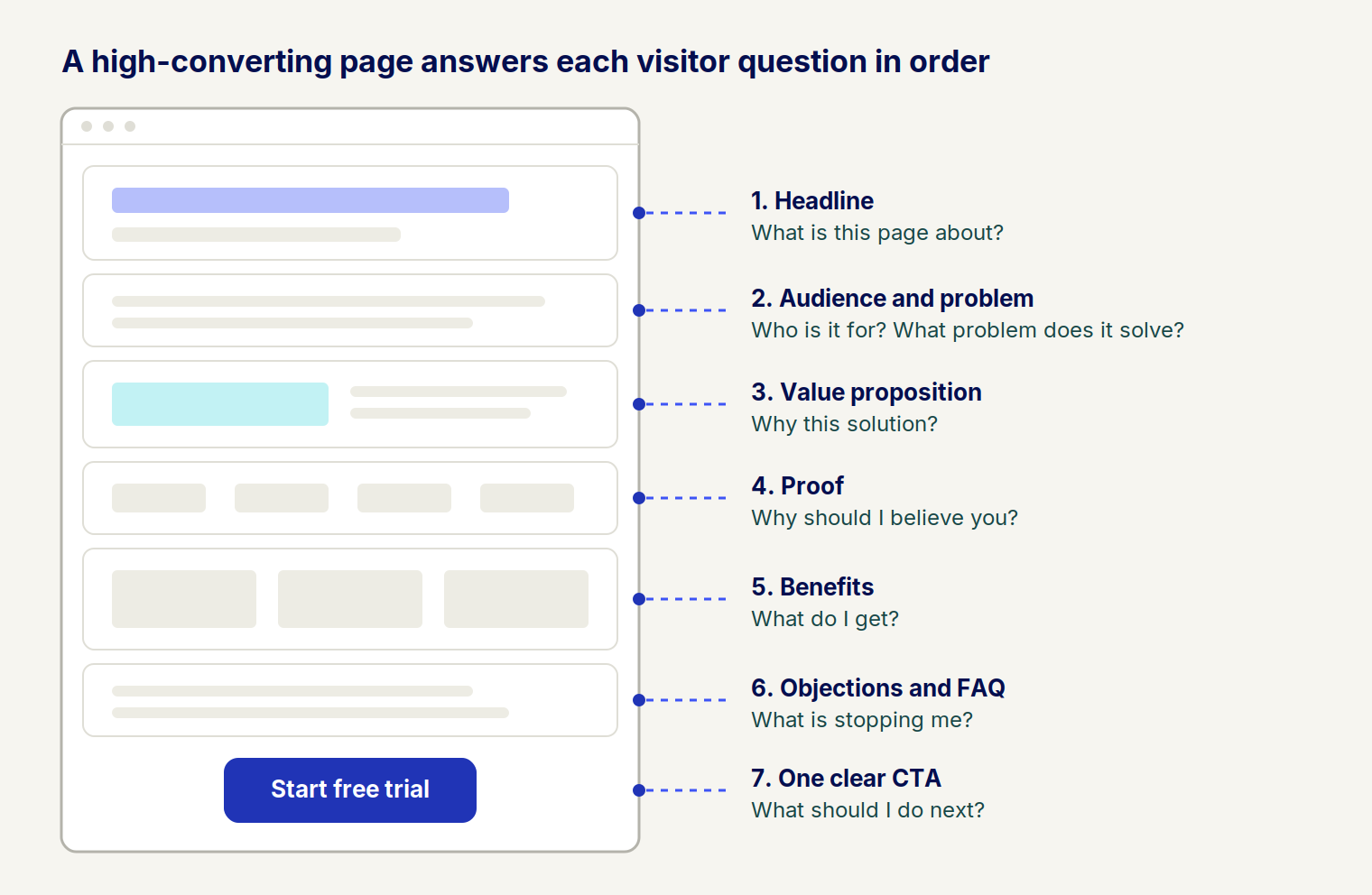
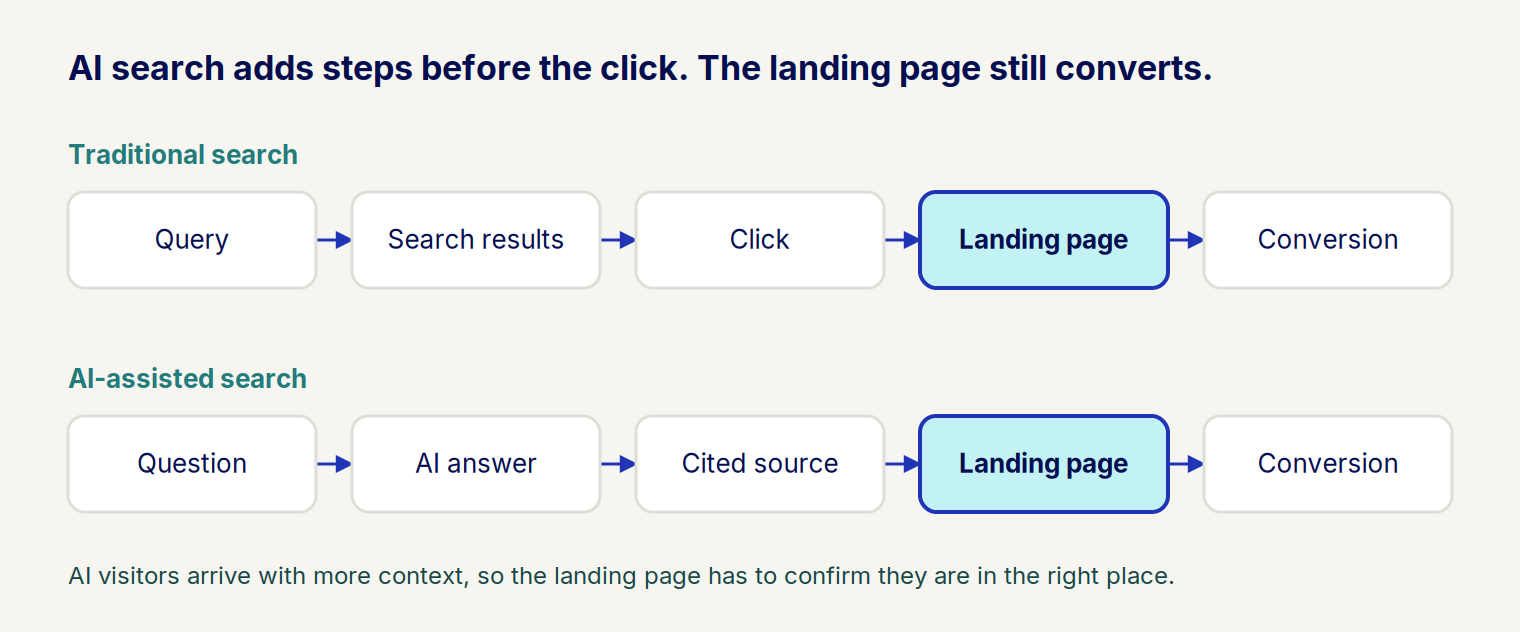
One of the most significant risks in this new environment is "optimizing for the machine" at the expense of the human. Marketers who attempt to "hack" AI search by over-stuffing pages with hidden text or long-form "SEO essays" are finding that while they may occasionally appear in an AI snippet, their conversion rates plummet. The goal of a high-converting page remains the same: the "minimum uncertainty" for the user. A page must clearly state what the product is, who it is for, why it is better than the competition, and what the user should do next.
As we look toward 2025 and beyond, the integration of AI into search will likely lead to even more personalized "concierge-style" discovery. The brands that thrive will be those that view AI not as a hurdle to be cleared, but as a filter that delivers more qualified, informed leads to their door. The discovery is earned through content and authority, but the revenue is earned through the relevance and clarity of the post-click experience.
In conclusion, the evolution of search from a directory to an assistant does not diminish the importance of the landing page—it amplifies it. As the journey becomes longer and more complex, the final destination must be more robust, more personalized, and more convincing than ever before. The experience after the click is now the ultimate differentiator in an AI-driven market.


 Raul Delapena Setiawan

 Lina Irawan