

Paid search advertising generated $102.9 billion in U.S. revenue in 2024, cementing its status as the most significant digital advertising format by a substantial margin. This figure reflects a broader global trend where search advertising continues to dominate marketing budgets due to its unique ability to place brand messaging in front of consumers at the precise moment of high-intent inquiry. As the industry moves into 2025, the global expenditure for search advertising is forecasted to reach approximately $355.10 billion, driven by advancements in artificial intelligence and the increasing sophistication of auction-based bidding systems.
The scale of the search market exists because it capitalizes on "declared intent." Unlike social media or display advertising, where ads are served based on user interests or demographic profiles, paid search responds to specific queries. However, the maturity of the market has brought significant challenges. Rising competition and shifting platform algorithms have seen the average cost-per-lead (CPL) climb from $66.69 in 2024 to an estimated $70.11 in 2025. This inflationary environment necessitates a deeper understanding of the mechanics behind the search engine results page (SERP) and a more strategic approach to the "post-click" experience.
The Chronological Evolution of Search Marketing
The trajectory of paid search has moved from a simple keyword-matching service to a complex, AI-driven ecosystem. In the early 2000s, the launch of Google AdWords revolutionized the internet by introducing a self-service model for advertisers. Initially, the system was rudimentary, relying heavily on exact keyword matches and manual bidding.
By the mid-2010s, the introduction of "Enhanced Campaigns" signaled a shift toward mobile-first advertising, acknowledging the proliferation of smartphones. This era also saw the rise of Quality Score as a critical metric, forcing advertisers to focus on ad relevance rather than just the size of their bank accounts.
In the current decade, the focus has shifted entirely toward automation. The transition from Expanded Text Ads to Responsive Search Ads (RSAs) and the introduction of Performance Max (PMax) campaigns represent a new era where machine learning determines the best combination of headlines, descriptions, and placements. Today, the "black box" of Google’s AI handles millions of signals—including location, time of day, and previous user behavior—to execute auctions in milliseconds.

The Mechanics of the Digital Auction
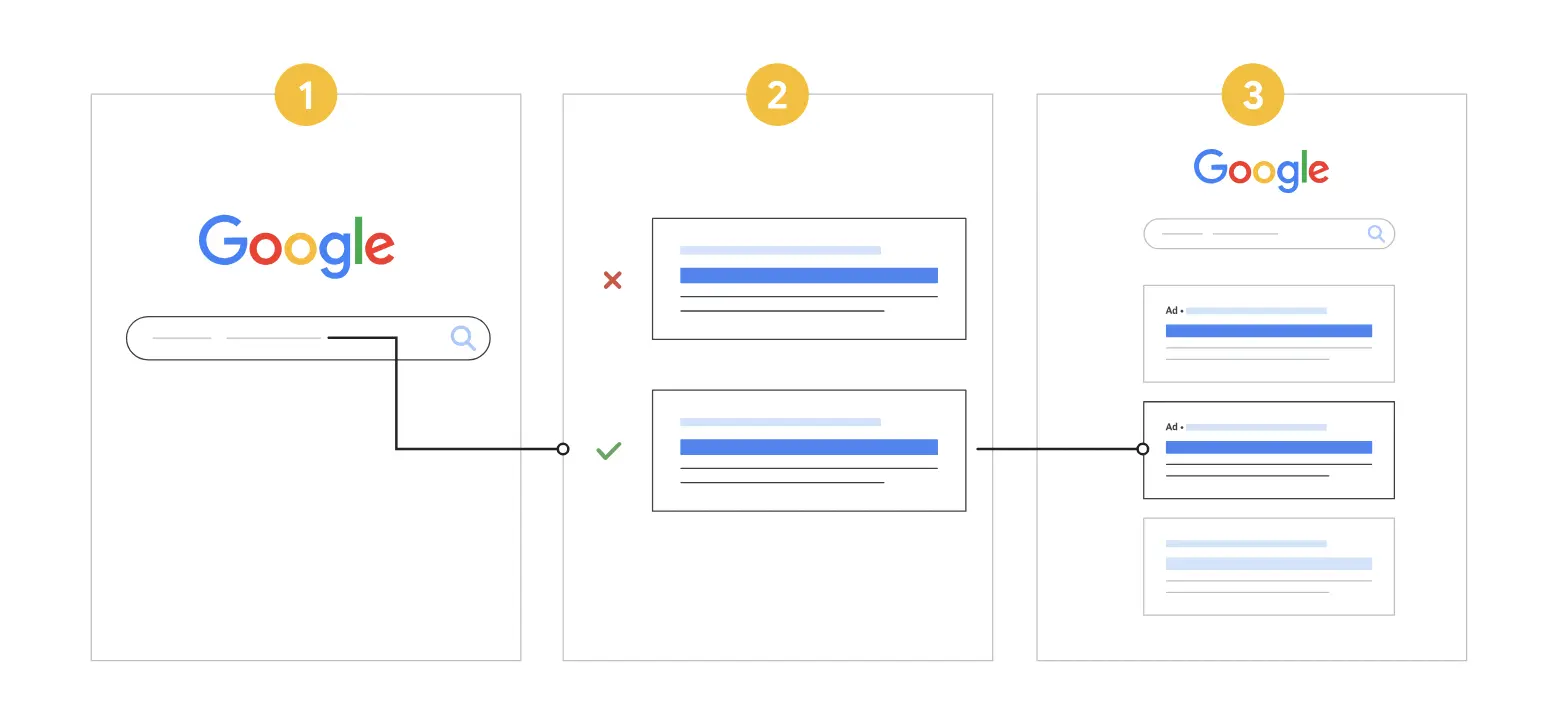
At the core of paid search is the real-time auction, a process that occurs every time a user enters a query. This system is designed to balance the search engine’s need for revenue with the user’s need for relevant information. The auction follows a rigorous five-step sequence:
- The Query: A user enters a specific keyword or phrase.
- The Trigger: The search engine identifies all active campaigns bidding on those terms that also meet the user’s geographic and device criteria.
- Ad Rank Calculation: Each potential ad is assigned an Ad Rank. This is not determined by the bid alone but by a combination of the maximum bid, the Quality Score (which includes expected click-through rate, ad relevance, and landing page experience), and the expected impact of ad assets.
- Determination of Placement: The advertiser with the highest Ad Rank secures the top "Sponsored" position. This allows well-optimized, highly relevant ads to outrank competitors who may be bidding more but offering a poorer user experience.
- The Final Charge: Under the second-price auction model, the winning advertiser does not pay their maximum bid. Instead, they pay the minimum amount required to maintain their position above the next-highest bidder, typically just one cent more than the competitor’s Ad Rank would require.
Platform Diversification and Market Share
While Google Ads remains the undisputed leader, holding roughly 90% of the global search market share, the landscape is becoming increasingly multi-polar. Google’s ecosystem offers unparalleled reach through YouTube, Gmail, and the Google Display Network, making it the primary choice for 39.8% of all digital ad revenue.
Microsoft Advertising, however, has carved out a significant niche. By powering search results on Bing, Yahoo, AOL, and DuckDuckGo, Microsoft captures a demographic that is often older and has higher disposable income, particularly in the US, UK, and Canada. Recent strategic expansions, such as Microsoft’s partnership to provide the ad-supported tier for Netflix, have opened new avenues for search-adjacent inventory that Google cannot currently access.
Furthermore, Apple Search Ads has emerged as a powerhouse for the mobile app economy. Appearing at the top of App Store search results, these ads represent the most direct path to app discovery on iOS devices. The platform offers two tiers: Basic, which uses automated generation for smaller developers, and Advanced, which provides granular control over keyword targeting and audience segmentation.
Strategic Comparison: Paid Search vs. Organic Search (SEO)
The relationship between paid and organic search is often viewed as a zero-sum game, but market analysts argue they are complementary. Paid search provides immediate visibility and is ideal for product launches or highly competitive commercial terms where organic ranking might take years to achieve.
Conversely, Organic Search (SEO) is a long-term play focused on building authority and capturing informational traffic. While SEO has no direct cost-per-click, the "time to results" is typically three to twelve months. Data suggests that running both simultaneously creates a "halo effect." When a brand appears in both the sponsored and organic sections of a SERP, the perceived credibility of the brand increases, often leading to a higher overall click-through rate across both channels.
The Modern Ad Suite: RSAs, DSAs, and PMax
The variety of ad formats available today allows for a multi-layered strategy:
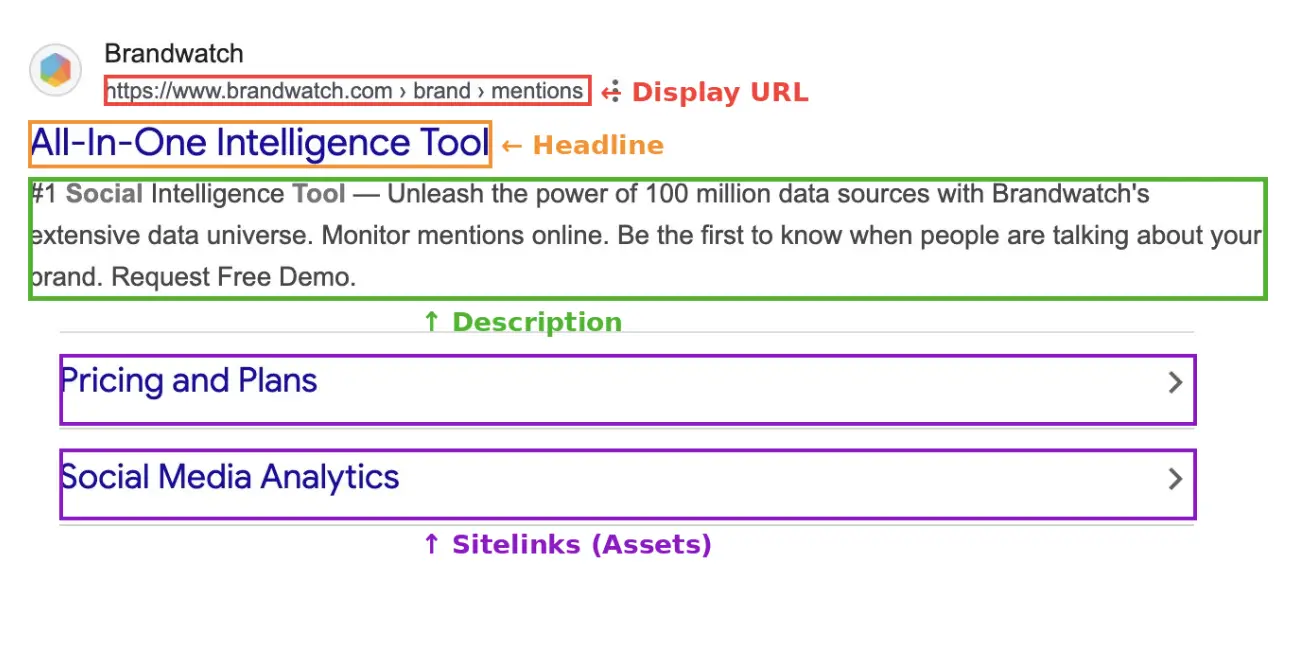
- Responsive Search Ads (RSAs): These are now the industry standard. Advertisers provide up to 15 headlines and four descriptions, and the platform’s AI tests combinations to find the most effective version for each specific user.
- Dynamic Search Ads (DSAs): Instead of bidding on keywords, DSAs use the content of a company’s website to automatically generate headlines and target relevant queries. This is particularly effective for large e-commerce sites with thousands of products.
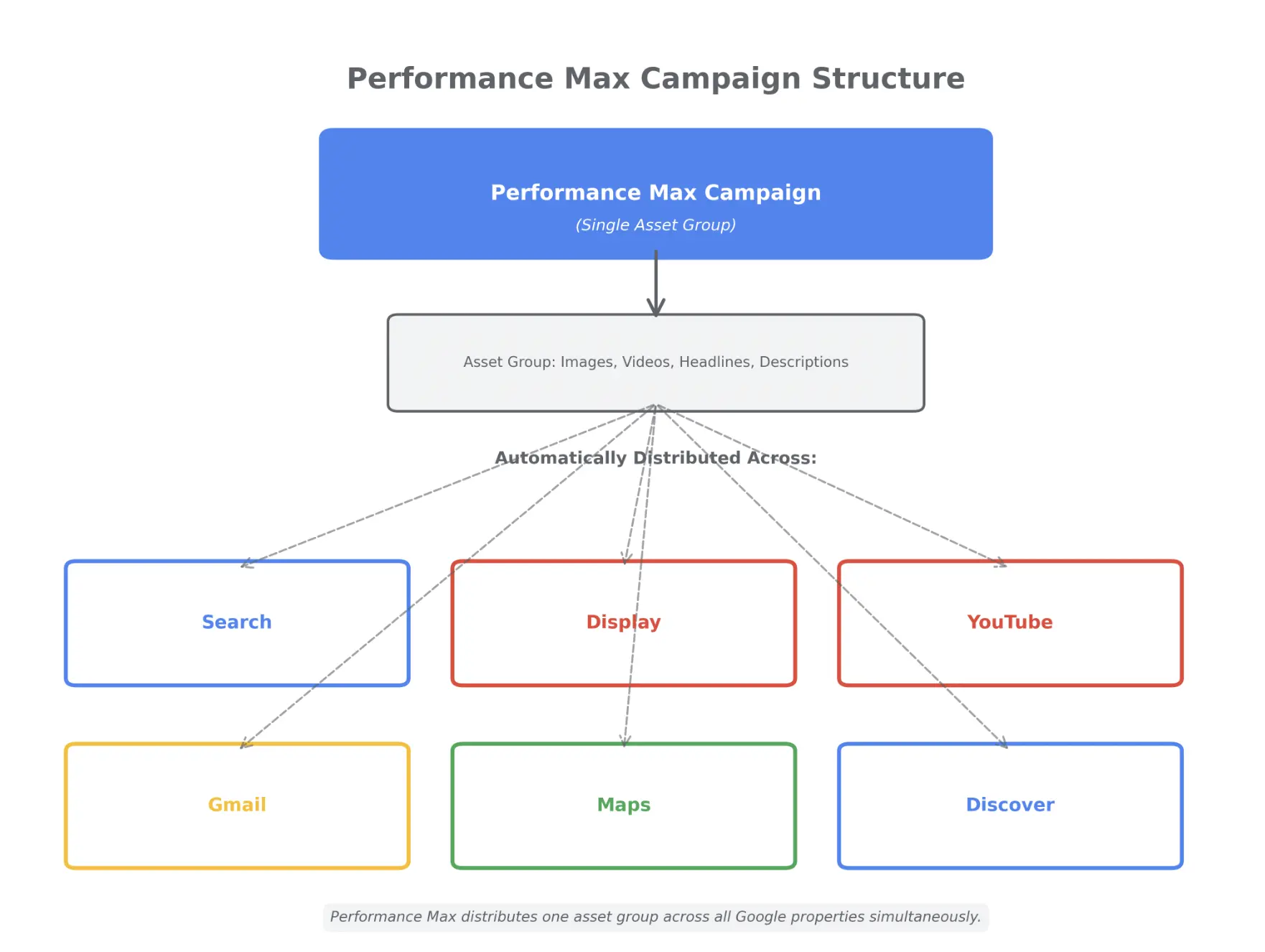
- Performance Max (PMax): This represents the pinnacle of Google’s automation. A single campaign can serve ads across Search, Display, YouTube, and Maps. It relies on "audience signals" provided by the marketer to find new customers across all of Google’s properties.
- Shopping Ads: Driven by product feeds in the Google Merchant Center rather than traditional copy, these ads are essential for retail, displaying images and prices directly on the SERP.
The Critical Importance of the Post-Click Experience
The most significant point of failure for modern search campaigns is not the ad itself, but what happens after the click. Industry benchmarks indicate that while generic homepages typically convert at a rate of 2% to 4%, dedicated, message-matched landing pages can achieve conversion rates exceeding 10%.
The "Message Match" principle is a cornerstone of high-performing strategies. If an ad promises a "14-Day Free Trial," and the landing page focuses on "Enterprise Consultations," the cognitive dissonance causes users to bounce, wasting the ad spend. Furthermore, because landing page experience is a component of Quality Score, a poor post-click experience actually increases the cost-per-click, creating a double-penalty for the advertiser.

Speed is another non-negotiable factor. Research into mobile user behavior shows that a one-second delay in page load time can reduce conversions by up to 20%. In a competitive landscape where clicks can cost upwards of $50 in sectors like legal or insurance services, technical performance is as much a financial metric as it is a functional one.
Measurement, Attribution, and the Role of GA4
With the sunsetting of Universal Analytics and the full adoption of Google Analytics 4 (GA4), measurement has become more user-centric. Marketers now track "Paid Search" as a specific channel grouping, allowing them to see the full user journey from the first click to the final conversion.
The rise in CPL—from $66.69 to over $70—has shifted the focus from volume to efficiency. Key Performance Indicators (KPIs) have evolved from simple click-through rates (CTR) to Return on Ad Spend (ROAS) and Cost Per Acquisition (CPA). Advanced marketers are increasingly using "Smart Bidding" strategies, such as Target CPA (tCPA), which allow the search engine to automatically adjust bids in real-time to meet specific profitability goals.
Broader Implications and Industry Outlook
The future of paid search is inextricably linked to the tension between AI automation and user privacy. As third-party cookies are phased out and privacy regulations like GDPR and CCPA become more stringent, search engines are relying more on "first-party data" and "modeled conversions" to fill the gaps in tracking.
Furthermore, the rise of Generative AI in search—such as Google’s Search Generative Experience (SGE)—is expected to change how ads are integrated into results. Instead of a list of links, users may receive synthesized answers, with ads placed within the AI-generated response. This will likely increase the premium on high-quality, authoritative content and even more precise ad targeting.
In conclusion, while the financial scale of paid search is massive, its success in 2025 and beyond depends on a holistic approach. Advertisers who rely solely on high bids will likely be priced out by those who master the nuances of the auction, leverage the full power of AI-driven ad formats, and prioritize a seamless, high-speed, and relevant post-click experience. The era of "set it and forget it" search marketing has ended, replaced by a landscape that demands constant optimization and a deep integration between creative messaging and technical execution.







