
The hum of the dishwasher, the rhythm of household chores, or the commute to the office – these are moments when traditional screen-based content often falls by the wayside. While blogs remain a cornerstone of digital strategy, crucial for SEO, feeding artificial intelligence models, driving traffic, and generating leads, a powerful new contender is capturing the attention of B2B audiences: podcasts. Forward-thinking B2B brands are not abandoning their established content channels; instead, they are embracing a dual strategy, integrating podcasts to reach their audience in previously inaccessible moments. The burgeoning data underscores this shift, revealing podcasting as the next significant frontier in B2B content marketing.
The past year has seen a surge in research illuminating the undeniable impact of podcasting on the B2B sector. Analysis of five distinct reports, all released within the last twelve months, paints a compelling picture: the podcasting landscape for B2B audiences is experiencing unprecedented growth, with its full potential yet to be realized. This auditory medium offers a unique advantage by seamlessly fitting into the daily routines of busy professionals, allowing brands to connect with their target demographic during times when visual engagement is impractical or impossible.
Exploding Listenership: The Ever-Growing Podcast Audience
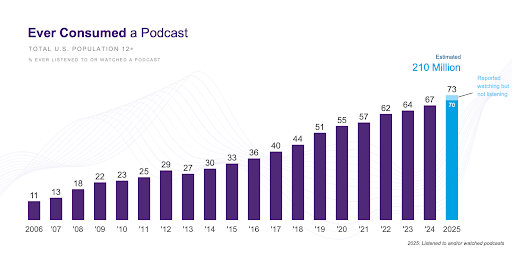
Podcasting has firmly established itself as a growth medium, with listenership figures consistently climbing. What is particularly striking is the significant influx of new listeners, indicating a broadening appeal beyond early adopters. Despite the medium’s origins in the early 2000s, it has only recently achieved true mass-market penetration. Data from Edison Research’s “Infinite Dial” report series consistently highlights this expansion. For instance, the 2023 report indicated that a substantial portion of the U.S. population now consumes podcasts, a figure that has seen steady year-over-year increases. This consistent growth suggests a sustained interest that transcends fleeting trends.
The expansion of podcast listenership is not merely a matter of increasing numbers; it reflects a fundamental shift in how individuals consume information and entertainment. As more platforms become accessible and the quality of content diversifies, podcasts are becoming a preferred medium for a growing segment of the population. This democratisation of content creation and distribution has fueled the growth, making it easier for both established brands and emerging voices to find their audience.

The Demographically Valuable Podcast Listener
While the sheer volume of podcast listeners is impressive, the critical question for B2B marketers revolves around the demographic and professional profile of this audience. Are these listeners the right target for B2B products and services? The data strongly suggests they are. A vast audience is less relevant if it doesn’t align with a brand’s ideal customer profile. However, recent research consistently demonstrates that podcast listeners are not only numerous but also possess characteristics highly desirable for B2B engagement.
Numerous studies indicate that podcast listeners often represent a highly educated and affluent demographic, frequently holding professional roles. For example, data from various industry reports reveals a significant proportion of podcast listeners fall within the 25-54 age bracket, a prime working demographic. Furthermore, income levels among regular podcast listeners often exceed national averages, indicating a strong purchasing power. This demographic profile makes them a highly valuable target for B2B marketers seeking to reach decision-makers and influencers within organizations. The ability to consistently reach such a concentrated group of potentially high-value customers through a single medium is a significant advantage.
Podcasts as a Trusted Conduit for Information
In an era marked by pervasive skepticism and content saturation, B2B buyers are increasingly discerning. They are adept at filtering out generic advertising and are actively seeking credible sources of information. Brands that adopt a conversational, rather than a purely promotional, approach are the ones that cut through the noise. Podcasts offer one of the most direct and effective pathways to establishing this crucial credibility. By delivering valuable insights, expert opinions, and engaging discussions, podcasts build familiarity and foster a sense of authority, which are instrumental in influencing purchasing decisions.
The intimate nature of audio content allows for a deeper connection between the host, guest, and listener. This format lends itself to nuanced discussions and detailed explanations, which are particularly beneficial for complex B2B products and services. Unlike the often superficial engagement with written content, podcasts encourage sustained attention, allowing for the gradual development of trust and understanding. This trust is not easily earned and is a powerful differentiator in a crowded marketplace. Moreover, the perceived authenticity of podcast hosts and guests often translates into a higher level of trust for the information being shared, including any product or service recommendations.
The Devotion of Podcast Fans: Engaged and Attentive Audiences
The digital landscape is characterized by fleeting attention spans. Most online content struggles to capture more than a few seconds of a user’s attention before they move on. Podcasts, however, are designed for sustained engagement. Listeners actively choose to dedicate significant blocks of time to consuming podcast content, demonstrating a level of commitment rarely seen elsewhere in the digital realm.
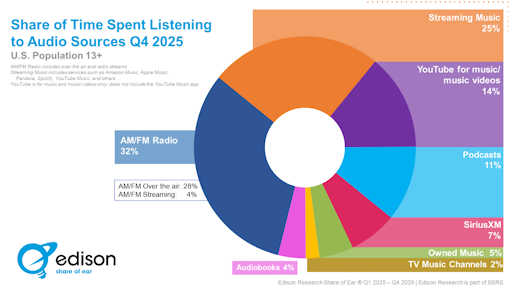
This devoted listenership is a critical advantage for B2B marketers. It means that messages, whether embedded within the content or delivered through advertisements, have a far greater chance of being heard and absorbed. Research from Edison Research consistently shows that podcast listeners tend to spend a significant portion of their media consumption time listening to podcasts, often dedicating hours each week to the medium. This “share of time” is a valuable commodity, indicating a captive audience that is actively engaged with the content. This deep engagement fosters a stronger connection between the brand and the listener, leading to greater recall and impact.
The Evolution of Podcasting: Video’s Expanding Influence
The podcasting medium is not static; it is continuously evolving. A notable trend is the increasing integration of video, transforming many podcasts into visual experiences. While the debate continues on whether this expansion blurs the lines of traditional audio, the impact on audience engagement and reach is undeniable. Platforms like Netflix now feature dedicated podcast categories, and many popular podcasts offer video feeds, enhancing the listener experience.
The visual element of video podcasts offers several advantages, particularly for B2B brands. Seeing a guest’s reactions or a host’s body language can create a deeper sense of intimacy and personal connection that audio alone cannot replicate. This humanizes abstract concepts and complex services, making them more relatable and understandable to a B2B audience. Furthermore, the visual format provides additional opportunities for brand recognition and more strategic ad placements. For B2B products or services that are intangible or difficult to visualize, video can be a powerful tool for demonstrating value and building rapport. This evolution reflects a broader trend in digital media towards multi-sensory engagement, catering to diverse audience preferences.
The Compelling Business Case for Podcast Advertising
While the value of organic podcast content is clear, the effectiveness of podcast advertising also warrants significant attention. Despite the prevalence of ads on many popular podcasts, listeners generally exhibit a high degree of tolerance, often recognizing that this is the cost of accessing free, high-quality content. This goodwill is a crucial factor that translates into positive outcomes for advertisers.
Data indicates a growing trend of listeners making purchasing decisions after hearing advertisements on podcasts. This effectiveness stems from the trust and engagement built through the podcast itself. When an advertiser aligns with a trusted podcast and its audience, the message carries more weight. The ability to reach an engaged and attentive audience in a format they actively choose is a powerful proposition. For B2B marketers, this represents a significant opportunity to connect with potential clients at a critical stage of their decision-making process. The question is no longer whether podcasting is a relevant channel for B2B marketing, but rather whether a brand can afford to overlook this potent touchpoint.
Strategic Implications and Future Outlook
The data overwhelmingly supports the integration of podcasting into a comprehensive B2B marketing strategy. Brands that fail to explore this medium risk being “pod cast aside” as competitors leverage its unique advantages. Podcasting is no longer a peripheral “nice-to-have” but a fundamental component of reaching and engaging modern B2B buyers.
The complexity of launching and managing a successful podcast can be daunting, involving aspects like sponsorship acquisition, guest sourcing, production, and promotion. However, partnering with experienced podcast marketing agencies can demystify the process and ensure a strategic, effective approach. By outsourcing these tasks, B2B brands can focus on creating compelling content that positions them as thought leaders and trusted resources within their respective industries.
The “Beyond B2B Marketing Podcast,” for example, serves as a prime illustration of how established brands are utilizing this medium. Hosted by industry experts, it delves into critical topics such as AI disruption, the importance of creativity, and effective storytelling in B2B marketing, offering valuable insights to professionals. This type of content not only educates but also subtly reinforces the host’s brand authority and expertise.
As the digital marketing landscape continues to evolve, the strategic adoption of podcasting by B2B brands is set to become a standard practice. Its ability to foster deep engagement, build trust, and reach audiences in moments of undivided attention positions it as an indispensable tool for achieving marketing objectives and driving business growth. The future of B2B content marketing is undoubtedly auditory, and brands that embrace this shift will be best positioned for success in the years to come.