
 rifanmuazin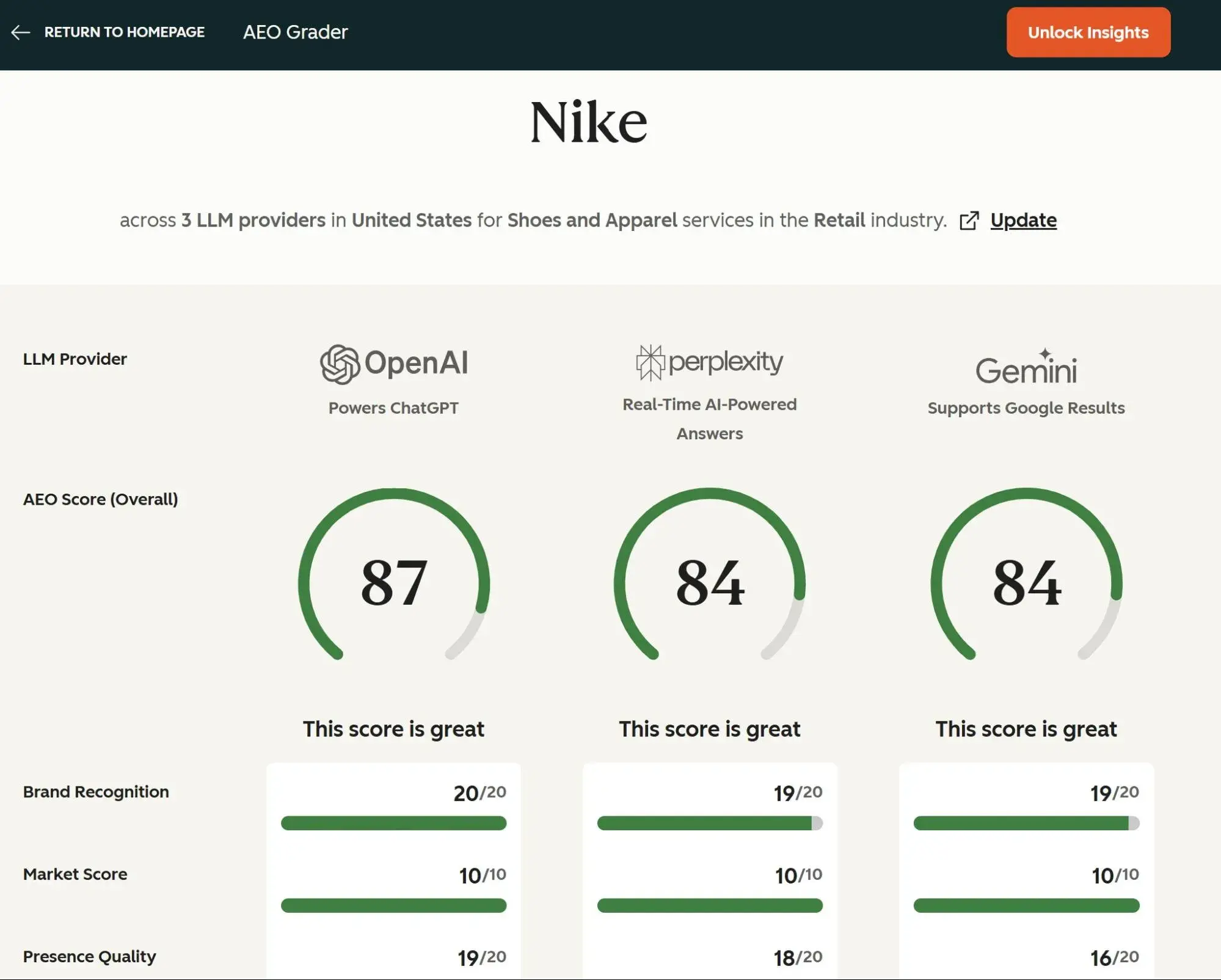
The rapid proliferation of artificial intelligence in search and content generation has fundamentally reshaped the competitive arena for businesses, necessitating a paradigm shift from traditional search engine optimization (SEO) to Answer Engine Optimization (AEO). While companies routinely encounter competitors featured in AI-generated responses, a critical gap often exists in marketers’ understanding of which rivals are cited, for which queries, and why. This strategic blind spot underscores the escalating importance of AEO competitor analysis, a specialized discipline designed to provide teams with precise, actionable insights into this nascent, yet dominant, digital frontier.
The core distinction between the current AI-driven environment and previous search paradigms lies in how information is consumed. Platforms such as ChatGPT, Perplexity, and Google’s AI Overviews do not simply rank web pages; they synthesize information and cite sources within their generated answers. This fundamental shift profoundly alters the dynamics of competitive visibility. A brand might command a top-three organic ranking on a traditional search engine results page (SERP), yet remain entirely absent from the AI-generated answer that a prospective customer encounters first. Without diligently tracking citation patterns and understanding the underlying mechanisms of AI preference, marketers risk making content and SEO decisions based on an incomplete picture. A comprehensive AEO competitor analysis, therefore, serves as an indispensable guide, detailing how to establish this critical tracking, identify key metrics, leverage appropriate tools, and translate findings into content strategies that effectively close competitive gaps.
The Rise of Answer Engines and the Shifting Landscape of Search
The evolution of search has been relentless, moving from keyword matching to semantic understanding, and now to generative AI. Historically, SEO focused on optimizing content for algorithms that crawled and indexed web pages, rewarding relevance, authority, and technical proficiency with higher organic rankings. The user journey typically involved clicking on a link to access information. However, the advent of large language models (LLMs) and their integration into search experiences marks a pivotal inflection point.

ChatGPT, launched in late 2022, rapidly became the fastest-growing consumer application in history, surpassing 100 million active users within two months and now boasting over 900 million weekly active users. This exponential growth signaled a profound shift in user behavior, as individuals increasingly turned to conversational AI for direct answers rather than lists of links. Google, recognizing this seismic change, responded with its own generative AI features, notably "AI Overviews," which began rolling out in early 2024. These overviews provide synthesized answers directly at the top of the SERP, often relegating traditional organic links further down the page, sometimes below the fold. Other answer engines like Perplexity and Gemini have also gained significant traction, each offering unique approaches to information synthesis and source citation.
This chronological development highlights a critical trend: answer engine search is no longer a futuristic concept but a present reality with rapidly accelerating adoption. Data from Search Engine Land indicates that 58.5% of U.S. Google searches and 59.7% of EU searches now result in zero clicks, a phenomenon directly attributable to the efficacy of AI-generated answers in satisfying user intent without the need to navigate to external websites. This zero-click trend is a stark warning for businesses relying solely on traditional SEO metrics.
Defining AEO Competitor Analysis
At its core, AEO competitor analysis is the systematic process of identifying which brands, specific web pages, and authoritative sources are being cited by answer engines in their AI-generated responses. Crucially, it involves benchmarking a brand’s own visibility against these identified competitors across the same target queries. Answer Engine Optimization (AEO) itself is the strategic practice of structuring content in such a way that AI platforms—including ChatGPT, Perplexity, Google’s AI Overviews, and Gemini—are more likely to surface it as a trusted and authoritative answer.
AEO competitor analysis extends this practice beyond self-optimization. Instead of merely refining their own content, marketing teams are now tasked with systematically tracking who else these powerful AI engines are citing, why these sources are preferred, and what strategic gaps can be exploited to gain a competitive edge. This approach demands a different set of metrics than traditional SEO. While traditional SEO competitive research focuses on keyword rankings, organic traffic, and backlink profiles, AEO competitor analysis tracks citation frequency, answer share, entity coverage, and QA content depth within AI-generated answers. The underlying competitive landscape has transformed: marketers are no longer solely vying for a specific rank position but are competing to be recognized as the authoritative source that an LLM trusts and references.

Why AEO Competitor Analysis Is Now Paramount
The urgency surrounding AEO competitor analysis stems from several critical factors impacting pipeline influence, customer support, and brand authority:
-
Emerging Channels Favor Front-Running Adopters: The digital world consistently rewards early movers in new channels. Teams that establish AEO measurement frameworks and content infrastructure now are proactively building citation authority. This early engagement allows them to shape AI perception of their brand and expertise before the majority of competitors even begin to track this critical metric. Industry analysts and marketing strategists universally concur that "wait and see" approaches to AI visibility are increasingly risky. Citation patterns within LLMs tend to be remarkably sticky; once a model establishes an association between a brand and authority on a particular topic, that association often persists across diverse queries and subsequent model updates, creating a durable competitive advantage.
-
AI Answers Compress Traditional SERPs: The integration of AI Overviews into Google’s search results has a tangible physical impact on the SERP layout. These generative answers often push traditional organic blue links significantly further down the page, frequently below the fold. For high-intent queries—such as "what is the best CRM for startups," "how do I calculate customer lifetime value," or "how to choose marketing automation software"—the AI answer effectively becomes the primary SERP result for a vast majority of users. If a competitor consistently earns citations in these prominent AI answers while a brand does not, that brand becomes virtually invisible for those critical queries, regardless of its traditional organic rankings. This drastically reduces the opportunity for organic clicks and website visits.
-
Visibility Shifts to Citations, Entities, and QA Patterns: Traditional search engines prioritized pages based on a complex array of signals. Answer engines, however, primarily reward entities and answers. They evaluate content based on its factual accuracy, conciseness, comprehensiveness, and how effectively it addresses specific questions. Competitor analysis in this environment transcends merely observing what rivals publish; it necessitates a deep understanding of how their content is structured, why LLMs prefer it, and what specific attributes make it citable. This includes analyzing the clarity of answers, the depth of supporting information, the presence of structured data, and the overall trustworthiness of the source.
-
Profound Impact on Business Outcomes: AEO visibility extends its influence far beyond mere traffic numbers, directly impacting pipeline generation, customer support deflection, and overall brand authority. Brands consistently appearing in AI answers for buying-stage queries—such as "best [category] software," "how to choose a [tool]," or "[brand A] vs [brand B]" comparisons—can significantly influence purchase decisions before a prospect ever visits their website. Furthermore, by owning the AI-generated answers to common customer issues and product FAQs, businesses can proactively deflect inbound support questions, thereby optimizing resource allocation and enhancing customer satisfaction. This strategic alignment of AEO with business objectives elevates it from a technical SEO concern to a core marketing imperative.
A Step-by-Step Guide to AEO Competitor Analysis
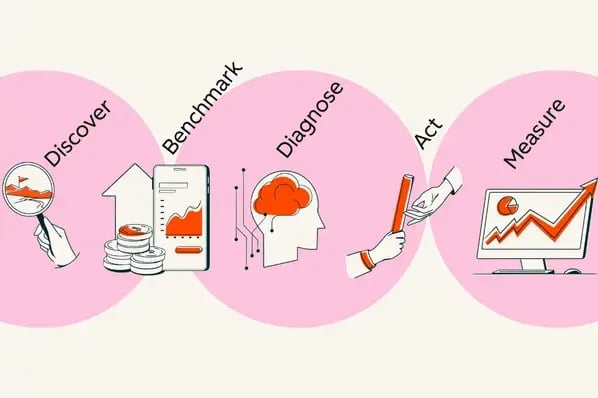
Executing an effective AEO competitor analysis involves a structured, multi-phase approach:
Step 1: Collect Priority Questions that Answer Engines Must Resolve.
The foundational step involves compiling a robust query set—a representative list of questions that your target audience is likely to ask, and that answer engines are expected to resolve with a generated response. This set should be comprehensive, spanning various stages of the customer journey:
- Informational/Discovery: "What is [concept]?" "How does [process] work?"
- Consideration/Comparison: "Best [product category] for [user type]," "[Brand A] vs. [Brand B]."
- Transactional/Navigational: While less common for direct answers, questions about pricing, features, or specific brand offerings can still yield AI responses.
- Support/Troubleshooting: "How to [solve problem] with [product]."
Pro Tip: Leverage existing data sources such as traditional keyword research tools, customer support tickets (which reveal common pain points and questions), sales call transcripts, and the "People Also Ask" sections within Google SERPs. Aim for a diverse set of 30 to 100 queries across your core topic clusters to ensure a statistically meaningful view of answer share. For users of integrated platforms like HubSpot, built-in AEO features can suggest prompts tailored to your business, industry, and customer segments, streamlining this initial data collection.
Step 2: Test Queries Across Chatbots and AI Overviews.
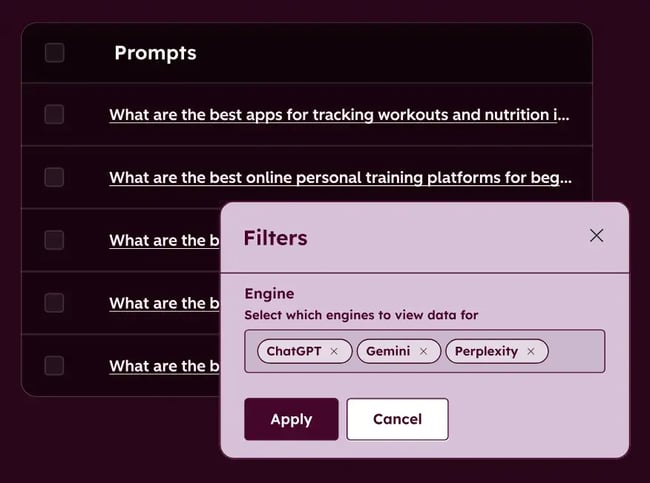
Once the query set is established, systematically run each query across multiple answer engines. Key platforms to include are ChatGPT, Perplexity, Google AI Overviews, and Gemini. For each query, meticulously record:
- The generated AI answer.
- All cited sources (URLs, domains, specific entities).
- Whether your brand or a direct competitor was cited.
- The sentiment or positioning of your brand/competitor if mentioned.
At scale, manual execution of this step becomes unsustainable, underscoring the necessity of specialized AEO tools. However, for an initial understanding and to build intuition, conducting manual tests for your top 10-15 queries is highly recommended. This hands-on approach provides qualitative insights into why certain content is cited that automated dashboards alone cannot fully convey. HubSpot AEO, for instance, automates this tracking across major answer engines, providing a consolidated view of brand and competitor citations over time.
Step 3: Extract Cited Sources and Entities.
For every query in your set, thoroughly document all cited sources and named entities. This process helps construct a detailed map of:
- Cited Domains: Which websites are consistently providing answers.
- Cited Content Types: Are LLMs preferring blog posts, product pages, FAQ sections, academic papers, or news articles?
- Specific Entities Mentioned: Beyond brand names, what key concepts, individuals, or organizations are associated with particular answers?
Look for recurring patterns. If a competitor’s blog consistently earns citations for informational queries, but their product pages do not, it suggests LLMs favor their educational content over direct promotional material. The consistent appearance of a direct competitor for your core queries should be flagged as a significant competitive threat requiring immediate attention.
Step 4: Map Competitors by Topic Cluster and Answer Share.
Organize the collected citation data by topic cluster, rather than simply by individual competitor. Calculate a rough answer share for each brand: the percentage of queries within a specific topic cluster where that brand is cited. This structured mapping reveals two crucial insights:
- Areas of Competitive Dominance: Which topic clusters are currently dominated by competitors in AI answers?
- Untapped Opportunities: Where are there significant gaps in AI coverage, presenting opportunities for your brand to establish authority?
Step 5: Diagnose Why Competitors Win.
This is arguably the most critical and often overlooked step. It moves beyond what is happening to why. For each competitor page that consistently earns citations, conduct a deep analysis:
- Content Structure: How is the content organized? Does it use clear headings, bullet points, and concise summaries?
- Directness of Answers: Does the page provide immediate, clear answers to common questions?
- Depth and Comprehensiveness: Does the content thoroughly cover the topic, addressing related questions and nuances?
- Entity Clarity: Is the brand, product, or topic clearly defined and consistently reinforced?
- Trust Signals: What elements contribute to its perceived trustworthiness (e.g., expert authorship, data citations, external validations)?
- Freshness and Accuracy: How recently was the content updated? Is the information demonstrably current and correct?
A valuable diagnostic question to frame this analysis is: "If I were a language model trying to answer this question, would this page give me a clear, trustworthy, complete answer?" This perspective helps cut through complexity and identify the attributes that LLMs are likely prioritizing. Integrated tools like AEO in HubSpot Marketing Hub can generate prioritized, plain-language recommendations based on these diagnostic insights, streamlining the transition from analysis to action.
Essential AEO Competitor Analysis Tools and Workflows
A diverse toolkit is necessary for comprehensive AEO competitor analysis, ranging from dedicated AEO platforms to traditional SEO tools.
-
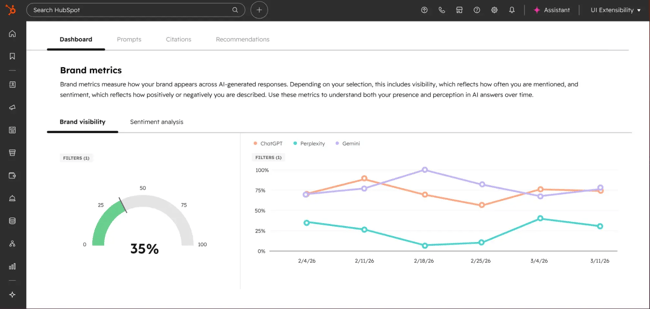
HubSpot AEO: This specialized tool provides marketers with a clear, consolidated view of their brand’s performance across major answer engines (ChatGPT, Perplexity, Gemini). It tracks share of voice at the prompt level, precisely identifying which prompts cite the brand, which cite competitors, and where the brand is entirely absent. Its strength lies in translating complex visibility data into actionable, plain-language insights, eliminating the need for extensive AEO expertise. HubSpot AEO connects visibility data to strategic actions, tracking priority prompts, analyzing favored sources, and identifying competitor gains. Crucially, it generates prioritized recommendations, offering clear next steps to improve AI visibility.
-
HubSpot AEO Features in Marketing Hub: For existing HubSpot users, AEO capabilities integrated into Marketing Hub Pro and Enterprise offer an end-to-end system for visibility tracking, strategy, and implementation. Its connection to HubSpot CRM allows it to automatically suggest relevant prompts based on a company’s industry, competitors, and customer segments, ensuring highly specific and actionable insights. This integration allows marketers to track AI visibility data alongside contact and pipeline reporting, directly linking AEO performance to tangible business outcomes. The ability to seamlessly move from AEO suggestions in Marketing Hub to content creation in Content Hub streamlines the entire optimization workflow.
-
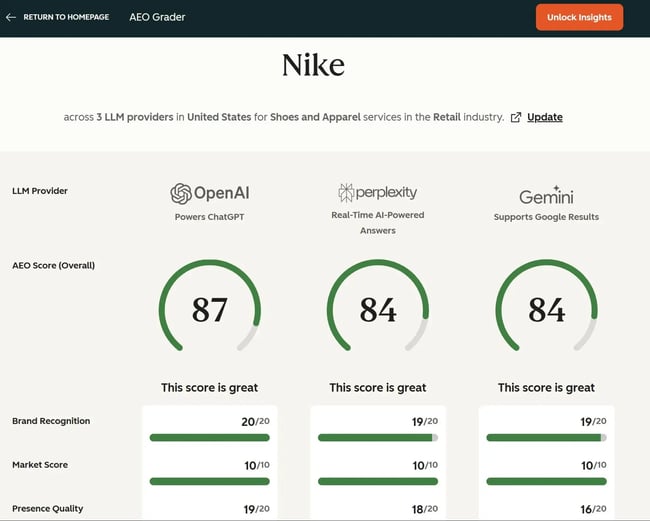
HubSpot AEO Grader: A free, accessible entry point into AEO, the AEO Grader benchmarks answer engine visibility by measuring how often a brand appears in AI-generated answers relative to competitors. It provides a quick snapshot of AI share of voice across key prompts and insights into how the brand is represented. This tool is ideal for initial assessments, helping marketers identify existing visibility gaps without requiring extensive setup or prior AEO experience.
-
Perplexity: As a leading AI answer engine, Perplexity is invaluable for quick qualitative spot-checks. It clearly displays inline citations, making it straightforward to identify which competitor URLs are earning placement. Its "Focus" modes (Web, Academic, Writing) allow marketers to test how answer sources vary based on query context, providing deeper insights into AI’s interpretative mechanisms.
-
ChatGPT with Browse: ChatGPT’s browsing mode is crucial for testing current queries, especially those in the consideration and comparison stages ("best X for Y"). Brand mentions in AI answers for these types of queries carry significant purchase influence, making direct observation vital.
-
Ahrefs (and other traditional SEO tools): While AEO focuses on AI citations, traditional SEO tools like Ahrefs remain essential for diagnosing the underlying reasons for a page’s AI visibility. Backlink authority, robust on-page optimization, and established topical authority signals all contribute to how LLMs perceive and cite content. Ahrefs can audit competitor pages consistently cited by AI, revealing the traditional SEO factors reinforcing their AI visibility.
-
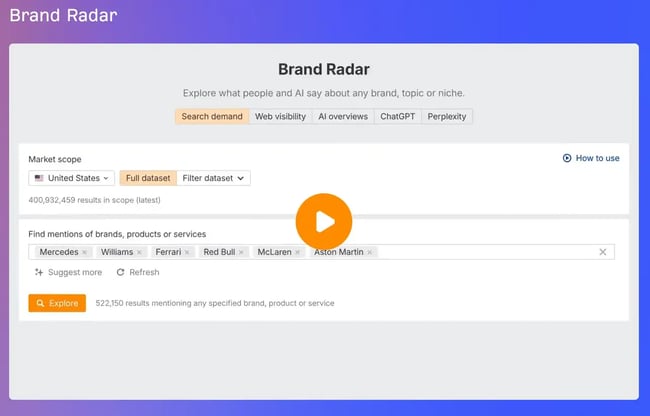
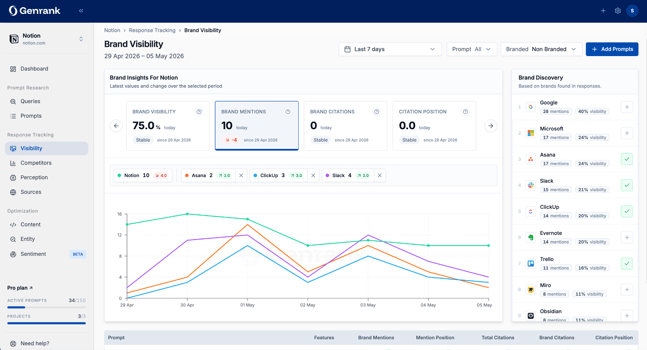
Genrank: This platform offers a structured approach to analyzing competitor visibility within AI-generated answers. It tracks brand appearances, citation frequency, and attributed qualities across prompts, moving beyond manual checks to provide a more consistent view. Genrank’s focus on prompt-level analysis for ChatGPT helps teams understand how visibility shifts with prompt intent (informational vs. commercial) and provides insights into brand positioning within AI responses.
-
BrightEdge or Conductor: Enterprise-level SEO platforms like BrightEdge and Conductor are increasingly incorporating AI Overview and answer engine tracking features. These are best suited for large organizations managing hundreds of topic clusters, requiring automated citation monitoring and executive-ready reporting capabilities.
Key AEO Competitor Analysis Metrics and Dashboards
Effective AEO competitor analysis relies on a distinct set of metrics that reflect the unique dynamics of AI-driven search:
-
Answer Share and Citation Frequency:
- Answer Share: This is the foundational AEO metric, representing the percentage of queries within a defined set where a brand is cited in the AI-generated answer. It is the AEO equivalent of organic market share. Track answer share at three critical levels:
- Overall Brand Answer Share: Across your entire query set.
- Topic Cluster Answer Share: Within specific thematic groups of queries.
- Individual Query Answer Share: For specific, high-priority questions.
- Citation Frequency: The raw count of how many times a domain or specific URL is cited across the query set. High citation frequency on a small number of pages might indicate an over-reliance on a few content assets, while broad citation frequency across many pages signals strong, holistic topical authority.
- Answer Share: This is the foundational AEO metric, representing the percentage of queries within a defined set where a brand is cited in the AI-generated answer. It is the AEO equivalent of organic market share. Track answer share at three critical levels:
-
Entity Coverage and QA Depth:
- Entity Coverage: Measures whether a brand, its products, and key associated topics are explicitly recognized, correctly defined, and appropriately associated by answer engines. Test this by directly asking LLMs: "What is [your brand]?", "What does [your brand] do?", or "Who uses [your product]?" Vague, incomplete, or incorrect answers signal an entity clarity problem that will likely suppress citations across your full query set.
- QA Depth: Assesses how completely and accurately a brand’s content answers the specific questions within its query set. Score competitor content (and your own) on a simple rubric:
- Directness: Does it answer the question immediately and concisely?
- Completeness: Does it provide all necessary information without extraneous details?
- Accuracy: Is the information factually correct and up-to-date?
- Trustworthiness: Are sources cited? Is the information presented credibly?
-
Connecting AI Answer Visibility to Conversions:
The most challenging, yet crucial, aspect of AEO measurement is attributing pipeline impact from AI visibility, as AI-generated answers don’t always result in trackable clicks. A multi-touch attribution approach is recommended:- UTM-tagged URLs: Implement UTM parameters on all cited content to track direct referral traffic from AI sources.
- Self-Reported Attribution: Add "Answer Engine/AI Search" as an option in website forms and empower sales teams to ask prospects about how they discovered the brand.
- Branded Search & Direct Traffic Monitoring: Observe trends in branded search queries and direct traffic as a proxy for AI-influenced awareness, particularly for top-of-funnel content.
- CRM Integration: In platforms like HubSpot, create custom contact properties (e.g., "AI-Attributed First Touch") to build a longitudinal dataset correlating AEO content investments with actual contact and deal creation over time. This provides concrete evidence of AEO’s contribution to revenue.
Translating AEO Competitor Insights into Actionable Strategies
Upon completing the analysis, the next critical step is to translate findings into a prioritized action list. Common, high-impact actions surfaced by AEO competitor analysis include:
- Content Restructuring: Reorganize existing content to adopt a direct-answer structure, placing concise answers at the beginning of sections, especially for high-priority queries where competitors are winning citations.
- Entity Optimization: Refine content to clearly define your brand, products, and key concepts, ensuring consistent messaging across all digital assets to improve AI’s understanding and association.
- FAQ Content Expansion: Identify unanswered questions or areas where competitor FAQs are particularly strong, and create comprehensive, direct-answer FAQ pages.
- Structured Data Implementation: Implement schema markup (e.g., FAQPage, HowTo, QAPage) to explicitly signal question-and-answer patterns to search engines and LLMs.
- Topical Authority Building: Develop content clusters that thoroughly cover specific topics, establishing your brand as a comprehensive and authoritative source in areas where competitors demonstrate strong answer share.
- Trust Signal Enhancement: Actively build and highlight trust signals within content, such as expert author bios, data citations, research methodology, and external validations, to boost LLM confidence.
- Product & Service Page Optimization: For transactional queries, ensure product and service pages directly answer questions about features, benefits, use cases, and comparisons, making them more citable by AI for purchase-intent searches.
- Proactive Content Creation: Identify emerging topics or underserved niches where AI answers are sparse, allowing your brand to be a first-mover in establishing authority.
Frequently Asked Questions About AEO Competitor Analysis
How often should AEO competitor analysis be run?
A full AEO competitor analysis, encompassing the complete query set, citation documentation, and benchmark updates, is recommended on a monthly cadence for most teams. In highly competitive markets or during active content campaigns, biweekly monitoring of top-priority query clusters can be a worthwhile investment. Unlike traditional SEO rankings, which fluctuate constantly, AI citation patterns can shift significantly after new content publication by competitors or following major model updates, necessitating regular snapshots to detect changes and adapt strategies.
How is pipeline impact attributed from AI answers?
Attributing pipeline impact from AI answers requires a multi-faceted approach due to the nature of AI-generated responses not always generating direct clicks. Strategies include: using UTM-tagged URLs on cited content to track referral traffic; integrating "Answer Engine/AI Search" as a self-reported attribution option in forms and sales conversations; and monitoring trends in branded search and direct traffic as a proxy for AI-influenced awareness. Platforms like HubSpot allow the creation of custom contact properties and deal source fields within the CRM to build a longitudinal view of AI-attributed pipeline, directly linking AEO performance to revenue.
What is the best way to structure QA content for LLM citations?
The most consistently cited content format by LLMs is the direct-answer structure. This involves:
- Verbatim Question as Heading: The target question appears verbatim (or nearly so) as an H2 or H3 heading.
- Immediate Direct Answer: The first 1-3 sentences directly and completely answer that question.
- Supporting Detail: Supporting information, examples, and nuances follow in clearly organized subsections.
FAQ schema markup (and HowTo schema for process-oriented content) further reinforces this structure for Google’s AI Overviews. Crucially, avoid lengthy preambles; LLMs favor content that gets straight to the point.
When should AEO be prioritized over traditional SEO?
AEO and traditional SEO are complementary, not mutually exclusive. Many content quality signals that drive traditional rankings (authority, depth, structured formatting, freshness) also contribute to AI citations. However, if analytics reveal declining organic click-through rates despite stable or improving rankings, it strongly signals that AI answers are intercepting clicks for your target queries. In such scenarios, investing in AEO content structure and citation optimization is likely to yield a higher marginal return than pursuing incremental ranking improvements. More broadly, for any query type where AI Overviews or LLM answers are already dominant, AEO should be the primary optimization lens.
From Analysis to Action: Turning AEO Insights Into Competitive Advantage
AEO competitor analysis provides marketers with an unprecedented level of insight: a direct view into how brands are recommended at the crucial moment of decision-making within AI-driven search. This goes beyond optimizing for rankings alone, allowing teams to measure citation frequency, answer share, and entity presence, and critically, to understand why competitors are being surfaced in AI-generated answers.
The true value, however, is realized through decisive action. Identifying competitive gaps is only beneficial if teams can act on those insights quickly and consistently. Tools like HubSpot’s AEO Grader offer an accessible starting point for benchmarking current visibility, while HubSpot AEO and the integrated features within HubSpot Marketing Hub enable ongoing tracking, detailed competitor analysis, and prioritized recommendations. These platforms bridge the gap between insight and execution, connecting AEO performance directly to content creation workflows, CRM data, and pipeline reporting.
For businesses committed to thriving in the AI era, the path forward is clear: establish a reliable query set, diligently track answer share over time, and continuously refine content based on what AI engines actually cite and why. The organizations that operationalize this process early will not merely keep pace with competitors; they will actively define how their category, products, and services are represented and recommended in the evolving landscape of answer engines, securing a lasting competitive advantage.









